
DAX 40 Breakout Or Bull Trap? Is Germany’s Blue-Chip Index Hiding Massive Risk… Or Generational Opportunity?
02.02.2026 - 04:26:40 | ad-hoc-news.de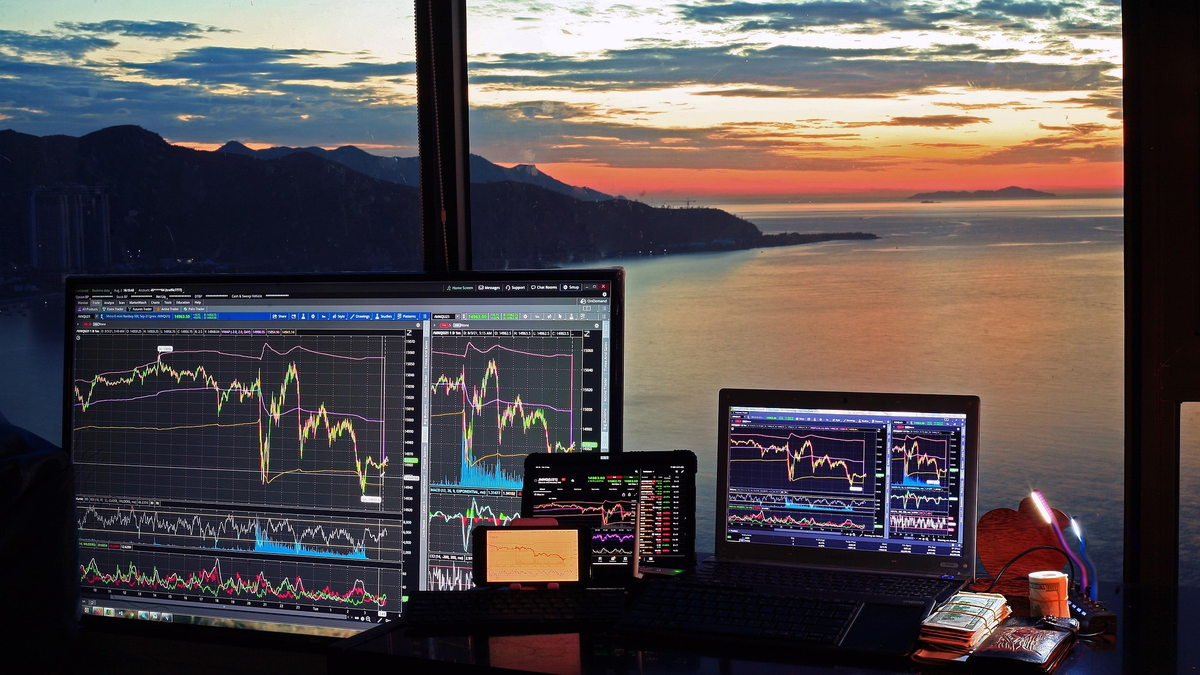
Get the professional edge. Since 2005, the 'trading-notes' market letter has delivered reliable trading recommendations – three times a week, directly to your inbox. 100% free. 100% expert knowledge. Simply enter your email address and never miss a top opportunity again. Sign up for free now
Vibe Check: The DAX 40 came into this session riding a powerful green rally, but with every uptick the risk meter is flashing brighter. The index is hovering near a key zone where German bulls and global macro bears are fighting for control. Instead of a clean melt-up, we are seeing choppy intraday swings, sharp reversals and clear signs of profit taking on every push higher. That is classic late-cycle behavior: big money is still in, but already hedging, while retail traders are trying to "buy the breakout" at exactly the spot where risk quietly explodes.
The current structure screams "decision point": momentum buyers are defending the trend, but macro headlines and bond yields are capping euphoria. If the DAX 40 can hold above its recent support area, the narrative stays "healthy uptrend with rotations." If that zone cracks, the same price range suddenly becomes the textbook start of a deeper correction. That is why today’s action matters: it is not about a tiny daily move, it is about which side shows conviction.
The Story: To understand where the DAX goes next, you cannot just stare at candles. You need to connect four big macro drivers: the ECB, the Euro, energy prices, and Germany’s industrial machine.
1. ECB and Rates – From Panic Hikes To Cut Speculation
The European Central Bank is stuck in a brutal balancing act. Inflation pressure has come down from its peak, but core prices and wage growth still make policymakers nervous. Markets are already betting on a shift from "higher for longer" to the first rate cuts, but the timing is everything. If the ECB cuts too soon, it risks re-igniting inflation and undermining credibility; too late, and the Eurozone’s weak spots – like German manufacturing and construction – take another hit.
DAX heavyweights are hypersensitive to this. Exporters and cyclical industrials love the idea of lower rates and cheaper financing. Banks and insurers, on the other hand, are torn: lower yields mean pressure on margins, but a stronger economy means more deal flow and fewer defaults. That tug-of-war is exactly why you are seeing sideways chop in some financial names while industrials and tech-adjacent plays are trying to lead.
2. Euro vs. Dollar – FX Is The Invisible Hand On DAX Earnings
The Euro’s trajectory versus the US dollar has become a stealth earnings driver. When the Euro weakens, German exporters become more competitive globally, and their overseas revenues translate into fatter numbers in home-currency terms. When the Euro strengthens too much, that tailwind flips into a headwind, eating into profit margins.
Right now, the currency is moving in a range where nobody is fully happy. It is not weak enough to be a free gift to exporters, but not strong enough to signal booming global confidence in the Eurozone either. That “no-man’s land” vibe is showing up in cautious guidance from some DAX companies: they are not screaming crisis, but they are not screaming boom either. For traders, that means the Euro chart is basically a live sentiment gauge for the next DAX earnings season.
3. Energy Prices – The Germany-Only Risk Premium
Unlike the US, Germany cannot just shrug off energy shocks. Natural gas prices, power costs and geopolitical supply risks still hover over the DAX like a storm cloud. Whenever energy prices ease, you see relief rallies in chemicals, autos and industrials. Whenever headlines hint at new disruptions or geopolitical flare-ups, the same names wobble as fears of margin compression and production cuts resurface.
Traders must remember: the DAX is packed with energy-sensitive business models. A delayed spike in gas or oil prices can show up in earnings with a lag, just when everyone thinks the danger is gone. That is why energy remains a structural risk factor for any medium-term DAX swing trade or investment thesis.
4. German Industrial Output & Recession Fears
Germany’s backbone is still manufacturing: autos, machinery, chemicals, engineering. Recent data has been mixed at best. Some indicators point to stabilization after a nasty slowdown; others look like a classic pre-recession plateau. Order books are decent in some niches but fragile in others, especially when it comes to big-ticket exports and global capex cycles.
Every time a fresh data release hints at contracting output or weak new orders, recession narratives roar back: "Is the world’s manufacturing powerhouse stalling?" The DAX then trades not just as a German index, but as a proxy for global industrial health. That is why big swings often line up with PMI releases, factory orders and sentiment surveys – they are not noise; they are the heartbeat of the DAX macro story.
Earnings Season & Sector Rotation
On the micro side, corporate earnings are painting a nuanced picture: some DAX members are beating expectations with cost-cutting and pricing power, while others warn of softer demand, especially in Europe and China. The result is an intense sector rotation underneath the index surface:
- Defensives and quality names benefit when fear spikes and traders hide in stability.
- Cyclicals and autos catch flows when the market sniffs a soft landing instead of a hard recession.
- Tech-related and growth stories perform when yields stabilize and risk appetite rotates back into higher-duration assets.
This rotation is why you cannot simply say "DAX up" or "DAX down" and think you understand the game. Smart money is constantly shuffling exposure, and that creates both traps and opportunities for retail traders.
Social Pulse - The Big 3:
YouTube: Check this analysis: DAX 40 & European Stocks – Macro, ECB, and Key Chart Levels
TikTok: Market Trend: Is Europe The Next Big Trade?
Insta: Mood: DAX Trader Desk Setup & Sentiment Check
- Key Levels: For now, traders are laser-focused on a crucial resistance band overhead and an equally important demand zone underneath. Above resistance, the narrative flips to "fresh breakout" with room for continuation; below support, the script becomes "failed breakout" with risk of a deeper, momentum-driven flush. Inside this range, expect choppy sideways price action with stop hunts and fakeouts on both sides.
- Sentiment: Are the Euro-Bulls or the Bears in control? Sentiment is split right down the middle. On one side, Euro-bulls argue that the worst of the energy and inflation shock is behind us, that ECB policy will gradually turn more supportive, and that global demand will stabilize. On the other side, bears point to fragile growth data, sticky costs, and the risk of policy mistakes or new geopolitical shocks. The result: positioning is cautious, volatility pops quickly on bad headlines, and big funds prefer tactical trades over long-term, all-in bets.
Trading Playbook: How To Navigate This DAX Inflection
So what does this all mean if you are trading or investing the DAX 40 right now?
1. Respect The Risk
This is not the early stage of a bull market where you can buy any dip and forget about it. The mix of elevated valuations in some sectors, macro uncertainty, and sensitive technicals means drawdowns can hit fast. Use stop-losses. Size positions modestly. Leverage is a tool, not a toy.
2. Think In Scenarios, Not Predictions
Instead of trying to guess a single outcome, build scenarios:
- Scenario A: Soft-landing vibes hold, the ECB manages a controlled pivot, energy stays manageable and global demand stabilizes. In that world, the DAX likely grinds higher, with periodic nasty pullbacks that reward disciplined dip buyers.
- Scenario B: Growth data weakens, energy flares up again, or the ECB stays too tight for too long. Then the current range turns out to be distribution, and a more brutal correction forces late bulls to capitulate.
Align your trades with the scenario you see unfolding – and be ready to switch if the data and price action tell you you are wrong.
3. Focus On Relative Strength
Even in choppy or bearish phases, some DAX names will quietly outperform. Track which sectors hold up best on red days and lead on green days. Those are your potential leaders if the index resolves higher. Conversely, names that bleed on every dip and fail to bounce are your candidates for short setups or at least "do not touch" lists.
Conclusion: The DAX 40 is not giving easy answers right now – and that is exactly why it is attractive for active traders. Between ECB crosswinds, an indecisive Euro, sensitive energy dynamics and a fragile industrial backdrop, Germany’s flagship index is trading at a genuine crossroads.
Is this a high-conviction breakout or a carefully disguised bull trap? Nobody knows with certainty. What you can control is your preparation: understand the macro drivers, map the key zones on the chart, respect risk, and avoid emotional FOMO. Let price confirm the story before you go heavy. In this environment, survival and consistency beat hero trades. But for those who stay patient and disciplined, this DAX turning point could later look like the moment when the next major opportunity was born.
Tired of poor service? At trading-house, you trade with Neo-Broker conditions (free!), but with real professional support. Use exclusive trading signals, algo-trading, and personal coaching for your success. Swap anonymity for real support. Open an account now and start with pro support
Risk Warning: Financial instruments, especially CFDs on indices like the DAX 40, are complex and come with a high risk of losing money rapidly due to leverage. You should consider whether you understand how these instruments work and whether you can afford to take the high risk of losing your money. This content is for informational purposes only and does not constitute investment advice.
So schätzen Börsenprofis die Aktie ein!

Für. Immer. Kostenlos.


