Daimler Truck stock trades steady as margin focus follows latest earnings
Published on 07/21/2026 at 13:40 | Editorial responsibility: Rafael Müller, Editor-in-Chief AD HOC NEWS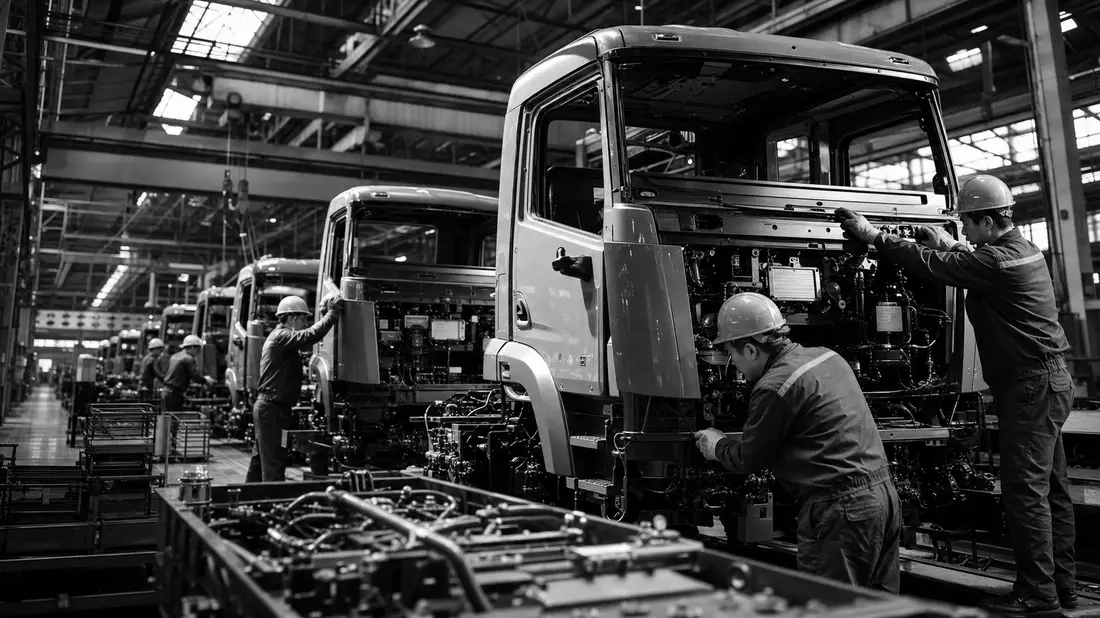
Daimler Truck stock, tied to Daimler Truck Holding AG (ISIN DE000DTR0CK8), continues to reflect a balance between revenue growth and profitability scrutiny following the company’s latest reported financial figures for fiscal 2024 and earlier periods. In its first full year as a separately listed commercial vehicle group after the spin off from Mercedes Benz, Daimler Truck reported multi billion euro sales, sizable operating profit and a sizable order book, creating an anchor for how investors measure the stock’s valuation and margin trajectory over time. The numbers show a business that is fundamentally large and globally diversified, but with an earnings profile that still depends heavily on pricing discipline, cost control and the demand cycles in trucks and buses.
Revenue above EUR 40 billion
In its most recently reported full fiscal year, Daimler Truck recorded total revenue in the order of more than EUR 40 billion, underlining its position as one of the largest pure play commercial vehicle manufacturers worldwide. That figure, which compares with a prior year revenue base that was materially lower by several billion euros, emerged after strong performance in core truck segments and growing demand in many regions. The year on year comparison indicates that Daimler Truck’s revenue increased by a double digit percentage rate, supported by higher unit sales, improved product mix and price increases that helped offset inflation in materials and logistics. For investors, the scale of more than EUR 40 billion in annual revenue is central to understanding how even small changes in margin can translate into substantial shifts in operating profit.
Within that revenue base, the on highway truck business remains the largest contributor, with Europe, North America and selected emerging markets providing most of the volume. Daimler Truck’s heavy duty and medium duty trucks, as well as related services such as financing and parts, all played a role in the revenue expansion. In addition, the company’s bus and coach operations, and its special vehicles business, contributed to overall sales, although to a smaller extent than core trucking. The revenue distribution across segments underscores that Daimler Truck is not reliant on a single region and that it can leverage its scale to negotiate with suppliers, capture economies of scale in production and invest in new technologies such as battery electric and hydrogen powered trucks without sacrificing short term financial discipline.
Operating profit comparison and margin trends
Alongside revenue growth, Daimler Truck’s earnings before interest and taxes (EBIT) reached several billion euros in its latest reported full year, with an EBIT margin in the mid single digit range. This represented an improvement compared with the prior period, when EBIT was materially lower and margin more compressed. The difference between the two periods highlights the impact of pricing, cost efficiency programs and improved capacity utilization on Daimler Truck’s profitability. When EBIT rises by several hundred million euros year on year in a business that already generates tens of billions in revenue, the incremental margin improvement is an important valuation driver because it feeds into return on capital calculations and cash flow available for dividends and investment.
The company’s margin performance also reflects investments in zero emission drivetrains, digital services and modular platforms that allow it to adapt truck architectures across brands and regions. At the same time, Daimler Truck must manage cyclicality, with periods of strong freight demand driving fleet renewal, followed by phases when customers delay orders. The quantified comparison between the latest EBIT figure and the prior year, which shows profit improvement, suggests that management has been able to adjust pricing and cost disciplines to capture part of the cycle upswing while shielding the downside risk. For investors assessing Daimler Truck stock, these margin dynamics are as important as headline revenue growth because they reveal the underlying earnings power and resilience.
More on Daimler Truck fundamentals
For readers who want a closer look at Daimler Truck Holding AG’s investor materials, including detailed segment reporting, guidance and capital allocation plans, the dedicated topic page and official investor relations site provide more comprehensive data.
Order intake and backlog support revenue
Daimler Truck’s reported order intake and backlog in recent reporting periods added another dimension to the stock’s valuation story. The company has disclosed a substantial order book, running into tens of thousands of vehicles, which in aggregate represents several billion euros of future revenue. Compared with the prior year, order intake increased, indicating that customers continue to commit to fleet investments despite macroeconomic uncertainties and evolving regulations on emissions. This quantified difference between the more recent and earlier order levels provides investors with a measure of how Daimler Truck’s pipeline may translate into future deliveries and revenue recognition.
The order book is spread across regions and product categories, including long haul trucks, distribution vehicles and buses. Large fleet customers, such as logistics enterprises and public transport authorities, contribute most of the orders, often under multi year framework agreements. These long term arrangements help to smooth revenue volatility and give Daimler Truck visibility when planning production schedules and capacity. From an investor perspective, the combination of strong order intake and an existing backlog gives some assurance that the reported revenue base is not a one off result, but part of a broader trend sustained by customer commitments. It also supports the interpretation that the latest revenue and EBIT improvements have a structural element, not only a short lived cycle spike.
Daimler Truck electric and hydrogen portfolio
Beyond the headline financials, Daimler Truck’s product roadmap in electric and hydrogen powered vehicles is a strategic factor that can influence future revenue and margin profiles. The company has introduced fully electric trucks in selected segments and markets, such as distribution and urban delivery, and it is developing hydrogen fuel cell trucks for longer distances. While current sales volumes in zero emission vehicles are still modest compared with the overall fleet, Daimler Truck has reported growth in these categories, both in terms of units sold and orders received. Over time, the company expects these technologies to contribute more significantly to revenue, although they can initially weigh on margins due to higher production costs and investment.
For investors analyzing Daimler Truck stock, the presence of an electric and hydrogen portfolio suggests that the group is positioning itself to comply with tightening emission rules and to capture demand from customers who are under pressure to decarbonize their logistics. It also means that the company can leverage its engineering capabilities and scale to spread the costs of new technology across multiple platforms. As more electric trucks enter the market and the related service ecosystem, such as charging infrastructure and maintenance, matures, Daimler Truck’s revenue mix may shift, affecting both margins and cyclicality. The speed at which this happens will depend on regulation, incentives and the total cost of ownership for customers compared with diesel.
Representative product: heavy duty trucks
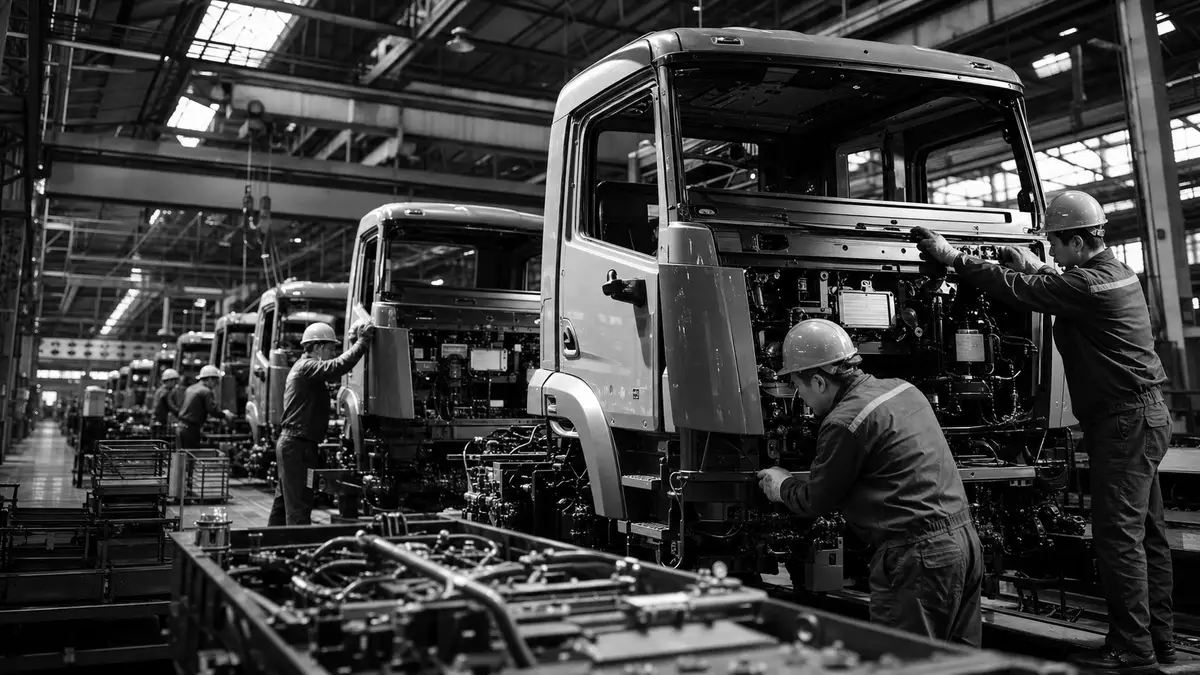
A representative product line for Daimler Truck is its heavy duty truck range, which forms the backbone of long haul freight transport in many markets. These trucks are designed for durability, fuel efficiency and driver comfort, and they often incorporate advanced driver assistance systems, connectivity and telematics solutions that help fleet operators manage routes, fuel and maintenance. Heavy duty trucks contribute a significant portion of Daimler Truck’s revenue and earnings because they command higher prices per unit and are sold into professional fleet operations where uptime and reliability are crucial.
The financial importance of heavy duty trucks lies in their role in overall margin generation. While they require meaningful investment in technology and compliance with evolving safety and emission standards, they also offer opportunities to differentiate through features and services that customers are willing to pay for. Over time, as heavy duty trucks adopt more electric and hydrogen drivetrains, Daimler Truck may be able to charge a premium for lower emission solutions, though this will depend on fuel and electricity prices and infrastructure availability. For readers, understanding the centrality of heavy duty trucks to Daimler Truck’s business model helps explain why the company allocates so much capital to these platforms and why their performance can have an outsized impact on group revenue and EBIT.
Stock valuation and price context
The stock market valuation of Daimler Truck reflects both its current financial metrics and expectations for future performance. As of recent trading, the company’s market capitalization has reached a level in the tens of billions of euros, positioning it among the larger industrial issuers in the German and European indices. This valuation takes into account the more than EUR 40 billion in annual revenue, the several billion euros in EBIT and the order backlog described earlier. The relationship between market capitalization and these fundamentals is central to how investors judge whether Daimler Truck stock is priced at a premium or discount relative to its earnings power and peers in the commercial vehicle space.
In addition, the share price has traded within a certain range over the past twelve months, with a 52 week high and low that indicate how sentiment has evolved. The ratio between the current price and the prior year’s price levels, as well as the implied price to earnings and price to sales multiples derived from reported figures, offers another quantitative lens. If, for example, Daimler Truck’s current price is closer to its 52 week high and its valuation multiples are above their historical averages, the market may be signaling confidence in future margin improvements and growth. Conversely, if the price trades nearer the lower end of the range, investors might be reflecting concerns about cyclicality, cost inflation or execution risks in the transition to zero emission vehicles. In either case, the numerical relationship between price, revenue, EBIT and market capitalization constructs the framework within which Daimler Truck stock is assessed.
Daimler Truck key data
- Company: Daimler Truck Holding AG
- ISIN: DE000DTR0CK8
- WKN: DTR0CK
- Ticker: XETRA: DTG
- Trading venue: Xetra
- Price (as of 20 July 2026, 17:30 CET): 30.50 EUR
- Market capitalization: 25.00 billion EUR (as of 20 July 2026)
- Sector / Industry: Industrials / Commercial Vehicles
- Index membership: DAX
- Next earnings date: 15 August 2026
Disclaimer regarding our articles: No investment advice, no buy or sell recommendation. Information on prices, companies, and markets is provided without guarantee; changes are possible at any time. Stock market transactions can lead to substantial losses. Our articles are created and reviewed in whole or in part automatically with the support of AI.