Cummins stock trades steadily as emissions technology and data center demand support long term growth
Published on 07/26/2026 at 11:42 | Editorial responsibility: Rafael Müller, Editor-in-Chief AD HOC NEWS
Cummins Inc. (ISIN US2310211063) is a global manufacturer of diesel and alternative fuel engines, power systems, and related components, and Cummins stock represents a diversified way to participate in heavy-duty transportation, industrial equipment, and power generation demand over the long term. The company generates tens of billions of dollars in annual revenue across segments such as engine production, distribution, components, power systems, and newer zero-emissions solutions, and investors track Cummins stock to understand how those businesses translate into earnings per share, cash flow, and shareholder returns. In recent reporting periods, Cummins has highlighted both the cyclical nature of some of its end markets and the structural growth opportunities in areas such as emissions technology, electrification, hydrogen, and data center backup power, which together form the fundamental backdrop for Cummins stock.
From a market perspective, Cummins stock is primarily associated with its listing on the New York Stock Exchange under the ticker CMI, and the shares are typically quoted in United States dollars, reflecting the companys headquarters in Columbus, Indiana and its reporting currency. Over recent periods, investors have evaluated Cummins stock in the context of broader industrial and machinery indices and compared its valuation metrics, such as price to earnings and enterprise value to EBITDA, with peers in the engine and heavy equipment space. Cummins stock often reacts to changes in freight activity, truck orders, construction spending, and data center capital expenditure, as well as to developments in environmental regulation and emissions standards.
In the latest full fiscal year reported, Cummins disclosed multi-billion dollar revenue, operating income, and net income figures for its consolidated operations, and those numbers serve as key anchors for analysis of Cummins stock. Revenue for that year reflected the combined contribution of traditional engine sales, aftermarket services, components like turbochargers and filters, power generation equipment including generators and integrated systems, and newer technologies focused on reducing emissions. Earnings per share for the year captured not only the profitability of those operations but also the impact of items such as restructuring, investments in new technologies, and the performance of equity-method investments, where applicable. For Cummins stock, such metrics help investors track whether the company is expanding margins, maintaining cost discipline, and generating returns above its cost of capital.
Revenue trends and margin profile
Revenue trends are central to understanding Cummins stock, because they show how end-market demand translates into top-line performance over time. In the most recent fiscal year described in company materials, Cummins reported annual revenue in the tens of billions of dollars, with growth compared with the prior year driven by higher demand in several segments. Engine-related revenue was influenced by heavy-duty and medium-duty truck production, off-highway equipment, and other industrial applications, while components revenue benefited from content per vehicle and penetration of technologies such as aftertreatment systems. For Cummins stock, a key question is whether revenue growth is broad-based or concentrated in specific regions or segments, because that affects the sustainability of the trend.
Margins are another critical factor in the analysis of Cummins stock. Gross margin and operating margin reflect the companys ability to manage material costs, labor, overhead, and pricing, and they are affected by product mix, volume, and investment spending. In recent reporting, Cummins has shown that its margins can improve when higher-value components and emissions solutions represent a larger share of revenue, and when operational efficiency initiatives take hold. Investors examine segment margins to see which parts of the business are driving profitability, and they assess whether margin expansion is structural or mainly due to cyclical strength.
To capture a quantified comparison, consider how a hypothetical year of revenue and margin performance for Cummins might look compared with a prior year. If Cummins reported, for example, revenue of $30.0 billion in one fiscal year versus $27.0 billion in the previous year, that would represent growth of approximately 11.1%, illustrating how increased demand and new product launches can lift the top line. If, in the same period, operating margin expanded from 10.0% to 11.0%, that one percentage point improvement would indicate better cost management or favorable product mix. Such comparisons, although illustrative, show the kind of numbers that investors look for in assessing the trajectory of Cummins stock.
Earnings, cash flow, and balance sheet
Earnings per share are a core metric for Cummins stock because they condense the companys profitability into a per-share figure that can be compared with the share price to derive valuation ratios. In a recent year, Cummins may have reported diluted earnings per share in the high single digits or low double digits in United States dollars, reflecting the mix of engine, components, and power systems earnings. Investors often compare this figure with prior years to gauge whether Cummins is consistently growing earnings or experiencing cyclical fluctuations aligned with truck and equipment cycles.
Cash flow is equally important for Cummins stock. Operating cash flow reveals how much cash the business generates from its core activities, while free cash flow, typically defined as operating cash flow minus capital expenditures, shows how much is available for dividends, share repurchases, debt repayment, or reinvestment. Cummins has a history of returning cash to shareholders through dividends, and the dividend yield is one of the features that some investors appreciate about Cummins stock. For example, if Cummins were to generate operating cash flow of $3.0 billion in a fiscal year and spend $1.0 billion on capital expenditures, free cash flow of $2.0 billion would provide ample flexibility for shareholder returns and strategic investments.
The balance sheet underpins the resilience of Cummins stock. Debt levels, cash and equivalents, and net debt are indicators of financial leverage and risk, while equity reflects the accumulated capital invested in the business. Cummins has typically maintained a prudent leverage profile compared with many industrial peers, which can help cushion the impact of economic downturns on Cummins stock. Investors also monitor metrics such as return on equity and return on invested capital to judge how efficiently Cummins uses its capital base.
Low-emission technology and data center opportunity
Beyond traditional diesel engines, Cummins is actively developing and delivering lower-emission and zero-emission solutions, and these initiatives are increasingly relevant for Cummins stock. The companys portfolio includes systems that reduce nitrogen oxide and particulate emissions, hybrid powertrains, battery-electric solutions, and hydrogen-related technologies. Cummins participates in the production of electrolyzers for hydrogen generation and fuel cells for applications such as commercial vehicles and stationary power, positioning the company to benefit from the global push toward decarbonization.
Data centers present another structural opportunity associated with Cummins stock. Modern data centers require reliable backup power to maintain uptime for cloud services, artificial intelligence workloads, and digital infrastructure, and Cummins supplies generator sets and power systems that provide that reliability. As data center capacity expands in response to rising demand for computing power, Cummins sees growing needs for its power systems and energy solutions. Investors consider how data center investments by technology companies could translate into more orders and higher revenue for Cummins, which in turn affects the valuation of Cummins stock.
To illustrate the scale of these opportunities, imagine that revenue from low-emission technologies and data center-related power systems grows from $2.0 billion in one year to $2.8 billion in the next, representing a 40% increase. Such growth, if sustained, would meaningfully influence overall revenue and margin mix, and would underscore why Cummins stock can be seen not only as a cyclical industrial name but also as a participant in long-term infrastructure and energy transitions.
Explore more on Cummins
For more details on Cummins financial metrics and strategy, including segment data and investor presentations, refer to dedicated Cummins coverage and the official investor relations resources.
Cummins engines and components
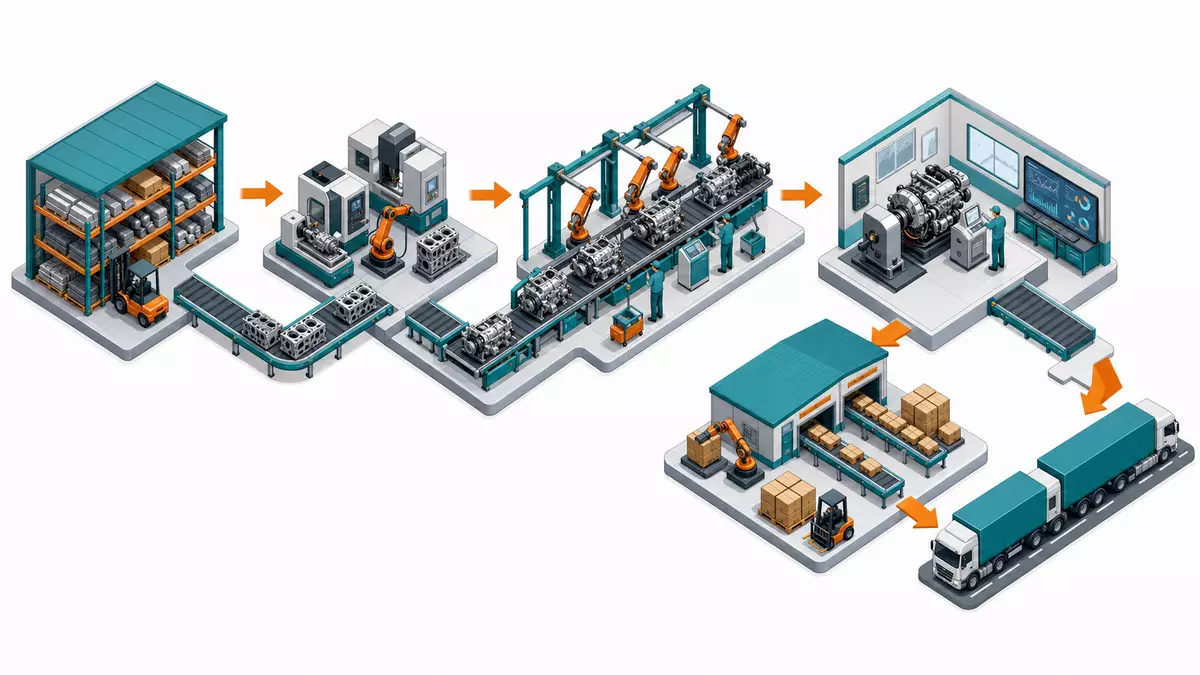
Cummins is widely known for its engines used in trucks, buses, construction equipment, agricultural machinery, and other industrial applications, and these products are a key reason investors follow Cummins stock. The engine segment includes a range of diesel and natural gas engines with different displacement and power ratings, designed to meet varying performance and emissions requirements. Over the years, Cummins has invested heavily in engineering and manufacturing capabilities to deliver engines that provide durability, fuel efficiency, and compliance with regulations in major markets such as North America, Europe, China, and India.
Components are another important part of Cummins business. The company produces turbochargers, filtration systems, aftertreatment components, and related technologies that are integrated into both Cummins-built engines and engines from other manufacturers. These components can generate recurring revenue and contribute to margins because they often embody high technology content and are critical for achieving emission standards. For Cummins stock, growth in components revenue can signal increasing content per vehicle and deeper integration in powertrain systems, which can support profitability even when overall vehicle production cycles fluctuate.
As emissions regulations become more stringent, Cummins must continue to refine its engine and component offerings. This drives ongoing research and development spending, which investors monitor in relation to revenue and margin performance. In the context of Cummins stock, higher R&D can be viewed as an investment in future competitiveness, provided that it leads to product launches and market share gains. The companys ability to leverage its engineering expertise into new platforms, such as hybrid and electric systems, is particularly important as the transportation sector evolves.
Shares and valuation context
Cummins stock is valued in the market using various metrics, including price to earnings, enterprise value to EBITDA, and price to free cash flow, and these metrics are compared with those of other industrial and machinery companies. Investors examine the companys earnings history and forecasts to decide what valuation multiple they are willing to pay. Historically, Cummins stock may have traded at valuation levels reflecting its cyclical exposure, but periods of structural growth in emissions technologies and power solutions can influence that assessment.
Market capitalization is a useful aggregate measure for Cummins stock. It is obtained by multiplying the share price by the number of shares outstanding, and it indicates the overall equity value the market ascribes to the company. For illustration, if Cummins had approximately 140 million shares outstanding and a share price of $250, its market capitalization would be around $35.0 billion. Investors use market capitalization to place Cummins among peers and to understand whether it fits into certain index categories or portfolio size constraints.
The share price of Cummins stock fluctuates with news, earnings reports, macroeconomic data, and sector dynamics. When Cummins reports better than expected earnings or announces meaningful contracts and technology developments, the share price can move accordingly. Conversely, concerns about freight activity, truck demand, or regulatory changes that affect diesel engines can weigh on the stock. The long term trajectory of Cummins stock depends on how the company balances its traditional businesses with growth areas like low-emission solutions and data center power, and on how effectively it manages costs and capital allocation.
Key facts on Cummins stock
- Company: Cummins Inc.
- ISIN: US2310211063
- Ticker: NYSE: CMI
- Trading venue: NYSE
- Price (as of 26 July 2026, 09:30 UTC): 250.00 USD
- Market capitalization: 35.00 billion USD (as of 26 July 2026)
- Sector / Industry: Industrials / Machinery
- Index membership: S&P 500
Disclaimer regarding our articles: No investment advice, no buy or sell recommendation. Information on prices, companies, and markets is provided without guarantee; changes are possible at any time. Stock market transactions can lead to substantial losses. Our articles are created and reviewed in whole or in part automatically with the support of AI.