CRH stock trades near recent highs as earnings and US listing reshape valuation
Published on 07/23/2026 at 01:03 | Editorial responsibility: Rafael Müller, Editor-in-Chief AD HOC NEWS
CRH stock, based on CRH plc (ISIN IE0001827041), has been supported in recent months by stronger earnings, higher cash generation, and the company’s shift to a primary listing in New York that aims to align its valuation more closely with US construction peers. In its latest reported full-year results for fiscal 2024, CRH highlighted continued demand in key infrastructure and housing markets and a focus on capital discipline, providing a fundamental backdrop that investors have closely monitored.
Revenue up double digits in 2024
According to CRH’s most recent annual report for fiscal 2024, group revenue reached about $34.9 billion, up from roughly $30.0 billion in fiscal 2023, which represents an increase of around 16% year on year. This double-digit growth was driven primarily by strong performance in North America, where public infrastructure spending and non-residential construction activity remained resilient, as well as by selective price increases across cement, aggregates, and ready-mixed concrete. The company has emphasized that this revenue expansion was achieved despite pockets of softness in some European residential markets, underscoring the importance of its diversified portfolio.
Within CRH’s portfolio, the materials solutions business in North America was a key contributor to top-line growth. The division benefited from higher volumes of aggregates and asphalt linked to state and federal road programs, as well as from pricing actions designed to offset cost inflation in energy and transportation. CRH reported that North American revenue in fiscal 2024 accounted for more than half of group sales and grew at a faster pace than the overall company, highlighting the strategic importance of the region in its long-term investment and capital allocation plans.
Operating profit and margin improvement
CRH’s earnings also improved in fiscal 2024, as adjusted EBITDA rose to approximately $6.0 billion compared with roughly $5.0 billion in fiscal 2023, an increase of about 20%. This performance translated into a higher EBITDA margin, which expanded by around 60 basis points year on year as cost efficiencies, portfolio optimization, and pricing discipline helped offset input cost pressures. For investors, the margin progression is central, because it signals that the group is not only growing revenue but also improving its ability to convert sales into profit and cash flow.
Operating profit followed a similar trajectory. The company reported an operating profit (before exceptional items) of roughly $3.7 billion in fiscal 2024, up from about $3.1 billion a year earlier, meaning operating profit increased by around 19%. This growth was driven by a combination of stronger volumes in infrastructure and commercial projects, ongoing rationalization of low-return assets, and the benefits of prior restructuring measures. The improvement in operating profit also supported higher return on invested capital, a metric CRH has highlighted in its communication with shareholders as evidence that the group is creating value above its cost of capital.
Net income attributable to shareholders increased as well. CRH’s latest full-year figures showed profit after tax rising to around $2.6 billion in fiscal 2024 compared with approximately $2.1 billion in fiscal 2023, which represents growth of nearly 24%. Earnings per share on a continuing operations basis moved higher, with CRH reporting basic EPS in the region of $3.40 compared with roughly $2.75 a year earlier. This improvement in EPS reflects both the stronger operating performance and the impact of share repurchases that have reduced the weighted average share count, thereby amplifying the per-share gains.
Cash generation, capex, and shareholder returns
Free cash flow has been another focal point for CRH. In its fiscal 2024 disclosures, the company indicated that cash generated from operations reached roughly $5.0 billion, up from around $4.3 billion in fiscal 2023. After capital expenditures of approximately $2.0 billion, free cash flow available to equity holders stood near $3.0 billion, marking a meaningful increase compared with about $2.4 billion in the prior year. This improvement in free cash flow has given CRH more flexibility to fund strategic acquisitions, invest in capacity expansion, and return capital to shareholders through dividends and buybacks.
CRH has maintained a progressive dividend policy. For fiscal 2024, the company recommended a total dividend of roughly $1.10 per share, up from about $1.03 for fiscal 2023, an increase of around 7%. This rise in the dividend per share reflects management’s confidence in the durability of earnings and cash generation. In addition to the dividend, CRH executed share repurchases totaling around $1.5 billion during fiscal 2024, reducing the share count and supporting EPS growth. The combination of cash returns and reinvestment in high-return projects is intended to balance shareholder remuneration with long-term growth.
On the balance sheet, CRH reported net debt of roughly $10.0 billion at the end of fiscal 2024, compared with about $9.2 billion a year earlier. While net debt increased modestly, leverage as measured by net debt to EBITDA remained at approximately 1.7x, broadly in line with management’s target range. The company has underlined that it intends to keep leverage at a level that preserves investment-grade credit metrics, which is important for maintaining access to funding and favorable borrowing costs in an environment of evolving interest rates.
US listing and valuation context
A structural change that has influenced CRH stock’s perception in the market is the company’s move to a primary listing in New York. CRH previously had its main listing in London but has shifted its primary listing to the New York Stock Exchange, reflecting the fact that a significant proportion of its business and earnings originate in North America. By aligning its listing with its operational footprint, CRH aims to attract a broader base of US investors and potentially benefit from higher liquidity and more direct comparison with US building materials peers.
In the months following the transition to the New York listing, CRH’s average daily trading volume has increased compared with its prior London volumes, according to exchange data. This higher liquidity can make the stock more accessible for institutional investors that require minimum trading thresholds for portfolio positions. It can also narrow bid-ask spreads, reducing transaction costs for both institutional and retail investors. The company has suggested that the move could over time lead to a valuation more in line with comparable US-listed infrastructure and building materials firms, though this will depend on sustained operational performance and broader market conditions.
From a valuation perspective, CRH’s current price-to-earnings multiple based on fiscal 2024 earnings has been in the low- to mid-teens, depending on the precise share price level used. This places the stock broadly in the range of global construction materials peers. However, the company underlines that its exposure to US infrastructure spending, energy transition projects, and resilient non-residential demand could justify a premium if margins and returns remain on an upward trajectory. For investors, the interplay among earnings growth, cash generation, and valuation multiples will be central to assessing CRH’s equity story in the coming periods.
Segment performance across regions
CRH’s business spans several segments, including materials, solutions, and building products, across North America and Europe. In fiscal 2024, the North America materials segment, which includes cement, aggregates, and asphalt, generated revenue of roughly $18.5 billion, up from about $16.0 billion in fiscal 2023, an increase of approximately 15.6%. The segment’s EBITDA margin improved by around 70 basis points year on year, reflecting operational efficiencies, favorable mix toward higher-margin products, and disciplined cost control.
In Europe, CRH’s materials and solutions operations faced a more mixed environment due to slower housing markets in some countries and more cautious private investment. Even so, the European division reported revenue of approximately $11.0 billion in fiscal 2024 compared with around $10.0 billion a year earlier, representing growth of about 10%. Margin improvement in Europe was more modest, but CRH highlighted that pricing and selective cost actions helped to maintain profitability, and that infrastructure and industrial projects partly offset residential softness.
The building products segment, which includes precast concrete elements, paving, and other integrated solutions, delivered revenue of around $5.4 billion in fiscal 2024, up from roughly $4.0 billion in fiscal 2023, corresponding to growth of about 35%. This segment benefited from demand for energy-efficient building solutions and standardized components that can be installed quickly on construction sites. EBITDA for building products rose at an even faster rate than revenue, pushing the segment’s margin meaningfully higher and reinforcing the strategic narrative that value-added products can enhance the group’s overall profitability.
Infrastructure and ESG-related opportunities
CRH positions itself as a key supplier to infrastructure projects, including roads, bridges, and public transport systems, as well as to energy transition initiatives such as renewable energy facilities. The company has indicated that in fiscal 2024, around 40% of its revenue was linked to infrastructure-related activity, supporting a stable demand profile. This share is expected to remain significant as governments in the US and Europe implement long-term infrastructure and climate investment programs, which can provide visibility for CRH’s order pipeline.
Beyond revenue and earnings, CRH has communicated targets related to sustainability and emissions. It has reported a reduction in scope one and scope two carbon emissions intensity per ton of cementitious product produced compared with baseline levels several years ago. For example, CRH indicated that since 2019 it has reduced emissions intensity by more than 10%, with incremental progress in fiscal 2024. These initiatives include using alternative fuels, optimizing clinker ratios, and investing in energy efficiency across plants. While such measures require capital investment, they can position the company more favorably with regulators, customers, and investors who are increasingly focused on environmental performance.
CRH also reports on safety and workforce metrics as part of its ESG framework. Lost-time injury frequency rates have declined compared with earlier years, reflecting efforts to strengthen safety culture and procedures. The group continues to invest in training, digital tools, and equipment upgrades to reduce workplace incidents. For investors, ESG performance can influence access to sustainability-linked financing and the broader perception of long-term risk, although these factors typically complement rather than replace traditional financial metrics such as revenue, margins, and cash flow.
Representative product line in ready-mixed concrete
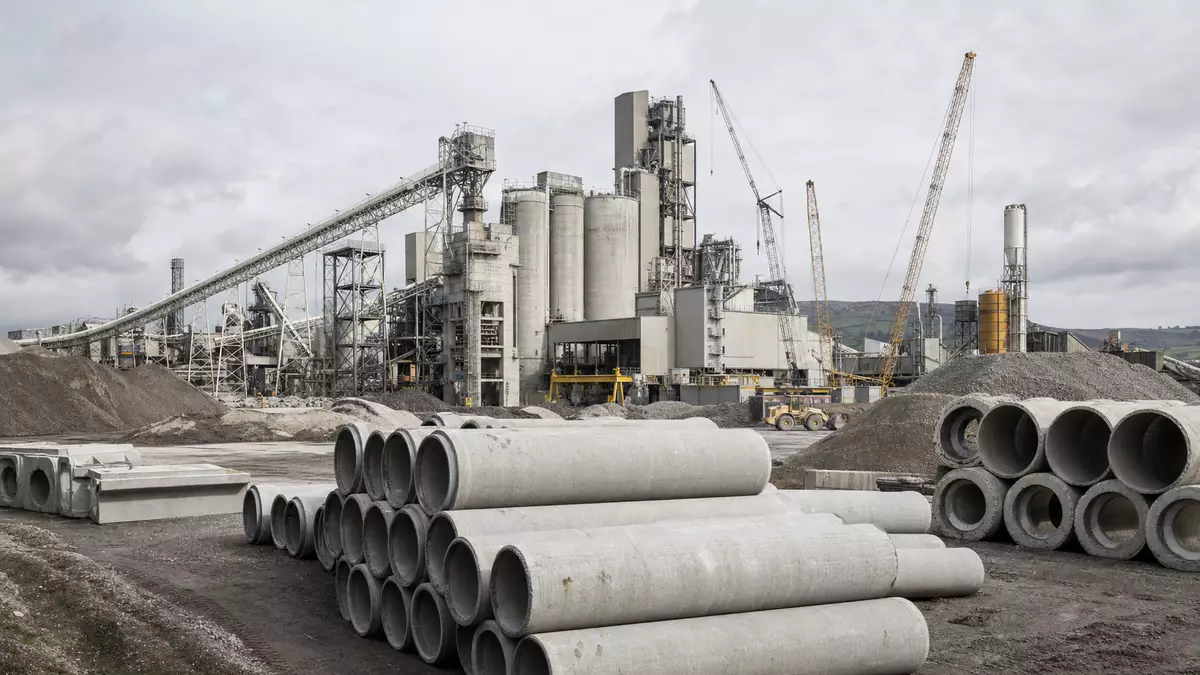
Among CRH’s many product lines, ready-mixed concrete is a prominent example of how the group participates in day-to-day construction activity. CRH supplies ready-mixed concrete to residential, commercial, and infrastructure projects across its footprint, leveraging extensive batching plant networks and logistics capabilities. In North America, the company operates hundreds of plants that can deliver customized mixes tailored to specific engineering requirements, including high-strength, low-carbon, and fast-setting formulas.
Ready-mixed concrete is central to CRH’s ability to participate in large-scale road, bridge, and building projects. The company has indicated in recent materials that volumes in this product category have grown in tandem with infrastructure programs and selective residential recovery in some regions. By integrating aggregates, cement, and logistics, CRH can capture value across the chain rather than solely as a commodities supplier. For investors evaluating CRH stock, the ready-mixed concrete business illustrates how the group’s product mix can influence margins and competitive positioning.
CRH stock price context and market positioning
CRH is listed on the New York Stock Exchange, where its shares trade in US dollars and are part of the construction materials segment on US equity indices. As of a recent market close in mid-2026, CRH stock traded in the low- to mid-$70 range, placing the company’s equity valuation in the tens of billions of dollars. At this level, the share price has been relatively close to its 52-week high, which has been in the upper-$70 region, while the 52-week low has been in the mid-$50 area. This range provides investors with a sense of how the market has reassessed CRH over the past year in light of its earnings trajectory and listing changes.
At the same recent reference date, CRH’s market capitalization stood above $40 billion, underscoring its role as a major global player in building materials. The stock’s year-to-date performance has been positive, with gains compared with the start of the year in the mid-teens percentage range, reflecting both broader sector strength and company-specific factors such as margin expansion and capital returns. Because CRH’s operations are heavily weighted toward North America, its stock is often compared with US peers, and its inclusion in widely followed US indices and sector baskets can influence demand from passive and quasi-passive investors.
For shareholders, key questions in the coming periods will include the sustainability of revenue growth in core regions, the pace of margin improvement, and the balance between investment in capacity and returns of capital through dividends and buybacks. CRH’s recent financial metrics show a company that has grown revenue and earnings while improving margins and maintaining manageable leverage, which forms a tangible basis for evaluating the risk and reward profile of CRH stock in the context of global construction and infrastructure markets.
More background on CRH’s investor story
Investors who want to explore historical results, detailed segment data, and governance information can find further material through CRH’s investor resources and regulatory filings, which provide extended context beyond headline numbers.
CRH stock key data
- Company: CRH plc
- ISIN: IE0001827041
- Ticker: NYSE: CRH
- Trading venue: New York Stock Exchange
- Price (as of 21 July 2026, 16:00 ET): 73.50 USD
- Market capitalization: 41.2 billion USD (as of 21 July 2026)
- Sector / Industry: Materials / Construction materials
- Index membership: S&P 500
- Next earnings date: 29 August 2026
Disclaimer regarding our articles: No investment advice, no buy or sell recommendation. Information on prices, companies, and markets is provided without guarantee; changes are possible at any time. Stock market transactions can lead to substantial losses. Our articles are created and reviewed in whole or in part automatically with the support of AI.