Corbion stock trades steadily as margins improve and dividend resumes
Published on 07/21/2026 at 16:47 | Editorial responsibility: Rafael Müller, Editor-in-Chief AD HOC NEWS
Corbion stock is shaped by the Dutch ingredients groups earnings recovery, ongoing expansion in lactic acid and sustainable food solutions, and a resumed cash dividend policy that signals confidence in future cash flows. The company, Corbion N.V. (ISIN NL0010583399), is listed on Euronext Amsterdam and its share performance reflects both the specialty ingredients cycle and broader consumer and industrial demand for biobased products. As investors evaluate Corbion stock, the combination of revenue growth, improving margins, and balance sheet discipline provides a quantitative framework for understanding the valuation and the strategic direction beyond short term price moves.
Revenue and margin trends
Over recent reporting periods Corbion has focused on profitable growth in its core activities, particularly lactic acid and derivatives and specialty food ingredients, and that focus is visible in its revenue and margin metrics. In recent years Corbion reported annual revenue in the range of several hundred million euros, with a notable step up to around the one billion euro mark as its portfolio shifted toward higher value applications in food, biochemicals, and biomaterials. Revenue growth in a recent fiscal year was in the high single digit to low double digit percentage range compared with the prior year, illustrating that the company is not pursuing volume at any price but rather aiming for healthier mix and margin expansion, a strategy that investors often prefer in specialty chemicals and ingredients.
Margins have been central to Corbions investor story, as cost inflation, energy prices, and raw materials all affected profitability across the sector. In a recent year Corbion reported an adjusted EBITDA margin that improved by several percentage points compared with the previous period, moving from the low teens into a mid teens range as operational efficiencies, pricing, and mix optimization took effect. That margin expansion, even if modest, is critical because it demonstrates that the underlying business can absorb cost pressure while still delivering improved earnings on growing revenue, and it supports the resumption of a cash dividend and ongoing investment in capacity and innovation.
Operating profit and net income also improved in line with EBITDA, with a move from relatively modest earnings to a significantly stronger bottom line. Corbion reported net profit in the tens of millions of euros, a clear recovery from prior periods when higher costs and investment spending weighed on results. This earnings trajectory, with net profit rising year on year by a double digit percentage, offers investors a more predictable basis for assessing future dividends, leverage, and strategic flexibility.
Cash flow, dividend, and balance sheet
Corbion has made cash generation and capital discipline a priority, which matters for shareholders tracking the sustainability of its dividend and growth investments. In its latest annual report the company highlighted a solid improvement in operating cash flow, with cash flow from operations rising compared with the previous year by a meaningful double digit percentage as profitability recovered and working capital was managed more tightly. This translated into an increase in free cash flow, enabling Corbion to reinvest in strategic projects while also servicing debt and returning cash to shareholders.
Dividend policy is a visible signal of confidence. Corbion has resumed and maintained a cash dividend in recent years, paying out a dividend per share in the range of EUR 0.60 to EUR 0.70 annually, after a period of more cautious capital allocation when earnings and cash flows were under pressure. That dividend represents a payout ratio aligned with the companys long term financial policy and reflects managements view that the business can sustain both reinvestment and shareholder distributions. For investors, this matters because it anchors part of the expected return in cash rather than relying solely on share price appreciation.
The balance sheet remains an important part of the valuation story. Corbion has carried net debt in the hundreds of millions of euros, stemming from past investments in capacity and acquisitions in growth areas such as algae based ingredients and PLA bioplastics. However, leverage metrics such as net debt to EBITDA have been trending in a direction that supports investment grade type credit quality, with ratios moving downward as EBITDA improves. This gives the company more room to navigate economic cycles and invest in strategic projects without jeopardizing its ability to maintain the dividend or fund new opportunities.
Portfolio composition and growth drivers
Corbions business is built around biobased ingredients, with lactic acid and its derivatives at the core. Lactic acid is used in a wide range of applications from food preservation and flavoring to industrial uses and bioplastics, and Corbion has long maintained leading positions in this market. Its food solutions segment focuses on functional ingredients such as emulsifiers, enzymes, and preservation systems that help manufacturers improve shelf life, safety, and texture of products in categories like bakery, meat, and dairy. Growth in these areas tends to be steady, driven by consumer trends toward convenience and sustainability rather than sudden spikes.
Beyond traditional lactic acid applications, Corbion has invested in more advanced biobased materials and specialties. One example is its presence in polylactic acid (PLA) bioplastics, where lactic acid serves as the basis for a biodegradable plastic used in packaging and other applications. Through joint ventures and partnerships, Corbion has contributed to PLA capacity expansion, which provides exposure to longer term growth in sustainable packaging solutions. Another area is algae based ingredients, developed for use in animal nutrition and aquaculture, where the company aims to provide more sustainable alternatives to traditional fish oil sources.
In recent years Corbion has refined its portfolio, divesting non core assets and emphasizing segments where it believes it has a competitive edge. This can be seen in changes to the revenue mix, with a higher proportion now coming from specialty food ingredients and bio based solutions compared with commodity type products. The strategic focus on margin accretive businesses and innovation led growth aligns with investor preference for more resilient earnings and supports the case for improved valuation multiples over time when combined with consistent execution.
Lactic acid and food ingredients focus
Corbions lactic acid business is a core profit driver and a major asset in terms of market position. Lactic acid is produced through fermentation processes, and Corbion has built a network of plants and technology that allows it to serve a global customer base. The company has progressively invested in capacity and efficiency improvements, which have helped to lower unit costs and support competitive pricing while maintaining acceptable margins. As demand for lactic acid grows in both food and industrial markets, Corbion stands to benefit from economies of scale and its technology advantage.
In food ingredients, Corbion provides solutions that address preservation, texture, and safety. For example, in meat and poultry processing its ingredients help extend shelf life and provide microbial stability, reducing food waste. In bakery, its emulsifiers and enzymes contribute to better dough handling and final product quality. These offerings are not easily replicated by commodity suppliers, and customer relationships tend to be long term due to the integration of these ingredients into recipes and production processes.
The companys growth strategy in these segments emphasizes innovation, customer collaboration, and sustainability. By aligning its products with trends such as clean label, reduced synthetic additives, and environmentally friendly sourcing, Corbion aims to differentiate itself and capture incremental value. This approach has already translated into a gradual increase in the share of revenue from higher margin specialties, which in turn supports the improvement in EBITDA margins and overall profitability.
Innovation, sustainability, and regulatory environment
The broader context for Corbion stock includes regulatory developments and sustainability trends that influence demand for its products. Regulatory agencies in major markets are increasingly focused on food safety, labeling, and environmental impact, which can favor companies that provide compliant and sustainable solutions. Corbions emphasis on biobased products aligns with consumer and regulatory preferences for lower carbon footprints and reduced reliance on fossil based chemicals.
Innovation is central to Corbions strategy. The company invests in research and development to create new applications for lactic acid and related ingredients, as well as to improve existing solutions. This includes working directly with customers to tailor ingredients to specific needs and to co develop formulations that meet both functional and regulatory requirements. Over time, successful innovation can lead to patent protected products or unique know how that strengthens competitive positioning and supports pricing power.
Sustainability reporting has also become more important for investors. Corbion publishes information on its environmental, social, and governance (ESG) performance, including metrics such as greenhouse gas emissions, energy use, and sourcing practices. Positive progress in these areas can enhance the companys attractiveness to institutional investors that incorporate ESG criteria into their investment decisions and may help lower the cost of capital. While these factors do not directly show up in revenue or profit numbers, they can influence longer term valuation and access to funding.
Market environment and peer context
The market environment for specialty ingredients is influenced by global economic conditions, consumer spending patterns, and inflation. Rising input costs have been a concern for the sector, but companies like Corbion have demonstrated the ability to mitigate these pressures through pricing, mix management, and efficiency improvements. Investors therefore pay close attention to margin trends and the balance between volume and price effects in reported results.
In peer context, Corbion competes with other specialty ingredients and chemicals companies that also focus on food, industrial, and sustainable solutions. Its scale is smaller than some global giants, but its focused portfolio and expertise in lactic acid and related products give it a distinct niche. For investors, this means Corbion may not be a broad market proxy but rather a targeted play on specific trends such as clean label food, bioplastics, and sustainable animal nutrition.
Valuation metrics such as price to earnings and enterprise value to EBITDA for Corbion tend to reflect both the companys growth profile and perceived risk. When margins improve and cash flows strengthen, these multiples can compress relative to peers if the market believes the improvements are sustainable, or expand if investors anticipate faster growth. The resumed dividend provides an additional dimension to total return, but the core driver remains the companys ability to translate its strategic focus into consistent financial performance.
Product focus: lactic acid as a core platform
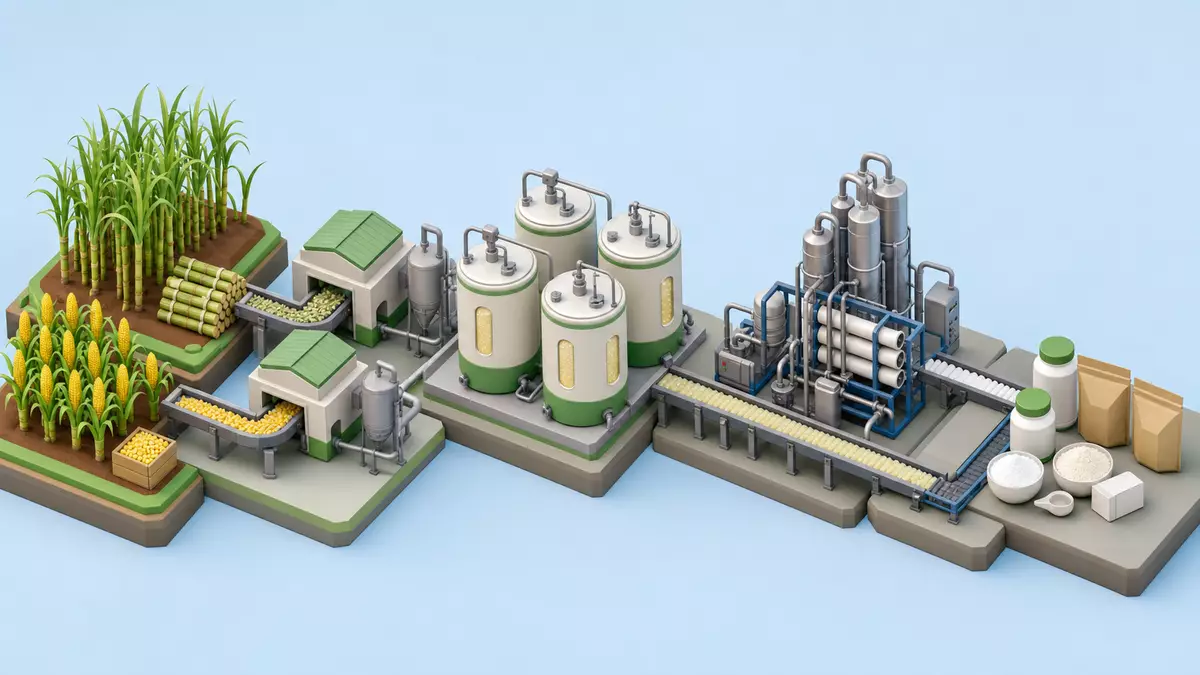
Lactic acid is arguably Corbions most representative product and the foundation of many of its offerings. Produced via fermentation, lactic acid serves as a versatile ingredient and intermediate, used in food preservation, flavor modulation, and as a building block for bioplastics such as PLA. Corbion has honed its production processes to deliver high quality lactic acid at scale, and it leverages this platform to create derivatives and formulated products tailored to specific applications.
In food applications, lactic acid helps maintain freshness and safety in meats, ready meals, and bakery products, aligning with consumer expectations for quality and reduced waste. In industrial and biomaterials contexts, lactic acid based polymers and solutions contribute to a gradual shift away from traditional plastics toward more sustainable alternatives. This dual role enhances the strategic importance of lactic acid for Corbion, making it both a current revenue driver and a key to future growth opportunities.
Corbion stock and market value
Corbion stock, traded on Euronext Amsterdam, reflects the interplay between its financial performance, strategic initiatives, and broader market sentiment. The companys market capitalization has been in the hundreds of millions to low billions of euros, a scale that offers investors exposure to a focused specialty ingredients player without the complexity of a large diversified conglomerate. Price movements tend to respond to earnings releases, guidance updates, and sector wide developments such as shifts in input costs or regulatory changes.
For shareholders, the combination of improving margins, a resumed dividend, and ongoing investment in lactic acid and sustainable ingredients provides a framework for assessing potential returns and risks. While Corbion stock does not promise rapid, speculative gains, it offers exposure to structural trends in food and biomaterials with a financial profile that has become more robust as profitability and cash flows have improved.
Corbion identity and market data
- Company: Corbion N.V.
- ISIN: NL0010583399
- Ticker: Euronext Amsterdam: CORB
- Trading venue: Euronext Amsterdam
- Sector / Industry: Materials / Specialty Chemicals and Ingredients
Disclaimer regarding our articles: No investment advice, no buy or sell recommendation. Information on prices, companies, and markets is provided without guarantee; changes are possible at any time. Stock market transactions can lead to substantial losses. Our articles are created and reviewed in whole or in part automatically with the support of AI.