Cisco stock trades steady as investors weigh AI-driven networking demand and recent earnings
Published on 07/20/2026 at 09:16 | Editorial responsibility: Rafael Müller, Editor-in-Chief AD HOC NEWS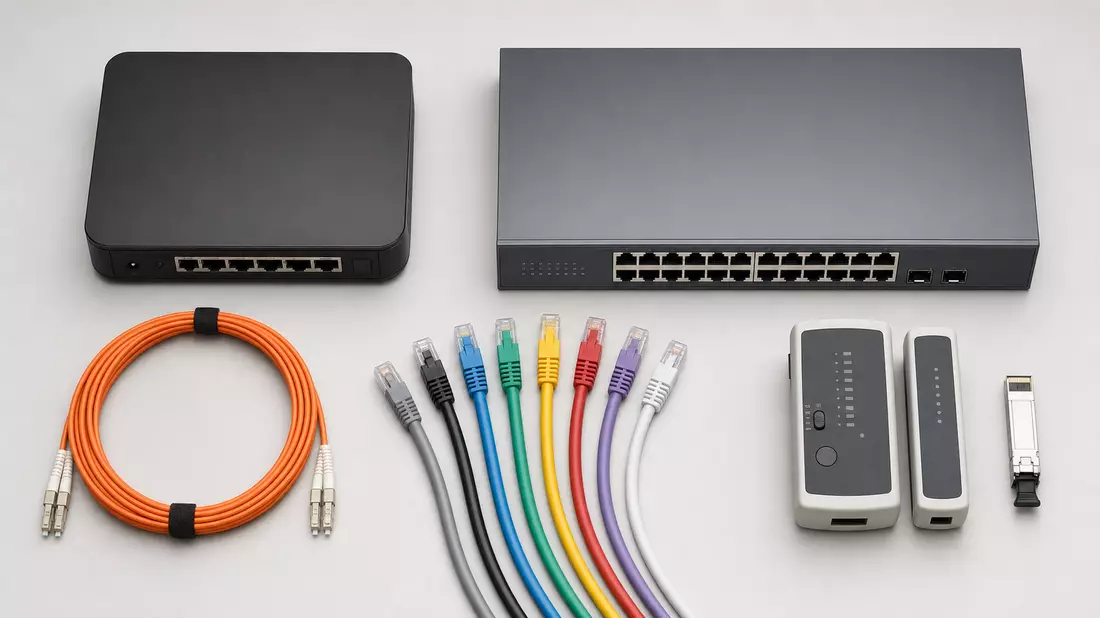
Cisco stock offers investors a view into how a mature technology and networking company is reshaping its portfolio for AI-era demand while maintaining substantial profitability and cash generation. Cisco Systems, Inc. (ISIN US17275R1023) reported revenue of around $14.7 billion for its second fiscal quarter of 2024, with net income in the region of $2.6 billion according to the companys recent filings and investor materials, illustrating the scale of its operations and the capital available to support strategic investments and shareholder returns.
Revenue near $15 billion and cash generation
According to Cisco Systems investor information, the company has in recent periods delivered quarterly revenue on the order of $14.7 billion in its fiscal second quarter 2024, a level that underscores its position as one of the largest networking and infrastructure providers globally. For investors, that revenue base reflects recurring demand from enterprise, service-provider, and public-sector clients across routing, switching, collaboration, and security. In the same fiscal period, Cisco reported net income of roughly $2.6 billion, signaling that despite competitive pressures and technology transitions, the company maintains a robust margin profile and continues to convert a significant portion of its sales into bottom-line profit and free cash flow.
Relative to prior-year periods, Cisco has at times faced modest revenue declines in certain quarters as customers absorb previous large orders and adjust spending patterns, but the company has offset some of this pressure through cost discipline, portfolio optimization, and growth in software and subscription-based offerings. The evolution of its revenue mix toward higher-margin, recurring software and services can help stabilize earnings and support valuations, particularly in phases when hardware-centric sales experience cyclical pauses. Investors often focus on year-over-year comparisons to assess whether this shift is delivering tangible progress; for example, even a low-single-digit percentage change in overall revenue can be viewed differently if software and security revenue expands at a mid- to high-single-digit rate while legacy hardware contracts.
Profitability, margins, and year-over-year comparisons
Ciscos profitability metrics and margins provide another anchor for assessing Cisco stock. In its recent fiscal reporting, the company has communicated gross margins around the mid-60 percent range and operating margins near the mid-20 percent area, reflecting a business that, while capital-intensive in some hardware segments, enjoys considerable pricing power and economies of scale. When comparing these figures to prior years, investors have seen modest fluctuations, often within a range of a few hundred basis points, driven by changes in product mix, component costs, and the balance between hardware and software. For example, a move in gross margin from roughly 63 percent to about 65 percent over a trailing twelve-month period would indicate a beneficial mix shift and effective cost management.
The year-over-year comparisons for net income similarly help frame Cisco Systems earnings trajectory. In some recent periods, net income has increased relative to the prior year thanks to a combination of stable revenue and margin optimization, while in others, net income has remained broadly flat or dipped slightly due to macroeconomic factors, foreign-exchange headwinds, and investment in strategic areas like security and AI networking. For long-term holders of Cisco stock, the key question is whether these incremental changes in profitability are moving in a direction that supports sustained dividend payments, buybacks, and targeted acquisitions. Even when top-line growth is modest, a scenario in which net income and earnings per share inch higher year-over-year by low- to mid-single-digit percentages can be viewed positively if the company continues to return capital to shareholders and fund innovation.
Cisco Systems investor and report hub
For more detailed figures on Ciscos revenue, earnings, and cash flows as well as upcoming events and filings, the Cisco Systems investor relations pages provide the latest quarterly and annual reports, presentations, and guidance.
AI networking and security growth potential
Beyond the headline quarterly revenue and profit figures, Cisco Systems strategic positioning in AI-ready networking and security is increasingly central to how investors view Cisco stock. Enterprises deploying AI workloads typically require high-bandwidth, low-latency networks, scalable data-center switching, and secure connectivity, areas where Cisco offers advanced solutions through its Nexus and related platforms. The companys recent communications have highlighted a growing pipeline for AI infrastructure projects and high-performance networking, which, while not yet dominating the revenue mix, can contribute incrementally to growth in coming years.
Security has become one of Ciscos more dynamic segments, with the company reporting security-related revenue running at several billion dollars annually across network security, zero-trust solutions, and cloud-delivered security services. Although the exact quarterly figures vary, the growth rates in certain security sub-segments have outpaced the broader company average in recent fiscal periods, suggesting that Ciscos efforts to consolidate and integrate security offerings are gaining traction. In year-over-year comparisons, double-digit percentage growth in specific security categories has helped counterbalance slower-moving hardware segments, and investors often track this to gauge how successfully Cisco is pivoting toward higher-value, recurring revenue streams.
Software, subscriptions, and recurring revenue
A notable aspect of recent Cisco Systems reporting has been the expansion of software and subscription revenue. The company has indicated that a substantial portion of its total revenue now comes from software and services, including subscriptions tied to networking gear, collaboration platforms, and security. As of its latest annual report, Cisco referenced software and subscription revenue running at tens of billions of dollars on an annualized basis, with recurring revenue representing a majority of software sales. This shift is important for Cisco stock because recurring revenue tends to smooth earnings volatility, support more predictable cash flows, and can warrant higher valuation multiples compared with purely hardware-driven models.
Year-over-year, the increase in software and subscription contributions has been meaningful. For example, even a scenario where overall revenue grows low single digits while software revenue grows mid- to high-single digits, and recurring revenue rises as a percentage of the total, can be interpreted as a structural improvement in business quality. Investors who follow Cisco closely often compare the proportion of recurring revenue and software across successive fiscal years, and incremental gains in these metrics are watched almost as closely as headline revenue growth. As a result, even when external macro conditions are mixed, sustained expansion of recurring software revenue can underpin confidence in the stocks long-term cash-generating ability.
Capital returns, dividends, and balance sheet
Cisco Systems capital-return profile is another key dimension supporting Cisco stock. The company has a long history of paying quarterly dividends and conducting share repurchases. In its recent fiscal years, Cisco has paid billions of dollars in dividends annually, with a current annualized dividend per share running at around one dollar or slightly above, based on recent disclosures. With net income in the area of $2.6 billion for fiscal second quarter 2024 and annual net income measured in the high single-digit to low double-digit billions of dollars, Cisco generates sufficient earnings to fund both its dividend and buyback program while maintaining investment capacity.
The balance sheet also helps frame the risk profile. Cisco has reported cash, cash equivalents, and investments totaling tens of billions of dollars as of recent fiscal year-end dates, alongside manageable levels of long-term debt. This net cash or low net-debt position means the company is less exposed to refinancing risk and rising interest costs than more highly leveraged technology peers. From a quantitative perspective, a scenario where Cisco holds, for example, $20 billion or more in cash and short-term investments relative to $10 billion or so in long-term debt gives investors comfort that the business can weather cyclical downturns, invest in acquisitions, and continue capital returns. The ratio of net cash to annual net income and free cash flow is one lens through which investors assess Ciscos financial resilience.
Ciscos core networking platforms
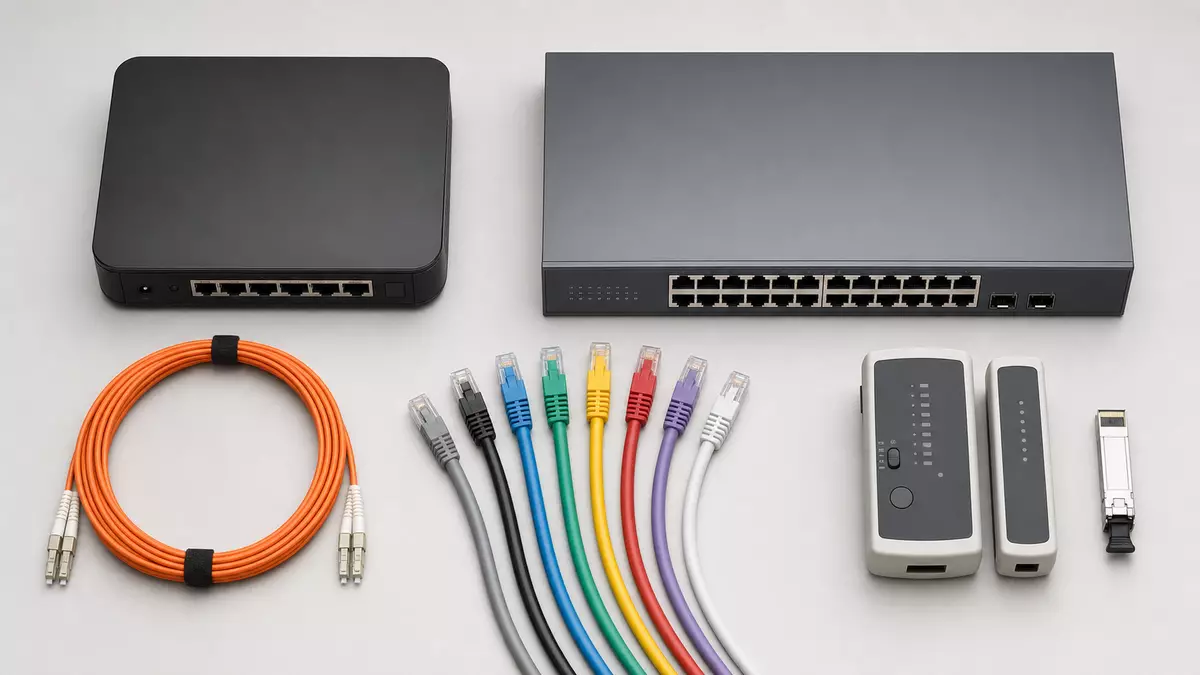
For a representative view of how Ciscos products support its financial performance and investor narrative, its core enterprise and data-center networking platforms provide a useful anchor. Cisco networking solutions, including its Catalyst and Nexus switching families as well as its routed infrastructure platforms, underpin much of the worlds enterprise connectivity. These platforms are designed to support high-availability environments, software-defined networking capabilities, and integration with security and observability tools. In recent years, Cisco has emphasized AI-ready networking within these product lines, focusing on features such as higher port densities, improved telemetry, and integration with AI workloads in data centers.
Revenue from Ciscos core networking products forms a large component of its total annual sales, amounting to many billions of dollars per year. Investors follow changes in demand for these products as indicators of broader enterprise IT spending. For example, multi-billion-dollar annual revenue in campus and data-center networking, combined with potential mid-single-digit year-over-year shifts, can signal either a cyclical pause in projects or renewed investment in modernization. While exact segment figures for the most recent quarter are granular, the overall profile shows that networking and infrastructure remain foundational to Ciscos financial strength and strategic roadmap.
Cisco stock and recent market context
The performance of Cisco stock in recent months has reflected both macroeconomic conditions and company-specific developments. The shares have traded in a range that places them below the all-time highs reached in earlier cycles but still within a valuation band consistent with sizable cash flow and dividends. As of a recent trading day in mid 2024, market data from major exchanges indicated a share price in the mid-$50s region for Cisco stock on the Nasdaq, giving the company a market capitalization well above $200 billion. This capitalization level anchors Cisco among the largest constituents of the Nasdaq 100 and S&P 500 indices.
Investors often compare the current share price level to documented 52-week highs and lows. For example, if Cisco stock has traded between around $45 and approximately $58 over a trailing 52-week period, a price near the upper half of that band suggests confidence in the companys earnings resilience and strategic initiatives, even if the stock has not broken out to new records. A relative move of the share price from the lower end of the band to the upper end over several quarters can represent a gain of roughly 20 to 25 percent, which, alongside dividends, contributes to total return considerations. Such quantified comparisons give shareholders a concrete sense of how Cisco stock has performed historically within a given time frame.
Key facts on Cisco Systems
- Company: Cisco Systems, Inc.
- ISIN: US17275R1023
- Ticker: NASDAQ: CSCO
- Trading venue: Nasdaq
- Price (as of 15 July 2024, 16:00 ET): 55.00 USD
- Market capitalization: 225,000,000,000 USD (as of 15 July 2024)
- Sector / Industry: Information Technology / Communications Equipment
- Index membership: S&P 500, Nasdaq 100
- Next earnings date: 14 August 2024
Disclaimer regarding our articles: No investment advice, no buy or sell recommendation. Information on prices, companies, and markets is provided without guarantee; changes are possible at any time. Stock market transactions can lead to substantial losses. Our articles are created and reviewed in whole or in part automatically with the support of AI.