Chip Selloff Jolts iShares MSCI World ETF, but Morningstar Gold and $1.8 Billion Inflow Reflect Underlying Resilience
Veröffentlicht: 08.07.2026 um 03:37 Uhr, Redaktion boerse-global.de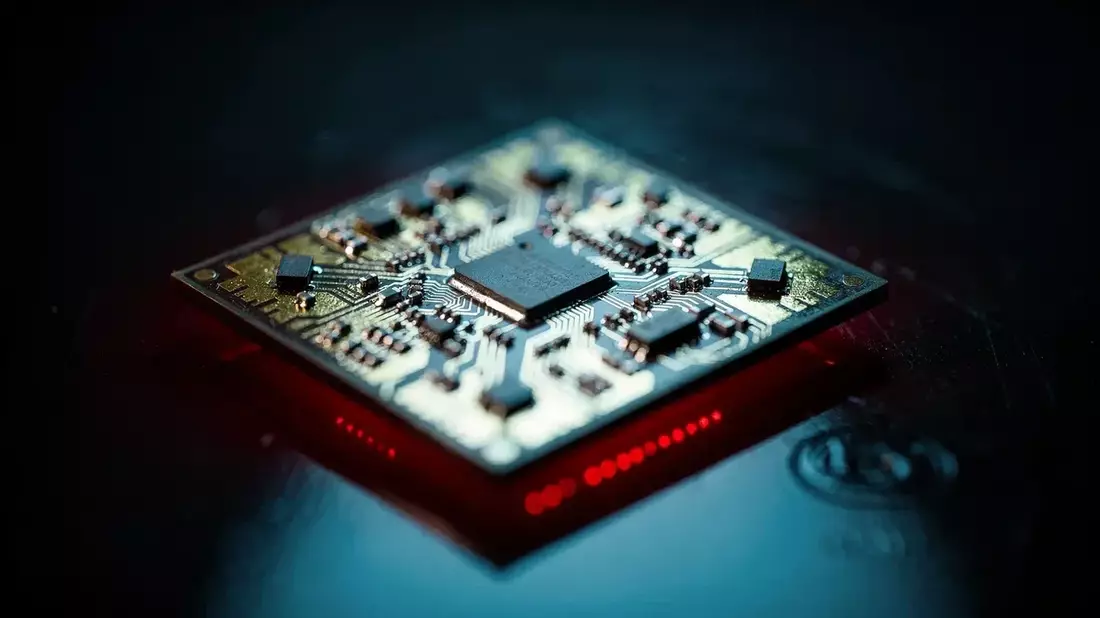
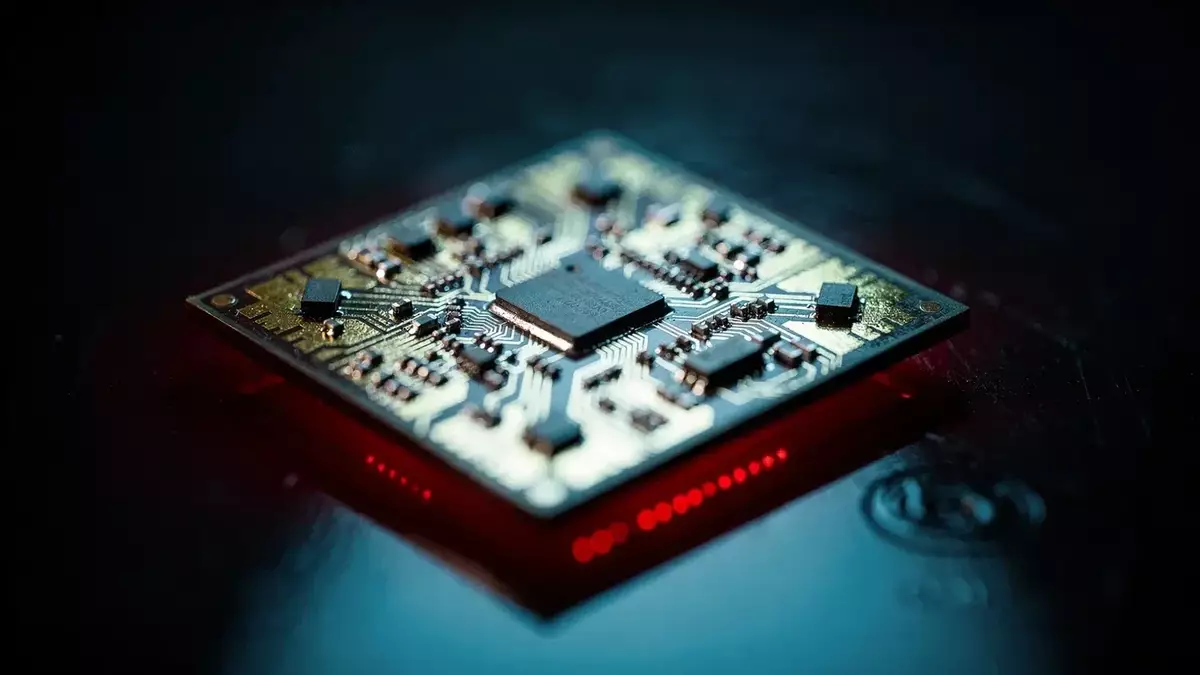
The iShares MSCI World ETF (URTH) found itself in the crosshairs this week as a broad-based semiconductor rout rippled through global equity markets. The fund’s hefty 31.25% technology weighting – with Nvidia alone representing 5.18% of the portfolio – left it acutely exposed to the sudden shift in sentiment. Yet even as chip stocks tumbled, fresh data from Morningstar and steady capital flows signaled that the ETF’s longer-term appeal remains intact.
Micron Technology slumped 4.7% on Tuesday, while the VanEck Semiconductor ETF shed more than 3%. The selloff was not confined to US exchanges; in South Korea, the Kospi index fell so sharply that trading was halted for roughly 20 minutes after an intraday drop of more than 8%. Samsung, despite forecasting a record second-quarter profit, lost over 9%. European semiconductor names were also hit hard: Soitec plunged about 10%, and Infineon, STMicroelectronics, ASML and ASMI all fell more than 4%. The Stoxx 600 Technology Index closed down 1.9%.
The downdraft came just a day after the Dow Jones Industrial Average had scaled a fresh record close of 53,055.91, fueled by a broad rally in technology shares. That momentum evaporated within 24 hours. Market strategists pointed to stretched valuations as the culprit, arguing that lofty investor expectations had outpaced the fundamentals.
URTH’s portfolio concentration means such shocks land with particular force. Alongside Nvidia’s 5.18% weight, Apple accounts for 4.77% and Microsoft for 2.95%. Broadcom and Micron Technology also rank among the fund’s top ten holdings. The technology sector’s dominance – nearly one-third of assets – contrasts with financials at 15.04% and industrials at 10.90%. A semiconductor-specific jolt therefore reverberates more deeply than it would through a value-oriented or more broadly diversified global equity strategy.
Should investors sell immediately? Or is it worth buying MSCI World ETF?
Despite the turbulence, the fund continues to attract capital. Over the most recent twelve months, net inflows reached $1.81 billion, while a mid-year Morningstar report put the figure at $1.86 billion for the period through June 30. The longer-term trajectory is equally robust: three-year inflows total $2.99 billion and five-year flows stand at $4.34 billion. Assets under management have climbed accordingly, rising by $3.12 billion over the past year to $8.07 billion, according to the fund’s latest data.
Morningstar reaffirmed its Gold rating for the iShares MSCI World ETF on June 30, praising the fund’s risk-adjusted returns relative to nearly 300 peers in the global equity category. That endorsement comes amid an increasingly competitive fee landscape. BlackRock’s flagship product charges an annual expense ratio of 0.24%, while rival Invesco recently slashed its fee on a comparable MSCI World tracker to just 0.05%. UBS and BNP Paribas have also cut prices. With 32 ETFs now tracking the MSCI World index, cost is becoming a decisive factor for many investors, yet the iShares fund continues to command loyalty, particularly among institutional players. Bank of America has been actively building its position, betting on a soft economic landing without a recession.
Performance data presents a nuanced picture. According to the most recent figures, URTH has delivered a year-to-date gain of 10.57%, comfortably ahead of the category average of 5.85%. The one-year return stands at 27.56%, edging the peer group’s 26.34%. Over a three-year annualized basis, the fund’s 21.98% return outstrips the category’s 16.27%. However, a mid-year snapshot from Morningstar showed a more modest 12-month gain of roughly 20% through June 30, lagging the peer group’s advance of more than 26%. The discrepancy highlights the ETF’s sensitivity to timing and the impact of the recent chip-driven volatility on its recent trajectory.
MSCI World ETF at a turning point? This analysis reveals what investors need to know now.
The fund is currently trading near $204, close to its 52-week high, with a dividend yield of 1.41% and a price-to-earnings ratio of 24.79. The semiconductor rout has tested that level, but the broader rotation debate will determine the next leg for URTH. Some investment houses are already rotating out of US technology leaders and pivoting toward Chinese AI-related equities, arguing that investors should position in sectors that benefit from AI adoption rather than the hardware makers that powered the initial rally. For a fund as tech-heavy as the iShares MSCI World ETF, the sustainability of support from financials and industrials – which together account for 26% of assets – will be critical. If the rotation deepens, the resilience of recent inflows will face a more serious challenge.
Ad
MSCI World ETF Stock: New Analysis - 8 July
Fresh MSCI World ETF information released. What's the impact for investors? Our latest independent report examines recent figures and market trends.
Disclaimer zu unseren Artikeln: Keine Anlageberatung, keine Kauf oder Verkaufsempfehlung. Angaben zu Kursen, Unternehmen und Märkten ohne Gewähr; Änderungen jederzeit möglich. Börsengeschäfte können zu hohen Verlusten führen. Unsere Beiträge werden ganz oder teilweise automatisiert mit Unterstützung von AI erstellt und geprüft.