China Lithium Futures Open to Foreign Traders as Vulcan Energy's Tech Deal Adds Validation – Stock Ignores Both
Veröffentlicht: 04.07.2026 um 14:02 Uhr, Redaktion boerse-global.de
The Guangzhou Futures Exchange has thrown open its lithium derivative market to international participants, a shift that could reshape global price discovery for the battery metal. In May alone, the bourse saw 6.3 million contracts change hands — a staggering volume that dwarfs the Chicago Mercantile Exchange’s tally of just over a thousand for the same period. London, meanwhile, recorded zero trades. Foreign dealers can now trade yuan-denominated lithium carbonate futures and options, posting US dollars as collateral subject to a 5% discount.
For Vulcan Energy, the operator of Germany’s flagship Lionheart lithium project, the structural change in China’s market amounts to a useful tailwind for the broader industry, yet the company’s shares remain stubbornly anchored near their floor. At Friday’s close the stock stood at €1.88, a marginal weekly gain of just over 1%. The longer-term picture is far more punishing: the equity has shed roughly 21% over the past month and 28% since the start of the year.
What has drawn the attention of analysts, however, is a technology validation that arrived from Bolivia. Vulcan has sold its A-DLE pilot plant PP4 to EAU Lithium, a subsidiary of Cosmos Exploration, after successful acceptance tests. The deal marks the first deployment of Vulcan’s direct lithium extraction technology — the VULSORB process — in a South American project. Market watchers view the transaction as more than a simple sale; it provides third-party endorsement of the company’s proprietary extraction method and helps reduce technology risk through know-how transfer and training.
Should investors sell immediately? Or is it worth buying Vulcan Energy?
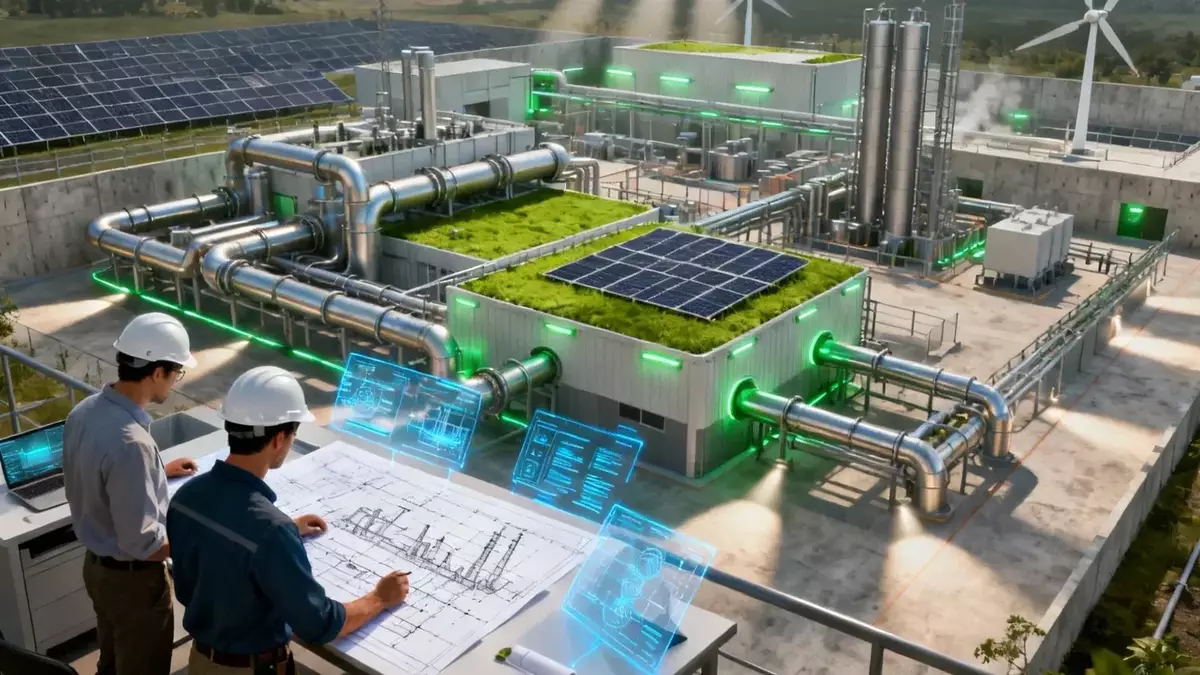
The timing is notable because while the PP4 sale bolsters the credibility of Vulcan’s DLE platform, the company’s core focus remains the Lionheart development in the Upper Rhine Valley. A €2.2 billion financing package reached financial close at the end of May, following a positive final investment decision taken last December. Construction is now under way on an integrated facility that combines lithium extraction with renewable energy generation. The central lithium chemicals plant in Frankfurt-Höchst will be flanked by upstream extraction units. At full capacity, the complex is designed to produce 24,000 tonnes of lithium hydroxide monohydrate per year — enough for roughly 500,000 electric-vehicle batteries — and over a planned 30-year operating life it will also deliver 275 gigawatt-hours of electricity and 560 gigawatt-hours of heat annually to the region.
Operational progress, however, has yet to translate into buying interest. The stock closed well below both its 50-day moving average of €2.16 and its 200-day average of €2.60. The distance from the latter stands at around 28%. The 52-week high of €3.98, set in October 2025, is now more than 52% above the current price. By contrast, the gap to the 52-week low of €1.77, touched at the end of March 2026, is only 6.27%. The relative strength index of 39.9 suggests neither oversold nor overbought conditions, while an annualised 30-day volatility of 57.5% underlines the extreme price swings that continue to unsettle holders.
With China’s lithium market opening providing a macro boost for the sector, and the Bolivia deal offering micro-level validation, investors are now looking for tangible construction milestones at Lionheart to justify a break from the current downtrend. Until such deliverables appear, the shares seem likely to remain trapped in the shadow of their recent lows.
Ad
Vulcan Energy Stock: New Analysis - 4 July
Fresh Vulcan Energy information released. What's the impact for investors? Our latest independent report examines recent figures and market trends.
Disclaimer zu unseren Artikeln: Keine Anlageberatung, keine Kauf oder Verkaufsempfehlung. Angaben zu Kursen, Unternehmen und Märkten ohne Gewähr; Änderungen jederzeit möglich. Börsengeschäfte können zu hohen Verlusten führen. Unsere Beiträge werden ganz oder teilweise automatisiert mit Unterstützung von AI erstellt und geprüft.