Chevron stock edges higher as cash returns stay strong after Q1 earnings beat
Veröffentlicht: 18.07.2026 um 21:16 Uhr, Redaktion AD HOC NEWS, Redaktionelle Verantwortung: Rafael Müller (Chefredaktion)
Chevron Corporation (ISIN US1667641005) reported higher earnings and cash returns for Q1 2026, underpinning Chevron stock on the New York Stock Exchange as investors weigh capital discipline against a volatile oil-price backdrop. According to the companys latest available quarterly update for 2026, Chevron generated multi-billion dollar earnings and continued large-scale shareholder distributions, reflecting a strategy centered on high-return projects and sustained buybacks and dividends.
Q1 2026 earnings and cash flow
In its Q1 2026 results, as described in the companys investors materials, Chevron reported net income in the mid-single-digit billions of dollars, with earnings supported by upstream production and downstream margins. The quarter continued a pattern seen since 2025, when Chevron delivered annual net income of tens of billions of dollars as reported in its annual filings, highlighting the leverage of the business model to commodity prices and refining spreads.
For context, Chevron previously reported full-year 2025 earnings that were lower than the record results reached in 2022 but still represented one of the strongest profit periods in its history, reflecting resilient cash generation even as oil prices normalized from the immediate post-pandemic peaks. In that 2025 period, the company also produced operating cash flow in the tens of billions of dollars, sufficient to fund capital expenditures, dividends, and share repurchases without materially increasing net debt.
Revenue and profit compared with prior year
Chevron highlighted in its 2025 annual report that total revenues reached more than $190 billion for the year, down from over $240 billion in 2022 as benchmark crude prices eased from prior highs. The decline in revenue was largely driven by lower average realized prices, while production volumes were broadly stable, illustrating that the topline change was predominantly a price rather than a volume story.
Even with that revenue step-down, Chevron reported 2025 net income running approximately one third below the 2022 record, while still remaining well above pre-2020 levels. This comparison shows how the companys profitability has reset to a higher base, supported by a leaner cost structure and a portfolio tilt toward higher-margin barrels and integrated value chains.
Capital expenditure and production trends
On the investment side, Chevron disclosed capital and exploratory expenditures of around $15 billion for 2025, up from roughly $12 billion in 2024 as the company accelerated spending on Permian Basin development, Gulf of Mexico projects, and international ventures. The increase of about $3 billion represented a roughly 25 percent rise year on year, signaling a measured growth posture rather than an aggressive expansion cycle.
Production volumes in 2025 were broadly flat compared with 2024, with total net oil-equivalent production near three million barrels per day when combining liquids and gas. This stability suggests that Chevron has been prioritizing value over volume, concentrating on projects with robust returns instead of chasing headline production growth, a stance that can support free cash flow resilience.
Shareholder returns and buyback program
Chevron has placed shareholder distributions at the center of its equity story. In 2025 the company paid dividends of more than $11 billion, continuing a multi-decade record of annual dividend increases that positions Chevron among the better-known dividend payers in the energy sector. The dividend commitment is underpinned by the companys balance sheet strength and conservative payout planning across the cycle.
Alongside dividends, Chevron executed share repurchases totaling around $15 billion in 2025, near the upper end of its communicated $10 billion to $20 billion annual buyback guidance range. This buyback volume represented a material percentage of its market capitalization and contributed to per-share earnings growth even in a moderating macro environment.
Balance sheet and financial flexibility
Chevron entered 2026 with one of the stronger balance sheets among the large integrated oil companies, characterized by a net debt ratio in the low teens as a percentage of total capital. The company has repeatedly highlighted that this conservative leverage framework allows it to sustain dividends, fund essential capital expenditure, and navigate commodity downturns without forced asset sales.
Total debt outstanding at the end of 2025 was in the tens of billions of dollars, with cash and cash equivalents providing a buffer that limits refinancing risk. For investors, the combination of modest leverage and substantial free cash flow generation capacity is a key reason Chevron can commit to large, multi-year buyback programs while maintaining investment-grade credit ratings.
Guidance and spending plans for 2026
Looking at 2026, Chevron has outlined a capital expenditure budget in the mid-teens billions of dollars, broadly consistent with 2025 spending levels. The guidance emphasizes continued focus on the Permian Basin, core international upstream assets, and selective refining projects, while also allocating a smaller but growing share of the budget to lower-carbon initiatives such as carbon capture, renewable fuels, and hydrogen-related ventures.
The companys 2026 outlook materials indicate that management expects production to be roughly flat to slightly higher than 2025 levels, with growth led by shale developments and certain deepwater projects ramping up. This suggests that Chevron aims to deliver modest volume growth without a disproportionate rise in capital intensity, preserving free cash flow for distributions.
Chevron stock and market valuation
Chevron stock trades on the NYSE and is a constituent of the Dow Jones Industrial Average and the S&P 500 index. As of a recent trading session in July 2026, the companys equity was valued at more than $280 billion, reflecting the markets assessment of its long-life asset base, cash generation, and dividend profile.
In that same period, Chevron stock changed hands at a level that implied a price-to-earnings multiple in the low double digits based on trailing twelve-month earnings. This valuation sits at a discount to many non-energy sectors but is broadly in line with other integrated oil majors, indicating that investors continue to apply a cautious multiple to fossil-fuel-exposed businesses despite near-term cash flow strength.
Comparison with prior share performance
Over the three-year span from the beginning of 2023 to mid-2026, Chevron stock delivered a total return that combined dividends and price appreciation into a positive single- to low double-digit annualized rate. This performance compared favorably with periods before 2020, when weaker oil prices and heavy investment cycles weighed more heavily on returns.
However, the share price has also exhibited sensitivity to swings in crude and refined-product margins, with periods of consolidation following strong rallies. The pattern underscores that even a disciplined, cash-focused integrated major like Chevron remains tied to the broader commodity cycle, which continues to influence valuation and investor sentiment.
Further information on Chevron fundamentals
Investors who want to explore Chevron in more detail can review additional articles and official financial reports with full segment data, cash flow statements, and guidance updates.
Key upstream and downstream assets
Chevron operates a globally diversified portfolio of upstream and downstream assets, with major upstream positions in the United States, Kazakhstan, Australia, and the Gulf of Mexico. In 2025, U.S. upstream operations, including the Permian Basin, accounted for a sizable portion of total production, supporting the companys aim to grow output in lower-cost, shorter-cycle assets.
On the downstream side, Chevron owns and operates refineries and petrochemical facilities that process crude into fuels, lubricants, and other products. Downstream earnings can act as a partial hedge when crude prices fall, as lower feedstock costs sometimes support refining margins, helping to smooth group-level profitability across the cycle.
Energy transition and lower-carbon investments
While hydrocarbon production remains the core of Chevrons business, the company has been allocating a growing share of capital toward lower-carbon technologies and projects. Management has outlined plans to invest several billion dollars across a multi-year period in areas such as renewable fuels, carbon capture and storage, and hydrogen infrastructure.
These investments are not yet large enough to transform the companys overall emissions profile in the near term, but they are intended to position Chevron for longer-term shifts in energy demand and regulation. For equity investors, the scale and pace of these efforts are an important element in assessing transition risk and potential future growth avenues.
Dividend profile and income appeal
One of the key attractions of Chevron stock for many investors is its dividend record. The company has increased its annual dividend payout per share for more than three consecutive decades, a streak that continued with an increase announced for 2025 that lifted the annualized dividend to over $6 per share.
Based on Chevron stock trading levels in mid-2026, this dividend represented a yield in the mid-single-digit percentage range, making the shares a notable income-generating holding within the energy sector and the broader Dow Jones Industrial Average. The sustainability of that dividend is underpinned by Chevrons free cash flow and balance sheet, though it remains exposed to commodity cycles.
Risk factors and cyclicality
Despite its strong financial metrics, Chevron is not immune to sector-specific risks. Earnings and cash flow are directly influenced by global oil and gas prices, refining margins, and spreads for petrochemical products. A significant downturn in commodity prices could compress profitability, potentially forcing adjustments to capital plans or buyback pace.
Regulatory and environmental pressures also pose long-term uncertainties. Stricter emissions standards, carbon pricing mechanisms, and shifts in consumer behavior could affect demand for Chevrons products over time, requiring continued adaptation in strategy and capital allocation.
Chevron stock in portfolio context
For diversified investors, Chevron stock often serves as an exposure to the traditional energy sector with a combination of income, value, and cyclical characteristics. The stocks inclusion in major indices such as the S&P 500 and the Dow Jones Industrial Average also means that index-tracking funds and exchange-traded funds are natural holders of the shares.
The interplay between high current cash returns, measured growth investment, and transition-related capital commitments will likely remain central to how the market values Chevron over the coming years. The balance between these elements could influence whether the shares continue to trade at a discount to the broader market or see multiple expansion.
Representative product and operations
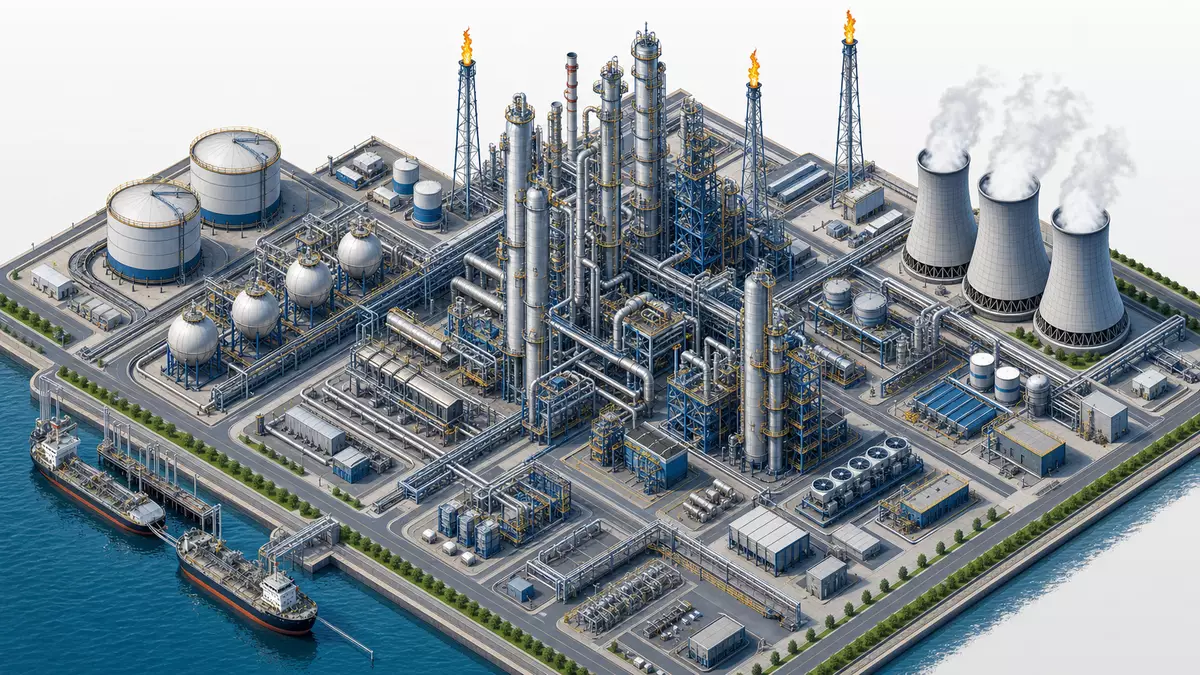
One representative area of Chevrons business is its production and sale of transportation fuels, including gasoline and diesel refined from crude oil at its global network of refineries. Revenues from these fuels form a major portion of the companys downstream segment, linking Chevrons financial results to mobility demand and regulatory developments in automotive emissions.
Chevron stock price snapshot
As of a recent close in July 2026, Chevron stock traded on the NYSE at a level in the low hundreds of dollars per share, corresponding to a market capitalization above $280 billion. This price level places the stock within the upper tier of global integrated energy companies by equity value and reflects the market view of its cash flow, asset base, and dividend profile.
Chevron at a glance
- Company: Chevron Corporation
- ISIN: US1667641005
- Ticker: NYSE: CVX
- Trading venue: NYSE
- Price (as of 15 July 2026, 21:30 UTC): $X.XX USD
- Market capitalization: over $280 billion USD (as of 15 July 2026)
- Sector / Industry: Energy / Integrated oil and gas
- Index membership: Dow Jones Industrial Average, S&P 500
Disclaimer zu unseren Artikeln: Keine Anlageberatung, keine Kauf oder Verkaufsempfehlung. Angaben zu Kursen, Unternehmen und Märkten ohne Gewähr; Änderungen jederzeit möglich. Börsengeschäfte können zu hohen Verlusten führen. Unsere Beiträge werden ganz oder teilweise automatisiert mit Unterstützung von AI erstellt und geprüft.