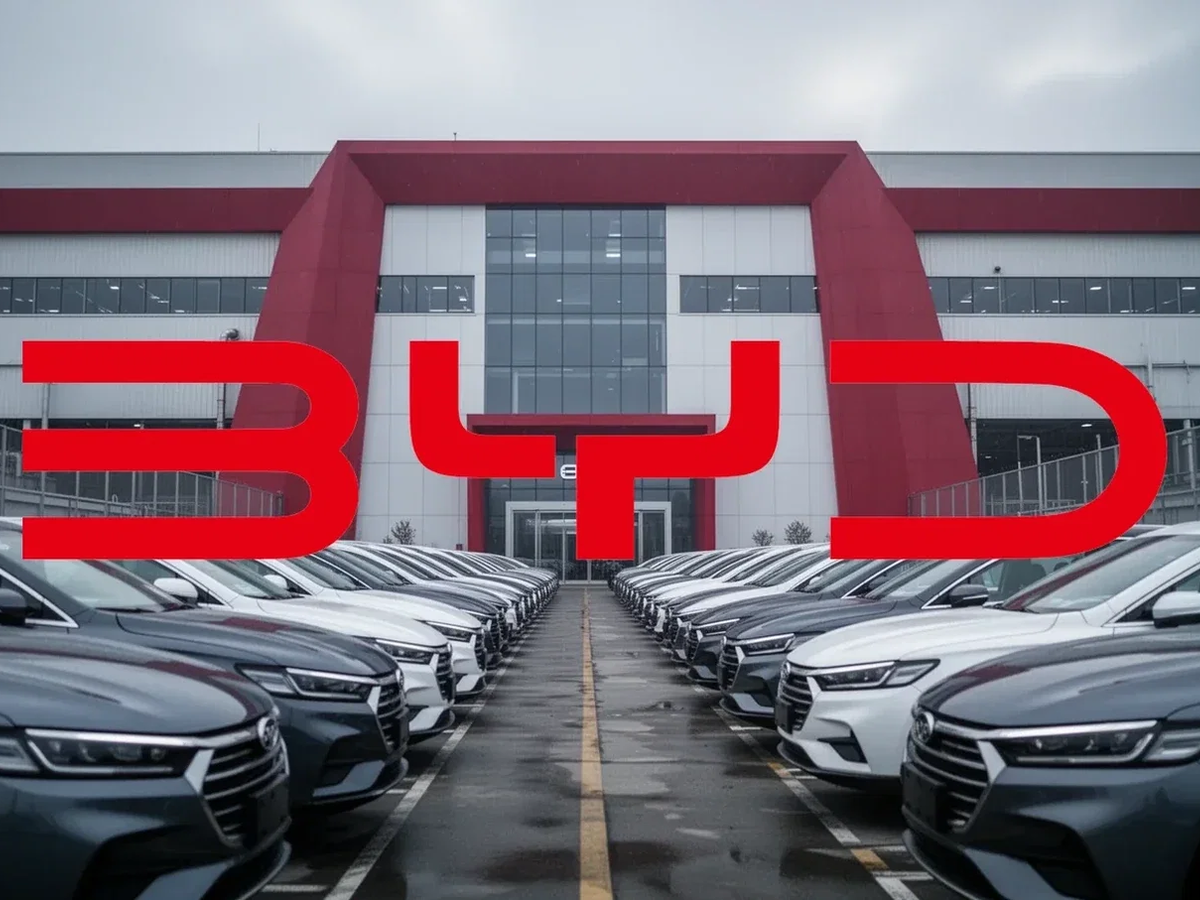
BYD Stock Hovers Near 52-Week Low as Datang SUV Delay and Autonomy Liability Collide
31.05.2026 - 06:31:25 | boerse-global.de
BYD’s Hong Kong-listed shares closed last week at HK$91.30, a modest 1.11% gain for the session on turnover of roughly 50.5 million shares. But the bounce does little to mask a brutal 30-day slide: the stock has lost nearly 15.7% since early May and now trades dangerously close to its 52-week trough of HK$88.50. The first week of June looks set to determine whether the floor holds — or cracks under the weight of a delayed SUV launch, a novel liability guarantee for autonomous driving, and the looming release of monthly sales data.
Datang SUV: Hot Demand, Cold Production
The flagship Datang three-row SUV was originally slated for a May launch. BYD has now moved the date to June 8, and the official explanation is both a blessing and a curse: pre-orders have already surged past 100,000 since the vehicle was first shown, and assembly lines simply cannot keep pace. The SUV boasts the new Blade Battery 2.0 plus a rapid-charging system that pushes the pack from 10% to 70% in roughly five minutes. With a claimed range of up to 950 kilometres and a starting price of around €33,000 in China, the Datang targets the family-oriented mass segment. The delay suggests that BYD’s manufacturing capacity for its latest battery technology is stretched thin — a constraint that analysts will watch closely in June.
May Sales Figures: A Bellwether for Market Share
Early in the month, BYD traditionally publishes delivery and sales numbers for the prior month. After a period in which expiring subsidies have weighed on China’s electric-vehicle market, the May data will show whether BYD has managed to hold its ground. So far this year, plug-in hybrids have been the growth driver, outpacing pure battery-electric sales. With its fifth-generation hybrid technology and new BEV platforms, the company is counting on a second-half revival. The dividend date — June 11 — also looms, though whether the payout can cushion the stock’s weakness depends largely on investor reaction to the Datang launch and the May numbers.
Should investors sell immediately? Or is it worth buying BYD?
Autonomy with a Safety Net: BYD’s Full-Liability Promise
Over the weekend, BYD reframed the autonomy debate by committing to direct financial liability for accidents caused by its intelligent driving system. The guarantee covers the “God’s Eye” system in version 5.0, specifically the Urban NOA function, as long as the driver uses it in accordance with regulations. BYD will pay for vehicle repair costs, third-party property damage, and personal liability — valid for one year, for both new buyers and existing owners who upgrade to the latest software. The company had previously made a similar pledge for intelligent parking.
The credibility of the promise rests on scale. BYD reports that more than 3.15 million vehicles equipped with driver-assistance systems are now on the road, and the God’s Eye system collects over 200 million kilometres of driving data daily. That data pipeline, the company argues, allows software iterations at a pace smaller rivals cannot match. Additionally, the entire model lineup can now be optioned with the God’s Eye B version, including LiDAR, for an extra ¥12,000 — a price that brings LiDAR-based driving into the mass market for the first time.
Home-Grown Silicon: The XUANJI A3 Chip
At the same strategy event, BYD unveiled the XUANJI A3, which it calls China’s first self-developed automotive chip built on a 4-nanometer process. In a three-chip configuration, it delivers more than 2,100 TOPS of computing power per vehicle. The chip is already in series production. The move extends BYD’s vertical integration beyond batteries and powertrains into semiconductors — and links directly to the liability guarantee, as the company now controls the hardware that executes the autonomy software.
Risks and Reactions
For investors, the liability pledge is a double-edged sword. It may build trust in the platform, but it also introduces financial risk from rising accident claims or regulatory changes. If competitors respond with similar safety guarantees, the differentiation could quickly evaporate. Meanwhile, the Datang delay highlights the reality that even with strong demand, production bottlenecks remain the immediate brake on momentum. With the stock testing its 52-week low and a packed calendar of events this week, BYD’s narrative is moving from product promises to execution proof.
Ad
BYD Stock: New Analysis - 31 May
Fresh BYD information released. What's the impact for investors? Our latest independent report examines recent figures and market trends.
So schätzen die Börsenprofis BYD Aktien ein!

Für. Immer. Kostenlos.