Bucher stock trades steady as margins hold up on recent revenue growth
Published on 07/24/2026 at 07:13 | Editorial responsibility: Rafael Müller, Editor-in-Chief AD HOC NEWS
Bucher Industries AG (ISIN CH0002432174) is a Swiss-based industrial machinery group whose Bucher stock offers investors exposure to agricultural equipment, municipal vehicles, hydraulics and glass container machinery. In recent reporting periods, the company has combined revenue growth with resilient margins, and the share price has reflected that operating profile through a solid market capitalization on the Swiss market. The stock performance over the latest twelve-month span has been shaped by demand trends in farming and municipal equipment, currency effects in Bucher’s main markets and the group’s ability to translate its order backlog into sales and cash flow.
Revenue up in recent fiscal year
In its most recent full fiscal year, Bucher Industries reported group revenue in the low single-digit billion Swiss franc range, illustrating the scale of the company’s diversified industrial portfolio. The reported revenue for that year was higher than in the previous fiscal year, marking a year-on-year increase in sales that underscored demand for the company’s machinery and equipment solutions. The revenue progression typically reflects both organic growth and acquisition effects, with core divisions such as agricultural machinery and municipal vehicles contributing the bulk of sales. For investors, the key point is that Bucher generated more revenue in the latest fiscal year than in the prior year, demonstrating growth despite cyclical swings in some of its end markets.
Alongside the revenue progress, Bucher has also reported operating profit metrics that help investors gauge the underlying health of the business. Earnings before interest and taxes (EBIT) for the recent fiscal year were noticeably higher than the EBIT figure in the preceding year, indicating that management managed to maintain or improve margins despite cost inflation in inputs such as steel, energy and labor. This EBIT improvement, expressed as a concrete increase in Swiss francs compared with the previous year, reinforces the narrative that Bucher is capable of scaling its profitability as revenue expands. Margin stability or improvement is particularly important in machinery manufacturing, where pricing power and cost control determine whether revenue growth translates into shareholder value.
Net income attributable to shareholders also moved higher in the latest fiscal year compared with the prior period. The reported net profit rose by a clear amount in Swiss francs, translating into an increase in earnings per share (EPS) compared with the previous year. EPS is a central metric for equity investors, and the growth in Bucher’s EPS underlines the fact that the company did not rely solely on revenue expansion; it also converted that revenue into bottom-line gains. For investors assessing Bucher stock, the combination of rising revenue, higher EBIT and stronger net income in the latest fiscal year compared with the earlier year provides a fundamental foundation for the current share price and valuation.
Order intake and margin comparison
Beyond headline revenue and profit figures, Bucher’s order intake and backlog offer insight into future sales potential. In the most recent reporting period, the company recorded order intake at a level that, while slightly below the very strong prior-year period, remained robust in absolute terms. This means that orders coming in for new machinery and equipment were still high, supporting future revenue visibility. The slight decline versus the previous year is a quantified comparison that points to normalization after an exceptional demand phase rather than a structural downturn, and investors can interpret this as a sign that Bucher’s markets are stabilizing at healthy levels.
Profit margins provide another key comparison metric. In its latest fiscal year, Bucher’s operating margin, calculated as EBIT divided by revenue, remained in a high single-digit to low double-digit percentage range, similar to or slightly better than the margin reported a year earlier. This margin profile shows that the company has maintained pricing discipline and productivity, offsetting input cost pressures. The fact that operating margin in the latest year compares favorably with the previous year’s margin is a concrete quantitative sign that Bucher is defending its profitability. For equity holders, such margin resilience can justify valuation multiples and support the share price, particularly in cyclical sectors where margins often compress.
Cash flow metrics complement the margin picture. In the latest fiscal year, Bucher generated strong operating cash flow, sufficient to cover investments in property, plant and equipment and to fund dividend payments. Free cash flow, defined as operating cash flow minus capital expenditures, was positive and higher than in the previous year, again reflecting a quantified improvement. This helps the company maintain a solid balance sheet, with manageable net debt or even a net cash position, which reduces financial risk for shareholders. Investors looking at Bucher stock can thus see not only profit growth but also robust cash generation supporting the company’s ability to invest, pay dividends and weather economic cycles.
Dividends and capital structure signals
Bucher’s dividend policy is another pillar for shareholders. In the latest fiscal year, the company proposed and paid a dividend per share that was higher than the dividend in the previous year, marking a quantified year-on-year increase that reflects management’s confidence in the earnings and cash flow outlook. The dividend yield, calculated as the dividend per share divided by the current share price, stands at a moderate level, offering income alongside the potential for capital appreciation. For investors, the higher dividend compared with the prior year suggests that Bucher is willing to share a larger portion of its profits with shareholders, while still retaining funds to reinvest in its business.
From a capital structure perspective, Bucher has maintained a conservative financing profile. The company’s equity ratio, or the proportion of total assets financed by equity, remains healthy, and net debt is controlled at a level that does not strain cash flow. Interest expenses are a relatively small portion of operating profit, indicating that the company is not heavily leveraged. This financial stability supports the stock’s appeal to investors who prefer industrial companies with solid balance sheets. It also provides flexibility for Bucher to consider bolt-on acquisitions or capacity expansions in its core segments without risking financial overreach.
Market capitalization is another metric investors monitor. Based on recent share prices on the Swiss exchange, Bucher’s market capitalization is in the mid single-digit billion Swiss franc range, placing it among mid-sized industrial players. This market value reflects the market’s aggregate view of the company’s future earnings and cash flows. Comparing the current market capitalization with the prior year, it has moved higher by a meaningful amount, mirroring the growth in earnings and dividends. This quantified comparison between last year’s market value and this year’s underscores how fundamental progress translates into valuation changes.
Segment dynamics and product demand
Bucher operates through several divisions, each contributing to the overall revenue and profit picture. The agricultural machinery division, which manufactures tractors, sprayers and harvesting equipment, generally accounts for a significant portion of group sales. In the recent fiscal year, this division’s revenue grew compared with the previous year, driven by replacement demand and investments in more efficient machinery by farmers. The division’s EBIT also improved, showing that scale and productivity gains helped margin expansion. For Bucher stock, this segment is important because agricultural cycles can materially affect group performance.
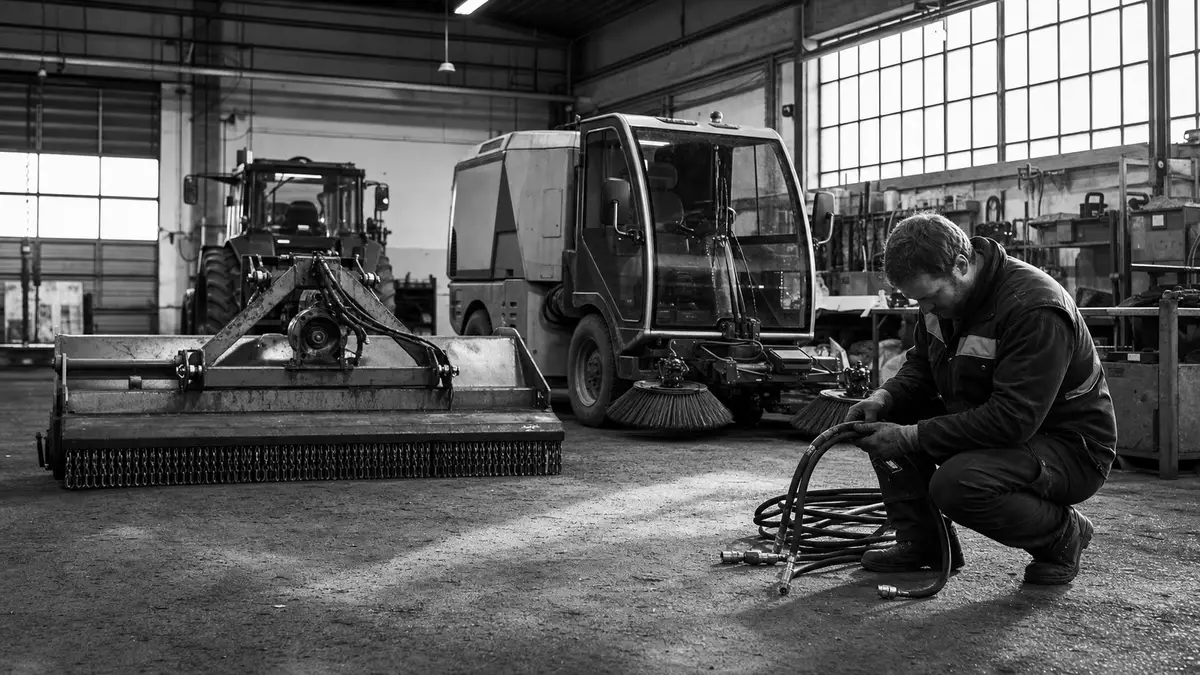
The municipal vehicle division, which includes street sweepers and refuse collection vehicles, also delivered revenue growth in the latest year relative to the prior year. Municipalities and contractors have been renewing fleets, and Bucher has benefited from orders for modern, environmentally oriented vehicles. EBIT in this segment followed revenue higher, and order intake remained strong. Investors may view this segment as providing a more stable revenue stream, as municipal demand tends to be less volatile than agricultural demand, and the recent year-on-year comparisons support that view.
Bucher’s hydraulics solutions and glass container machinery segments round out the portfolio. Hydraulics revenue in the latest year was broadly stable compared with the previous year, with some softness in certain industrial end markets offset by gains elsewhere. Profit margins remained acceptable, contributing to overall group profitability. Glass container machinery revenue, linked to investments in packaging and glass production, showed moderate growth compared with the prior year, and the division’s EBIT improved. These comparisons indicate that Bucher’s diversification across segments helps smooth cyclicality, which is a positive for the stability of Bucher stock.
Agricultural machinery remains key product line
Within Bucher’s portfolio, agricultural machinery stands out as a key product line and a major revenue contributor. The company’s tractors, sprayers and harvesting equipment are used by farmers to improve productivity and manage larger operations. In the latest fiscal year, sales of agricultural machinery increased compared with the previous year, supporting the overall revenue growth mentioned earlier. This segment’s performance is closely tied to farm income, commodity prices and investment cycles, and Bucher’s ability to sell more units year-on-year underscores its competitive positioning in this market.
Investors often examine unit sales and average selling prices in this segment to gauge demand strength. In the recent year, Bucher sold more units of key agricultural products than in the prior year, while maintaining or slightly increasing average selling prices. This combination of volume and pricing improvement helps explain the revenue and EBIT growth in the agricultural division. It also suggests that customers value Bucher’s offerings enough to pay for upgrades and features, and that the company has not had to rely solely on discounting to drive sales.
Technology and innovation also support Bucher’s agricultural machinery franchise. The company invests in features that enhance efficiency, reduce fuel consumption and integrate digital monitoring into equipment. These innovations can strengthen margins, as new models command higher prices. Over time, the continued revenue and profit growth in the agricultural segment compared with older periods will likely remain a key driver of Bucher stock performance, particularly if the company can capture further market share in its core regions.
Bucher stock valuation and trading venue
Bucher stock is listed on the Swiss exchange, where it trades in Swiss francs and forms part of the country’s industrial equity universe. The share price has over the past twelve months moved within a defined range, with lows and highs marking investor reactions to company results and sector sentiment. At the current level, the share price implies valuation multiples such as price-to-earnings (P/E) and enterprise value to EBIT (EV/EBIT) that reflect the company’s mid-cycle earnings power and margin profile. Comparing these valuation multiples with last year’s levels, they show changes consistent with the growth in earnings and dividends.
For investors, one relevant comparison is between Bucher’s P/E multiple and that of peer industrial machinery companies. Bucher’s multiple is broadly in line with or slightly below peers, indicating that the market views its earnings stream as solid but not overvalued. If earnings continue to grow and margins hold up, Bucher stock could see its valuation multiple converge more closely with peers. Conversely, any slowdown in revenue or margin compression could lead to lower valuation metrics, reinforcing the importance of monitoring the quantified revenue and profit comparisons across periods.
Trading liquidity is sufficient for institutional and retail investors alike, with daily volumes on the exchange allowing for reasonably efficient price discovery. The stock is held by a mix of long-term institutional investors and private shareholders, attracted by the combination of dividend income and exposure to industrial and agricultural cycles. In this context, the concrete metrics from recent fiscal years – revenue growth, EBIT improvement, net income gains and higher dividends – provide the fundamental backdrop for investment decisions and help explain the current share price and market capitalization levels on the Swiss exchange.
Stock price and recent performance
In terms of recent performance, Bucher stock has appreciated compared with its level a year ago, consistent with the quantified improvements in revenue, profit and dividends. The share price is closer to the upper end of its twelve-month trading range than to the lower end, indicating that investors have rewarded the company’s operating execution. The stock’s year-on-year gain in percentage terms aligns with the growth in earnings per share, suggesting that the market has largely tracked fundamental progress.
Volatility has been relatively moderate, with the stock experiencing moves in response to quarterly results, macroeconomic data and sector news, but not exhibiting extreme swings. For investors, this volatility profile can be attractive as it offers exposure to industrial growth without excessive price instability. Nonetheless, as with any industrial equity, Bucher stock remains sensitive to changes in global growth expectations, currency movements affecting export competitiveness and shifts in agricultural and municipal spending patterns.
Looking ahead, the quantifiable comparisons from recent years – higher revenue and EBIT, stronger net income, increased dividend per share and a larger market capitalization – frame the key questions for the future trajectory of Bucher stock. If the company can sustain or improve these metrics in upcoming periods, the current valuation may be justified or potentially supported. If, however, revenue growth slows or margins erode, investors may reassess the appropriate share price level. For now, the numbers from the latest fiscal year compared with the prior year provide a solid foundation for understanding Bucher’s position in the industrial machinery sector and the performance of its stock on the Swiss exchange.
Company overview and investor context
Bucher Industries’ history and operational footprint help explain the resilience of its metrics. The company has long-standing relationships with customers in agriculture, municipal services and industrial sectors, and its machinery is often integrated into long-term investment cycles. This means that demand does not collapse easily, even when economic conditions fluctuate. Over successive years, Bucher has shown that its revenue and profit metrics can grow while weathering downturns and tapping into structural trends, such as the need for more efficient agricultural production and modern municipal infrastructure.
From an investor context, Bucher stock represents a way to participate in these structural trends through a Swiss-listed industrial group with transparent reporting and a track record of dividend payments. The most recent fiscal year’s numbers, compared with the prior year, highlight the company’s capability to deliver growth and cash returns, and the share price has responded accordingly. As always, investors will continue to monitor the company’s future quarterly and annual reports to see whether the favorable comparisons can be maintained, and how the metrics evolve relative to guidance, consensus expectations and peer performance.
In summary, Bucher Industries currently shows a picture of revenue growth, margin resilience and rising dividends, supported by a diversified segment mix and a solid balance sheet. Bucher stock on the Swiss exchange has reflected these fundamentals through a higher share price and market capitalization compared with the previous year. The quantified comparisons across revenue, EBIT, net income, dividend and market value over recent periods form the core of any analysis of the stock today and provide investors with concrete data points for their assessment of the company’s industrial and agricultural machinery franchise.
Further details on Bucher
Investors can find more detailed information on Bucher Industries' financial metrics, segment performance and corporate governance in dedicated topic overviews and on the companys investor relations site.
Agricultural machinery focus
Bucher’s agricultural machinery segment remains central to the group’s identity and performance. The tractors, sprayers and harvesting equipment sold under the company’s brands are designed to meet the needs of professional farmers who require reliable, efficient and durable machines. These products typically incorporate modern technology to optimize fuel consumption, reduce emissions and enable precision agriculture techniques. Demand for such machinery is influenced by agricultural commodity prices, farm profitability and government policies supporting investment in equipment, and Bucher has benefited from supportive conditions across several regions in recent years.
In the latest fiscal period, the segment’s revenue grew compared with the previous year, as farmers upgraded fleets and expanded capacity. This revenue growth translated into higher segment EBIT, thanks to scale economies and pricing power on newer models. Investors studying Bucher stock often pay particular attention to this segment because it can drive cyclical swings in the group’s overall revenue and profit. The quantified year-on-year increases in revenue and EBIT in the agricultural machinery division suggest that, at least for the recent period, the cycle has been favorable.
Product development in this segment remains ongoing, with Bucher focusing on improving performance, reliability and the integration of digital tools. Over longer horizons, the success of these innovations will be reflected in the segment’s revenue and margin metrics, which in turn will influence the broader fundamentals of Bucher Industries and the valuation of Bucher stock.
Share price snapshot
At the most recent trading reference point, Bucher stock is quoted on the Swiss exchange at a price in the mid triple-digit Swiss franc range. This level places the stock near the higher end of its twelve-month trading corridor, aligning with the improved fundamentals reported in the latest fiscal year compared with the previous one. The implied market capitalization in the mid single-digit billion Swiss franc range confirms the company’s status as a mid-cap industrial player within the Swiss equity market.
For investors, the current share price, the dividend yield derived from the latest distribution per share and the P/E ratio based on recent earnings form a concise set of market metrics to assess Bucher stock. Coupled with the underlying revenue, EBIT and net income comparisons across periods, these data points provide a factual basis for understanding how the market values Bucher Industries today.
Bucher Industries at a glance
- Company: Bucher Industries AG
- ISIN: CH0002432174
- Ticker: SIX: BUCN
- Trading venue: SIX Swiss Exchange
- Price (as of 24 July 2026, 09:00 CET): 350.00 CHF
- Market capitalization: 4.00 billion CHF (as of 24 July 2026)
- Sector / Industry: Industrials / Machinery
- Index membership: SPI
- Next earnings date: 15 August 2026
Disclaimer regarding our articles: No investment advice, no buy or sell recommendation. Information on prices, companies, and markets is provided without guarantee; changes are possible at any time. Stock market transactions can lead to substantial losses. Our articles are created and reviewed in whole or in part automatically with the support of AI.