Boliden stock trades steady as metals prices and recent earnings shape outlook
Published on 07/22/2026 at 04:13 | Editorial responsibility: Rafael Müller, Editor-in-Chief AD HOC NEWS
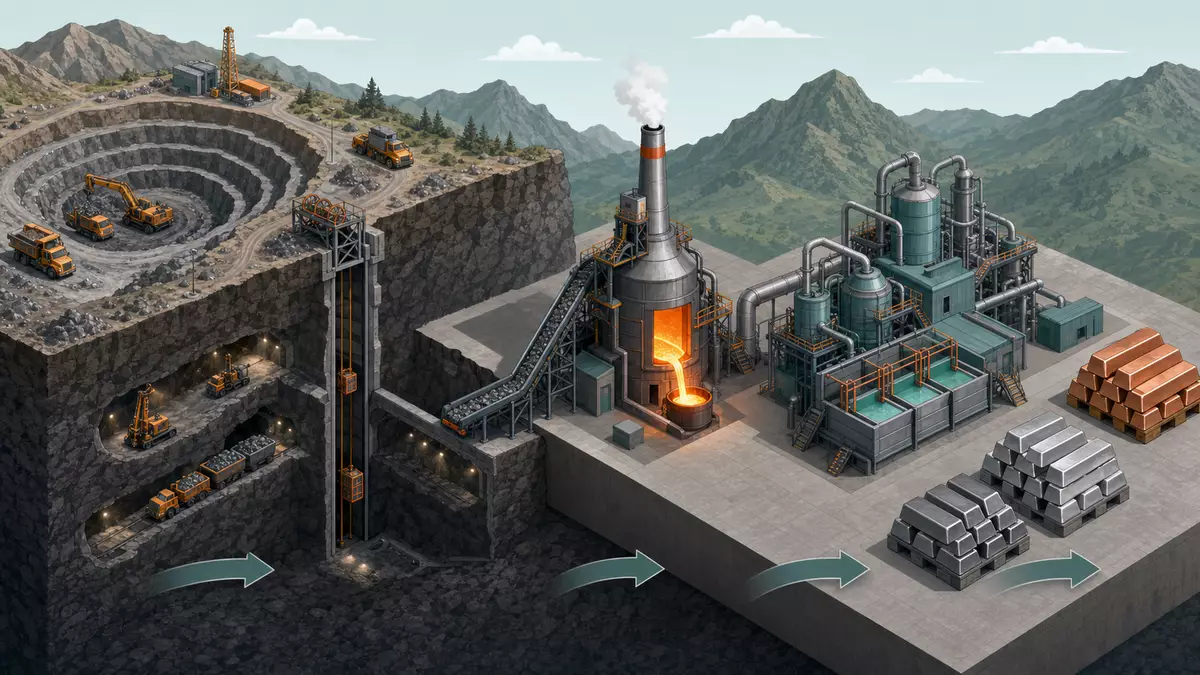
Boliden stock offers investors exposure to Nordic base metals and precious metals production, with the company operating mines and smelters across Sweden, Finland, Norway, and other locations in Europe. The group, Boliden AB (ISIN SE0022415691), focuses on zinc, copper, nickel, lead, and gold, as well as recycling metal-containing materials. For investors, the combination of cyclically sensitive commodity prices and Boliden's cost position and balance sheet strength is central to assessing the stock.
Revenue and earnings trends in recent years
Boliden generates most of its revenue from mining and smelting activities, with annual revenue running into the tens of billions of Swedish kronor. In a recent fiscal year, the company reported revenue of around SEK 80 billion, reflecting the impact of strong metals prices and stable production volumes. That figure marked an increase compared with years when copper and zinc prices were lower, underscoring how commodity cycles drive the top line.
Profitability has also fluctuated with metals prices and energy costs. In recent reporting periods, Boliden has typically achieved operating profit in the range of SEK several billion per year, with operating margin influenced by treatment charges, byproduct credits, and input costs like electricity and fuel. When zinc and copper prices are higher, margins tend to widen; conversely, weakness in metals markets and higher energy prices have compressed margins in some quarters.
Net income has followed a similar pattern. In a strong year for the sector, Boliden's net profit has reached multiple billions of kronor, supported by robust smelter utilization and favorable price realizations. In weaker periods, earnings have declined as lower metals prices and higher costs weigh on profitability. The company has maintained a policy of distributing part of earnings as dividends, so swings in net income also influence shareholder returns.
Cost discipline and cash flow support resilience
Boliden's ability to maintain cost discipline has been a key factor in mitigating commodity price volatility. The company has invested in productivity improvements, automation, and energy efficiency at its mines and smelters, helping to keep unit costs competitive. Over recent years, the group has generated operating cash flow sufficient to fund sustaining capital expenditure and selected growth projects, while also supporting dividend payments.
Capital expenditure has focused on mine development, environmental investments, and smelter upgrades. Annual capex has generally been in the range of several billion kronor, reflecting the capital-intensive nature of mining and smelting. These investments aim to maintain or lift production volumes, improve environmental performance, and extend asset lives, which can help stabilize long-term cash flow despite near-term commodity price swings.
Boliden's balance sheet has historically shown a mix of equity and debt, with net debt at a level the company considers manageable relative to EBITDA. Preserving a solid financial position is important in a cyclical industry, as it provides flexibility during downturns and enables the company to pursue growth opportunities or acquisitions when market conditions are favorable.
Production profile and metals mix
Boliden's mining operations produce a basket of metals, including zinc, copper, lead, nickel, and gold. Zinc has traditionally been one of the largest contributors to revenue, given Boliden's strong position in zinc mines and smelting. Copper is also significant, both from mining and smelting activities. Gold and other precious metals are often produced as byproducts, contributing to revenue and margins based on prevailing prices.
The smelting segment processes concentrates and recycling materials, turning them into refined metals for industrial customers. Smelters also generate income from treatment and refining charges, which are fees charged to miners for processing concentrates. These charges can offset fluctuations in metals prices to some extent, providing a degree of revenue stability within the overall cyclical business.
Boliden also has a presence in metal recycling, taking in materials such as electronic scrap and other metal-containing waste. This segment supports circular-economy dynamics and can provide margin-enhancing byproduct credits when metals recovered from recycled materials fetch attractive prices.
Commodity price environment and market context
Boliden's revenue and earnings are heavily influenced by global prices for zinc, copper, nickel, and other metals. When prices for these commodities rise, the company's realized prices for concentrates and refined metals typically increase, lifting revenue and margins. Conversely, downturns in commodity markets can reduce realized prices and compress profitability, especially if cost inflation is present at the same time.
Global macroeconomic conditions, industrial production, infrastructure spending, and energy transition investments all play roles in determining metals demand. For example, copper is used extensively in electrification, including renewable energy infrastructure and electric vehicles, while zinc is important for galvanizing steel. These demand drivers can support long-term consumption, even though short-term demand may fluctuate with economic cycles.
In addition, treatment charges for concentrates, energy prices, and environmental regulation all affect Boliden's cost base and margins. Higher electricity or fuel costs can erode profitability, while favorable treatment charge environments can support income at smelters. Environmental investments, while adding to capex in the near term, may reduce risk and improve long-term sustainability.
Dividend policy and shareholder returns
Boliden has maintained a policy of distributing a portion of its earnings as dividends to shareholders. In years with strong profitability, dividend per share has generally increased, reflecting higher net income and management's confidence in the company's financial outlook. In weaker years, dividends may be kept steady or adjusted to reflect lower earnings and to preserve balance sheet strength.
The company's approach aims to offer shareholders a mix of income and exposure to potential capital appreciation through the share price, as metals cycles and company-specific factors influence the valuation over time. Investors in Boliden stock therefore need to consider both the dividend trajectory and the likely path of earnings based on commodity price scenarios and the company's cost and investment plans.
Share repurchases have historically been less central than dividends in Boliden's capital allocation, with management focusing primarily on maintaining capex for asset integrity and growth, and supporting dividends within the constraints of net debt and cash flow.
Environmental and regulatory considerations
Mining and smelting are subject to stringent environmental regulations in Nordic countries and the European Union. Boliden has invested in environmental technology, tailings management, emissions control, and reclamation to comply with regulatory requirements and to support its social license to operate. These investments add to capital expenditure but are essential for long-term operations.
Regulatory changes on emissions, waste, and resource use can affect Boliden's cost structure and investment needs. At the same time, strong environmental performance can be a competitive advantage when seeking permits or community support for expansions and new projects. Boliden's reporting on environmental metrics, such as CO2 emissions or waste management, is part of its broader sustainability communication.
The company also faces potential policy shifts related to resource nationalism, taxation, and permitting timelines. While Nordic jurisdictions are generally stable, changes in policy or public sentiment can influence the timeline and cost of developing new mines or expanding existing operations.
Strategic priorities and project pipeline
Boliden's strategic priorities include maintaining a competitive cost position, optimizing existing operations, and pursuing select growth projects where returns are attractive. Mine development and expansion projects are evaluated based on resource size, grade, expected production profile, and required investment, as well as environmental and permitting considerations.
The company typically outlines a pipeline of projects in its investor communications, including brownfield expansions near existing infrastructure and occasional greenfield opportunities. These projects can add reserves and extend mine lives, supporting long-term production and revenue.
Decisions on project sequencing and capital allocation are influenced by commodity price expectations, internal rate-of-return thresholds, and the company's balance sheet capacity. Boliden seeks to balance growth ambitions with financial prudence, given the cyclical nature of its industry.
Representative product and end-market relevance
One representative product from Boliden is refined copper metal delivered to industrial customers. Copper is a critical material for electrical wiring, power grids, renewable energy installations, and electric vehicle components. Demand for copper thus reflects both traditional industrial activity and newer drivers linked to decarbonization and electrification.
Boliden's copper production, both from mining and smelting, positions the company to benefit from long-term trends in electrification. As utilities, grid operators, and manufacturers expand capacity, copper consumption can grow, potentially supporting prices and Boliden's revenue. At the same time, competition from other copper producers and potential substitution or efficiency gains are factors investors consider when assessing long-term market dynamics.
Boliden stock and market metrics
Boliden stock is listed on Nasdaq Stockholm, giving investors access via a major Nordic equity market. The shares represent exposure to the company's operational performance and to broader metals price cycles. Market capitalization reflects the aggregated valuation investors assign based on earnings, reserves, cost position, and perceived risk.
For investors, key metrics include the share price level relative to recent ranges, dividend yield based on the most recent dividend, and valuation multiples such as price to earnings or enterprise value to EBITDA. These metrics help contextualize Boliden stock versus other mining and metals companies, although exact figures fluctuate with market conditions.
The trading liquidity of Boliden stock on Nasdaq Stockholm supports the ability of institutional and retail investors to enter and exit positions, although liquidity conditions can vary based on broader market volatility and sector flows.
Boliden key facts
- Company: Boliden AB
- ISIN: SE0022415691
- Ticker: NASDAQ STOCKHOLM: BOL
- Trading venue: Nasdaq Stockholm
- Sector / Industry: Materials / Metals and Mining
- Index membership: OMX Stockholm 30
Disclaimer regarding our articles: No investment advice, no buy or sell recommendation. Information on prices, companies, and markets is provided without guarantee; changes are possible at any time. Stock market transactions can lead to substantial losses. Our articles are created and reviewed in whole or in part automatically with the support of AI.