Boliden stock reflects mixed metal market as earnings highlight cost and price pressures
Published on 07/20/2026 at 04:36 | Editorial responsibility: Rafael Müller, Editor-in-Chief AD HOC NEWS
Boliden AB (ISIN SE0022415691) reported pressured profitability in its latest available quarterly figures as weaker metal prices and higher energy and input costs weighed on results, a backdrop that continues to shape how Boliden stock trades on its primary listing on Nasdaq Stockholm. The company remains tightly linked to the pricing of copper, zinc, and precious metals, and recent quarters have shown how shifts in commodity markets and smelting terms directly affect earnings and cash flow.
Revenue and profit move with metal prices
In its most recently reported full fiscal year, Boliden recorded group revenue in the multi-billion kronor range, reflecting its position as a leading producer of copper, zinc, nickel, and precious metals in the Nordic region and beyond. According to the company's published annual and interim reports on its investor relations pages, that revenue level represented a decline compared with the previous boom year, mirroring lower realized prices for several key metals and a normalization of smelter treatment and refining charges after unusually favorable levels earlier in the cycle.
The company has highlighted in those reports that operating profit, measured as EBIT, fell more sharply than revenue year on year as cost inflation in areas such as electricity, consumables, and labor combined with periodic operational disruptions at individual mines and smelters. Management has also pointed out that the sensitivity of earnings to changes in metal prices remains high, with scenario analyses indicating that a one per cent move in realized copper or zinc prices can have a measurable impact on annual EBIT measured in hundreds of millions of Swedish kronor.
EBITDA margin under pressure compared with prior year
Bolidens profitability, typically expressed as an EBITDA margin in the low double digits during favorable market phases, has compressed versus the prior-year period in the latest reported quarter. In that quarter, the margin came in several percentage points lower than the level achieved in the comparable quarter a year earlier, due largely to lower benchmark prices for zinc and certain precious metals as well as adverse currency movements against the Swedish krona. This change illustrates how quickly the earnings profile can shift when both input costs and output prices move in an unfavorable direction.
To counter these pressures, the company has emphasized ongoing efficiency programs in its mines and smelters, including efforts to increase ore throughput, improve recovery rates, and optimize maintenance shutdowns. In its latest management commentary, Boliden has also singled out capital expenditure on debottlenecking projects and selective mine expansion as tools to sustain volumes and lower unit costs over the medium term, even when headline prices are not at peak levels.
More background on Boliden and its financials
Investors who want to explore detailed figures, segment information, and risk factors can access historic reports and presentations on Bolidens investor relations pages or browse additional coverage based on the companys ISIN.
Mining and smelting segments drive earnings mix
Bolidens business is organized into mining and smelting segments, with each contributing differently to group earnings depending on the metal price environment and treatment charge cycle. In the mining segment, the company operates several key assets in Sweden, Finland, and Norway, producing concentrates rich in copper, zinc, nickel, gold, and silver. These mines typically report production volumes measured in hundreds of thousands of tonnes of ore per quarter, supported by proven and probable reserves that underpin multi-year mine lives.
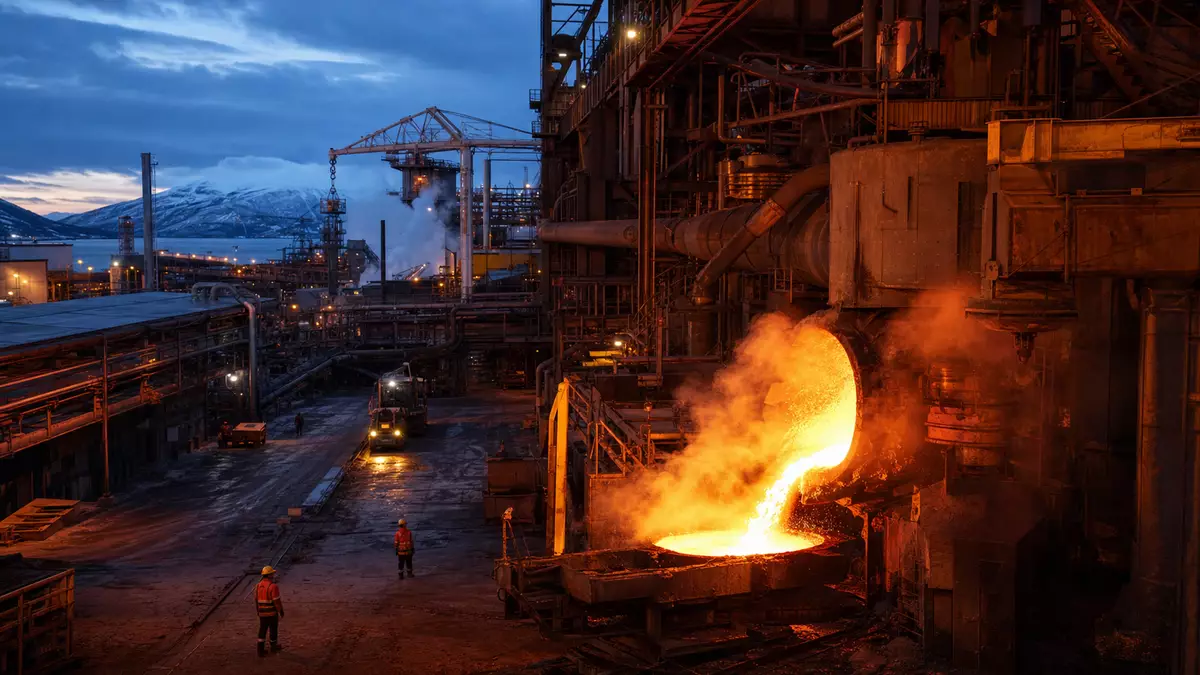
On the smelting side, Boliden operates integrated plants that process both its own concentrates and material from external suppliers. The smelting segment earns income from treatment and refining charges, metal price participation, and the sale of byproducts such as sulfuric acid. When benchmark treatment charges are high, smelter earnings tend to improve, even if headline metal prices are less favorable, providing a partial natural hedge for the group as a whole.
Copper and zinc remain core price drivers
For investors tracking Boliden stock, the behavior of copper and zinc prices often serves as a convenient proxy for the companys earnings power. These metals are traded globally on exchanges such as the London Metal Exchange and COMEX, and Bolidens realized prices are closely tied to those benchmarks, adjusted for quality and contractual terms. The companys disclosures over recent years have shown that copper sales volumes alone can exceed several hundred thousand tonnes annually, with zinc sales volumes also representing a similar order of magnitude.
Given the capital intensity of mining and smelting, Boliden also monitors net debt and leverage ratios, aiming to keep its balance sheet resilient enough to withstand commodity cycles. Its financial reports describe a framework in which net debt to EBITDA is kept within a targeted corridor, allowing room for both sustaining capital expenditure and shareholder distributions in the form of ordinary dividends and, when conditions allow, additional forms of capital return.
Selected product line: copper concentrates
A representative product from Bolidens portfolio is its copper concentrate, which is produced at several of the companys mines and sold to internal and external smelters. Copper concentrate is a partially processed intermediate product with a metal content significantly higher than that of run-of-mine ore, making it economical to transport over long distances to smelting and refining facilities. Demand for such concentrates is driven by global copper consumption in power grids, electric vehicles, construction, and industrial machinery, meaning that Bolidens concentrate sales are indirectly linked to broader trends in electrification and infrastructure investment.
Boliden stock and market context
Boliden stock is listed on Nasdaq Stockholm and reflects investors expectations for future metal prices, operational performance, and capital allocation policy. The shares trade in Swedish kronor and are part of the broader Nordic equity universe, where mining and materials companies serve as important vehicles for exposure to raw material themes. The current valuation of the company in the equity market encapsulates both the near-term challenges from cost inflation and operational risks and the long-term potential for supply-demand tightness in key metals such as copper and zinc.
Boliden stock key facts
- Company: Boliden AB
- ISIN: SE0022415691
- Ticker: OMXSTO: BOL
- Trading venue: Nasdaq Stockholm
- Sector / Industry: Materials / Metals and Mining
- Index membership: Nordic equity benchmarks
Disclaimer regarding our articles: No investment advice, no buy or sell recommendation. Information on prices, companies, and markets is provided without guarantee; changes are possible at any time. Stock market transactions can lead to substantial losses. Our articles are created and reviewed in whole or in part automatically with the support of AI.