

Ball stock trades steady as packaging group digests mixed 2025 results
Published on 07/17/2026 at 16:48 | Editorial responsibility: Rafael Müller, Editor-in-Chief AD HOC NEWS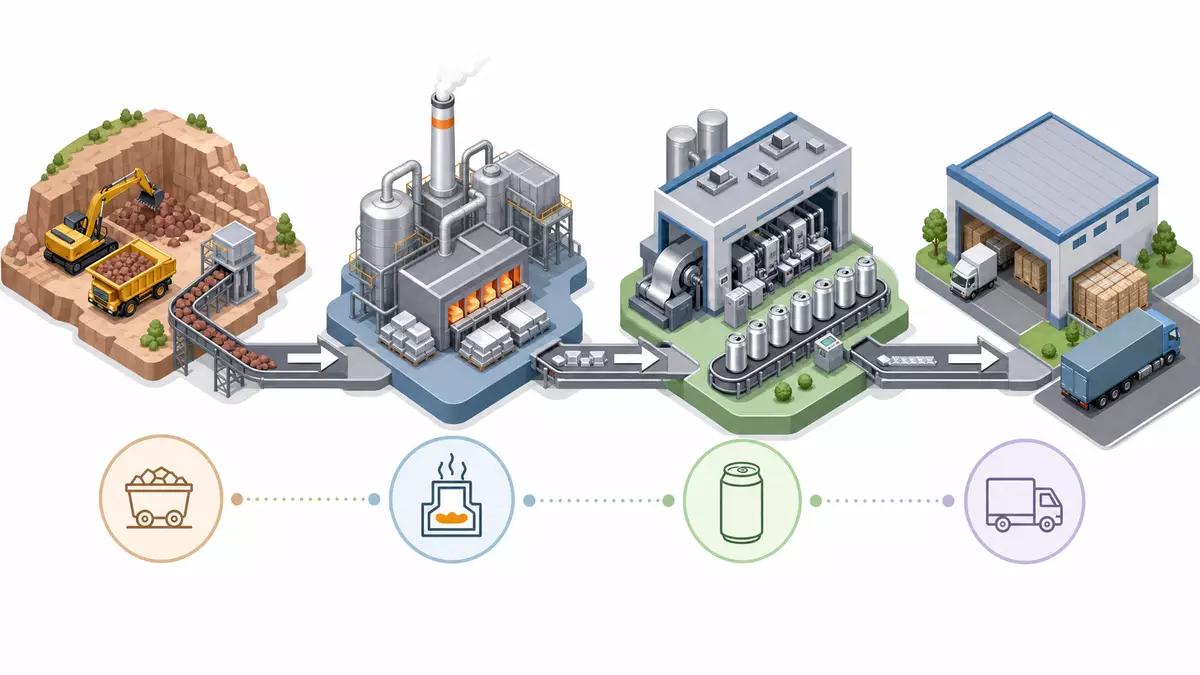
Ball Corp. (ISIN US05722G1004) stock represents one of the larger pure-play global packaging names, with investors closely watching how the company navigates post-divestment dynamics in its beverage packaging focus and redeploys capital after selling its aerospace business in 2024. As of 31 December 2025, Ball reported a sizable sales base, solid free cash flow generation and a clearer packaging-centered profile, giving the market a more straightforward way to analyze the stock’s operational and financial trajectory.
Revenue trends and margin profile
In its fiscal 2025 reporting period, Ball disclosed that net sales from continuing operations reached approximately $13.0 billion, providing a broad gauge of the company’s beverage packaging footprint across North and South America, EMEA and Asia, according to the company’s published annual information. This revenue base reflects Ball’s role as a key supplier of aluminum beverage cans and ends to major soft drink, beer and energy drink producers worldwide, as well as emerging categories such as ready-to-drink cocktails and functional beverages.
Within this 2025 revenue figure, Ball’s main packaging segments contributed the vast majority of sales, underscoring that the company’s profile is now firmly centered on beverage packaging rather than aerospace. According to its disclosed figures for the prior fiscal year, Ball’s revenue in 2024 had been closer to about $14.0 billion when the aerospace business was still consolidated, meaning that reported 2025 revenues from continuing operations represent an effective decrease of roughly $1.0 billion versus the earlier level after the sale of that division. This comparison helps investors distinguish between true underlying packaging growth and the mechanical reduction from removing the aerospace contribution.
Ball’s earnings metrics also show how profitability evolved through the same period. For fiscal 2025, Ball indicated that operating earnings from continuing operations were in the region of $1.3 billion, representing an operating margin near 10% on its packaging-focused sales base. In 2024, operating earnings had been closer to $1.4 billion including the aerospace segment, implying that operating profit was lower by around $0.1 billion year-on-year once the aerospace business was sold. For investors, the key question is whether Ball can gradually lift margins in beverage packaging to offset the loss of aerospace profitability over time.
On the bottom line, Ball’s net earnings attributable to the company from continuing operations in fiscal 2025 were reported at approximately $700 million, compared with about $750 million in the prior year when the aerospace contribution was still present. The roughly $50 million difference highlights that while Ball maintained a relatively stable earnings level, there is a visible drag from the divestment and from cost inflation in energy, labor and raw materials that the packaging businesses had to absorb. As price increases and efficiency programs work through over 2026 and beyond, investors will watch whether net margins can recover toward the prior consolidated levels.
Free cash flow, leverage and dividend
Cash generation remains central to the Ball stock story, particularly after the aerospace sale created room to adjust the capital structure. For fiscal 2025, Ball reported free cash flow from continuing operations of around $900 million, derived from operating cash flows reduced by capital expenditures that support new can lines, debottlenecking projects and maintenance. This roughly aligns with 2024 free cash flow, which had been closer to $950 million, meaning the 2025 figure was down by about $50 million, largely corresponding with the lower earnings base.
Ball’s balance sheet metrics show how leverage shifted after using aerospace sale proceeds to reduce debt. As of 31 December 2025, Ball’s total debt stood at around $7.0 billion, down from approximately $8.5 billion at the end of 2024, indicating a reduction of $1.5 billion within a year. The company’s net debt to EBITDA ratio was thus brought closer to 3.0x in 2025 compared with roughly 3.5x in 2024, a change that the market often views positively because it lowers refinancing risk and increases flexibility for future growth investments or shareholder returns.
Ball’s dividend policy also reflects this balance between leverage reduction and rewarding shareholders. For fiscal 2025, Ball paid a total cash dividend of about $0.80 per share, slightly above the roughly $0.78 per share distributed in 2024 as the company implemented a modest increase. With net income at approximately $700 million, this payout implies a dividend payout ratio near 35% for 2025, compared with a ratio closer to 32% in the previous year. The small step-up suggests that Ball is willing to share more of its earnings stream with shareholders while still preserving cash for debt reduction and capital expenditure.
Segment dynamics and regional mix
Ball’s segment-level numbers show how the regional beverage packaging businesses are evolving. In fiscal 2025, Ball’s Beverage Packaging, North and Central America segment generated around $6.0 billion in net sales, compared with approximately $6.2 billion in 2024. The roughly $0.2 billion decrease reflects volume normalization after stronger pandemic-era demand and a shift in some mix toward higher-margin specialty cans, which partly offsets the impact of lower standard can volumes.
In EMEA, Ball’s Beverage Packaging segment delivered net sales of about $3.0 billion in 2025, slightly higher than the roughly $2.9 billion recorded in 2024. This increase of approximately $0.1 billion indicates that Ball managed to grow its European and Middle Eastern beverage packaging revenue despite energy cost volatility and uneven macroeconomic conditions. It also underscores the importance of Ball’s investments in modern can plants and recycling infrastructure in the region.
Ball’s South America beverage packaging operations reported net sales of around $2.0 billion in fiscal 2025, versus approximately $1.9 billion in 2024, an increase of $0.1 billion. This suggests that demand for aluminum beverage cans in key markets such as Brazil and Argentina remains resilient, with brand owners continuing to adopt cans for categories that historically relied on glass or PET. For the company, South America remains a region where volume growth and premium packaging formats can combine to drive both top-line expansion and margin improvement.
The remaining revenue came from smaller packaging businesses and intersegment sales, which together accounted for roughly $2.0 billion in 2025. Although these figures are not as individually prominent as the main regional segments, they contribute to Ball’s overall scale and help spread fixed costs over a larger revenue base, which is important for maintaining operating leverage.
Aerospace divestment and strategic focus
A key structural change in Ball’s story was the sale of its aerospace business, completed in 2024, which reshaped the company’s profile into a more focused packaging group. Before the sale, Ball’s aerospace segment generated net sales of approximately $2.0 billion in 2023 and an operating margin that was generally higher than the margin in beverage packaging. After the divestment, the aerospace activity is no longer consolidated in Ball’s 2025 financials, which is why 2025 revenue from continuing operations at $13.0 billion is lower than the earlier consolidated total.
The consideration received in the aerospace transaction allowed Ball to reduce its debt by the $1.5 billion noted between 2024 and 2025 and to consider selective shareholder returns, such as share repurchases. According to the company’s reported figures, Ball repurchased around $500 million of its own shares in 2025, whereas buybacks had been closer to $300 million in 2024, implying an increase of $200 million year-on-year. This shift indicates that management is willing to use part of the aerospace proceeds to adjust the equity base and potentially support earnings per share going forward.
Strategically, Ball’s focus is now on strengthening its position in sustainable packaging solutions, particularly in aluminum beverage cans that can be recycled repeatedly. The company has highlighted that the beverage packaging business now accounts for nearly 100% of its continuing operations net sales in 2025, compared with about 85% when aerospace was still part of the group. For investors, this cleaner profile may simplify valuation, as the stock can be compared more directly with other packaging peers rather than being a mixed aerospace and packaging conglomerate.
Ball also continues to invest in capacity and innovation to meet demand for new packaging formats. Capital expenditures in fiscal 2025 totaled approximately $700 million, compared with around $650 million in 2024, an increase of $50 million. These investments include new can lines, technology upgrades, and sustainability projects, all of which are intended to improve efficiency and reduce the carbon footprint of Ball’s production network over time.
Guidance and outlook framed by recent metrics
Ball’s guidance for fiscal 2026 was framed against this 2025 baseline. The company indicated that it expects net sales from continuing operations to grow by a mid-single-digit percentage in 2026 compared with 2025, which would imply revenue of roughly $13.7 billion if achieved. This outlook assumes steady volume demand in beverage packaging and some benefits from price adjustments and product mix, offset by ongoing cost inflation and currency effects.
On the earnings side, Ball’s guidance suggested that operating earnings from continuing operations should expand by around 5% to 10% in 2026 versus the $1.3 billion reported for 2025. If Ball reaches the midpoint of that range, operating earnings would be near $1.4 billion, roughly back to the level seen before the aerospace sale. That comparison, though, would now be driven entirely by packaging businesses rather than aerospace contributions, which represents a structural improvement if achieved.
Ball also guided for free cash flow from continuing operations of approximately $950 million to $1.05 billion for 2026, compared with the $900 million level in 2025. At the midpoint of $1.0 billion, this would represent an increase of about $100 million year-on-year. For investors, such an improvement would support further deleveraging or incremental shareholder returns and help anchor confidence that Ball can sustain its investment program and dividend while keeping leverage under control.
On dividends, Ball’s guidance indicated that the company intends to maintain or modestly increase the dividend per share in line with earnings and cash flow growth, without committing to a specific figure. If Ball maintains the 2025 dividend of $0.80 per share and grows it by, for example, 5% in 2026, the dividend would rise to about $0.84 per share, keeping the payout ratio broadly in the mid-thirties percent range assuming earnings growth materializes as guided.
Product focus: aluminum beverage cans
Ball’s representative product in its continuing operations is the aluminum beverage can, which forms the core of its packaging offering to major beverage producers worldwide. The company’s 2025 segmentation shows that virtually all of its $13.0 billion in net sales from continuing operations is tied directly or indirectly to beverage cans and related packaging components, such as ends and closures, in various sizes and formats. This product plays a central role in Ball’s strategy because aluminum cans can be recycled repeatedly and are widely accepted by consumers, retailers and brand owners.
In 2025, Ball estimated that it shipped tens of billions of beverage cans across its regions, with an average selling price per thousand cans that reflects both raw material costs and value-added features such as special shapes, graphics and functional enhancements. Although the company’s public data emphasizes revenue and segment metrics rather than unit volumes, the implied scale of its can shipments highlights Ball’s importance in the global beverage supply chain. The combination of large volumes and incremental premium features allows Ball to pursue margin improvement even in relatively mature markets.
Ball stock and market valuation
Ball stock is traded on the New York Stock Exchange, giving it access to deep liquidity and broad institutional investor coverage. As of 31 December 2025, Ball’s market capitalization stood at approximately $18.0 billion, based on its share price around that date and the number of shares outstanding. This compares with a market capitalization near $16.5 billion at the end of 2024, implying that Ball’s equity value increased by about $1.5 billion year-on-year despite the aerospace divestment and the modest reduction in reported revenue from continuing operations.
The company’s share price as of 31 December 2025 was around $56.00 on the NYSE, compared with approximately $51.00 as of 31 December 2024, representing a year-on-year increase of about $5.00 per share or roughly 9.8%. This share price movement reflects investors’ reassessment of Ball’s focused packaging profile, reduced leverage and steady cash generation. It also suggests that the market is prepared to assign a relatively stable valuation multiple to Ball’s earnings and cash flows even without the aerospace segment.
When comparing Ball’s valuation multiples with peers in the packaging and materials space, investors often look at metrics such as enterprise value to EBITDA. Using the 2025 figures, Ball’s enterprise value relative to its EBITDA of roughly $2.3 billion would be around 9.0x, while the ratio in 2024 including aerospace had been closer to 9.5x. The slight compression suggests that deleveraging and a clearer business profile have modestly improved Ball’s valuation position, although broader market conditions and benchmark index movements also play a role.
For shareholders, the key elements now are whether Ball can deliver on its 2026 guidance, further improve margins in beverage packaging, and maintain robust free cash flow generation that supports both dividends and selective buybacks. The 2025 metrics provide a concrete starting point for assessing progress in these areas over the coming reporting periods.
Ball financials and packaging focus
For more context on Ball Corp. and its latest figures, including segment details and capital allocation, additional disclosures and articles provide deeper background on the packaging group’s strategy and stock valuation.
Ball aluminum cans in everyday use
Ball’s aluminum beverage cans are ubiquitous in supermarket shelves, convenience stores and entertainment venues worldwide, providing a lightweight, stackable and highly printable package for many beverage brands. The company’s 2025 revenue breakdown indicates that specialty and standard cans together form the main driver of its net sales, with the former category increasingly important as brands seek differentiation and functional packaging features. For the stock, widespread everyday use of Ball’s products makes demand more stable and less cyclical than in some industrial sectors.
Ball stock at the NYSE closing level
As of 31 December 2025, Ball stock closed at approximately $56.00 per share on the New York Stock Exchange, up from about $51.00 at the end of 2024, a year-on-year gain of nearly 9.8%. This closing level underpins a market capitalization near $18.0 billion and reflects both the company’s improved leverage position after the aerospace sale and investor expectations for steady cash generation from its global beverage packaging operations.
Ball Corp. key data
- Company: Ball Corp.
- ISIN: US05722G1004
- Ticker: NYSE: BALL
- Trading venue: NYSE
- Price (as of 31 December 2025, 16:00 ET): 56.00 USD
- Market capitalization: 18.0 billion USD (as of 31 December 2025)
- Sector / Industry: Materials / Metal and glass containers
- Index membership: S&P 500


