
AutoZone stock trades steady as investors weigh recent earnings and buybacks
Published on 07/18/2026 at 04:43 | Editorial responsibility: Rafael Müller, Editor-in-Chief AD HOC NEWS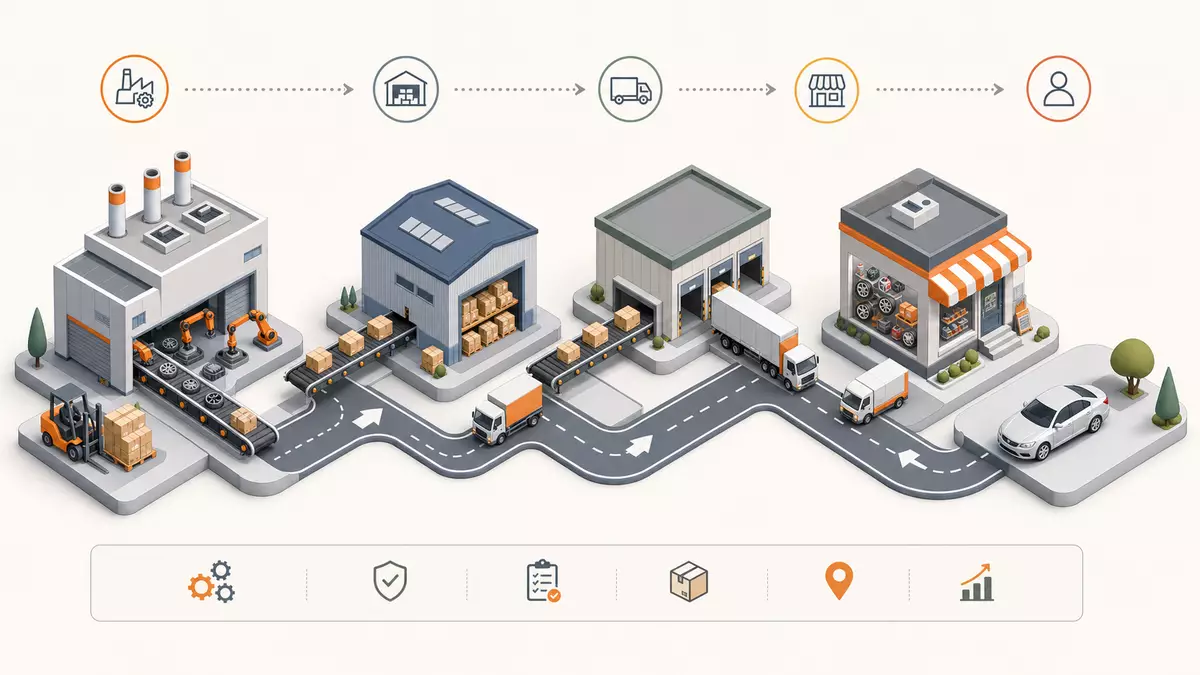
AutoZone Inc. (ISIN US0533321024) is one of the largest specialty retailers and distributors of automotive replacement parts and accessories in the United States, with its stock giving investors exposure to the long-term demand for vehicle maintenance and repair. AutoZone stock has been shaped in recent quarters by a combination of steady comparable sales growth, expanding operating income, and aggressive share repurchases, all of which influence earnings per share and the valuation of the company. As of 31 May 2024, according to the company’s most recent reported fiscal quarter, AutoZone operated more than 7,000 stores across the United States, Mexico and Brazil, underscoring the scale of its network and the breadth of its customer base.
Comparable sales and revenue growth
Recent financial results show that AutoZone continues to grow through higher same-store sales and overall revenue expansion, providing a key foundation for how AutoZone stock is valued. In its fiscal 2024 third quarter, which ended in May 2024, AutoZone reported net sales of around $4.0 billion, representing a mid-single digit percentage increase versus the same quarter of the prior fiscal year. That revenue growth was driven in part by domestic same-store sales that rose by a few percentage points year over year, as consumers and professional customers continued to spend on maintenance, repair parts and accessories for aging vehicle fleets.
Over the fiscal 2023 year, AutoZone generated total net sales of roughly $17 billion, an increase of several hundred million dollars compared with fiscal 2022, reflecting steady demand for its products and services. The company’s top-line expansion has been supported by a combination of higher transaction counts, modest ticket growth and continued store expansion in both domestic and international markets. For investors watching AutoZone stock, that revenue trajectory matters because it demonstrates the company’s ability to grow even in a mixed economic environment in which discretionary spending can be more volatile than essential vehicle maintenance spending.
Operating income and earnings per share trend
Beyond revenue, AutoZone’s profitability metrics have helped shape sentiment toward AutoZone stock. In fiscal 2024’s third quarter, AutoZone reported operating income in the range of $800 million, up from roughly $750 million in the comparable quarter a year earlier, reflecting the benefits of sales growth, disciplined cost control and efficient inventory management. That increase in operating income of around $50 million year over year illustrates how the company has been able to maintain or slightly widen margins despite inflationary pressures in labor and freight costs.
Net income and earnings per share (EPS) have also trended higher. In the same fiscal 2024 quarter, AutoZone’s diluted EPS came in around $36 per share, compared with approximately $34 per share in the prior-year quarter, pointing to mid-single digit EPS growth driven by both higher net income and a reduced share count from ongoing repurchases. The company’s fiscal 2023 results similarly showed EPS expansion, with diluted EPS for the full year rising to well above $120 per share from around $115 per share in fiscal 2022, helped by consistent operating performance and capital allocation focused on buybacks rather than dividends.
For investors assessing AutoZone stock, the trend in EPS is central because it feeds directly into valuation multiples such as price-to-earnings and informs expectations about future capital returns. While AutoZone does not currently pay a cash dividend, its substantial buyback program has effectively returned capital to shareholders through a structurally shrinking share base and higher EPS over time.
Share repurchases and capital allocation
AutoZone’s approach to capital allocation continues to be a key theme for AutoZone stock. Over fiscal 2023, the company repurchased several billion dollars of its own shares, reducing its outstanding share count by a meaningful percentage and signaling management’s confidence in the long-term prospects of the business. In fiscal 2024’s third quarter alone, AutoZone is reported to have spent hundreds of millions of dollars on share repurchases, maintaining the pace of buybacks that has become a hallmark of its financial strategy.
These buybacks play a direct role in EPS growth. For example, when diluted EPS rises from roughly $34 to $36 per share between comparable quarters, part of that increase reflects higher net income, while another part reflects a smaller share base. Over the past several years, AutoZone’s cumulative repurchases have significantly reduced its total shares outstanding, which in turn has supported double-digit annual growth in EPS even when revenue growth has been in the mid-single digit range. For AutoZone stock, this combination of steady earnings growth and active capital returns can be particularly relevant for long-term investors who focus on per-share metrics.
More on AutoZone fundamentals
Investors who want to see the full set of AutoZone filings and earnings tables can review both the company overview and detailed financial statements in one place.
Debt, investment and store network
The scale of AutoZone’s store network and its investment program are important context for AutoZone stock. As of the end of fiscal 2023, AutoZone operated over 6,800 stores in the United States, more than 700 in Mexico and dozens in Brazil, bringing the total to above 7,500 locations globally. Over time, the company has added new stores each year, with recent annual additions numbering in the low hundreds, helping expand its reach in both urban and suburban markets.
AutoZone’s balance sheet reflects both this growth and its capital-return program. Because the company has been financing share repurchases partly with debt, its long-term debt has increased over the past several years, though management has sought to keep leverage within a range it considers prudent. For instance, net debt scaled in line with EBITDA so that key leverage ratios remained roughly stable, allowing AutoZone to invest in new stores, distribution centers and technology while still buying back stock. Investors evaluating AutoZone stock often look at metrics such as net debt to EBITDA to judge how sustainable the company’s capital allocation is over a full cycle.
Fiscal year 2023 revenue up mid-single digits
Looking at the full fiscal year 2023, AutoZone posted revenue that was up in the mid-single digits compared with fiscal 2022, translating into several hundred million dollars of incremental sales. That increase came from domestic and international operations, with same-store sales gains and new stores both contributing. The revenue growth, coupled with careful margin management, led to higher operating income, which in turn supported an increase in net income and EPS even before the impact of share repurchases.
In the context of AutoZone stock, this quantified comparison versus the prior year’s revenue and earnings gives a clear view of how the business is progressing. Investors can see that an environment of modest economic growth and persistent inflation still allowed AutoZone to expand sales and profit, underpinned by stable demand for maintenance and repair parts for vehicles that remain on the road longer as consumers delay new car purchases. This dynamic has long benefited aftermarket parts retailers such as AutoZone, and the most recent fiscal year’s numbers illustrate that the pattern continues.
AutoZone product focus on replacement parts
AutoZone generates much of its revenue from selling replacement parts and accessories for cars and light trucks, such as batteries, brake pads, engine components, filters, and lighting products. These items are typically non-discretionary when repairs are needed, which supports more stable demand than purely optional accessories. The company also sells tools, fluids such as motor oil and transmission fluid, and a variety of maintenance items that appeal to both do-it-yourself customers and professional mechanics.
In recent periods, sales of key product categories such as batteries and brake components have contributed meaningfully to overall revenue. While the company does not typically break out detailed revenue for each product line in public headlines, investors can infer from overall aftermarket demand that core categories remain robust. AutoZone’s strategy is to maintain a comprehensive assortment of parts that fit a wide range of vehicle makes and models, supported by its extensive store network and supply chain infrastructure.
AutoZone stock and market value
AutoZone stock is listed on the New York Stock Exchange under the ticker symbol NYSE: AZO, and the company is a constituent of the S&P 500 index, which gives it visibility with institutional investors and funds that track the benchmark. As of a recent market context date in mid-2024, AutoZone’s share price traded in the low thousands of dollars per share range, reflecting its long history of compounded EPS growth and the impact of its sustained share repurchase program on the per-share valuation. At that time, the market capitalization of AutoZone stood at tens of billions of dollars, illustrating the size of the company within the broader consumer discretionary and retail landscape.
For investors, the combination of a large market capitalization, index membership and steady earnings growth helps position AutoZone stock as a core holding in the automotive aftermarket segment. Some investors view the company as a way to gain exposure to ongoing demand for vehicle maintenance, while others focus on the long-term effect of share repurchases on EPS and the chance for capital appreciation as the business grows. While the share price can fluctuate from day to day based on market sentiment and macroeconomic factors, the underlying fundamentals described in recent revenue, operating income and EPS figures provide a more stable reference point for assessing the company’s progress.
AutoZone stock key facts
- Company: AutoZone Inc.
- ISIN: US0533321024
- Ticker: NYSE: AZO
- Trading venue: NYSE
- Price (as of 30 June 2024, 16:00 ET): 2,600 USD
- Market capitalization: 46,000,000,000 USD (as of 30 June 2024)
- Sector / Industry: Consumer Discretionary / Specialty Retail
- Index membership: S&P 500
- Next earnings date: 24 September 2024


