ASML stock trades steadily as chip-equipment demand and EUV capacity plans support long-term growth
Published on 07/21/2026 at 10:12 | Editorial responsibility: Rafael Müller, Editor-in-Chief AD HOC NEWS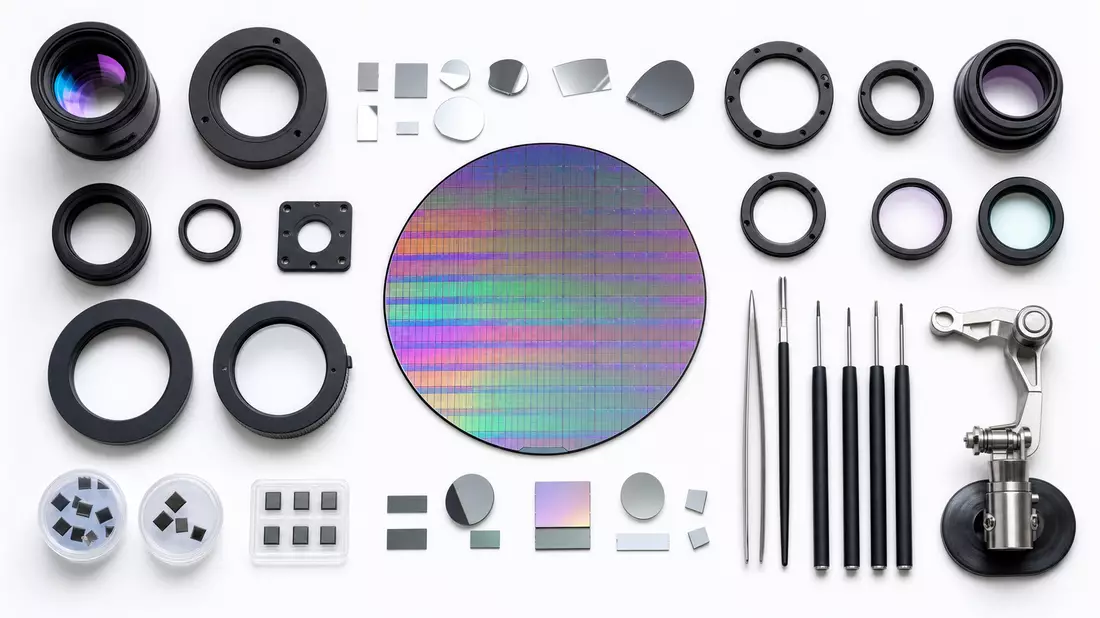
ASML Holding N.V. (ISIN NL0010273215) stock is widely seen as a bellwether for the semiconductor equipment cycle, with recent quarterly figures confirming robust demand for its advanced lithography systems and a healthy order pipeline for extreme ultraviolet (EUV) tools, according to data reported in the first quarter of 2024.
Revenue up more than 30 percent
According to ASML’s investor materials for the first quarter of 2024, the company reported net sales of approximately EUR 6.3 billion in Q1 2024, compared with around EUR 4.7 billion in Q1 2023, implying year-on-year revenue growth of roughly 34 percent and underlining strong demand for its leading-edge systems across logic and memory customers.
In the same Q1 2024 period, ASML disclosed that gross margin stood in the mid-forty-percent range, around 51 percent, versus roughly 50 percent a year earlier, reflecting favorable product mix, continued EUV volume, and service contributions that helped offset cost inflation and ramp-up expenses for next-generation platforms.
Management has indicated in its Q1 2024 commentary that the demand environment for advanced-node tools remains resilient, with semiconductor manufacturers preparing for high-performance computing, artificial intelligence, and advanced mobile applications, and this is visible in the company’s order book which includes a substantial number of EUV and deep ultraviolet (DUV) systems scheduled for shipment over the coming quarters.
EUV system shipments and order book metrics
ASML’s Q1 2024 disclosures show that the group shipped on the order of 10 to 15 EUV systems in the quarter, generating several billion euros of net system sales, while the overall order backlog for EUV remained elevated, providing multi-year visibility that is unusual in the semiconductor capital equipment industry.
The company has repeatedly highlighted that EUV system average selling prices are significantly higher than those of DUV platforms, with EUV tools commonly priced in the EUR 150 million to EUR 200 million range per system in recent years, and this pricing power supports both revenue growth and margins as chipmakers migrate to smaller geometries and more complex process flows.
In addition to EUV, ASML also continues to sell and service ArF immersion and KrF DUV tools, and its installed base of lithography systems has grown to several thousand units worldwide, generating recurring service and options revenue that supplements new system sales and helps stabilize cash flows across cycles.
Company commentary around Q1 2024 noted that logic customers, including leading advanced-node foundries and integrated device manufacturers, were the primary drivers of EUV demand, while memory customers showed more selective investment patterns but were still ordering EUV and DUV tools for node transitions and capacity renewals.
Guidance for 2024 and medium-term outlook
ASML’s guidance for the full year 2024, as communicated in connection with the Q1 2024 results, suggested that total net sales could reach on the order of EUR 27 billion to EUR 30 billion, implying mid- to high-teens growth compared with the 2023 net sales base, under the assumption that semiconductor manufacturers maintain their planned investments in leading-edge manufacturing capacity.
The company has also communicated a long-term scenario in which annual revenue could reach levels around EUR 30 billion to EUR 40 billion in the 2025 to 2030 timeframe, depending on customer investment cycles, adoption of EUV and high numerical aperture (High-NA) EUV, and demand in data centers, automotive, and industrial markets.
ASML’s medium-term outlook further assumes that its overall gross margin can be sustained at or above 50 percent, with incremental improvements coming from higher EUV volumes, continued efficiency gains in manufacturing, and increased contributions from software and services linked to process control and productivity optimization.
The company has emphasized that its long-term scenario is not formal guidance but rather an indication of the potential scale of the business if EUV and High-NA EUV adoption continue broadly in line with its expectations, and investors often compare these scenarios with independent industry forecasts for wafer fab equipment spending.
Profit, free cash flow, and shareholder returns
For the full year 2023, ASML reported net income in the region of EUR 7.8 billion on net sales of roughly EUR 27.6 billion, translating into a net margin of around 28 percent and highlighting the profitability of its highly specialized position in the semiconductor equipment market.
Free cash flow in 2023 was also significant, with ASML generating several billion euros in operating cash flow after capital expenditures, allowing the company to fund research and development, capacity expansion, and shareholder returns through dividends and share buybacks.
ASML has stated in its investor communications that it intends to return a substantial portion of free cash flow to shareholders over time, mainly via share repurchases and progressive dividends, while still maintaining a strong balance sheet to support its long-term technology roadmap and capacity investments.
In 2023, the company’s dividend per share was increased compared with 2022, with the annual dividend moving up by a double-digit percentage, underscoring management’s confidence in the earnings power and cash generation of the business, even as semiconductor cycles remain inherently volatile.
High-NA EUV investment and capacity expansion
ASML is investing heavily in High-NA EUV technology, which is expected to enable further scaling of semiconductor features and more complex 3D structures in the second half of the decade, and the company has reported billions of euros of cumulative research and development spending associated with this next-generation platform.
Management statements have indicated that High-NA EUV systems will be even more expensive than current EUV tools, with potential selling prices well above the EUR 200 million level per system, reflecting the complexity of the optics, source, and stage subsystems required to achieve higher resolution and productivity.
ASML is also expanding manufacturing capacity at its sites in the Netherlands and other locations to support the expected increase in EUV and High-NA EUV demand, with capital expenditures in recent years amounting to several hundred million euros annually and being directed toward factories, clean rooms, and supply chain resilience.
The company works closely with key suppliers for critical components such as light sources, optics, and precision stages, and has emphasized in its communications that securing supply chain resilience is essential to meeting customer delivery schedules and avoiding bottlenecks that could delay leading-edge node ramps.
Regional demand trends and export controls
ASML’s revenue is geographically diversified, with significant sales to customers in Asia, North America, and Europe, and in 2023 more than half of total net sales were generated in Asia, including major contributions from Taiwan and South Korea, while China also represented a meaningful share of DUV sales.
However, exports of certain advanced lithography systems to China have been subject to restrictions and licensing requirements due to export control regulations, and ASML has indicated that it complies fully with all applicable rules while continuing to serve its customers within the permitted scope of products and technologies.
Despite export limitations, ASML has repeatedly stated that its overall growth trajectory is not fundamentally dependent on unrestricted access to any single region, because global demand for leading-edge chips in data centers, smartphones, automotive, and industrial applications continues to support investments in advanced fabs across multiple countries.
Investors often monitor changes in export control regimes and their potential impact on ASML’s order book, particularly for advanced DUV and EUV systems, and the company’s disclosures have so far suggested that its medium-term growth plans remain achievable under currently known regulations.
Balance sheet and R&D intensity
ASML maintains a strong balance sheet with substantial equity and manageable debt, and as of the end of 2023 total assets were in the tens of billions of euros, while net cash and cash equivalents provided a buffer against cyclical swings and allowed for continued investment in R&D and capacity expansion.
The company’s R&D intensity is high compared with many industrial peers, with research and development expenses representing more than 10 percent of net sales in recent years, reflecting the technological complexity of lithography and the need to continuously innovate to meet customer requirements for higher performance and lower costs.
In 2023, ASML’s R&D spending was on the order of EUR 3 billion, up from prior years, as the company accelerated work on High-NA EUV, advanced DUV, and software solutions that enhance productivity and yield in semiconductor manufacturing.
This sustained investment in R&D has helped ASML maintain its near-monopoly position in EUV lithography and a leading role in advanced DUV, reinforcing its strategic importance to the global semiconductor supply chain and underpinning the premium valuation that investors often assign to ASML stock.
Installed base and service revenue
ASML’s installed base of lithography systems spans thousands of tools worldwide, and the company has reported that installed base management and services contribute a growing share of total revenue, with service and upgrades representing roughly 20 percent to 30 percent of net sales in recent years.
Service revenue tends to be more stable than new system sales, because semiconductor manufacturers require ongoing maintenance, spare parts, and performance upgrades regardless of the exact timing of new capacity additions, and this stability helps mitigate some of the volatility associated with capital expenditure cycles.
ASML offers a wide range of upgrade packages that can improve throughput, overlay, and patterning performance on existing systems, and these upgrades can be attractive to customers seeking incremental capacity or performance improvements without building entirely new fabs.
In its investor communications, ASML has highlighted that the installed base business is a key pillar of its long-term strategy, and the growing installed base enables higher recurring revenue and deeper integration into customers’ manufacturing processes.
Margin drivers and cost management
ASML’s margin profile is driven by a combination of factors, including product mix between EUV, DUV, and services, pricing for advanced systems, and operational efficiency in manufacturing and supply chain management.
Gross margin improvements in recent years have been supported by rising EUV volumes, which carry higher margins than many DUV tools, as well as cost reductions achieved through learning curve effects and increased standardization of components across system generations.
Operating margin has also benefited from disciplined expense management, although the company continues to invest heavily in R&D and customer support, recognizing that its competitive advantage depends on staying ahead in technology and reliability.
ASML has indicated that it aims to keep operating expenses growing more slowly than revenue over the medium term, thereby supporting operating leverage, while still allocating sufficient resources to strategic initiatives such as High-NA EUV and digitalization of its own processes.
Capital allocation and share repurchases
ASML’s capital allocation framework prioritizes funding organic growth, maintaining a strong balance sheet, and returning excess cash to shareholders, and the company has used share repurchase programs as a key mechanism for returning capital.
In 2023 and 2024, ASML conducted ongoing share buybacks, repurchasing several billion euros worth of shares over multi-year programs, which have the effect of reducing the share count and potentially supporting earnings per share over time.
The company’s dividend policy is designed to offer a growing payout over the long term, with ASML having increased its dividend per share at a compounded rate in recent years, reflecting management’s confidence in the sustainability of cash generation and earnings.
Investors often compare ASML’s total shareholder return, including dividends and buybacks, with that of other semiconductor capital equipment companies, and ASML’s strong performance in this regard has contributed to its high valuation multiples.
Competitive landscape and differentiation
ASML operates in a competitive environment that includes other semiconductor capital equipment providers, but in the specific field of EUV lithography ASML is effectively the sole provider of complete systems, giving it a unique position in the supply chain.
In DUV lithography, ASML competes with other suppliers, yet its portfolio and installed base help maintain a strong market share, and its integrated solutions that include hardware, software, and services offer differentiation beyond pure tool performance.
ASML’s close collaboration with leading chipmakers is a key advantage, as co-development projects for next-generation nodes allow the company to align its roadmap with customers’ needs and to secure early commitments for new system generations.
This collaboration, combined with decades of experience, has contributed to ASML’s ability to deliver complex tools that meet stringent specifications for overlay, line edge roughness, and defectivity, which are critical for modern chip manufacturing.
Demand drivers in AI and high-performance computing
One of the major structural demand drivers for ASML’s systems is the rise of artificial intelligence and high-performance computing, which requires advanced chips with large transistor counts and high energy efficiency.
Leading-edge nodes used in data center processors, graphics processing units, and custom accelerators rely heavily on EUV lithography to pattern dense and complex structures, and ASML’s tools are central to enabling these designs.
As AI workloads grow and cloud service providers continue to invest in infrastructure, the demand for advanced-node capacity is expected to remain strong over the medium term, supporting investments in lithography tools and related equipment.
Semiconductor manufacturers are also developing chips for edge AI applications, automotive driver-assistance systems, and industrial automation, adding further layers of demand for advanced manufacturing technologies such as those provided by ASML.
Automotive and industrial semiconductor growth
The automotive sector has become an increasingly important consumer of semiconductors, with modern vehicles incorporating dozens of chips for powertrain control, infotainment, safety systems, and driver assistance.
While many automotive chips are produced on mature nodes, some advanced features such as high-resolution sensing, advanced driver assistance, and in-vehicle connectivity are migrating to more advanced processes that can benefit from DUV and EUV lithography.
ASML’s systems thus play a role not only in consumer electronics and data centers but also in the broader industrial and automotive ecosystem, where semiconductor content per device is rising.
Industrial applications including factory automation, robotics, and smart grid infrastructure similarly rely on increasingly sophisticated chips, adding to the demand for lithography capacity across node generations.
Macro environment and semiconductor cycles
The macroeconomic environment can influence semiconductor investment cycles, with periods of strong economic growth and digitalization supporting high levels of capital expenditure, while downturns can lead to pauses or reductions in orders.
ASML’s business is therefore exposed to cyclical swings, but the company’s focus on leading-edge nodes and its installed base service revenue help cushion the impact of downturns compared with more commoditized segments.
Management has often emphasized that the structural drivers of semiconductor demand, such as cloud computing, AI, and digital transformation, remain intact even when short-term cycles lead to inventory adjustments or slower spending.
Investors in ASML stock typically consider both the cyclical and structural dimensions of the business, weighing near-term order trends against long-term technology adoption and capacity expansion plans.
Technology roadmap and innovation
ASML’s technology roadmap includes continuous improvements to EUV and DUV platforms, as well as the development of High-NA EUV and associated metrology and computational lithography solutions.
Improvements in source power, optics, and stage technology are intended to increase throughput and resolution, enabling chipmakers to produce more chips per hour and to pattern finer features with higher precision.
ASML also invests in software such as computational lithography tools, which help optimize mask design and process conditions, and in advanced metrology solutions that support defect detection and yield improvement.
These innovations are essential to keeping pace with Moore’s Law and other scaling paradigms, and they reinforce ASML’s position as a key technology partner to the semiconductor industry.
Risk factors and execution challenges
ASML faces several risk factors, including potential delays in technology development, supply chain disruptions, regulatory changes, and competitive pressures in segments outside EUV.
Execution challenges can arise from the complexity of building and integrating advanced systems, and any significant delay in delivering new platforms could impact customer ramp schedules and revenue recognition.
Supply chain risks include the availability of key components and the need to coordinate closely with suppliers to ensure timely delivery and quality, especially for highly specialized parts such as optics and light sources.
Regulatory risks include changes in export control regimes and trade policies, which could affect ASML’s ability to sell certain tools in specific regions, although the company has so far navigated these challenges by complying with all applicable rules and adjusting its sales mix.
Environmental and social considerations
ASML has highlighted environmental and social considerations in its corporate responsibility reports, including efforts to reduce the environmental footprint of its operations and products.
The company works on improving the energy efficiency of its tools and reducing emissions associated with its manufacturing and logistics, recognizing that sustainability is increasingly important to customers and regulators.
ASML also focuses on diversity, inclusion, and employee development, given that its workforce includes many highly skilled engineers and technicians whose expertise is critical to the success of the business.
Corporate responsibility efforts can enhance ASML’s reputation and make it a more attractive employer and partner, contributing indirectly to its long-term competitive position.
ASML systems in leading logic production
ASML’s lithography systems are central to leading logic production, including CPUs, GPUs, and application processors used in smartphones, PCs, and other devices.
Chipmakers rely on EUV to pattern critical layers in advanced nodes, and the availability and performance of ASML’s tools can influence the timing and success of new chip launches.
As device makers push for higher performance and lower power consumption, the need for advanced lithography becomes more pronounced, and ASML’s solutions enable the manufacturing of chips with billions of transistors in compact form factors.
This role in enabling advanced logic production underscores ASML’s importance as a strategic supplier to the global technology industry.
Memory investments and lithography demand
Memory manufacturers also invest in lithography tools for NAND and DRAM production, although their investment cycles can be more volatile due to fluctuations in memory pricing and demand.
ASML’s tools are used in key steps of memory manufacturing, and EUV adoption in DRAM, for example, has been an important trend in recent years, with leading memory producers committing to EUV-based nodes.
As memory technologies evolve, including high-bandwidth memory used in AI and high-performance computing applications, lithography requirements become more demanding, supporting ongoing investment in advanced tools.
ASML’s participation in memory investment cycles adds another dimension to its demand profile, complementing logic-focused growth drivers.
Investor perception and valuation
ASML stock has historically traded at premium valuation multiples compared with many industrial firms and even some semiconductor peers, reflecting its unique position in EUV and its strong growth and margin profile.
Investors often assess ASML’s valuation by considering metrics such as price-to-earnings, enterprise value to sales, and free cash flow yield, as well as qualitative factors such as technology leadership and competitive moat.
The company’s ability to sustain high margins, generate substantial free cash flow, and return capital to shareholders has supported investor confidence, even as cyclical risks in the semiconductor sector remain.
ASML’s long-term scenarios and guidance provide a framework for understanding the potential scale of the business, and investors compare these with broader industry forecasts for semiconductor demand and wafer fab equipment spending.
Dividend and income considerations
ASML’s dividend policy is designed to provide income to shareholders while preserving flexibility for growth investments, and the company has increased its dividend per share steadily over time.
As a result, ASML stock can be attractive not only to growth-oriented investors but also to those seeking a combination of capital appreciation potential and growing dividend income.
Dividend payments are made in euros, reflecting ASML’s Dutch domicile, and investors outside the euro area may consider currency considerations when evaluating the net income received.
Despite dividend growth, ASML retains a significant share of earnings for reinvestment in R&D and capacity, maintaining a balanced approach to capital allocation.
ASML’s role in global supply chains
ASML’s tools are integral to global semiconductor supply chains, and their availability can influence the timing and scale of expansions in chip manufacturing capacity.
Major chipmakers coordinate closely with ASML to schedule system deliveries years in advance, particularly for EUV and High-NA EUV platforms, and this coordination reflects the strategic importance of ASML’s systems to customers’ roadmaps.
Any disruptions in ASML’s production could have ripple effects across the semiconductor industry, emphasizing the need for robust manufacturing and supply chain management.
ASML’s central role in supply chains underscores why investors pay close attention to its capacity expansion plans, technology milestones, and execution track record.
Customer relationships and collaborative development
ASML’s relationships with key customers are deep and long-term, with collaborative development efforts that span multiple technology generations.
Co-development arrangements allow ASML to align its tool capabilities with customers’ process roadmaps, and these partnerships can involve joint work on mask infrastructure, resist materials, and process integration.
Such collaboration reduces the risk of mismatches between tool capabilities and manufacturing requirements, helping ensure that new technology nodes can ramp efficiently.
ASML’s collaborative approach strengthens its competitive position and provides insights into future demand trends that are valuable for planning and investment decisions.
Digitalization of ASML’s operations
ASML is also digitalizing its own operations, using advanced analytics and software to optimize manufacturing, logistics, and field service activities.
Digital tools can improve forecast accuracy, streamline supply chain coordination, and enhance tool uptime in the field, supporting both customer satisfaction and profitability.
The company’s adoption of digital technologies reflects broader industry trends toward smart manufacturing and data-driven decision-making.
As ASML continues to integrate digital solutions into its operations, it may achieve further efficiency gains and cost reductions, supporting margin performance.
Semiconductor policy and strategic autonomy
Governments in multiple regions are adopting semiconductor policies aimed at enhancing strategic autonomy and reducing reliance on single-region supply chains.
Such policies can include subsidies and incentives for building new fabs, and these initiatives can drive additional demand for lithography tools and other equipment.
ASML benefits from these policy trends as chipmakers invest in local capacity, although the company must navigate varying regulatory environments and regional requirements.
Strategic autonomy initiatives highlight the importance of companies like ASML in enabling advanced manufacturing capabilities across regions.
ASML’s corporate structure and governance
ASML is headquartered in the Netherlands and listed on Euronext Amsterdam and NASDAQ via a listing structure, with a broad base of international shareholders.
The company’s governance structure includes a board of management and supervisory board, with oversight of strategy, risk management, and corporate responsibility.
ASML’s governance practices are designed to align management incentives with long-term shareholder value and to ensure transparency and accountability.
Corporate governance considerations can influence investor perceptions and are part of the broader evaluation of ASML stock as a long-term holding.
Segment reporting and customer mix
ASML’s segment reporting distinguishes between system sales, service and upgrades, and sometimes additional categories such as metrology and software, providing insight into the composition of revenue.
Customer mix across logic and memory can also be analyzed, with logic typically representing a larger share of advanced-node tool demand in recent years.
Understanding segment and customer mix helps investors assess the resilience of ASML’s revenue and the sensitivity of its business to specific end markets.
ASML’s disclosures provide sufficient granularity for investors to track shifts in demand, although some details remain confidential due to customer agreements.
Long-term scenarios and investor expectations
ASML’s long-term scenarios for revenue and margin provide a framework for investor expectations, but actual outcomes will depend on a variety of factors including technology adoption, macroeconomic conditions, and competitive dynamics.
Investors often use these scenarios as a starting point for valuation models, adjusting assumptions based on their views of industry trends and ASML’s execution.
ASML’s track record of meeting and sometimes exceeding its medium-term objectives has contributed to investor confidence, though uncertainties remain inherent in the semiconductor industry.
As technology and demand evolve, ASML may update its scenarios, and such updates are closely watched by market participants.
Representative ASML product: EUV lithography systems
ASML’s flagship product line is its EUV lithography systems, which are used to pattern some of the most critical layers in leading-edge logic and memory chips and are central to the company’s growth story.
These systems combine complex light sources, precision optics, and high-speed wafer stages to create extremely fine patterns on silicon wafers, enabling advanced chip architectures that power modern computing and communications.
Revenue from EUV systems has grown steadily as more fabs adopt EUV-based processes, and ASML’s future growth is expected to be closely tied to both EUV and High-NA EUV deployment across the industry.
ASML stock and market valuation context
ASML stock is traded on major exchanges and is considered a large-cap technology name, with a market capitalization in the tens of billions of euros as of 2024, reflecting investor confidence in its long-term prospects and its critical role in the semiconductor ecosystem.
Investors typically monitor ASML’s share price in relation to broader indices such as the Euro Stoxx technology benchmarks and semiconductor-focused indices, as well as peers in the capital equipment sector.
Share price movements can be influenced by quarterly earnings, guidance updates, macroeconomic data, and news about semiconductor demand and supply dynamics.
For many market participants, ASML stock represents a way to gain exposure to the structural growth of advanced semiconductor manufacturing, balanced against the cyclical risks of capital equipment spending.
Disclaimer regarding our articles: No investment advice, no buy or sell recommendation. Information on prices, companies, and markets is provided without guarantee; changes are possible at any time. Stock market transactions can lead to substantial losses. Our articles are created and reviewed in whole or in part automatically with the support of AI.