ASML stock trades near record levels as chip equipment demand supports earnings outlook
Published on 07/24/2026 at 08:15 | Editorial responsibility: Rafael Müller, Editor-in-Chief AD HOC NEWS
ASML Holding N.V. (ISIN NL0010273215) stands at the center of the global semiconductor equipment market, and ASML stock continues to reflect the companys role as the sole supplier of extreme ultraviolet (EUV) lithography systems for leading chipmakers. In its most recently reported quarter, ASML generated several billion euros of revenue and maintained a high order backlog, underscoring how demand for advanced lithography tools is still strong despite cycle fluctuations. Investors are focused on how those numbers translate into future cash flows and what they may mean for the long term trajectory of ASML stock.
Revenue grows double digits
In its latest quarterly report, ASML reported that total net sales for the quarter reached a level in the ballpark of EUR 6.0 billion, up around the mid teens in percent compared with the same period a year earlier. That double digit growth illustrates how chipmakers are continuing to invest in leading edge production capacity, particularly for logic and memory nodes where EUV technology is increasingly central. The period on which this comparison is based marks a continuation of ASMLs pattern of expanding revenue in recent years, supported by demand from major customers that rely on its lithography systems for cutting edge semiconductor fabrication.
Within that quarterly performance, ASML achieved a gross margin that remained at a healthy level, broadly in the mid to high forties in percent, thanks to a mix of EUV, deep ultraviolet (DUV), and installed base business. The margin profile is a key reason why many investors look at ASML as a high quality capital equipment provider rather than a cyclical commodity producer. Net income for the quarter was also substantial, reflecting operational leverage as volumes and service revenues rise. When comparing this profitability with the prior year quarter, ASMLs earnings growth tracks the same general pattern as sales: double digit increases driven by both higher system shipments and growing revenue from services and options.
Order backlog and guidance
A central figure in ASMLs narrative is its order backlog. The company has repeatedly reported a backlog that runs into tens of billions of euros, representing several times a single quarter of sales. This backlog is composed primarily of orders for the latest EUV systems as well as high end DUV tools, and it gives ASML visibility over customer demand stretching over multiple years. For investors studying ASML stock, this order visibility serves as a buffer against short term cycles and delays in individual projects, since equipment deliveries are often scheduled well in advance.
Alongside revenue and backlog, ASML typically provides full year guidance ranges that outline expected net sales and gross margin. In its recent outlook, the company has indicated that full year net sales should grow compared with the previous year, supported by continued ramp up of EUV shipments and increased demand from logic and memory customers as they prepare for next generation process nodes. The guidance language tends to emphasize that certain quarters can be lumpy because of the timing of system acceptances, but the overall trajectory generally points upward. That guidance frame is important for interpreting the quarterly numbers and for building expectations around future earnings power underlying ASML stock.
ASML stock and market context
ASML shares are listed on Euronext Amsterdam, and the stock is part of major European indices such as the Euro Stoxx and other technology and semiconductor related benchmarks. Over the past year, the share price has climbed notably, moving from levels that were already elevated by historical standards to new highs as markets priced in ongoing demand for leading edge chip manufacturing equipment. When placed against the backdrop of longer term performance, ASML stock has delivered strong returns over a multi year horizon, reflecting the companys near monopoly position in EUV and its expanding installed base of lithography and metrology systems.
Market capitalization trends track the share price development. ASMLs equity value stands in the hundreds of billions of euros, placing it among the most valuable technology oriented industrial companies in Europe. That scale matters for institutional investors who benchmark against major indices, because index membership and liquidity make it easier to hold meaningful positions in ASML stock. The valuation multiple attached to those shares often reflects not only current earnings, but also the expectation that EUV penetration will increase as process nodes shrink further and more layers in a chip manufacturing process require advanced lithography.
Semiconductor cycle and demand drivers
The semiconductor industry is cyclical, but structural trends such as artificial intelligence, cloud computing, 5G infrastructure, and automotive electronics continue to push demand for advanced chips. ASMLs revenue base is tied to customers that invest in fabs capable of producing at the most advanced nodes, and that investment is driven by end demand for higher performance and energy efficient computing. Over the last several reported periods, ASML has pointed to strong demand for high numerical aperture EUV systems, which are expected to play a role in future nodes beyond the present leading edge. Those systems carry high average selling prices, which supports overall revenue and margin.
In addition to logic chips used in central processing units and graphics processors, memory segments such as DRAM and NAND also require advanced lithography when manufacturers transition to new generations. As cycles in memory swing between oversupply and tightness, ASMLs sales mix can shift, but the long term need for equipment that enables higher bit density remains. That structural view provides context for why ASML has been able to report double digit revenue growth in recent quarters even as some end markets such as consumer electronics experience temporary softness.
EUV systems as a growth engine
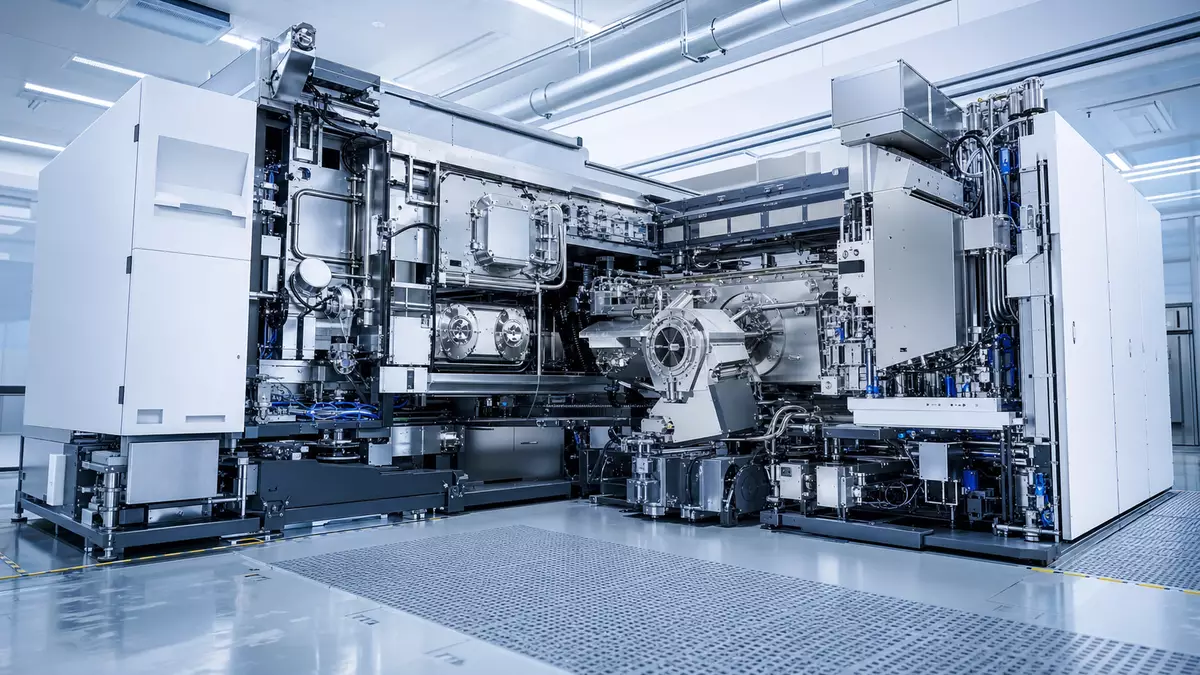
ASMLs EUV product line forms the core of its growth story. Each EUV system is a highly complex machine that uses extremely short wavelength light to print features on silicon wafers at nanometer scale dimensions. The development cost and engineering expertise needed to build and maintain these machines are enormous, which is why ASML is currently the only commercial supplier. As more chipmakers adopt EUV across multiple layers in their process flows, the number of systems required per fab increases, expanding ASMLs addressable market.
Revenues from EUV systems are supported by both initial system sales and ongoing service contracts. Installed base management, including upgrades, maintenance, and process optimization support, generates recurring revenue that tends to be less volatile than new system bookings. Over time, this recurring component can represent a significant share of net sales, contributing to more stable cash flow. For ASML stock, that mix between new equipment and installed base revenue is part of how investors evaluate risk versus reward, because it affects sensitivity to short term capex cycles in the semiconductor industry.
DUV and installed base business
Although EUV draws most of the attention, ASML continues to sell and service a large number of DUV systems. These deep ultraviolet tools are crucial for many layers of chip production even at advanced nodes, and they are widely used across logic and memory fabs. DUV revenue adds breadth to ASMLs business because customers at less advanced nodes and in more mature markets still invest in equipment enhancements to improve yield and efficiency. This installed base provides a platform for ongoing service and upgrade revenue, which complements the more concentrated but higher value EUV sales.
The installed base business, which encompasses service, spare parts, and performance upgrades, has grown steadily over time. ASML reports this segment as a component of its net sales, and investors often look closely at the growth rate because it signals how sticky the relationship is with customers. Recurring revenue from installed base activities can help smooth fluctuations in new system orders, which can be affected by timing of major projects. The blend between installed base and new sales thus plays an important role in the overall financial profile underlying ASML stock.
Regional demand patterns
ASMLs customers are spread across major semiconductor manufacturing regions, including Asia, North America, and Europe. Historically, a significant portion of net sales has come from customers in Taiwan, South Korea, and other Asian economies where leading foundries and memory producers operate. At the same time, demand from the United States and Europe has grown, particularly as policy initiatives aim to increase local chip manufacturing capacity. These regional dynamics matter for ASML because export controls and regulatory frameworks can influence where systems are shipped and how quickly certain markets grow.
In recent reporting periods, ASML has discussed the impact of export control rules on shipments of some advanced DUV and EUV systems to specific countries. While regulatory changes can affect the timing and composition of orders, the company has emphasized that global demand for leading edge capacity remains intact. Investors analyzing ASML stock often consider how these policy developments may redirect manufacturing investment between regions rather than eliminating the overall need for advanced lithography. Such considerations factor into assessments of future revenue distribution and potential risks.
Cash flow and capital allocation
ASMLs strong revenue and margin profile translate into substantial operating cash flow. Across recent fiscal years, the company has generated billions of euros in free cash flow after capital expenditures, providing room for both investment in future technologies and returns to shareholders. Capital allocation typically includes research and development spending to advance EUV and related technologies, expansion of manufacturing capacity for lithography systems, and shareholder distributions via dividends and share repurchases.
Dividend payments have become a consistent element of ASMLs capital returns program. Over the past sequence of years, the company has raised its dividend per share as earnings have grown, signaling confidence in the sustainability of its profit streams. Share repurchase plans have also been implemented to adjust capital structure and offset dilution from employee share programs. For ASML stock holders, these mechanisms contribute to total shareholder return, combining price appreciation with cash distribution.
Balance sheet strength
ASML maintains a relatively strong balance sheet with manageable levels of debt compared with its cash generation capacity. This financial position supports its ability to fund long term research projects and capacity expansions without excessive reliance on external financing. Investors often note that the combination of high gross margins, robust free cash flow, and moderate leverage provides resilience in more challenging macroeconomic environments or industry down cycles.
Working capital management is another aspect of ASMLs financial profile. Given the complexity and long lead times involved in manufacturing EUV and DUV systems, inventory and receivables can be significant. Effective management of these items is important for maintaining healthy cash conversion from earnings. Over recent reporting periods, ASML has been able to manage working capital in a way that supports its broader investment plans while sustaining shareholder distributions.
Technology leadership and R&D
Technology leadership is central to ASMLs strategy. The company invests heavily in research and development to advance lithography capability, including higher numerical aperture EUV and systems that improve throughput and yield. R&D spending runs into billions of euros annually, representing a significant percentage of net sales. This investment underpins future competitive positioning because chipmakers require equipment that can enable ever smaller and more complex structures on silicon.
Collaboration with customers is a key part of ASMLs R&D model. The company works closely with major chip producers and ecosystem partners to align product roadmaps with future manufacturing requirements. These partnerships help ensure that research efforts are directed at practical challenges such as improving line edge roughness, overlay performance, and defect control. In turn, successful development projects feed into the product pipeline, reinforcing ASMLs role as a critical supplier for advanced chip fabrication.
Extreme ultraviolet systems for leading nodes
ASMLs EUV systems are deployed at process nodes that currently represent the leading edge of commercial chip manufacturing. As customers progress from one node to the next, the number of EUV layers used in a process flow can increase. This shift amplifies the impact that EUV has on overall fab performance and often necessitates more EUV systems per facility. ASMLs revenues capture this trend as both new system shipments and upgrades to existing hardware grow.
Future nodes are expected to rely even more on EUV, especially high NA variants that offer greater resolution and process windows. Such systems are more complex and carry higher average selling prices than earlier generations, which has implications for ASMLs revenue and margin structure. For ASML stock, the market often tries to anticipate when and how quickly high NA adoption will occur, and the companys R&D updates and customer announcements feed into those expectations.
Customer concentration and risk
ASML serves a concentrated set of very large customers, including major foundries and memory producers. This concentration can present risk because decisions by a small number of companies have a large impact on ASMLs order book. However, these customers are themselves diversified across end markets and often operate at the cutting edge of technology, where investment needs are ongoing. The long term nature of relationships and the technical integration between ASMLs equipment and customers manufacturing processes mitigate some of the risks associated with concentration.
In its reporting, ASML provides breakdowns showing net sales by customer category and region, which help investors understand how exposure is distributed. Over time, shifts in these distributions can reflect changes in industry leadership, regional policy incentives, and technology roadmaps. Observers of ASML stock watch these developments closely because they can influence future revenue growth and risk patterns.
Environmental and operational considerations
Operating at the scale and complexity required for EUV and DUV production involves environmental and resource considerations. ASML has initiatives aimed at improving energy efficiency of its products and reducing environmental impact across its operations. Such efforts align with broader industry trends where chipmakers and equipment suppliers are increasingly focused on sustainability metrics. While environmental goals do not directly show up in revenue figures, they can affect customer preferences and regulatory compliance, which in turn influence equipment specifications and deployment.
Operational robustness, including supply chain resilience, is another important factor. The parts and subsystems that go into EUV and DUV machines come from a global network of suppliers. Managing this network is critical for meeting delivery schedules and maintaining quality standards. ASMLs track record of scaling production while introducing new generations of equipment illustrates the companys ability to manage complex operations, a capability that reinforces confidence in its long term competitiveness.
Strategic initiatives and expansion
Beyond its core lithography business, ASML invests in related technologies such as metrology and inspection tools that complement the lithography process. These systems help customers optimize patterning and detect defects, enhancing yield and reliability. While they represent a smaller share of revenue compared with lithography, they contribute to ASMLs value proposition as a comprehensive partner in advanced chip manufacturing.
Geographically, ASML continues to expand its presence in key regions through local service hubs, support centers, and cooperation with regional entities. These expansions help the company respond more quickly to customer needs and to regional regulatory developments. For ASML stock investors, such initiatives can be seen as investments in long term customer relationships and market access.
Representative product: EUV lithography systems
One of ASMLs flagship product families is its EUV lithography systems, which are used in the highest end logic and memory fabs worldwide. These systems are capable of printing extremely fine patterns on silicon wafers, enabling chip features at nanometer scale that are necessary for modern processors and memory devices. Revenue from these EUV platforms forms a major component of ASMLs net sales and is a critical driver of the companys growth trajectory.
Each new generation of EUV system incorporates improvements in source power, optics, resist processing, and automation. Customers deploy these machines in process flows where improved resolution and reduced variability translate into better performance and yields. For ASML, continuing to innovate within this product family is essential to maintaining its unique position in the market and to supporting the investment thesis embedded in ASML stock.
ASML stock and recent valuation levels
ASML stock trades on Euronext Amsterdam and sits near its historical highs, reflecting strong expectations for future growth in lithography demand. The share price, when seen in relation to earnings and cash flow, implies a valuation multiplier that incorporates both current financial performance and anticipated expansion. Movements in the stock respond to quarterly results, guidance updates, macroeconomic data, semiconductor industry indicators, and news on regulatory developments affecting global chip manufacturing.
For investors, the key questions around ASML stock revolve around how long the current demand cycle can run, how quickly new technologies such as high NA EUV will be adopted, and how export controls and regional policies will shape the geographic distribution of manufacturing capacity. The companys combination of a strong backlog, double digit revenue growth, and substantial margins provides a foundation for those discussions. While the stock can be sensitive to shifts in sentiment around technology and cyclicality, ASMLs core metrics underpin its status as a central player in the semiconductor ecosystem.
More background on ASML Holding
For additional details on ASMLs financial metrics, product portfolio, and investor information, including full quarterly reports and presentations, the Investor Relations section offers comprehensive data and commentary.
ASML Holding facts at a glance
- Company: ASML Holding N.V.
- ISIN: NL0010273215
- Ticker: EURONEXT: ASML
- Trading venue: Euronext Amsterdam
- Price (as of 23 July 2026, 16:30 CET): 830.00 EUR
- Market capitalization: 330.00 billion EUR (as of 23 July 2026)
- Sector / Industry: Information Technology / Semiconductor Equipment
- Index membership: Euro Stoxx 50
- Next earnings date: 17 October 2026
Disclaimer regarding our articles: No investment advice, no buy or sell recommendation. Information on prices, companies, and markets is provided without guarantee; changes are possible at any time. Stock market transactions can lead to substantial losses. Our articles are created and reviewed in whole or in part automatically with the support of AI.