ASML's €1,387 High and the $400 Million Caveat
Published on 05/28/2026 at 13:52 | Redaktion boerse-global.de
The Dutch chip-equipment giant is riding a wave, but the next push requires a leap few customers are ready to take. ASML’s stock has surged to within 2.4% of its 52-week high at €1,387, powered by a €12 billion buyback program and unprecedented demand from AI-related chipmakers. Yet the very technology that promises to sustain this momentum—High-NA EUV lithography—carries a price tag that is splitting the industry.
ASML has been aggressively repurchasing its own shares, spending roughly €15.9 million each day between May 18 and 22. The company bought between 11,397 and 12,644 shares daily at weighted average prices of €1,255 to €1,393. In the first quarter alone, it funneled €1.1 billion into buybacks under the program announced in January 2026, which authorizes up to €12 billion in repurchases over three years. Shareholders also saw a 17% dividend hike to €7.50 per share for 2025.
The operational backdrop is strong. ASML reported first-quarter revenue of €8.8 billion, a gross margin of 53%, and net income of €2.8 billion. For full-year 2026, management targets sales between €36 billion and €40 billion, with gross margins in the 51–53% range. The second quarter is expected to deliver €8.4–9.0 billion in revenue, though margins are seen slipping to 51–52%. The engine behind this growth is clear: AI infrastructure spending is driving demand for the most advanced chips, and ASML holds a monopoly on the extreme ultraviolet (EUV) lithography systems needed to produce them.
Should investors sell immediately? Or is it worth buying Asml?
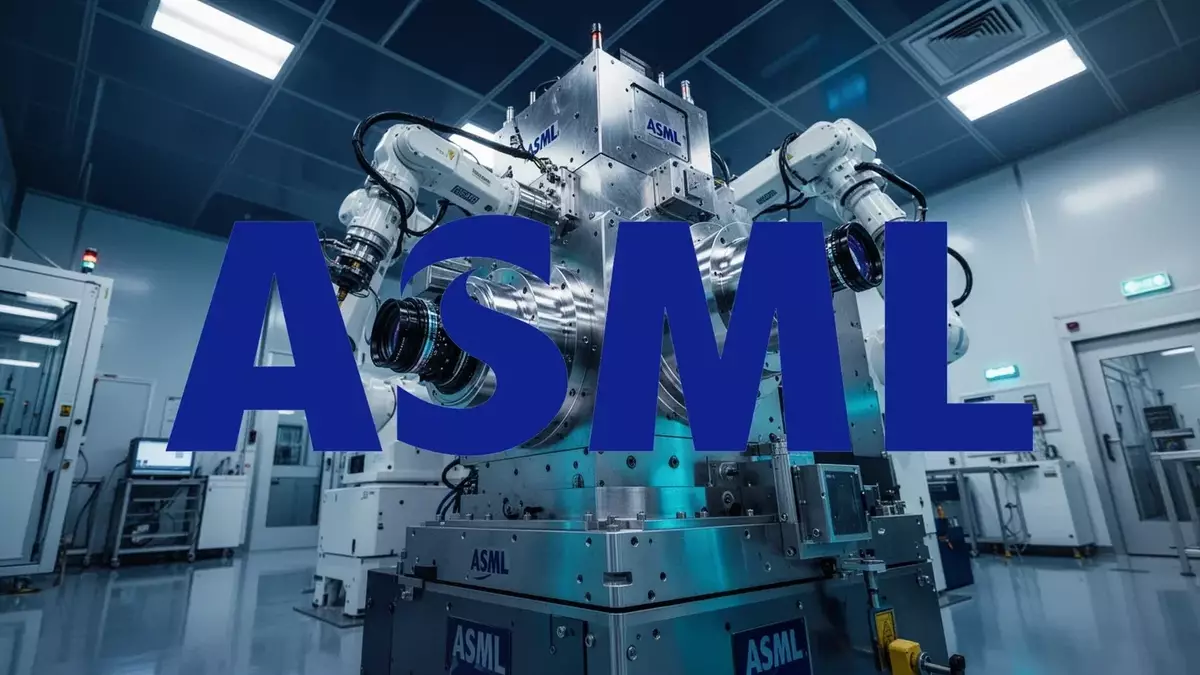
But the next frontier—High-NA EUV—comes at a cost of up to $400 million per system. That has created a fault line among ASML’s biggest clients. TSMC, the world’s largest contract chipmaker, has so far balked at the price, judging it too high for the immediate payoff. In contrast, Intel, Samsung, and SK Hynix are pressing ahead with their High-NA roadmaps, betting that the ability to etch finer circuits will prove essential as chip complexity escalates. The first chips produced using High-NA systems are expected in the coming months, providing a real-world test of whether the technology justifies its premium.
Geopolitical risk adds another layer. The U.S. MATCH Act could restrict ASML’s access to the Chinese market, a significant revenue contributor. Management has deliberately left a wide range in its annual guidance to account for different outcomes in the export-control debate. The stock’s annualized volatility stands at 46%, reflecting the dual exposure to booming demand and political uncertainty.
The market has already priced in much of the optimism. ASML closed at €1,375.60 on Wednesday, up 39.19% year-to-date and 107.79% over the past twelve months. That puts it just below its 52-week high of €1,421 (with one source citing €1,420.80). European tech stocks opened firmer the same day, with ASML and Infineon contributing to index gains, while Micron Technology in the U.S. briefly crossed the $1 trillion market-cap threshold.
For investors, the near-term catalyst is the performance of those first High-NA chips. Success would cement ASML’s role in the next phase of the AI cycle; any delay would revive the cost debate and test how much upside the stock has already discounted.
Ad
Asml Stock: New Analysis - 28 May
Fresh Asml information released. What's the impact for investors? Our latest independent report examines recent figures and market trends.
Disclaimer regarding our articles: No investment advice, no buy or sell recommendation. Information on prices, companies, and markets is provided without guarantee; changes are possible at any time. Stock market transactions can lead to substantial losses. Our articles are created and reviewed in whole or in part automatically with the support of AI.