ASML Plays Long Game With Photonics Pact While MATCH Act Threat Lingers
Published on 06/25/2026 at 13:13 | Editorial boerse-global.de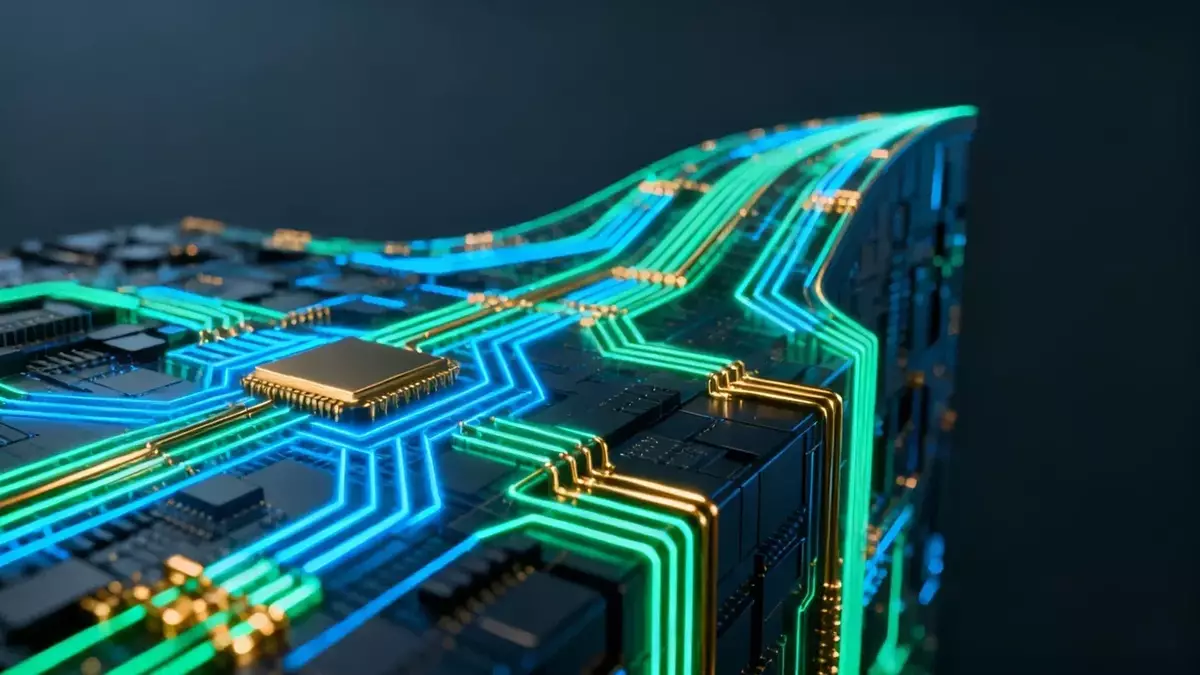
The Dutch lithography titan is placing an early bet on a technology that could one day complement—or even compete with—conventional electronics. ASML has entered a cooperation with research organisation TNO to scale photonic chips from lab curiosity to industrial production. A pilot line is being set up on the High Tech Campus Eindhoven under the European PIXEurope project, gradually building capacity for 6-inch indium phosphide wafers. ASML is supplying DUV and I-line lithography tools along with process support, with deliveries phased over time.
The logic is straightforward: photonic chips move data using light, not electricity, offering superior speed, energy efficiency and bandwidth. Demand is accelerating, particularly in AI, where electrical chips are running into physical limits. Market researcher Yole pegs the global silicon photonics market at $278 million in 2024, projecting it to hit $2.7 billion by 2030—a compound annual growth rate of 46%. ASML already commands a near-monopoly in EUV lithography, and this move positions it early in a nascent market.
The stock gave investors a positive read on the news, climbing 4.56% on Thursday to €1,619. That leaves the shares roughly 5.3% below the 52-week high of €1,710 set on June 22. Year-to-date, the equity has surged around 64%, though it has pulled back nearly 9.5% from that record. The session’s gain still left the RSI at 58—comfortably away from overbought territory—and the price stands well above the 200-day moving average of €1,125, a measure of sustained upward momentum in recent months.
Yet the photonics announcement arrives against a tricky backdrop. The stock’s recent retreat had nothing to do with demand and everything to do with a piece of legislation still in committee in Washington. The so-called MATCH Act would bar Chinese chipmakers from accessing DUV immersion lithography—the very tools ASML can still sell into China (EUV sales have been blocked for years). The Netherlands is pushing back hard: foreign trade minister Sjoerd Sjoerdsma travelled to Washington to meet US commerce secretary Howard Lutnick and lawmakers, but no vote has taken place. Early July, Sjoerdsma is set to lead a business delegation to China that will include ASML representatives.
Should investors sell immediately? Or is it worth buying Asml?
China’s importance to ASML is clear but shrinking. In the first quarter of 2026, the country accounted for 19% of net system sales, down sharply from 36% in the final quarter of 2025. For the full year 2024, China contributed €10.2 billion, or 36% of total revenue of €28.3 billion. A full DUV ban would sever that still-active revenue stream before non-China business fills the gap. Management explicitly expects China revenue to fall significantly in 2026 versus 2024 and 2025, though the company was positively surprised by China last year. The direction of the next surprise is anyone’s guess.
The structural investment case, however, remains robust. ASML holds a 100% monopoly on EUV lithography—every advanced AI chip in the world runs on its machines. CEO Christophe Fouquet has highlighted strong order intake as customers build out AI infrastructure. The 2027 production target for low-NA EUV systems is at least 80 units, up from 44 shipped in 2025, with a 2026 target of at least 60. For the second quarter of 2026, ASML guided net sales of €8.4 billion to €9.0 billion, and the full-year guidance was raised to €36–40 billion with gross margins of 51–53%. The upgrade was driven by stronger demand for immersion systems and additional EUV potential outside China.
In Q1 2026, net system sales reached €6.3 billion, with EUV alone contributing more than €4.1 billion—including revenue from two High-NA units. Customers in both logic and DRAM are shifting to more EUV layers, replacing multi-patterning DUV with single-exposure EUV. That technology migration is a long-term tailwind.
The bear case revolves around the extraterritorial reach of the MATCH Act. It would not only block new DUV sales to China but could also prohibit servicing machines already installed there. Should the US fail to win agreement from allies, the legislation threatens export restrictions on those allies themselves. The market’s sensitivity became clear after the Q1 results: despite beating expectations, the stock fell around 6% in after-hours trading—solely on China fears.
Asml at a turning point? This analysis reveals what investors need to know now.
Valuation adds another layer of risk. After a near-57% year-to-date gain, the equity trades roughly 38% above its 200-day average of €1,121—a hefty premium to the broader semiconductor equipment sector. That buffer can shrink quickly on bad news. On the technical side, the 50-day moving average of €1,386 sits about 12% below the current close and offers a first support zone if sentiment deteriorates.
The immediate catalyst is the Q2 earnings report in July. Whether ASML confirms, tightens or widens its full-year guidance—and what it signals about DUV exposure to China—will dictate the share price trajectory through the second half of 2026. The RSI currently stands at 53, indicating no extreme positioning. The market is waiting for clarity.
Ad
Asml Stock: New Analysis - 25 June
Fresh Asml information released. What's the impact for investors? Our latest independent report examines recent figures and market trends.