Arafura Rare Earths: With 80% of Output Already Sold, the Nolans Project Now Hinges on a Shareholder Vote and a Beijing Deadline
Published on 06/16/2026 at 19:05 | Editorial boerse-global.de
The rare earths supply chain is about to face a stress test that few outside the sector are watching. Arafura Rare Earths has already locked up the vast majority of its future production through long-term offtake agreements, yet the entire Nolans project in Australia remains tethered to two pivotal events in 2026. If either goes wrong, the carefully constructed financing structure risks unravelling.
The company has secured contracts covering 80% of its planned output of neodymium-praseodymium oxide, with Hyundai and Kia committing to 1,500 tonnes annually and Siemens Gamesa taking another 520 tonnes. Additional agreements with Traxys and Australia’s strategic minerals reserve round out the book. Final talks with German industrial buyers are underway. But the real action is not in the sales office; it is in the boardroom and in Beijing.
The July 2 referendum
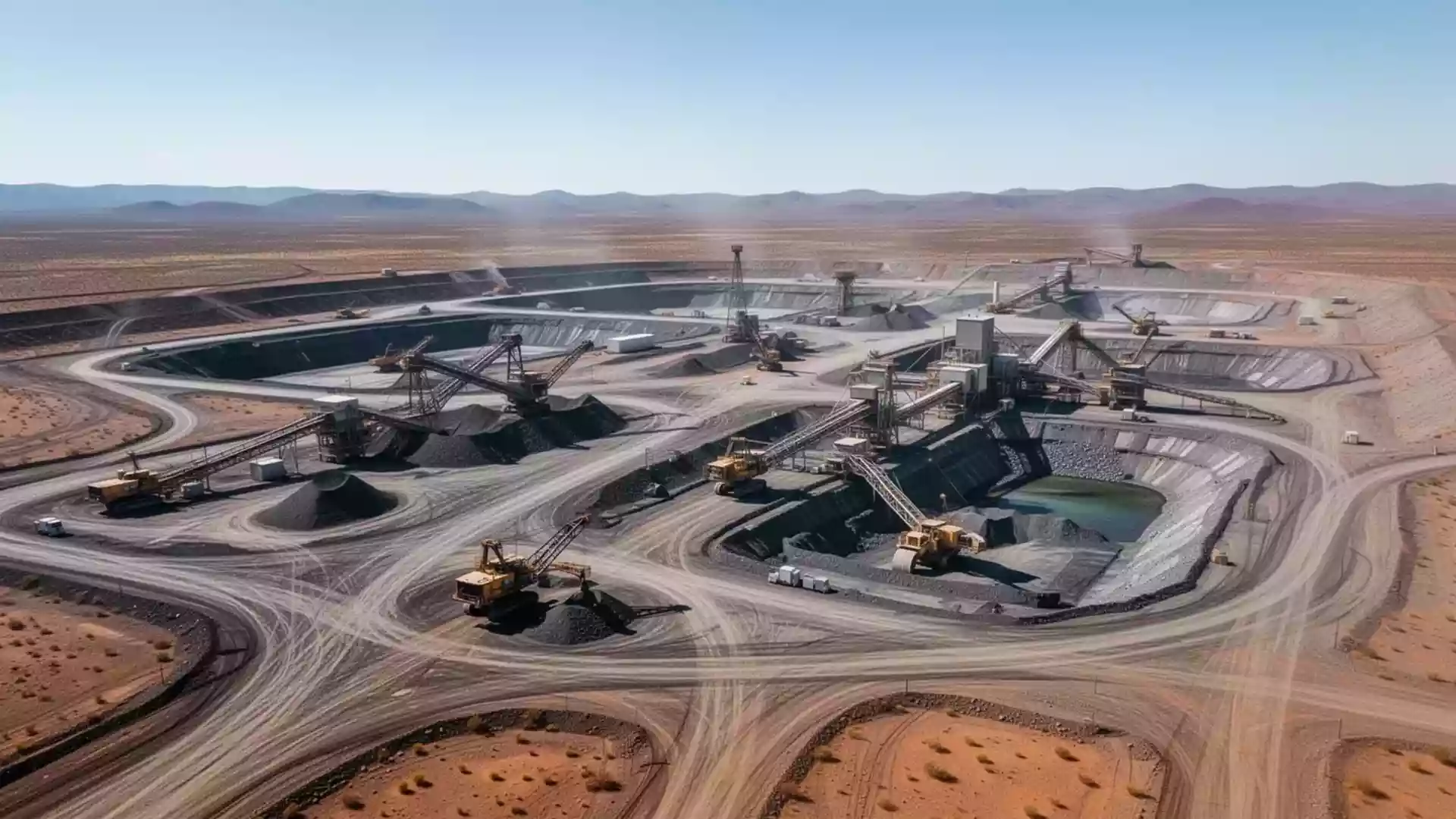
On 2 July, shareholders will vote on an extraordinary resolution to issue roughly 595 million new shares at A$0.2447 each, raising A$350 million. The funds are earmarked for the Nolans integrated ore-to-oxide facility, which will become Australia’s first fully domestic rare earths processing plant – ending the decades-old habit of shipping raw ore to China for refining.
Under Australian law, investors must approve three separate items: the placement to Export Finance Australia, the tranche for Germany’s KfW, and the allocation to the National Reconstruction Fund Corporation. A single "no" vote could collapse the entire capital structure. That is the first clock ticking.
Should investors sell immediately? Or is it worth buying Arafura Rare Earths?
The Beijing double bind
The second clock is geopolitical. On 10 November 2026, China is due to review its export controls on rare earths, a market it still dominates with a 90% share. Analysts project that share will shrink to 69% by 2030, but the gap is narrowing faster than many realise. Arafura will not produce its first tonne until 2029 at the earliest. If Beijing tightens the screws earlier, Western industries scrambling for non-Chinese NdPr oxide could face a severe squeeze.
This is not just a long-term concern. The credit commitments from export credit agencies in the US, Canada, Germany and South Korea come with a hard cut?off: all conditions must be met by 1 December 2026, or the entire loan package lapses. The financing backbone of Nolans is therefore exposed to two parallel deadlines, one corporate and one diplomatic.
The production blueprint
Should the capital flow as planned, construction will begin in September 2025, with commercial output targeted for end-2029. The plant is designed to produce over 4,400 tonnes of NdPr oxide per year, enough to cover roughly 4% of global demand by 2032. The vertical integration – from mining to separation – eliminates reliance on Chinese refineries and gives Arafura a structural cost advantage.
A lucrative byproduct further strengthens the economics. The facility will produce 144,000 tonnes of phosphoric acid annually for the fertiliser industry. After-tax project value is estimated at US$1.73 billion, with an internal rate of return of 17.2%. Total equity backing stands at almost A$900 million, while debt financing – mostly from national development banks – exceeds A$1 billion.
Stock market signals are mixed
Despite the strategic heft, Arafura’s stock has been under pressure, losing about 18% in the past month to trade at €0.16. The relative strength index of 40.5 suggests it is nearly oversold, but the 50-day moving average of €0.19 marks immediate resistance. The weakness is largely mechanical: institutional holders such as State Street and Citigroup have exited their positions, with the latter’s departure attributed to normal securities lending activity. The market interpreted these moves as bearish.
Into that vacuum stepped Hancock Prospecting, the mining group controlled by billionaire Gina Rinehart, which invested A$85 million. Index funds have rotated out, while strategic capital has rotated in. So far the stock price has treated both signals identically, rewarding neither.
Arafura Rare Earths at a turning point? This analysis reveals what investors need to know now.
Environmental hurdle and market context
Adding a procedural layer, the Arid Lands Environment Centre has filed a formal complaint against the accelerated approval process for Nolans, demanding stricter conditions on groundwater and biodiversity. The complaint creates project risk but does not appear capable of halting development.
The wider backdrop is more supportive. Non-Chinese NdPr oxide already commands a premium of four to six times domestic Chinese prices, reflecting a second consecutive year of supply deficits. Demand from electric vehicles and wind turbines continues to climb. Arafura’s market capitalisation of €882 million at current prices stands in stark contrast to the structural scarcity it is positioned to address.
The disconnect between the share price and the underlying commercial logic is not a puzzle. It is a timing issue. On 2 July in Perth and on 10 November in Beijing, two decisions will be made that will shape the trajectory of the stock far more decisively than any chart line. Until then, Arafura remains a play on calendars as much as on commodities.
Ad
Arafura Rare Earths Stock: New Analysis - 16 June
Fresh Arafura Rare Earths information released. What's the impact for investors? Our latest independent report examines recent figures and market trends.