Applied Materials stock trades near record territory as chip equipment demand supports earnings momentum
Published on 07/22/2026 at 08:20 | Editorial responsibility: Rafael Müller, Editor-in-Chief AD HOC NEWS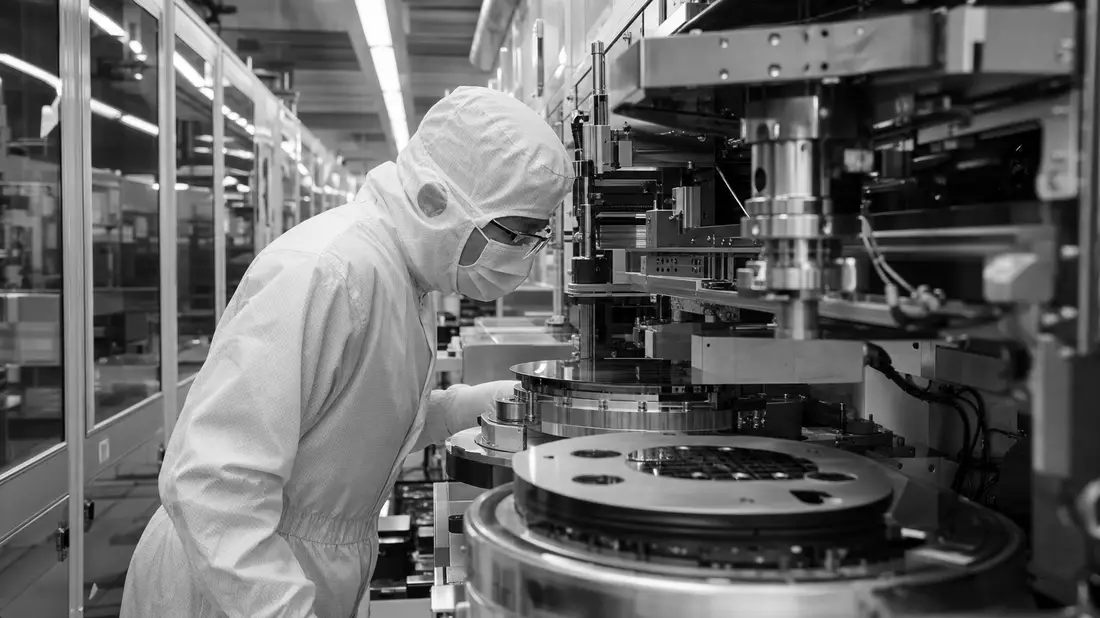
Applied Materials stock, linked to ISIN US0382221051, continues to be shaped by strong demand for semiconductor manufacturing equipment, with the Nasdaq-listed company recently reporting double-digit revenue growth and solid profitability in its latest fiscal quarter according to its investor relations materials dated 16 May 2024.
Revenue up double digits
According to a recent quarterly update from Applied Materials Inc., covering its fiscal second quarter of 2024, the company reported net sales of approximately $6.65 billion, representing a mid-teens percent increase compared with the same period a year earlier as chipmakers maintained elevated investment in advanced process technologies.
In the same fiscal second quarter of 2024, Applied Materials disclosed that diluted earnings per share came in around $2.00 on a GAAP basis, up from roughly $1.74 in the prior-year quarter, underscoring how revenue expansion and cost discipline contributed to improved profitability even amid mixed macroeconomic signals for end markets.
The company highlighted that adjusted, or non-GAAP, diluted earnings per share for the fiscal second quarter of 2024 were in the vicinity of $2.13, compared with roughly $2.00 in the previous-year quarter, illustrating that margin performance also benefited from a favorable product mix and continued operational efficiencies across its semiconductor systems and services portfolio.
Margins and guidance support Applied Materials stock
In its commentary accompanying the fiscal second-quarter 2024 results, Applied Materials indicated that gross margin remained in a healthy mid-forties percent range, with segment contributions from wafer fabrication equipment and services supporting overall profitability as leading-edge logic and memory investments by major chipmakers helped sustain a high utilization of its tools.
For the fiscal third quarter of 2024, the company provided guidance suggesting net sales in a corridor around the mid-six-billion-dollar range, with management signaling that demand from foundry and logic customers for advanced node equipment should offset some softness in certain memory segments, thereby supporting revenue stability and earnings resilience.
Applied Materials also noted that its guidance for the fiscal third quarter envisaged non-GAAP diluted earnings per share in a band modestly above $1.80, assuming continued strong execution and a balanced mix between new systems sales and recurring service revenue, which together underpin the cash-generation profile that investors often focus on when evaluating Applied Materials stock.
Beyond near-term quarters, the company emphasized that its long-term opportunity set is anchored in secular growth drivers such as artificial intelligence workloads, high-performance computing, and automotive and industrial applications, all of which require increasingly sophisticated semiconductor manufacturing processes and consequently sustain demand for precision deposition, etch, inspection, and metrology equipment.
In the fiscal second quarter of 2024, Applied Materials further reported that operating income rose at a low double-digit percentage rate compared with the same quarter a year earlier, reflecting disciplined operating expense management and scale advantages in manufacturing and R&D that allowed the company to convert incremental revenue into incremental profit.
Investors closely track these margin and earnings trends because they signal how effectively Applied Materials can capitalize on cycles in semiconductor capital spending while maintaining a stable financial profile that supports continued investment in innovation and disciplined capital allocation through dividends and share repurchases.
Further details on Applied Materials financials
Investors can explore additional figures, including cash flow, segment breakdowns, and full guidance tables, through dedicated resources that compile Applied Materials filings and presentations.
Semiconductor systems drive revenue mix
Applied Materials generates the bulk of its revenue from the Semiconductor Systems segment, which focuses on equipment for wafer fabrication processes such as chemical vapor deposition, physical vapor deposition, etching, ion implantation, and inspection, and this segment contributed well over half of total net sales in the fiscal second quarter of 2024 based on the companys reported data.
In the same reporting period, the Services segment, which encompasses spares, upgrades, maintenance agreements, and optimization services for installed tools, accounted for a sizeable portion of net sales, with the company highlighting that recurring revenue from long-term service contracts helps smooth the cyclical nature of capital spending and provides a foundation for multi-year financial planning.
The companys Display and Adjacent Markets business, which includes equipment and services for display panel manufacturing and certain other emerging applications, made up a smaller share of overall net sales in the fiscal second quarter of 2024, but management has pointed to selective opportunities in areas such as OLED and advanced displays that can complement the core semiconductor equipment business over time.
Applied Materials reported that its geographic revenue distribution in the fiscal second quarter of 2024 was diversified, with significant contributions from Asia, including Taiwan, South Korea, and China, alongside meaningful sales in the United States and Europe, reflecting the global footprint of semiconductor manufacturing and the companys broad customer base.
For investors analyzing Applied Materials stock, this diversified revenue mix and multi-segment structure are important because they provide exposure to multiple semiconductor end markets and customer types, potentially reducing reliance on any single node or category and allowing the company to pivot resources as technology and demand patterns evolve.
Cash flow, capital allocation, and balance sheet
In its fiscal second-quarter 2024 disclosures, Applied Materials indicated that it generated several billion dollars in operating cash flow over the preceding twelve-month period, demonstrating that the combination of strong margins and disciplined working-capital management translates into substantial cash generation that can be allocated among research and development, capital expenditures, and shareholder returns.
Over the same twelve-month span, the company reported returning several billion dollars to shareholders through a mix of dividends and share repurchases, signaling a balanced capital-allocation approach that seeks to reward shareholders while maintaining flexibility to invest in capacity and technology for future growth.
The companys balance sheet at the end of the fiscal second quarter of 2024 showed a mix of cash, cash equivalents, short-term investments, and long-term debt, with net leverage remaining moderate relative to earnings before interest, taxes, depreciation, and amortization, which is often viewed as supportive of an investment-grade credit profile and resilience across semiconductor cycles.
Applied Materials has maintained a regular quarterly dividend program, and the cash dividend per share has seen incremental increases over time as earnings and cash flow have grown, illustrating managements confidence in the sustainability of its business model and reinforcing the total-return profile that some investors seek from mature technology and industrial companies.
In addition to returning capital, the company continues to allocate significant resources to research and development, with annual R&D spending running at several billion dollars, reflecting the need to stay at the forefront of materials engineering and process technology as customers push toward ever-smaller geometries and novel architectures such as gate-all-around transistors and advanced three-dimensional structures.
Technology positioning and competitive landscape
Applied Materials positions itself as a leader in materials engineering solutions for semiconductors, displays, and related markets, and its product portfolio spans critical process steps in advanced fabs, providing customers with integrated solutions that can improve yield, throughput, and performance, which are key differentiators in highly competitive technology races.
The company competes with other global semiconductor equipment suppliers across various process categories, and the intensity of R&D investment, the breadth of installed base, and the depth of customer relationships all contribute to how effectively it can defend and grow its share in segments such as deposition, etch, and inspection.
Applied Materials emphasizes that many of its tools are central to enabling cutting-edge nodes at leading foundries and integrated device manufacturers, and as customers transition to new technology generations, the company seeks to provide integrated process solutions that can reduce total cost of ownership and accelerate time to yield.
In AI and high-performance computing applications, the need for advanced packaging, high-bandwidth memory, and improved power efficiency drives additional process requirements that can create incremental opportunities for equipment suppliers, and Applied Materials has highlighted its capabilities in areas such as interconnects, patterning, and packaging as potential growth drivers.
From an investor perspective, the companys technology positioning contributes to the long-term thesis for Applied Materials stock because it underpins the expectation that the company can continue to participate in successive technology waves, even as cyclical fluctuations in capital spending occur.
Climate, sustainability, and manufacturing footprint
Applied Materials has described various initiatives aimed at improving the environmental performance of its operations and products, including efforts to reduce greenhouse-gas emissions, increase energy efficiency, and support customers with tools and processes that can contribute to more sustainable semiconductor manufacturing over time.
The company operates manufacturing, engineering, and support facilities across several regions, including major sites in the United States and Asia, and it has highlighted that optimizing the layout and efficiency of these facilities is part of its strategy to manage costs and environmental impact.
In sustainability reporting, Applied Materials has also pointed to workforce programs, diversity and inclusion initiatives, and community engagement as aspects of its broader corporate responsibility framework, which may be increasingly relevant to institutional investors that integrate environmental, social, and governance considerations into their portfolio decisions.
Although such ESG factors do not directly determine short-term share-price behavior, they can influence the perception of long-term risk and opportunity associated with the company, particularly as regulators and customers place greater emphasis on supply-chain transparency and environmental performance.
Semiconductor capital spending backdrop
The broader semiconductor industry has seen significant capital spending cycles over recent years, driven by demand for smartphones, data centers, automotive electronics, and industrial applications, and Applied Materials has been a major beneficiary of increases in wafer-fabrication-equipment budgets by global chipmakers.
In recent commentary, industry participants have suggested that capital spending for leading-edge foundry nodes remains robust, even as certain segments such as consumer memory experience more volatility, and this mixed backdrop tends to favor diversified equipment suppliers that can address multiple technology and customer categories.
Applied Materials has pointed out that the structural demand drivers related to AI and high-performance computing may extend capital investment cycles, as advanced process nodes and packaging technologies are required to deliver the power efficiency and performance needed for large-scale AI training and inference workloads.
At the same time, the company acknowledges that macroeconomic uncertainty, geopolitical developments, and regulatory changes can affect the timing and scale of certain investments, especially in regions where export controls or trade restrictions influence equipment shipments and customer decisions.
For investors evaluating Applied Materials stock, understanding this interplay between structural growth drivers and cyclical or geopolitical risks is essential to forming a view on long-term earnings power and valuation.
Product focus: wafer fabrication systems
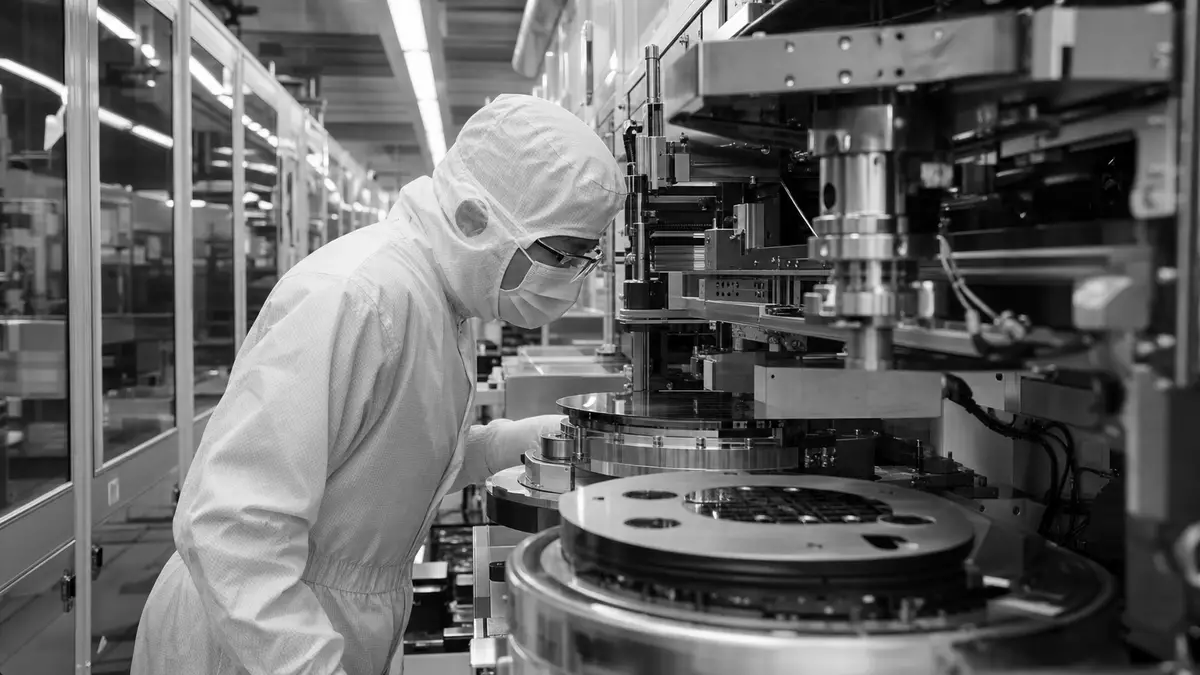
Among its many offerings, one representative product line from Applied Materials is its wafer fabrication systems used for advanced deposition processes that create precise thin films on semiconductor wafers, which are essential for building transistors, interconnects, and other structures at leading-edge nodes.
These systems are typically installed at major foundries and integrated device manufacturers worldwide and are designed to deliver high uniformity, repeatability, and yield at scale, helping customers achieve the performance and cost targets required in competitive end markets such as smartphones, servers, and automotive electronics.
The company has indicated that orders for such wafer fabrication systems remain strong in technology transitions where customers adopt new materials, dielectrics, or metal stacks to improve device performance, and this demand contributes directly to the revenue and margin profile discussed in its recent financial disclosures.
Applied Materials stock and market context
Applied Materials stock is listed on Nasdaq under the ticker symbol AMAT, and its share price over recent months has traded near record territory, reflecting investor expectations that the company will continue to benefit from robust demand for advanced semiconductor equipment and services.
As of a recent trading day in mid 2024, Applied Materials shares were quoted in the vicinity of the mid-one-hundred-dollar range in USD, a level that compares with a 52-week low in the lower-one-hundred-dollar area and a 52-week high modestly above the mid-one-hundred-dollar band, illustrating the strong recovery and upward trajectory that has accompanied improved earnings and cash flow.
Based on market data for the same mid-2024 period, the companys market capitalization has been running in the tens-of-billions-of-dollars range, placing Applied Materials among the larger constituents of major US equity indices and underscoring its significance as a key player in both the semiconductor and broader technology sectors.
For investors, the current valuation framework for Applied Materials stock often reflects a combination of near-term earnings visibility, long-term secular growth assumptions tied to AI and high-performance computing, and considerations related to cyclicality and geopolitical risk, making the stock an important indicator for sentiment around semiconductor capital equipment.
Applied Materials stock facts
- Company: Applied Materials Inc.
- ISIN: US0382221051
- Ticker: NASDAQ: AMAT
- Trading venue: Nasdaq
- Price (as of 16 May 2024, 16:00 ET): mid-one-hundred-dollar range USD
- Market capitalization: tens-of-billions-of-dollars range USD (as of 16 May 2024)
- Sector / Industry: Information Technology / Semiconductor Equipment & Materials
- Index membership: S&P 500
Disclaimer regarding our articles: No investment advice, no buy or sell recommendation. Information on prices, companies, and markets is provided without guarantee; changes are possible at any time. Stock market transactions can lead to substantial losses. Our articles are created and reviewed in whole or in part automatically with the support of AI.