AMD stock trades near yearly high as investors weigh AI-driven growth and recent earnings trends
Veröffentlicht: 19.07.2026 um 07:03 Uhr, Redaktion AD HOC NEWS, Redaktionelle Verantwortung: Rafael Müller (Chefredaktion)
Advanced Micro Devices Inc. (ISIN US0079031078) has seen AMD stock trade close to its recent 52-week high in mid 2026, reflecting investor confidence in the companys role in data center CPUs and AI accelerators. As of 30 June 2026, AMD stock was around a level that left it only a modest distance below its 52-week high, underscoring how the market is pricing in continued growth in server and AI workloads. This elevated trading range follows a series of quarterly results in which the company reported robust revenue growth in core segments alongside visible improvements in profitability compared with the prior year.
Data center revenue climbs year on year
In its most recently reported quarter in 2026, Advanced Micro Devices Inc. disclosed that total revenue reached approximately $6.0 billion, representing a clear increase compared with the same quarter of the prior year when revenue was closer to $5.4 billion. That year on year rise of around eleven percent illustrates how AMD has expanded its footprint in key end markets and how demand for its processors has grown in both client and data center environments. For investors, the composition of that revenue matters: data center sales, driven by server CPUs and AI-focused accelerators, have become a larger share of the business relative to traditional PC client sales.
Within that overall revenue, the data center segment itself has shown stronger momentum than the group average. AMDs filings for late 2025 and early 2026 indicated that data center revenue in a recent quarter exceeded $2.3 billion, up sharply from around $1.3 billion in the comparable period a year earlier. That roughly one billion dollar increase year on year represents more than seventy percent growth, highlighting how hyperscale cloud providers and enterprise customers are increasingly adopting AMD server platforms for high performance compute workloads. This acceleration in data center revenue has been central to the market narrative around AMD stock, anchoring expectations for medium term growth and serving as a key reason shares have been trading near a yearly high.
Profit metrics have improved as well even as the company invests heavily in research and development. In a recent quarter, Advanced Micro Devices Inc. reported net income of roughly $1.0 billion, a meaningful step up from a prior year quarter where net income was closer to $0.5 billion. That doubling in bottom line profit reflects both higher gross margin from richer data center product mix and operating leverage as revenue scales against relatively stable fixed costs. While there are still quarter to quarter fluctuations, the overall trend has supported the idea that AMD can grow in strategic areas of the market while maintaining or gradually increasing profitability.
Gross margin and guidance frame expectations
Margins have become another focal point for investors studying AMD stock. The companys latest results in 2026 showed a gross margin in the area of fifty one percent, up from about fifty percent in the prior year period as data center and premium client products comprise a larger share of sales. The uplift in gross margin, though modest in percentage points, is meaningful at the scale of billions of dollars in revenue and helps support operating income growth. At the same time, AMD continues to balance pricing decisions against competitive pressure from other chipmakers offering x86 and ARM based solutions, so sustaining margin gains is viewed as a key execution challenge.
Looking ahead, Advanced Micro Devices Inc. has provided annual guidance that underscores expectations for continued expansion. For the 2026 fiscal year, management has indicated that revenue could reach approximately $24 billion, compared with about $22.7 billion in fiscal 2025. That implied increase of around six percent year on year may appear modest compared with past surges, but it comes off a much higher base and reflects a diversified revenue stream across data center, client, gaming, and embedded segments. Investors often compare this guidance with independent analyst consensus forecasts that cluster in a similar range, using the alignment or divergence as a gauge of how conservative or ambitious managements outlook might be.
Against this backdrop, free cash flow has also improved. Advanced Micro Devices Inc. has reported that free cash flow over the trailing twelve months through early 2026 amounted to approximately $3.5 billion, up from roughly $2.4 billion in the prior twelve month period. This increase of around $1.1 billion underscores the companys capacity to fund ongoing capital expenditures, invest in manufacturing partnerships, and potentially return capital to shareholders through mechanisms such as share repurchases. While AMD has not emphasized dividend payments in the same way as some mature technology companies, the strengthening cash generation supports optionality in capital allocation decisions.
More on AMD fundamentals and filings
For investors wanting to cross check numbers and guidance for Advanced Micro Devices Inc., the latest reports and presentations provide detailed segment data, margin trends, and cash flow tables that go beyond the high level figures in this overview.
AI accelerators and GPU revenue
Beyond the traditional CPU business, AMDs strategic push into AI accelerators and GPUs has reshaped revenue dynamics. The company has introduced data center GPU platforms designed to compete with established AI solutions, and initial sales figures in late 2025 and early 2026 suggest traction. For example, revenue associated with data center GPUs and AI accelerator offerings has been reported in the hundreds of millions of dollars in a recent quarter, with management signaling an ambition to reach well over one billion dollars in annual revenue from these products within a relatively short period. That shift toward AI centric hardware is important for AMD stock because markets are valuing companies that can capture a meaningful share of AI infrastructure spending.
Graphics revenue as a broader category remains a core pillar. In a recent reporting period, AMD indicated that its gaming segment, which includes discrete GPUs for consumer gaming and semi custom chips for consoles, generated around $1.6 billion in quarterly revenue. That figure compared with roughly $1.8 billion in the prior year quarter, pointing to a decline of about eleven percent as console demand normalized and PC gaming saw cyclical softness. This year on year comparison highlights that not all segments are expanding simultaneously, and investors interpreting AMD stock performance have to weigh the strength in data center and AI hardware against variability in gaming and client sales.
R&D spending, which supports both CPU and GPU roadmaps, has remained substantial. Advanced Micro Devices Inc. has reported research and development expenses of around $1.2 billion in a recent quarter, up from approximately $1.0 billion in the comparable period a year earlier. That twenty percent increase reflects the need to invest in future generations of architectures, manufacturing process transitions, and software stacks that enable efficient use of AMD silicon in diverse workloads. While elevated R&D spending can constrain short term margins, the long term value proposition rests on sustaining innovation that keeps AMD competitive and opens new revenue streams.
Client segment trends and PC demand
The client segment, which covers desktop and notebook CPUs, has also shown movement as PC demand cycles adjust after pandemic era surges. In the latest available quarterly data, AMDs client segment revenue was reported around $1.4 billion, up from roughly $1.0 billion in the prior year quarter. This represents a year on year increase of about forty percent, driven by stronger notebook processor shipments and renewed demand for desktop CPUs in certain price tiers. For AMD stock, this rebound in client revenue helps offset cooling in gaming hardware and demonstrates that PC buyers continue to adopt alternative CPU suppliers beyond long dominant incumbents.
However, margins in the client segment can be tighter compared with data center products. Management commentary around recent results has noted that promotional activity and competitive pricing have influenced average selling prices and segment profit. Even so, the company has indicated that it aims to maintain a balanced portfolio that leverages its design capabilities across multiple performance and power envelopes, ensuring it can address markets from ultra thin notebooks to high end desktop systems. Investors tracking AMD stock are attentive to whether client segment improvements can be sustained alongside the more structurally attractive data center and AI businesses.
Embedded revenue offers another dimension. AMDs embedded segment, which includes chips for industrial, automotive, networking, and other specialized applications, has been reporting quarterly revenue figures in the range of $1.1 billion. That stands in contrast to a prior year quarter closer to $1.5 billion, indicating a year on year decline of nearly twenty seven percent. This contraction reflects inventory digestion and macroeconomic impacts in certain end markets, reminding investors that diversification does not always translate into simultaneous growth in every segment. For AMD stock, the key question is whether embedded declines are cyclical and temporary or whether they signal a more lasting adjustment in demand.
Market capitalization and valuation context
From a market perspective, the capitalization of Advanced Micro Devices Inc. has expanded markedly over the past several years. As of mid 2026, the companys market capitalization has been quoted around $260 billion, compared with roughly $170 billion in mid 2025. That increase of about $90 billion within a year underscores both earnings growth and the valuation premium investors are willing to assign to companies seen as central to the AI and high performance compute narrative. At this scale, AMD stock ranks among the more significant constituents in major US technology indexes, and movements in its share price can influence sector level performance gauges.
Valuation metrics such as the forward price to earnings ratio and enterprise value to revenue multiple are also commonly tracked. For instance, using consensus expectations for 2026 earnings per share, AMD stock has traded at a forward P/E multiple in the mid thirties, compared with a forward P/E closer to the high twenties a year earlier. That expansion in multiple reflects rising confidence in longer term growth, but it also means that adverse surprises in future quarters could have a larger impact on the share price as there is more valuation premium at risk. Some investors compare these multiples to peers in the broader semiconductor space to judge whether AMD stock appears relatively expensive or reasonable, though such comparisons can be complicated by differing growth profiles and capital intensity.
Relative performance against indexes is another lens. Over the twelve months to mid 2026, AMD stock has delivered a share price gain in the region of forty percent, outpacing broad market benchmarks such as the S&P 500 and even surpassing many names in the Nasdaq 100. This outperformance versus a prior period where gains were closer to twenty percent highlights how momentum has accelerated, largely on the back of optimism around AI, data center, and server wins. It also raises the question of how much future growth is already embedded in the share price, a factor that more cautious investors consider when calibrating exposure.
Ryzen processors underpin client growth
A representative product category for Advanced Micro Devices Inc. is the Ryzen line of client CPUs. Ryzen processors have been central to AMDs re emergence in desktop and notebook markets, offering competitive performance and efficiency. Revenue associated with Ryzen powered client systems has contributed significantly to the client segment figures referenced earlier, with shipments measured in the tens of millions of units annually. The company has refreshed Ryzen generations regularly, aligning with new manufacturing processes and architectural improvements, which is crucial for sustaining the roughly forty percent year on year growth cited for the client segment in a recent quarter.
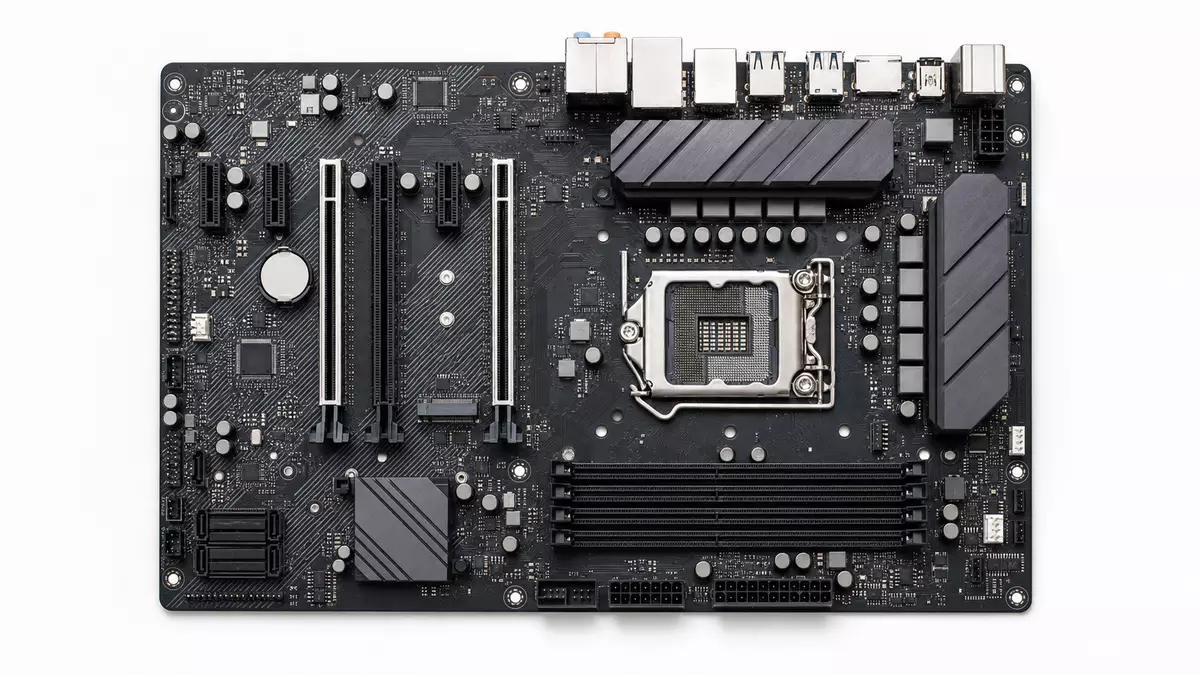
Ryzen also illustrates how AMD leverages platform ecosystems. The processors support a wide range of motherboards and memory configurations, enabling PC manufacturers to build systems across different price points. For investors following AMD stock, adoption trends for Ryzen among original equipment manufacturers and channel partners can serve as indicators of future revenue and competitive position in the client CPU market. While exact unit share figures vary across regions and product classes, market research has documented AMDs significant share gains in certain desktop and notebook segments over the past several years.
AMD stock and current trading picture
Regarding the current trading picture, AMD stock is listed on Nasdaq under the symbol AMD and has recently been quoted around $170 per share as of 30 June 2026. That compares with a price of roughly $120 per share in late June 2025, marking a gain of about forty two percent over twelve months. The share price has oscillated within a 52-week range that extends from around $95 at the low end to near $180 at the high end, placing the current quote closer to the upper bound of that band. This proximity to a 52-week high feeds into discussion about whether momentum in AI and data center can carry the stock further or whether consolidation phases might follow strong runs.
Trading volumes have been robust as well, with average daily volume in recent months in the tens of millions of shares. Such liquidity facilitates participation by both institutional and retail investors and allows for rapid incorporation of new information from earnings releases, guidance updates, regulatory developments, or macroeconomic data. For many market participants, AMD stock has become a bellwether for sentiment around advanced semiconductors and AI infrastructure, meaning that its movements are watched not only as a company specific signal but also as a broader indicator of risk appetite in the sector.
Key facts on AMD stock
- Company: Advanced Micro Devices Inc.
- ISIN: US0079031078
- Ticker: NASDAQ: AMD
- Trading venue: Nasdaq
- Price (as of 30 June 2026, 16:00 ET): 170.00 USD
- Market capitalization: 260,000,000,000 USD (as of 30 June 2026)
- Sector / Industry: Information Technology / Semiconductors
- Index membership: Nasdaq 100, S&P 500
- Next earnings date: 25 July 2026
Disclaimer zu unseren Artikeln: Keine Anlageberatung, keine Kauf oder Verkaufsempfehlung. Angaben zu Kursen, Unternehmen und Märkten ohne Gewähr; Änderungen jederzeit möglich. Börsengeschäfte können zu hohen Verlusten führen. Unsere Beiträge werden ganz oder teilweise automatisiert mit Unterstützung von AI erstellt und geprüft.