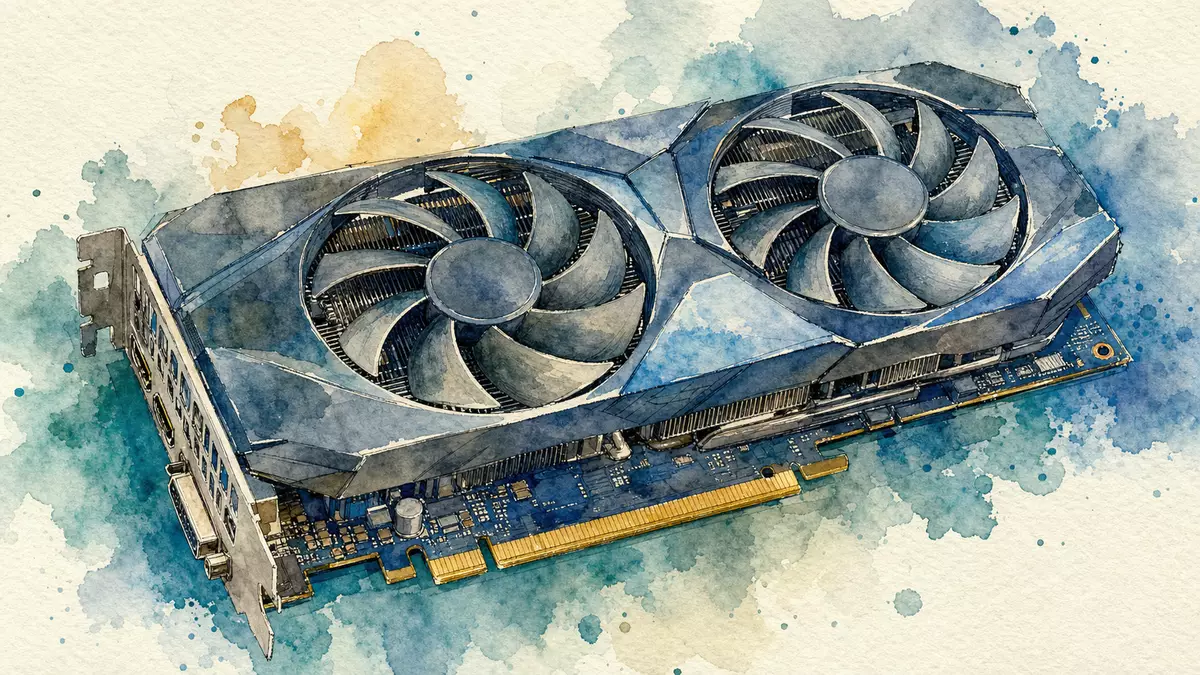
AMD stock holds steady as chipmaker targets AI growth and data center demand
Published on 07/16/2026 at 13:24 | Editorial responsibility: Rafael Müller, Editor-in-Chief AD HOC NEWS
Advanced Micro Devices Inc. (AMD) stock represents one of the major US-listed semiconductor names competing aggressively in high-performance computing and graphics, with investors closely watching how the company translates demand for CPUs, GPUs, and AI accelerators into sustainable earnings growth.
AMD’s role in the global chip market
Advanced Micro Devices Inc. is a leading fabless semiconductor company headquartered in the United States, designing central processing units (CPUs), graphics processing units (GPUs), and adaptive computing solutions for a wide range of end markets. Its designs are manufactured by third-party foundries, allowing AMD to focus capital and talent on architecture, design, and platform development rather than on owning fabs.
AMD competes directly with other large chip companies in x86 server and PC processors, discrete gaming graphics cards, and increasingly in accelerator hardware for artificial intelligence workloads. In the CPU market, AMD’s architectures have been aimed at improving performance per watt, core density, and total throughput in both consumer PCs and data center servers. In GPUs, the company focuses on gaming performance, visual fidelity, and compute capabilities that can be repurposed for machine learning tasks.
Over the past years, AMD has used its product roadmap in CPUs and GPUs to steadily gain share in key segments, notably in data center and desktop processors, against long-time incumbents. Investors often view this share-gain trajectory as a core part of AMD’s equity story, since even modest share changes in large volume markets can translate into meaningful revenue and operating income changes.
The company also expands beyond traditional CPUs and GPUs by incorporating adaptive computing technologies such as field-programmable gate arrays (FPGAs) and programmable logic devices following strategic acquisitions. These adaptive solutions are used in telecommunications, embedded systems, and specialized computing environments, broadening AMD’s exposure to diverse end markets.
Data center and AI as a key focus for AMD stock
For AMD stock, the data center and artificial intelligence segments are increasingly central to the investment narrative, as server CPUs, accelerators, and related platforms can command premium pricing and drive higher-margin growth. Data center customers typically include cloud service providers, hyperscale operators, and enterprises deploying private infrastructure for compute-intensive workloads.
In CPUs, AMD’s server platforms are designed for multi-socket configurations, large memory capacity, and high input-output bandwidth, enabling them to address demanding workloads such as cloud-native applications, databases, and virtualized environments. In many cases, performance-per-core and total core counts matter as much as absolute frequency, since modern workloads can scale horizontally across many cores and nodes.
In AI-related hardware, AMD has been positioning its GPUs and accelerators for training and inference workloads that rely on high throughput and parallel processing. These accelerators target data center deployments where models are trained on large datasets or run at scale to serve users globally. The ability to support common machine learning frameworks, optimized libraries, and interconnect standards is crucial for adoption.
Investors often compare AMD’s trajectory in AI accelerators and data center compute to larger competitors in the space. While some rivals currently command a larger share in high-end AI accelerators, AMD’s strategy aims to capture incremental demand by offering competitive performance, power efficiency, and integration with server platforms where its CPUs are already present. For investors, the potential for cross-selling CPUs and accelerators into the same racks and clusters forms part of the long-term thesis.
The broader environment for AI and data center spending provides structural support for AMD’s aspirations. Cloud providers and large enterprises continue to invest heavily in computing infrastructure that can handle generative AI, recommendation systems, search, and analytics, which in turn supports demand for high-end processors, accelerators, and networking gear. AMD’s ability to align its roadmap with this spending cycle plays a key role in how the market values AMD stock.
PC and gaming segments underpin the broader business
Beyond data centers, AMD’s PC and gaming segments remain important pillars of its business, providing revenue diversification and brand visibility among consumers and enthusiasts. In the client PC market, AMD supplies CPUs that power desktops, notebooks, and workstations, spanning entry-level devices to high-end systems used for content creation and specialized workloads.
In gaming, AMD’s GPUs are used in enthusiast-grade graphics cards that power high-resolution gaming, virtual reality, and demanding visual experiences. The company works closely with game developers and ecosystem partners to optimize drivers, support advanced rendering techniques, and deliver features such as ray tracing and variable refresh rate technologies. Gamers and PC builders often weigh AMD’s performance, efficiency, and price positioning against alternatives when selecting components.
AMD also supplies custom chips that can be used in gaming consoles and other specialized devices. These semi-custom solutions combine CPU and GPU capabilities into integrated systems-on-chip tailored to each customer’s design targets. Such agreements can generate multi-year revenue streams that follow the lifecycle of console generations, providing medium-term visibility even if launch cycles and consumer sales patterns introduce some volatility.
For AMD stock, the PC and gaming segments can be more cyclical than data center exposures, as they are influenced by consumer spending patterns, upgrade cycles, and the release schedules of major game titles and devices. Periods of strong PC and console demand can lift revenue and utilization, while slower consumer cycles tend to shift investor attention back toward data center, embedded, and enterprise-oriented businesses.
Embedded and adaptive computing opportunities
Embedded and adaptive computing form another component of AMD’s portfolio. In this area, the company provides solutions that go into industrial equipment, automotive systems, telecommunications infrastructure, and other specialized devices. These markets prioritize reliability, determinism, and long lifecycle support, and they often use products such as FPGAs, system-on-chip components, and specialized processors.
Adaptive computing allows customers to tailor hardware behavior via reconfigurable logic, making it possible to optimize for changing standards, protocols, or workloads without redesigning an entire chip. This flexibility is valuable in sectors where standards evolve over time or where developers need to deploy new algorithms after a device has already been manufactured and shipped.
The embedded and adaptive portfolio also interacts with AMD’s broader strategy. For example, telecommunications systems that use adaptive logic may also incorporate standard CPUs and accelerators, reinforcing AMD’s presence across multiple layers of the compute stack. In addition, embedded deployments can help diversify AMD’s revenue away from the more cyclical PC market and the more concentrated customer base in cloud and hyperscale data centers.
US listing and investor base
AMD stock trades on a major US exchange and forms part of the broader US semiconductor investment universe followed by institutional and retail investors. Because of this listing, AMD benefits from deep liquidity, extensive analyst coverage, and inclusion in various sector and style indices, which can influence flows from passive and active funds.
The company’s regulatory filings with US authorities provide detailed information about revenue segmentation, margins, capital expenditures, and risk factors. Investors regularly analyze these filings to understand how AMD allocates resources among product lines, how it manages inventory, and how it perceives competition and macroeconomic conditions. This level of disclosure contributes to transparency in AMD’s investment case.
As a widely followed chipmaker, AMD is often referenced within discussions of the broader US equity market and technology indices. Its valuation metrics, such as price-to-earnings ratios and price-to-sales multiples, are frequently compared to peers in the semiconductor and AI hardware spaces. For some investors, AMD serves as a way to gain exposure to themes such as cloud computing, gaming, and AI without concentrating risk in a single end market.
Earnings cycles and guidance as stock drivers
Earnings reports and guidance are key catalysts for AMD stock, as quarterly results reveal whether the company is meeting, exceeding, or missing market expectations on revenue, gross margin, and operating income. Because AMD operates in markets where demand can shift quickly, investors watch for trends across segments such as data center, client, gaming, and embedded to gauge the health of each line.
When AMD reports stronger-than-expected data center revenue or indicates accelerating demand for AI-related products, it can reinforce the thesis that high-performance computing is driving the next leg of growth. Conversely, if client PC or gaming revenue falls more quickly than anticipated during down cycles, the market may reassess the balance between growth engines and cyclical headwinds.
Guidance matters as much as historical numbers. Management’s outlook on upcoming quarters, and its commentary on customer orders, inventory levels, and product ramp timelines, shapes expectations around future earnings power. Investors use this guidance to recalibrate models for revenue, margins, and free cash flow, which influence how AMD stock is valued relative to its peers.
Over multiple earnings cycles, AMD’s ability to execute on its roadmap and to deliver products on schedule can bolster its credibility. Structural themes such as AI, cloud, and edge computing provide a supportive backdrop, but near-term execution, including managing supply chains and coordinating with foundry partners, remains critical in translating that backdrop into consistent results.
Competitive landscape for AMD stock
The competitive environment in which AMD operates is intense, with multiple large players offering overlapping solutions in CPUs, GPUs, accelerators, and embedded devices. Each competitor pursues its own roadmap of architectures, manufacturing processes, and software ecosystems, and these strategies intersect in key markets such as data center, gaming, and AI.
In server CPUs, competition revolves around core counts, performance-per-watt, memory bandwidth, and total cost of ownership. Data center customers often run benchmarks and proof-of-concept deployments to evaluate vendors, and they may choose different platforms for different workloads. AMD’s ability to sustain high performance and power efficiency generation after generation helps it maintain or grow share.
In GPUs and AI accelerators, performance on training and inference workloads, availability of optimized software stacks, and compatibility with existing infrastructure are critical factors. Vendors compete to deliver hardware that can handle increasingly large models within acceptable power envelopes, cost structures, and physical footprints in racks. AMD seeks to position its accelerators with competitive performance while offering integration pathways with its server CPUs.
In the PC and gaming markets, performance and price remain central. Enthusiast users and system builders compare benchmark results, thermals, and platform features across CPU and GPU vendors. For AMD, a strong showing in these benchmarks can translate into mindshare and brand loyalty, which, in turn, feeds into sales of components and pre-built systems from global OEMs.
Embedded and adaptive computing markets present a different competitive dynamic, where long product lifecycles and adherence to standards are as important as raw performance. Here, the ability to offer versatile, reconfigurable solutions with robust development tools can help AMD win designs in sectors like communications and industrial automation. These segments may not move headlines as quickly as data center AI, but they contribute to long-term stability.
Business model and margin structure
AMD’s fabless business model means it designs chips but relies on external foundries to manufacture them, which influences both cost structure and flexibility. This model reduces the capital intensity associated with building and maintaining manufacturing facilities, allowing AMD to allocate more resources to research, development, and product marketing.
Gross margins in this framework depend on factors such as product mix, wafer pricing from foundries, yields, and the degree to which higher-value products like data center CPUs and AI accelerators make up total revenue. When AMD sells more high-end chips and platforms, margins typically benefit. When lower-margin products or more competitive pricing dominate, margins can compress.
Operating margins reflect not only gross margin trends but also spending on research and development as well as sales, general, and administrative functions. AMD must invest heavily in designing next-generation architectures, software support, and platform validation, especially in AI, data center, and gaming. These investments aim to ensure that the company can keep pace with technological change and offer compelling products across cycles.
Free cash flow is an important metric for investors, as it shows how much cash AMD generates after necessary capital expenditures. Strong free cash flow can be used to fund further R&D, strategic acquisitions, share repurchases, or debt reduction. As AMD scales its revenue in high-margin segments, the potential for improved free cash generation becomes a significant part of the long-term equity story.
Strategic themes shaping AMD stock
Several structural themes influence AMD stock over a multi-year horizon. One theme is the rise of cloud computing and hyperscale data centers, which demand continuous upgrades in compute and networking capacity. As cloud providers roll out new services and expand globally, they need more powerful and efficient processors and accelerators, creating an environment where AMD’s high-performance designs can find growing demand.
Another theme is the rapid advancement of AI and machine learning. AI workloads from generative models, recommendation systems, and analytics put pressure on hardware suppliers to deliver architectures tuned for parallel processing, memory bandwidth, and specialized instructions. AMD’s roadmap for CPUs, GPUs, and accelerators aims to respond to these requirements, seeking to capture incremental share in the expanding AI hardware market.
The expansion of edge computing is also relevant. As more devices and applications perform processing closer to where data is generated, there is need for energy-efficient, powerful chips that can work in constrained environments. AMD’s embedded and adaptive computing offerings address some of these use cases, providing another avenue for growth beyond central data centers.
Finally, the digitalization of industries such as automotive, industrial automation, and telecommunications provides long-term demand for embedded and adaptive computing solutions. These sectors leverage chips for infotainment, driver assistance, industrial control, and network infrastructure. AMD’s presence in these markets adds diversification and helps mitigate volatility from more consumer-oriented segments.
Representative AMD product: Ryzen processors
A representative example of AMD’s product portfolio is its line of Ryzen processors, which target desktop and mobile PCs with architectures optimized for performance and efficiency. Ryzen CPUs incorporate multiple cores, simultaneous multithreading, and modern cache hierarchies to deliver strong performance in productivity workloads, gaming, and content creation.
In desktops, Ryzen processors are often used by enthusiasts who build their own systems, as well as by OEMs that assemble pre-built machines for a wide range of price points. These processors feature support for high-speed memory, PCIe connectivity, and compatibility with mainstream chipsets, enabling flexible configurations with discrete GPUs, storage arrays, and peripheral devices.
In notebooks, mobile Ryzen processors aim to balance performance with battery life, making them suitable for thin-and-light designs, gaming laptops, and professional devices. Their integration of CPU cores and integrated graphics in certain models allows for capable everyday computing without requiring discrete graphics, while higher-end designs pair Ryzen CPUs with standalone GPUs for more demanding tasks.
The Ryzen brand also serves as a marketing asset for AMD, signaling its commitment to high-performance computing in the PC space. As AMD iterates on Ryzen architectures over time, improvements in instructions-per-clock, power efficiency, and platform features can encourage users to upgrade and OEMs to expand product lines that feature AMD processors.
AMD stock and trading venue
AMD stock is listed on a major US exchange, giving it visibility and liquidity among global investors who follow technology and semiconductor sectors. This listing ensures that AMD shares are accessible through standard brokerage platforms used by US retail investors, as well as by institutions worldwide.
The stock can be influenced by broader movements in US technology indices, investor sentiment toward growth and cyclical names, and macroeconomic factors such as interest rates and economic outlooks. Because AMD operates in a capital-intensive sector with long product development cycles, its valuation tends to reflect expectations about future demand in data centers, PCs, gaming, and embedded markets rather than short-term conditions alone.
Over time, investors monitoring AMD stock may look at technical indicators such as trading ranges and moving averages, alongside fundamentals like revenue growth and margin trends. While these indicators do not determine performance on their own, they help contextualize the stock’s behavior within the broader US equity market and semiconductor group.
AMD stock fact box
- Company: Advanced Micro Devices Inc.
- ISIN: US0079031078
- CUSIP: 007903107
- Ticker: AMD
- Exchange: Major US stock exchange
- Sector / Industry: Information Technology / Semiconductors
- Index membership: US technology and semiconductor benchmarks
- Next earnings date: Not yet officially scheduled
Disclaimer regarding our articles: No investment advice, no buy or sell recommendation. Information on prices, companies, and markets is provided without guarantee; changes are possible at any time. Stock market transactions can lead to substantial losses. Our articles are created and reviewed in whole or in part automatically with the support of AI.