Almonty Shares Retreat 26% as Market Weighs Industrial Reality Against a Tidal Wave of Catalysts
23.06.2026 - 18:52:33 | boerse-global.de
Almonty Industries is living through a classic market contradiction. The stock tumbled 6.44% today to C$24.68, extending a 26% slide from its April peak. Yet that same equity has rallied roughly 412% over the past twelve months, and the company stands on the verge of a forced re-rating that could dwarf the recent pullback. Investors are now caught between operational teething pains and a cascade of structural catalysts that range from index inclusion to a brewing global shortage of a critical chip-making material.
The most immediate trigger arrives on June 29, when Almonty ascends into both the Russell 1000 and Russell 3000 indices. Index funds and exchange-traded funds will be compelled to add the shares to their portfolios, historically a recipe for elevated trading volumes and price support. That mechanical buying coincides with an acute crisis in the semiconductor supply chain. Two Japanese producers, Kanto Denka Kogyo and Central Glass, are shutting down operations permanently on July 1, eliminating roughly a quarter of the world's capacity for high-purity tungsten hexafluoride. Spot prices for Chinese exports of the compound had already surged to nearly US$150 per kilogram in April, and the annual supply gap is now projected to reach 2,000 tonnes. New suppliers face a certification timeline of up to 18 months, leaving chip giants such as Samsung and TSMC scrambling for alternatives.
On top of that, a geopolitical deadline is sharpening the strategic case for Almonty's assets. Beginning in January 2027, the US military will be barred from purchasing Chinese tungsten for a wide range of applications. Almonty is positioning its Gentung project in Montana as a domestic alternative, with production potentially starting before the end of 2026. The company has also moved its corporate headquarters to Dillon, Montana, a deliberate play for American defence procurement dollars.
Should investors sell immediately? Or is it worth buying Almonty?
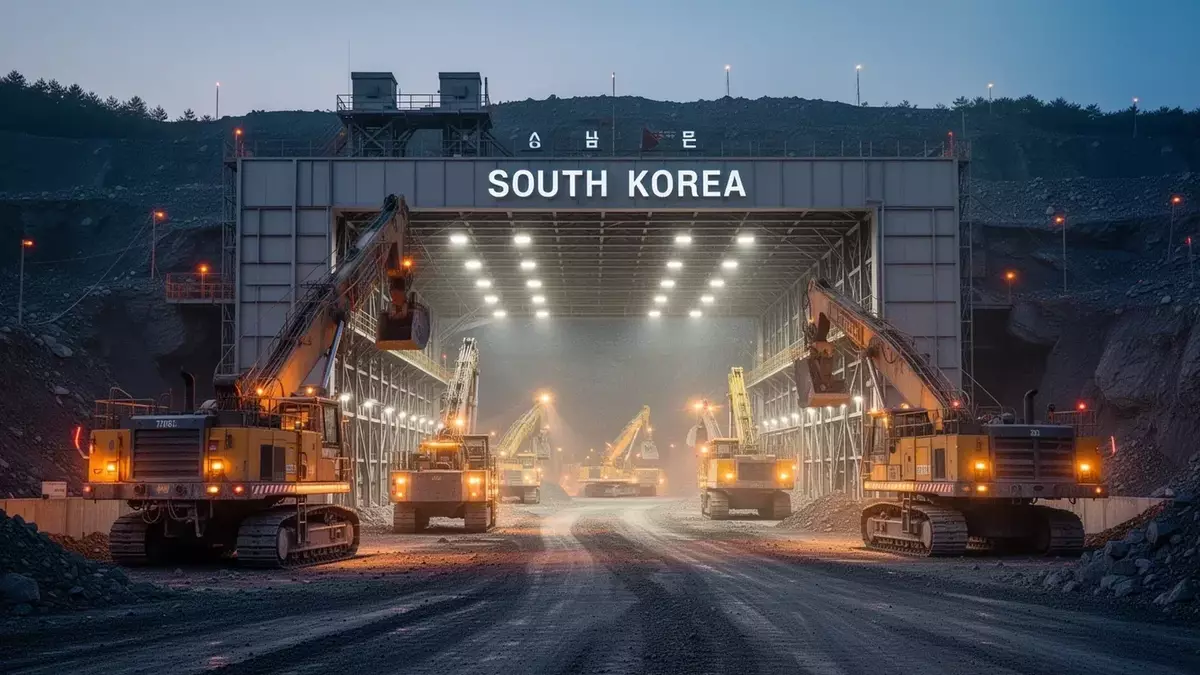
The operational centrepiece, however, remains the Sangdong mine in South Korea. Almonty brought the first phase of this historic site back into production in March 2026 after a 30-year hiatus. The processing plant is currently handling around 640,000 tonnes of ore per year, with a longer-term target of 2,300 tonnes of tungsten concentrate. The transition from developer to producer is less glamorous than the speculator-driven rally that preceded it, but the company is already proving that the mill works. Alongside tungsten, Almonty is drilling for molybdenum on the same property, with 37% of the planned 12,000 metres completed. South Korea is actively pushing private industry to secure domestic molybdenum reserves, and an off-take agreement with the industrial conglomerate SeAH has already been signed.
The financial foundation for these ambitions looks solid. Revenue hit C$25.4 million in the first quarter of 2026, roughly triple the year-ago level, and adjusted EBITDA swung firmly into positive territory. Cash reserves stood at a comfortable C$260 million at the end of March. The chart, meanwhile, tells a story of healthy consolidation after a vertical ascent that briefly pushed the company's market capitalisation close to €4.7 billion. The stock is now trading below its 50-day moving average but remains well above the 200-day line, while the relative-strength index sits at 46 — neutral ground that suggests the sell-off has not become oversold.
A production update is expected later this week, offering fresh data on the Sangdong ramp-up. That will be followed by the Russell inclusion on June 29. Between forced index buying, a tightening tungsten market, and a Pentagon-imposed supply chain shift, the near-term agenda is packed with potential catalysts. The question that now hangs over Almonty shares is whether the company can deliver the industrial consistency to match the narrative.
Ad
Almonty Stock: New Analysis - 23 June
Fresh Almonty information released. What's the impact for investors? Our latest independent report examines recent figures and market trends.