Almonty Industries: Russell Inclusion Lands as Stock Sheds 14% in a Week
28.06.2026 - 11:06:45 | boerse-global.de
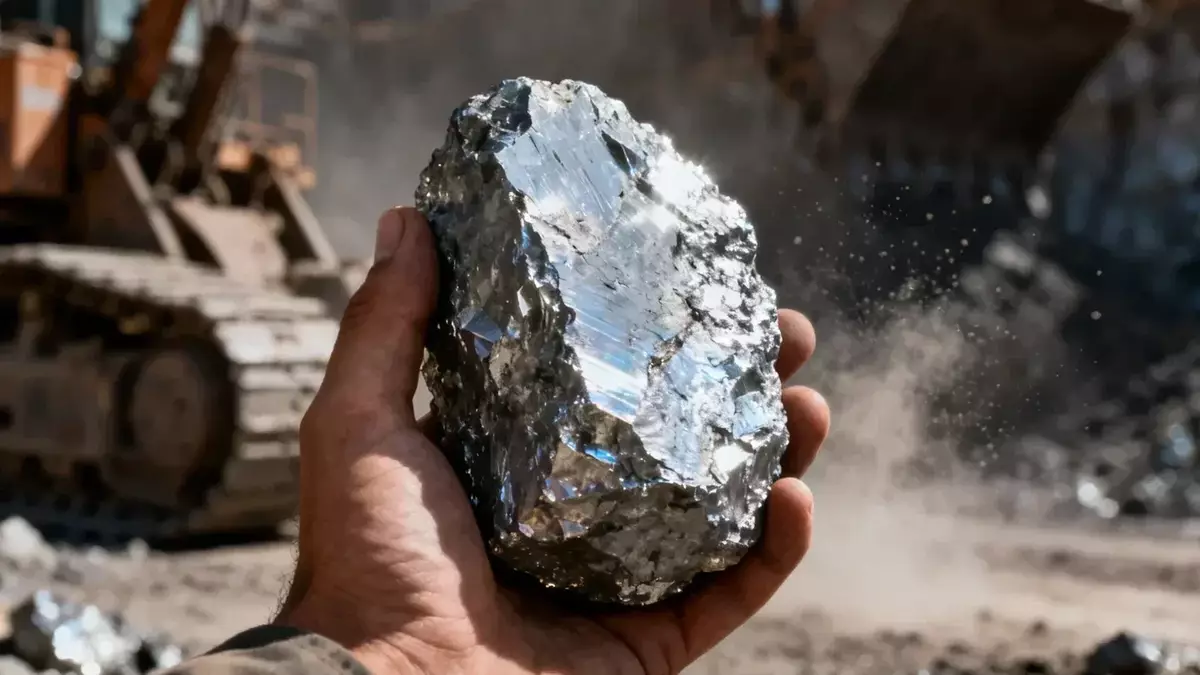
Almonty Industries steps onto the Russell 1000 and Russell 3000 on Monday, but the welcome mat is unusually shaky. The tungsten and molybdenum developer saw its shares slide roughly 14% last week to close at C$23.00 in Toronto — well below the 50-day moving average of C$26.78. Even so, the stock remains up 91% year-to-date and has nearly tripled over the past twelve months, a rally driven by production milestones, a tightening tungsten market, and a strategic pivot into molybdenum.
Monday’s index inclusion is no mere checkbox. Passive funds tracking the Russell benchmarks oversee around US$12.2 trillion in assets globally, and all of them must now hold Almonty’s stock. The rebalancing forces an immediate wave of compulsory buying — estimates of how many shares vary by fund size, but the structural demand is guaranteed. Active managers, too, will be compelled to benchmark against the stock, and the uplift in analyst coverage that typically follows inclusion should further deepen liquidity.
Molybdenum Drilling Passes the One-Third Mark
Away from the index mechanics, Almonty’s exploration team is advancing the Sangdong molybdenum project on South Korea’s eastern coast. Of the 26 planned drill holes, 37% are now complete, and the initial assays match historical grades, pointing to a continuous mineralized body. South Korea has formally declared a national molybdenum supply crisis as its strategic reserves dwindle, and the government has urged private companies to secure domestic sources.
Almonty already has an off-taker in place: the SeAH Group will buy the entire future production from the mine. The timing aligns with a 23% surge in spot molybdenum prices over the past year. Once the drill program defines the orebody’s dimensions, management intends to move straight into production, adding a second revenue stream.
Should investors sell immediately? Or is it worth buying Almonty?
Tungsten Output Ramps Up as Pentagon Deadline Looms
The molybdenum push complements the flagship Sangdong tungsten mine, where Phase 1 commissioning wrapped up in March 2026 after a 30-year hiatus. The plant is currently processing about 640,000 tonnes of ore annually, yielding roughly 2,300 tonnes of tungsten concentrate. Phase 2, targeted for 2027, will double capacity to 1.2 million tonnes and push annual concentrate output to around 4,600 tonnes — enough to cover roughly 40% of global tungsten demand outside China.
That position becomes critical on January 1, 2027, when the U.S. Department of Defense is barred from purchasing tungsten from China or Russia. China currently controls 88% of global production, and new supply from Australia, Canada, and Portugal is unlikely to reach the market before 2027 at the earliest. Regulatory pressure, combined with Chinese export controls enacted in early 2025, has already sent European ammonium paratungstate prices from around US$1,800 per metric ton unit in mid-February to above US$3,100 by late March — a gain of more than 550% since the curbs began.
Financial Turnaround and a US$700 Million War Chest
The operational progress is backed by a sharp improvement in the balance sheet. First-quarter 2026 revenue jumped 221% to US$25.4 million, swinging adjusted EBITDA from a loss of US$2.4 million to a positive US$6.1 million. Operating cash flow came in at US$9.7 million, while a net loss of US$5.3 million was almost entirely attributable to non-cash valuation adjustments.
Cash on hand stood at US$259.9 million as of March 31. That cushion received a further boost in early June when Almonty closed an oversubscribed convertible bond, raising US$700 million for refinancing and potential acquisitions.
Almonty at a turning point? This analysis reveals what investors need to know now.
Technical Picture and the Long View
Despite the flurry of positive news, the stock’s 14% weekly rout has pushed the relative strength index to 40.9 — flirting with oversold territory. With annualized 30-day volatility at 90.91%, double-digit weekly swings are part of the Almonty experience. The sell-off may reflect profit-taking after the 300% twelve-month run, or perhaps the market pricing in execution risk on the company’s ambitious “Korean Trinity” plan: integrating tungsten mining, refining, and molybdenum production under one roof in South Korea. All three components — Phase 2 expansion, a tungsten oxide plant, and the molybdenum project — remain incomplete, and large-scale mining operations frequently run over time and budget.
Still, the combination of structural demand from index tracking, a surging tungsten market, a new molybdenum revenue line, and a fortress-like balance sheet gives Almonty a set of catalysts few junior miners can match. Whether Monday’s Russell buying can reverse the latest technical damage will be the near-term test. The longer-term argument rests on a simple reality: China’s grip on tungsten supply is tightening, and the Pentagon is running out of alternatives.
Ad
Almonty Stock: New Analysis - 28 June
Fresh Almonty information released. What's the impact for investors? Our latest independent report examines recent figures and market trends.