Aixtron’s Penn State Research Inroad Comes as Q1 Losses and a Steep Stock Slide Tell a Different Story
02.06.2026 - 16:37:02 | boerse-global.de
The German equipment manufacturer’s push into U.S. semiconductor research gained a notable ally last week, but the market’s focus remained fixed on a painful first quarter and a share-price retreat that contradicted a fresh Buy recommendation from Jefferies.
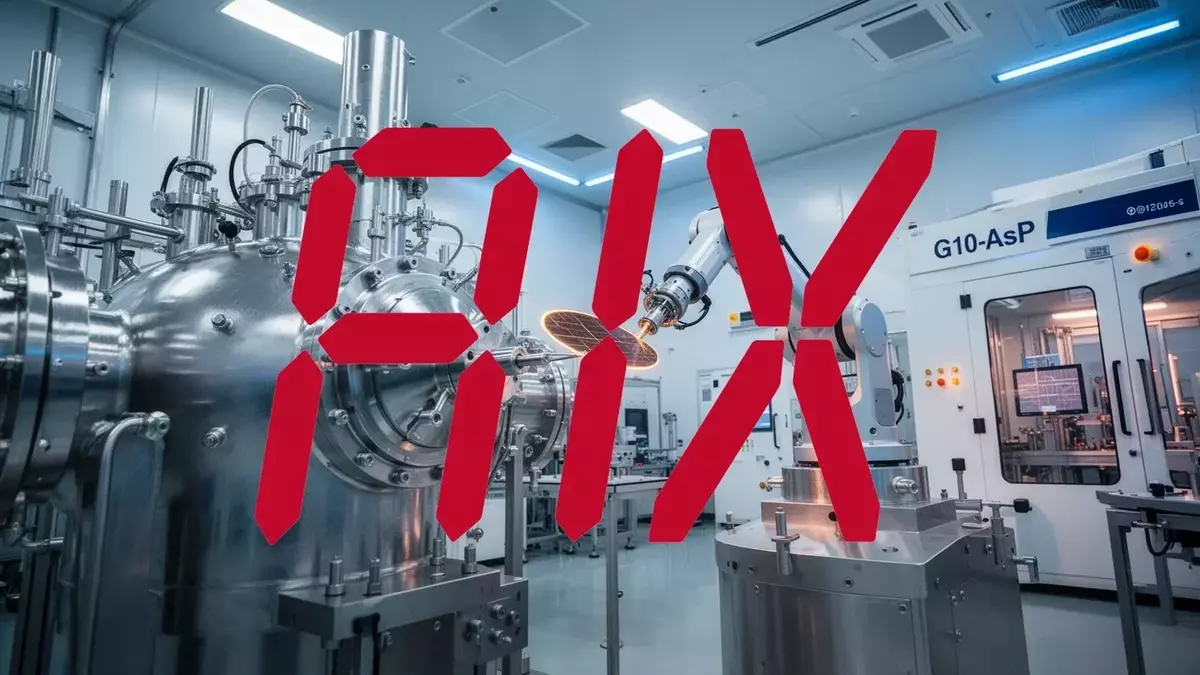
Pennsylvania State University has selected Aixtron’s CCS deposition system for a new lab at its Materials Research Institute, housed in the Millennium Science Complex. The facility is backed by $4.3 million in funding channeled through the Midwest Microelectronics Consortium and the Microelectronics-Commons initiative of the U.S. Department of Defense. The tool will enable high-precision epitaxial growth on substrates up to 100 millimeters, concentrating on gallium nitride and two-dimensional materials — technologies critical for wide-bandgap power electronics, logic, optoelectronics and neuromorphic computing.
For Aixtron, the installation carries strategic weight beyond any single order value. Early presence in publicly funded U.S. research ecosystems often translates into a closer position when commercial technology paths and industrial-scale production emerge. The CHIPS Act’s stream of money into domestic semiconductor infrastructure creates exactly this kind of market where technology partnerships matter as much as equipment sales.
Yet the Penn State news arrived in the shadow of a quarterly report that underscored how much ground the company still has to cover on the profitability front. In the first quarter of 2026, Aixtron posted revenue of €59.4 million, within its own guidance, but operating earnings turned sharply negative. EBIT came in at minus €22.3 million, representing a margin of minus 38%. The company attributed the loss to lower volumes and one-off costs tied to workforce reductions in its operations division.
Should investors sell immediately? Or is it worth buying Aixtron?
The mismatch between the research win and the operational pain was captured on the trading floor. Jefferies analyst Janardan Menon, who visited several European semiconductor companies last week, reaffirmed his Buy rating on Aixtron, noting that customer activity had become more predictable and that the broader industry is “fairly optimistic” about AI-related demand and a cyclical recovery. But on Monday, June 1, the stock closed at €55.62 on Xetra, down 6.05% from the previous session — a decline that appeared to reflect growing unease with near-term earnings rather than any specific news flow.
The underlying order book, however, offers a more encouraging narrative. Aixtron reported first-quarter order intake of €171.4 million, with nearly 70% contributed by optoelectronics, the current growth engine. The total order backlog swelled to €359.1 million, up from €307.9 million a year earlier. That backlog is the foundation for management’s reiterated full-year 2026 outlook: revenue of €560 million, a gross margin around 42% and an EBIT margin between 17% and 20%. For the second quarter, the company is guiding for revenue of roughly €110 million.
The trajectory from a loss-making first quarter to a healthy full-year margin hinges on whether the surge in optoelectronics orders converts into system deliveries on schedule. SiC-tool demand remains sluggish, and GaN tools are stabilizing at low levels, leaving optoelectronics to carry the weight. The second quarter will test whether the order pipeline can absorb the fixed costs that dragged Q1 into the red.
Aixtron’s full fiscal year 2025 had already set a cautious tone. Revenue slipped 12.1% to €556.55 million, and profit dropped 19.81% to €85.23 million. Weakness in power electronics was partly offset by brighter spots in optoelectronics during the first quarter of the current year. The management stood by its 2026 forecast, which envisions revenue growth, margin improvements and additional capacity from a new plant in Malaysia.
Aixtron at a turning point? This analysis reveals what investors need to know now.
The stock’s extraordinary run — up 184.34% year to date to a recent high of €59.30 before Monday’s pullback — has made valuation a central talking point. Even after the 6% slide, the shares sit just 6.14% below that peak. Analysts have scrambled to adjust their models: Deutsche Bank’s Michael Kuhn downgraded Aixtron from Buy to Hold while lifting his price target from €31 to €38. Berenberg also moved to Hold, with a €42 target. JPMorgan’s Craig McDowell kept an Overweight rating but raised his target from €36.50 to €54.50. Last week, the fair-value consensus was bumped from €36.50 to €55.30, a figure the stock now trades only marginally above.
The Penn State installation strengthens Aixtron’s foothold in U.S.-backed semiconductor research, a long-term competitive advantage. For the share price, however, the immediate focus is on execution: can the optoelectronics backlog deliver the promised margin recovery? If it does, the U.S. positioning will reinforce the re-rating. If power electronics demand remains soft, the elevated multiple will become harder to defend.
Ad
Aixtron Stock: New Analysis - 2 June
Fresh Aixtron information released. What's the impact for investors? Our latest independent report examines recent figures and market trends.