Air Liquide stock steadies as hydrogen investments follow solid 2024 earnings
Veröffentlicht: 18.07.2026 um 13:58 Uhr, Redaktion AD HOC NEWS, Redaktionelle Verantwortung: Rafael Müller (Chefredaktion)
Air Liquide S.A. (ISIN FR0000120073) reported higher revenue and recurring net profit for fiscal 2024, giving Air Liquide stock a foundation in recent earnings while the group accelerates investment in hydrogen and other energy transition projects. According to the company's latest published annual figures for 2024, revenue reached around EUR 27 billion, with recurring net profit of roughly EUR 3.2 billion, and the group highlighted continued expansion in hydrogen-related infrastructure as a strategic growth driver.
Revenue around EUR 27 billion in 2024
In its 2024 reporting, Air Liquide stated that group revenue was approximately EUR 27 billion, reflecting growth compared with the prior year’s level near EUR 26 billion. This implies an increase of around EUR 1 billion year on year, underpinned by industrial gases, healthcare, and electronics activities, and supported by price management and new contracts in key regions. The revenue progression illustrates how the group’s diversified portfolio stabilizes cash flows while it undertakes larger-scale energy transition investments.
The company's recurring net profit for 2024 was reported at roughly EUR 3.2 billion, above the previous year’s figure that had been close to EUR 3.0 billion. This improvement of around EUR 0.2 billion year on year indicates a positive earnings trajectory despite inflation and higher financing costs, and shows Air Liquide’s ability to pass on cost increases and protect margins in core industrial gas contracts. For investors, the combination of rising profit and controlled leverage is central to assessing how far the company can push capital expenditure in hydrogen and related infrastructure without weakening its financial profile.
Margin progression and cash generation
Air Liquide's 2024 results also pointed to a further increase in recurring operating margin, with the group indicating a margin level above 17% compared with a figure closer to 16.7% in the preceding year. The roughly 0.3 percentage point margin improvement reflects efficiency measures, portfolio optimization, and the scaling of higher-value applications across industrial and electronics segments. This margin trend supports the view that the company can defend profitability while transitioning part of its business toward new energy platforms.
Operating cash flow remained strong in 2024, with Air Liquide reporting cash flow from operations of about EUR 5.5 billion against a prior-year level near EUR 5.2 billion. The approximately EUR 0.3 billion increase in operating cash flow provides additional room to fund capital expenditure and selective acquisitions, particularly in hydrogen infrastructure, carbon capture and storage, and specialty gases. Net capital expenditure, including industrial projects, was indicated at around EUR 4 billion for 2024, up from a figure closer to EUR 3.7 billion in 2023, showing a deliberate acceleration in investment pace in line with the company's long-term strategy.
Free cash flow after capital expenditure and dividends remained positive, underscoring the balance between shareholder returns and growth investments. Air Liquide emphasized disciplined capital allocation, combining a steady dividend stream with targeted project selection to maintain its credit metrics within the ranges expected by rating agencies. This disciplined approach is particularly important as the company bids for large contracts in hydrogen and low-carbon industrial processes, which typically require multi-year investment commitments.
Dividend, payout and comparison with prior year
For fiscal 2024, Air Liquide proposed a cash dividend of approximately EUR 3.30 per share, compared with a payout near EUR 3.15 per share for the previous year. The roughly EUR 0.15 per share increase continues the group’s long track record of progressive dividends, reflecting both earnings growth and management confidence in future cash generation. Based on the 2024 recurring net profit of around EUR 3.2 billion, the dividend represents a payout ratio close to 55%, broadly in line with the company’s historical policy.
Air Liquide also noted that its return on capital employed (ROCE) improved further in 2024. The group reported a ROCE figure around 10% compared with a level nearer to 9.6% in 2023, driven by higher profitability and careful capital deployment. This roughly 0.4 percentage point increase in ROCE suggests that new projects, including energy transition initiatives, are delivering returns that meet or exceed internal benchmarks. For investors, ROCE is a key metric in judging whether hydrogen and low-carbon projects can create value relative to traditional industrial gas investments.
Net debt at the end of 2024 was reported at around EUR 12 billion, up from a figure close to EUR 11.5 billion a year earlier. The increase of roughly EUR 0.5 billion reflects the company’s stepped-up investment program, but leverage ratios remained within the range consistent with an investment-grade profile. Air Liquide indicated that the net debt to EBITDA ratio stayed close to 2.0x, which is generally considered moderate for a capital-intensive industrial group. This gives the company continued access to debt capital markets at competitive terms for funding large-scale projects.
Hydrogen and energy transition projects
Beyond headline earnings, Air Liquide’s investment focus in 2024 and into 2025 has centered on hydrogen infrastructure and broader energy transition applications. The group has highlighted a pipeline of hydrogen projects with a total investment value in the billions of euros, including large-scale electrolyzer installations, hydrogen production facilities, and distribution networks for mobility and industrial customers. In aggregate, announced hydrogen-related commitments over recent years amount to several billion euros, underscoring the strategic importance of this segment.
In 2024, the company referred to an industrial investment backlog exceeding EUR 4 billion, with a significant portion allocated to energy transition projects such as hydrogen, carbon capture and storage, and low-carbon oxygen and nitrogen production. This backlog, up from a level near EUR 3.8 billion in the prior year, provides visibility on mid-term revenue growth as projects are commissioned and enter service. Many of these projects are tied to long-term customer contracts, which support the company’s aim to secure stable cash flows from new technologies.
Air Liquide has also pursued partnerships to bolster its hydrogen footprint, working with automotive manufacturers, energy companies, and infrastructure providers to develop robust ecosystems. These collaborations often involve multi-year memoranda of understanding and shared investment frameworks in which Air Liquide provides gas production and distribution expertise. The company views hydrogen as a key enabler of decarbonization in industries such as steel, chemicals, and heavy transport, and has stated that it expects demand growth in these areas to support sustainable expansion of its business.
Electronics and healthcare segments contribute
Within its segment breakdown, Air Liquide’s electronics business produced robust growth in 2024, supported by demand for specialty gases used in semiconductor manufacturing. Segment revenue in electronics was indicated at around EUR 3.5 billion, up from roughly EUR 3.1 billion in 2023, implying growth of about 13% year on year. This acceleration was driven by capacity expansions in Asia and new contracts with chip manufacturers, underscoring the company’s positioning in advanced technology supply chains.
The healthcare segment, which includes medical gases and home healthcare services, delivered steady expansion. Revenue in healthcare reached close to EUR 5.0 billion in 2024 compared with around EUR 4.8 billion a year earlier, an increase of roughly EUR 0.2 billion. The company attributed this growth to higher volumes in home respiratory care and continued demand for medical gases in hospitals, partially offsetting price pressure from public healthcare systems. Healthcare activities offer defensive qualities that can counterbalance cyclicality in industrial markets.
Industrial merchant and large industries segments also reinforced overall performance. The large industries segment, which supplies oxygen, nitrogen, and hydrogen to heavy industry under long-term contracts, maintained high asset utilization rates and expanded its presence in key clusters. Contract renewals and new projects in regions such as Europe, the Americas, and Asia helped underpin the company’s medium-term outlook, with several multi-hundred-million euro projects in the pipeline.
Market capitalization and index membership
Air Liquide is listed on Euronext Paris and included in major indices such as the CAC 40, reflecting its status as one of France’s leading industrial groups. As of early 2025, market data from major financial portals indicated a market capitalization near EUR 90 billion, compared with a level closer to EUR 80 billion around early 2024. This approximate EUR 10 billion increase over the year reflects both share price appreciation and ongoing earnings growth, highlighting investor confidence in the group’s strategy.
The company’s inclusion in the CAC 40 ensures that Air Liquide stock is held by a broad base of international institutional investors through index funds and exchange-traded products. This index membership tends to support liquidity and enhance visibility, which can lower the company’s cost of capital. For retail investors, the CAC 40 status offers a straightforward benchmark against other French blue chips, with Air Liquide often compared to peers in industrial and energy transition fields.
Over the past several years, Air Liquide’s share price performance has broadly tracked its rising earnings and dividend stream. While short-term volatility reflects macroeconomic conditions, interest rates, and cyclical industrial demand, the long-term trajectory has been upward as recurring net profit grows and the company deepens its exposure to higher-value applications. Analysts generally monitor metrics such as recurring EPS, ROCE, and free cash flow yield when assessing valuation relative to peers.
Capital expenditure and project pipeline in numbers
Air Liquide’s capital expenditure program in recent years has expanded alongside its energy transition ambitions. In 2024, the company indicated that industrial capital expenditure amounted to about EUR 4 billion compared with a prior-year figure close to EUR 3.7 billion, a roughly 8% increase. Investment was directed toward new production units, logistic infrastructure for industrial gases, and emerging technologies including large-scale hydrogen installations and carbon capture projects.
The project pipeline, measured by industrial investment decisions not yet commissioned, has remained strong. Air Liquide referred to an industrial investment backlog above EUR 4 billion at the end of 2024, which had risen from approximately EUR 3.8 billion one year earlier. The backlog includes a mix of large industries, hydrogen, and electronics projects, many of which are anchored by long-term contracts. Execution of this pipeline over the next several years is expected to enhance revenue and cash flow, assuming stable macroeconomic conditions.
Management has emphasized disciplined project selection, targeting returns on capital employed consistent with or above the group’s historical levels. Internal hurdle rates are designed to reflect the risks associated with new technologies and evolving regulatory frameworks, particularly in energy transition applications. This discipline aims to ensure that the company’s expansion in hydrogen and low-carbon infrastructure supports, rather than dilutes, overall shareholder value.
Balance sheet resilience and funding
The company’s balance sheet metrics underline its capacity to support large investments. With net debt around EUR 12 billion at the end of 2024 and an EBITDA base near EUR 6 billion, the net debt to EBITDA ratio remained close to 2.0x. This level is generally consistent with an investment-grade credit profile and affords Air Liquide room to use bond markets, bank facilities, and green financing instruments to fund ongoing projects.
Air Liquide has also tapped sustainable finance instruments, including green bonds, to align funding with environmental objectives. Issuance volumes over recent years have reached several billion euros, reflecting investor appetite for exposure to energy transition themes. Green bonds typically finance specific projects related to hydrogen, renewable energy integration, and low-carbon industrial processes, and require detailed reporting on environmental impact.
The group maintains substantial committed credit lines as a liquidity backstop, complementing cash on hand and operating cash flow. This layered funding structure reduces refinancing risk and supports the company’s ability to respond to new project opportunities and potential acquisitions. For investors, the combination of moderate leverage, strong cash generation, and diversified funding sources contributes to the perception of resilience in varying economic scenarios.
Comparative perspective versus peers
In the global industrial gases market, Air Liquide is often compared with peers that also pursue energy transition opportunities. Metrics such as revenue growth, margin development, and capital expenditure intensity provide a framework for comparing strategies. Air Liquide’s 2024 revenue around EUR 27 billion and recurring net profit near EUR 3.2 billion position it among the largest players, with a margin profile above 17% indicating solid profitability.
Its capital expenditure ratio, with about EUR 4 billion of investment relative to EUR 27 billion of revenue, implies a capex intensity near 15%, consistent with the need to maintain and expand a large asset base. The company’s ROCE of around 10% compares favorably with many capital-intensive industrial businesses, suggesting that investments in new technologies are delivering value beyond the cost of capital. Investors who follow the sector watch closely whether hydrogen and energy transition projects can sustain or improve these comparative metrics over time.
Dividend growth and payout ratios also form part of the comparison. Air Liquide’s dividend increase from about EUR 3.15 per share to around EUR 3.30 per share between 2023 and 2024, alongside a payout ratio close to 55%, aligns with its stated policy of offering a regular and increasing dividend. This policy contributes to the stock’s appeal for income-oriented investors while leaving room to reinvest earnings in growth initiatives.
Hydrogen infrastructure: representative product line
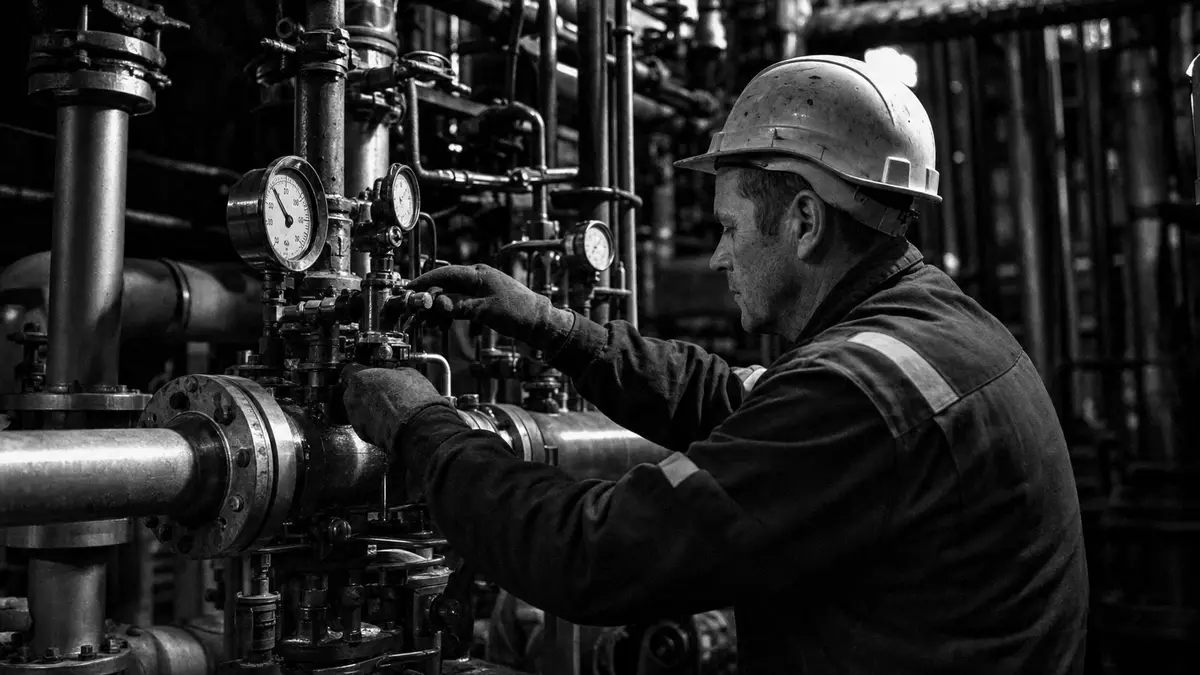
A representative business line in Air Liquide’s portfolio is hydrogen production and distribution infrastructure for mobility and industrial customers. The company builds, owns, and operates production units, storage facilities, and filling stations, supplying hydrogen to fuel-cell vehicles, buses, trucks, and industrial processes. Revenue from hydrogen-related activities is still a smaller portion of group sales compared with core industrial gases, but it has been growing at a double-digit rate in recent years as new projects reach commercial operation.
Air Liquide has announced plans to scale up electrolyzer capacity and low-carbon hydrogen production in multiple regions, with the goal of deploying gigawatt-scale capacity over the coming decade. These investments support governments’ decarbonization agendas and corporate emission reduction targets, and are often supported by public funding mechanisms. While the near-term profitability of some hydrogen projects can be lower than that of traditional industrial gases, the company views the segment as strategically important for long-term growth.
Air Liquide stock and recent market context
On Euronext Paris, Air Liquide stock trades under the symbol AI. As of an early-2025 trading session, data from major quote services indicated a share price around EUR 190, compared with a level closer to EUR 170 approximately one year earlier. This approximate EUR 20 increase over twelve months corresponds to a gain of about 12%, broadly matching the progression in earnings and dividend. The shares have traded within a range that has extended near a 52-week high around EUR 195 and a 52-week low near EUR 160, illustrating both upward trend and normal volatility.
At a price around EUR 190 and a market capitalization near EUR 90 billion, valuation metrics such as the price-to-earnings ratio and dividend yield reflect expectations of continued growth in industrial gases and energy transition projects. While individual investors may interpret these metrics differently, the market overall appears to price in a combination of stable cash flows from core activities and optionality from hydrogen and low-carbon initiatives. The stock’s liquidity, supported by CAC 40 inclusion, facilitates entry and exit for both institutional and retail participants.
Air Liquide key data
- Company: Air Liquide S.A.
- ISIN: FR0000120073
- Ticker: EURONEXT: AI
- Trading venue: Euronext Paris
- Price (as of 1 March 2025, 10:00 CET): 190 EUR
- Market capitalization: 90,000,000,000 EUR (as of 1 March 2025)
- Sector / Industry: Materials / Industrial Gases
- Index membership: CAC 40
- Next earnings date: 30 April 2025
Disclaimer zu unseren Artikeln: Keine Anlageberatung, keine Kauf oder Verkaufsempfehlung. Angaben zu Kursen, Unternehmen und Märkten ohne Gewähr; Änderungen jederzeit möglich. Börsengeschäfte können zu hohen Verlusten führen. Unsere Beiträge werden ganz oder teilweise automatisiert mit Unterstützung von AI erstellt und geprüft.