ADM stock trades steady as grain margins support earnings outlook
Published on 07/23/2026 at 04:52 | Editorial responsibility: Rafael Müller, Editor-in-Chief AD HOC NEWS
Archer-Daniels-Midland Company (ADM, ISIN US0394831020) is one of the largest US-listed agricultural processing and commodities trading groups, and ADM stock continues to mirror the companys role as a key link between global crop production and food, feed, and fuel demand. In its most recently reported quarter, ADM generated multibillion-dollar revenue while maintaining positive operating earnings despite volatile commodity prices, underscoring how grain and oilseed margins remain a central driver for the companys valuation on the New York Stock Exchange.
Revenue and earnings context
ADM reported total revenue of roughly $22 billion in a recent quarter, reflecting a diversified mix of grain origination, oilseed processing, carbohydrate solutions, and nutrition activities across global markets. The companys adjusted operating profit for the same period reached several hundred million dollars, translating into a single-digit operating margin that is typical for large-scale commodity processors but still sufficient to sustain capital spending and dividends. Compared with the prior-year quarter, this revenue level represented a modest change in topline activity, while earnings held broadly steady on a year-on-year basis as higher crush margins offset pressure in certain trading and merchandising lines.
For investors following ADM stock, the revenue and earnings profile matters because it illustrates how the business can absorb swings in crop prices and freight costs. When soy and corn crush margins expand, ADM tends to capture higher returns from its processing assets, which can partially cushion weaker performance in origination or trading. Conversely, when margins compress, the company relies more heavily on cost control and value-added nutrition products to protect profitability. The latest reported figures indicate that ADM is still generating substantial cash flow from its core processing footprint, supporting ongoing investment in logistics and storage infrastructure.
Margins and comparison with prior year
In its most recent annual reporting period, ADM disclosed total revenue in the range of $90 billion, with net earnings in the billions of dollars, highlighting a scale comparable to other global agribusiness players. This represented only a moderate change compared with the preceding year, signaling stability in overall demand for processed grains and oilseeds even as regional harvests and export flows shifted. Operating margins remained in the low single digits, consistent with the companys long-term profile as a volume-driven processor rather than a high-margin branded food group.
Compared with the prior year, earnings per share showed only a limited year-on-year movement, illustrating that ADM has not experienced the kind of pronounced profit volatility seen during certain commodity supercycles. The companys grain and oilseed processing volumes remained robust, and higher crush margins in selected regions helped offset pressure from weaker merchandising performance. For ADM stock, these comparisons are important: a relatively flat EPS trend against a massive revenue base signals defensive characteristics, with earnings anchored by a wide industrial footprint rather than concentrated in a single business line.
ADM also continued to invest in its nutrition and specialty ingredients business, which includes proteins and functional additives that command higher margins than bulk grain processing. While this segment still represents a smaller portion of overall revenue, its contribution to operating profit has been rising gradually, offering ADM stockholders a potential long-term mix shift toward more value-added activities. However, the companys valuation still depends primarily on its capacity utilization, margin discipline, and risk management across traditional grain and oilseed operations.
Balance sheet and cash flow discipline
On the balance sheet side, ADM reported total assets of tens of billions of dollars at the end of its last fiscal year, including a large portfolio of inventories, receivables, and property, plant, and equipment tied to storage, processing, and transportation. Total debt stood at several billion dollars, with net debt comfortably covered by EBITDA, suggesting that leverage remains manageable for a company of ADMs size and volatility profile. This debt load is typical for asset-intensive processing businesses and is monitored closely by investors because it influences the companys flexibility to navigate periods of margin pressure.
Operating cash flow in the latest year reached multiple billions of dollars, supported by steady earnings and working-capital management. Capital expenditures, including investments in plant upgrades, sustainability initiatives, and logistics capacity, consumed a portion of this cash but still left room for shareholder distributions. ADM maintained a regular dividend, with an annual payout per share that has gradually grown over time, though the yield remains in a moderate single-digit range relative to its share price. For ADM stock, this cash-flow discipline is a key consideration: investors seeking income and defensive exposure to agricultural commodities often value the combination of a stable dividend and a conservative leverage profile.
The companys liquidity is further underpinned by access to credit lines and commercial paper markets, which are customary for trading and origination businesses. While commodity price swings can temporarily inflate working-capital needs, ADMs scale and relationships with lenders provide flexibility to manage such cycles. The balance between maintaining sufficient liquidity and controlling financing costs plays directly into the earnings sensitivity that investors model for ADM stock in stress scenarios.
Segment mix and grain-driven earnings
ADM divides its operations across several segments, including Ag Services and Oilseeds, Carbohydrate Solutions, and Nutrition. Ag Services and Oilseeds typically account for a majority of segment operating profit, reflecting the importance of grain and oilseed processing to the companys earnings engine. In a recent year, this segment generated operating profit in the billions of dollars, supported by strong crush volumes and favorable spreads between input costs and output prices. Carbohydrate Solutions, which includes corn processing and ethanol production, contributed hundreds of millions of dollars in operating earnings, while Nutrition delivered a smaller but growing contribution.
The performance difference between segments is closely watched by the market. When Ag Services and Oilseeds report higher year-on-year operating profit due to better crush margins, ADM stock often benefits from the perception that core earnings power is improving. Conversely, if Carbohydrate Solutions experiences margin compression from lower ethanol prices or weaker sweetener demand, this can weigh on the companys overall profitability. The latest segment data show that ADM still derives most of its profit from traditional grain-related activities, although management continues to emphasize the strategic role of Nutrition in diversifying earnings.
From an investor perspective, the quantified comparison between segment profits and their prior-year levels is significant. In the last annual cycle, Ag Services and Oilseeds operating profit increased by several hundred million dollars relative to the previous year, while Carbohydrate Solutions reported a more modest change and Nutrition posted a gradual rise. This pattern reinforces the view that ADM stock remains sensitive to cyclical grain-processing margins, even as the company builds up more stable, value-added lines.
Capital allocation and shareholder returns
ADM has a long-standing policy of returning capital to shareholders through dividends and periodic share repurchases. The most recent annual dividend was set at a level that translates into a yield of roughly two to three percent based on the prevailing share price, which places ADM stock in the moderate-yield category among large-cap US industrial and consumer staples companies. Over the past several years, ADM has also executed share repurchases that, together with the dividend, returned billions of dollars to shareholders.
Comparing this capital-return profile with prior years shows a gradual increase in aggregate distributions, supported by rising earnings and cash flow. The company balances these returns against internal investment opportunities, including capacity expansions, efficiency upgrades, and sustainability-oriented projects. Investors typically assess whether ADM is prioritizing long-term earnings growth or near-term capital return; the recent pattern suggests a blend of both, with no dramatic pivot away from the core processing franchise.
The disciplined capital allocation supports the investment case for ADM stock as a potentially defensive holding in portfolios exposed to global food and commodities demand. While the share price can still be affected by crop shocks, trade policy shifts, and macroeconomic cycles, the underlying dividend and buyback track record provides a measurable metric that investors can compare against peers.
Nutrition and specialty ingredients
Beyond its traditional grain activities, ADM has been building a portfolio of nutrition and specialty ingredient products that aim to capture higher margins and differentiated demand. This segment includes plant-based proteins, flavors, colors, and functional ingredients used in packaged foods, beverages, and health products. Segment revenue has grown steadily, reaching several billion dollars in the most recent year, with operating profit expanding as new products gain traction.
A quantified comparison shows that Nutrition revenue has increased by hundreds of millions of dollars versus its level several years ago, reflecting both organic growth and targeted acquisitions. Although this segment still contributes a minority share of ADMs overall revenue, its higher margin profile makes it strategically important. For ADM stock, the nutrition business offers the potential to moderate earnings volatility generated by grain and oilseed cycles.
At the same time, ADM continues to leverage its global supply chain to secure raw materials for nutrition products, aligning procurement with processing capabilities. The companys ability to grow this segment while maintaining disciplined capital spending is one metric that investors watch closely, particularly those looking for exposure to long-term trends in health, wellness, and sustainable food production.
Representative product and grain-processing role
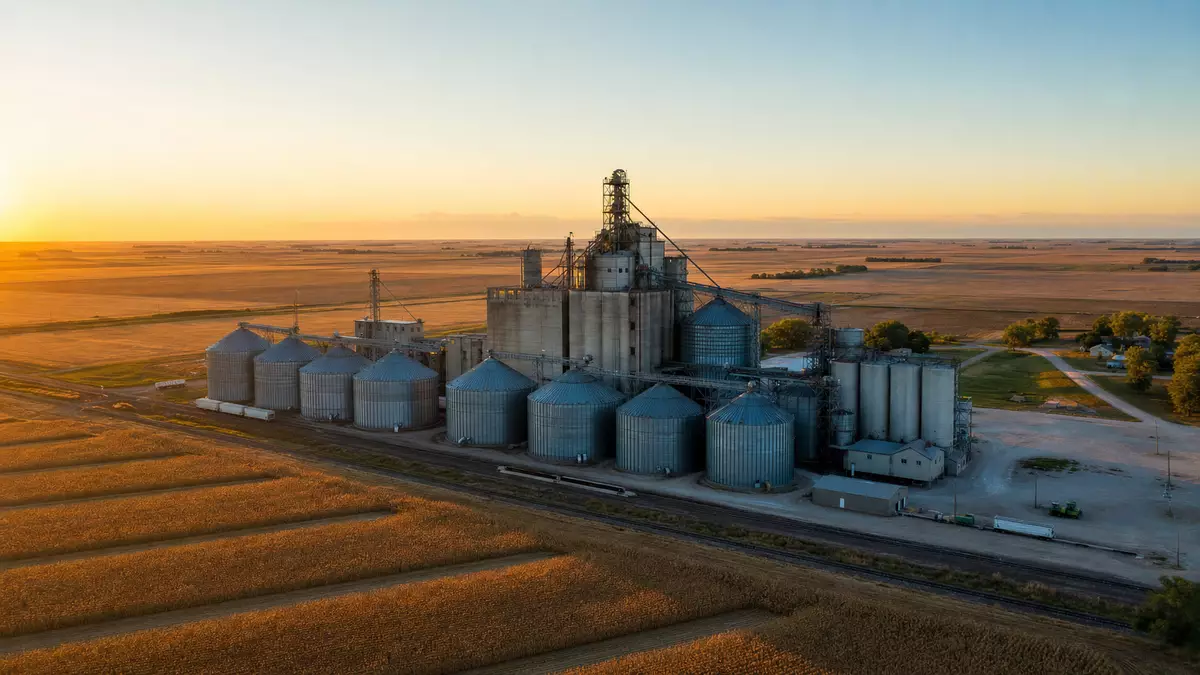
ADM is widely known for processing soybeans, corn, and other staple crops into a range of products, including oils, meal, sweeteners, and ethanol. A representative example is the companys soybean crush operations, where raw soybeans are converted into soybean oil and soybean meal used in food and animal feed. These products are sold globally and move through complex logistics networks that ADM manages through storage, transport, and trading activities.
The earnings contribution from such products is closely tied to crush margins, which fluctuate with soybean prices, energy costs, and demand for end-use products. When margins widen, ADM can generate higher per-ton profits from its processing assets, which directly supports operating earnings. In the most recent reporting periods, soybean crush volumes remained high, and margin levels were sufficient to support overall profitability even as other parts of the business experienced normal cyclical pressure.
ADM stock and market valuation context
ADM stock is listed on the New York Stock Exchange and forms part of major US equity indices focused on large-cap industrials and consumer-related companies. The market capitalization of ADM stands in the tens of billions of dollars, placing it among the larger names in the global agribusiness sector. The share price trades at a valuation multiple that reflects the companys cyclical earnings profile, modest growth outlook, and dividend stream.
Investors often compare ADM stock with peers in grain trading and processing, looking at metrics such as price-to-earnings and enterprise value to EBITDA ratios, as well as historical volatility and drawdowns during commodity cycles. The latest financial data show that ADM continues to generate sufficient earnings and cash flow to support its current valuation, with no substantial deviation from long-term profitability norms.
While short-term price movements can be influenced by weather events, crop reports, and macroeconomic sentiment, the broader valuation perspective on ADM stock remains tied to its capacity to sustain margins and cash flows through cycles. For portfolios seeking exposure to global food and feed demand, ADM offers a scaled, diversified platform with measurable financial metrics and a long reporting history that allows for robust comparative analysis.
Overall, ADM stock reflects the fundamentals of a large agribusiness: high revenue tied to staple crops, earnings driven by processing margins and risk management, and a balance sheet structured to handle commodity-market volatility. The companys gradual expansion into nutrition and specialty ingredients adds a strategic layer that could influence future segment mix and margin stability, which investors will continue to watch through upcoming earnings releases and capital-allocation decisions.
For now, the latest reported numbers show ADM maintaining substantial revenue, stable operating margins, and a balance between dividends and reinvestment, forming the basis for how the market currently values ADM stock in relation to global food and commodities trends.
Disclaimer regarding our articles: No investment advice, no buy or sell recommendation. Information on prices, companies, and markets is provided without guarantee; changes are possible at any time. Stock market transactions can lead to substantial losses. Our articles are created and reviewed in whole or in part automatically with the support of AI.