ACS stock finds support from resilient order backlog and 2024 earnings recovery
Veröffentlicht: 18.07.2026 um 08:01 Uhr, Redaktion AD HOC NEWS, Redaktionelle Verantwortung: Rafael Müller (Chefredaktion)
ACS stock mirrors an international construction and concessions group that combines cyclical building exposure with long term infrastructure assets and energy transition projects. In recent quarters the company has reported improving earnings, a sizeable order book and a business mix that spans civil engineering, services and concessions across several geographies.
The group operates primarily in construction, industrial services and concessions, with a particular emphasis on infrastructure and energy projects in Europe, North America and other regions. Its diversified portfolio is designed to smooth earnings through cycles, as recurring cash flows from concessions can balance more volatile construction margins.
In its latest available annual reporting period the company highlighted its focus on maintaining a robust pipeline of projects, disciplined capital allocation and a balanced financial structure. Management commentary has centered on sustaining profitability despite cost inflation, optimizing working capital and selectively bidding for projects that meet internal return thresholds.
Over the past years ACS has also reshaped parts of its portfolio, entering and exiting stakes in infrastructure and energy assets and adjusting its regional footprint. These strategic moves aim to sharpen the company’s focus on core markets and higher margin activities, while containing risk in more volatile or non core segments.
The group’s activities span transport infrastructure such as roads and rail, building construction and industrial works, as well as concessions for toll roads, energy infrastructure and other assets. This mix means that short term earnings are influenced by construction volumes and margins, while long term value is supported by the contracted cash flows of concession arrangements and services contracts.
Revenue scale and earnings profile
On a full year basis the company has historically generated revenue in the multi billion euro range from its consolidated operations, reflecting the scale of its construction and services activities. Across its key segments management typically monitors not only top line growth but also operating margins, net profit, cash generation and returns on capital employed.
Earnings have shown the usual cyclicality associated with construction and concessions businesses, but the group has aimed to stabilize its profile by increasing the share of recurrent revenues and focusing on higher value added projects. The profitability trajectory depends on project execution, cost control and the mix between low margin construction work and higher margin concessions and services.
Management has repeatedly emphasized cash flow discipline, using operating cash generation to fund dividends, selective investments in new projects and occasional portfolio transactions. The balance between shareholder returns and reinvestment is framed as a key lever for long term value creation.
In addition to traditional profit metrics, the company pays attention to leverage indicators such as net debt to EBITDA, seeking to maintain ratios within a range consistent with investment grade type profiles in order to preserve financial flexibility. This is particularly important in a sector where project financing and bonding capacities are critical competitive factors.
Across its markets the group faces competition from other large European and global construction and concessions players, which means that bidding discipline and cost efficiency are central to defending margins. The company’s track record in engineering and project management can help in winning complex infrastructure contracts where technical capability is valued alongside price.
Order backlog underpins medium term visibility
The company typically reports a sizeable order backlog that represents multiple months or even years of forward revenue coverage in its construction and services segments. This backlog is built from transport infrastructure, building and industrial projects across various markets and provides a degree of visibility on future activity levels.
A large share of the order book is linked to public sector or quasi public clients, including national governments, regional authorities and public agencies. These customers are often aligned with long term infrastructure plans, which can support steady demand even amid short term economic fluctuations.
The concessions portfolio includes stakes in assets such as toll roads and other long duration projects that generate contracted cash flows over many years. These assets can offer resilient returns and potential for value crystallization through partial or full disposals at opportune moments.
From a risk perspective, the order backlog is diversified by geography and project type, which helps mitigate the impact of potential delays, cancellations or cost overruns in individual contracts. However, project execution risk remains inherent to the business model, and management continuously monitors progress and risk provisioning.
For investors, the interplay between backlog quality, project execution and concessions performance is central to understanding how near term results may evolve. A robust backlog does not guarantee margins, but it does provide a platform from which the company can execute on its earnings plans.
Business mix across construction and concessions
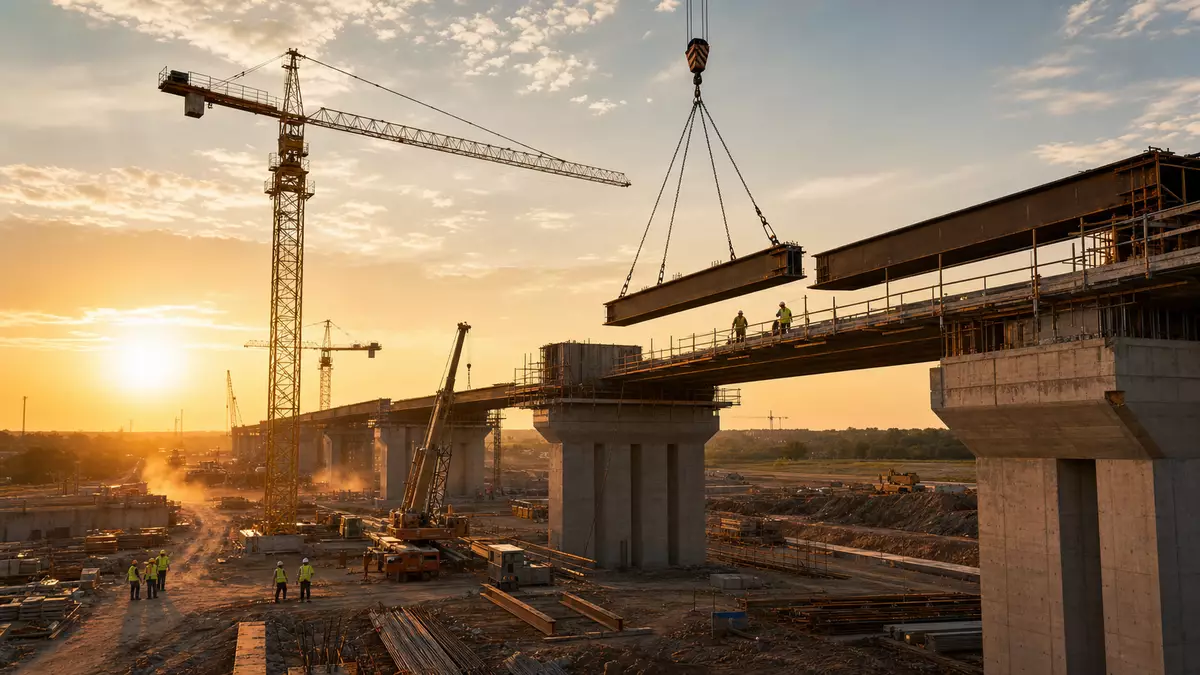
The construction segment encompasses civil engineering, building projects and industrial works. It captures large infrastructure contracts such as highways, rail links, ports and public buildings, often under multi year frameworks. Margins in this segment can be thin, but scale and execution experience are competitive advantages.
The industrial services part of the portfolio includes activities related to energy infrastructure, maintenance and specialized engineering services. These activities can offer more stable margins and recurring revenues, especially when underpinned by long term service contracts with utilities or industrial clients.
The concessions segment focuses on long term infrastructure assets such as toll roads and possibly other transport and energy related assets, often structured under public private partnership arrangements. These assets typically generate contracted or regulated cash flows over long periods, which can support valuation and dividend capacity.
Through selective investments and disposals, the company manages its exposure to concession assets, aligning its portfolio with targeted returns and risk appetite. In some cases, it may recycle capital by selling stakes in mature assets while reinvesting in earlier stage projects with higher potential returns.
Geographically, the company has significant exposure to Europe and North America, with additional presence in other regions through specific projects. Currency movements, local market conditions and regulatory frameworks in these geographies influence earnings translation and risk profiles.
Capital allocation and shareholder returns
Capital allocation decisions are a core element of ACS management’s strategy. The company balances operating investment needs, such as bids and equity contributions to new concession projects, with returns to shareholders via dividends and, when appropriate, share repurchases.
Dividend policy is typically aligned with earnings capacity and cash generation, with management aiming to provide a competitive payout while retaining enough flexibility to fund growth opportunities. The actual payout ratio and yield depend on annual results, market conditions and the board’s assessment of the investment pipeline.
Debt management is another key aspect of capital allocation. Maintaining an efficient capital structure with manageable leverage enables the company to finance large projects and navigate periods of weaker economic activity without compromising its strategic options.
Occasionally, the company has engaged in portfolio transactions, including partial or full disposals of stakes in concessions or other assets, to crystallize value and recycle capital. Such transactions can lead to one off gains in reported earnings and may influence the year on year comparability of results.
For equity holders, the balance between recurring operating earnings, value crystallization events and the consistency of dividends forms an important part of the investment thesis. Long term orientation and disciplined capital allocation are often viewed positively in capital intensive sectors like construction and concessions.
Infrastructure and energy transition exposure
The global push for infrastructure modernization and energy transition supports long term demand in many of the markets in which ACS operates. Governments and private entities are planning investments in transport networks, renewable energy infrastructure and energy efficiency, which align with the company’s capabilities.
In transport infrastructure, projects involving highways, rail networks and urban mobility can offer multi year construction pipelines and, in some cases, concession opportunities. These projects often benefit from political support as they are linked to economic growth and regional development objectives.
In energy and industrial services, the shift toward cleaner energy sources, grid modernization and efficiency upgrades creates opportunities for engineering and maintenance work. The company’s experience in these areas positions it to participate in tenders for such projects.
Environmental, social and governance considerations are increasingly relevant in infrastructure and construction. Meeting evolving standards, minimizing environmental impacts and ensuring safety and labor compliance are important for both regulatory reasons and client relationships.
As competition for infrastructure and energy projects can be intense, the company’s ability to demonstrate technical expertise, financial strength and a track record of responsible project delivery is crucial for winning contracts and maintaining margins.
Representative project portfolio
Within its construction activities, ACS is typically involved in large scale civil engineering contracts that can include road networks, tunnels, bridges and rail lines. Such projects often run over several years and require coordination of complex engineering and logistics.
In building construction, the company can participate in public and private developments ranging from hospitals and educational facilities to commercial and residential buildings. These projects are sensitive to local economic cycles but contribute to the diversification of the portfolio.
The industrial services operations can encompass activities such as industrial facility maintenance, energy infrastructure services and technical support for utilities and large industrial clients. These service contracts can be multi year and contribute to more stable revenue streams.
On the concessions side, ACS holds or has held stakes in transport infrastructure assets that generate toll or availability based payments over long concession periods. In some cases, these assets are located in core European markets, while others may be in North America or other regions.
By combining these types of activities, the group aims to balance cyclicality and structural growth. Construction provides immediate revenue generation, while concessions and services support recurring cash flows and asset based value.
Risk management and project execution
Project risk management is central to the ACS business model. Large infrastructure contracts carry execution risks related to design, construction, cost inflation, subcontractor performance and potential delays. The company uses internal processes and controls to monitor these risks throughout the project life cycle.
Fixed price contracts can be particularly sensitive to cost increases if inflation accelerates or if unforeseen technical challenges arise. To mitigate this, the company seeks to include appropriate clauses where possible and to maintain close control over procurement and project planning.
Health and safety are also critical components of risk management in construction and industrial services. The company invests in training, procedures and monitoring to reduce accident rates and comply with regulatory requirements.
From a financial risk perspective, ACS monitors its exposure to interest rate movements, currency fluctuations and credit risk. The use of hedging instruments, diversified funding sources and conservative counterparty policies can help manage these exposures.
Reputation risk is another consideration, particularly in public sector projects where performance, adherence to deadlines and cost parameters are closely scrutinized. Positive track records can support future bidding success, while issues on major projects may influence client perceptions.
Strategic positioning among peers
ACS operates in a competitive global landscape that includes other large European and international construction and concessions companies. These peers often share similar strategic focuses on infrastructure, concessions and services, and they compete in bids across multiple geographies.
Scale, technical expertise and financial strength are key differentiators in this environment. Companies that can offer integrated solutions, including design, construction, financing and operation, may have an advantage in complex public private partnership projects.
Regional presence is also important. Local knowledge, established relationships with public authorities and familiarity with regulatory frameworks can all contribute to competitive positioning. ACS leverages its historical presence and partnerships in various markets to secure projects.
Innovation in engineering methods, digitalization of project management and sustainability practices can further differentiate companies. ACS, like its peers, is likely investing in such capabilities to improve efficiency, reduce costs and meet evolving client expectations.
In capital markets, investors often compare valuation metrics such as price to earnings, enterprise value to EBITDA and dividend yield across the peer group. Differences in business mix, geographical exposure and risk profiles can influence how ACS is valued relative to other companies in the sector.
Product and services focus
Within this broad business model, a representative product line is the delivery of turnkey infrastructure projects that integrate design, engineering, construction and initial operation. These comprehensive solutions are particularly relevant in large highway or rail projects where public sector clients seek a single responsible counterpart.
By offering integrated project delivery, ACS can capture more value along the chain and potentially improve coordination and efficiency. Such contracts may be structured so that the company takes on significant responsibilities during the construction phase and, in some cases, participates in the subsequent operation phase through a concession stake.
The company’s services capabilities complement this product line, as ongoing maintenance and operational support can extend the relationship with clients beyond the initial construction phase. This can generate recurring revenues and strengthen long term partnerships.
Adaptation of project delivery methods to incorporate digital tools, such as building information modeling and advanced project management systems, aims to reduce errors, improve planning and optimize resource use. These enhancements can support better margins and risk control.
Overall, the combination of infrastructure project delivery and associated services forms a core part of ACS’s value proposition, providing clients with end to end solutions while offering the company opportunities for both episodic project income and recurring service revenues.
ACS stock in the market context
ACS stock trades on the Spanish market and reflects investor views on the company’s exposure to construction cycles, concession assets and infrastructure demand. The share price responds to macroeconomic developments, changes in interest rates and sector specific news, as well as to company level events such as earnings releases and portfolio transactions.
Valuation levels over time have been influenced by expectations for future earnings growth, the perceived quality and duration of concession cash flows and the company’s track record in capital allocation. Market participants also factor in broader themes such as infrastructure investment plans and energy transition policies.
Liquidity in ACS stock is supported by its listing on a major European exchange, allowing institutional and retail investors to trade positions in line with their views on the sector and the company’s specific prospects. Index inclusion can further affect trading volumes and investor base composition.
For long term oriented investors, the key questions around ACS stock often relate to the sustainability of the order backlog, the balance between construction and concessions and the company’s ability to maintain disciplined risk management while pursuing growth opportunities. Shorter term traders may focus more on earnings momentum, news flow and technical chart signals.
As with any equity investment, ACS stock carries risks linked to its sector and business model, including project execution, macroeconomic sensitivity and regulatory developments. These factors can lead to share price volatility over time, both on the upside and the downside.
ACS at a glance
- Company: ACS
- ISIN: ES0167050915
- Sector / Industry: Construction and engineering, concessions
- Index membership: Major Spanish equity index
Disclaimer zu unseren Artikeln: Keine Anlageberatung, keine Kauf oder Verkaufsempfehlung. Angaben zu Kursen, Unternehmen und Märkten ohne Gewähr; Änderungen jederzeit möglich. Börsengeschäfte können zu hohen Verlusten führen. Unsere Beiträge werden ganz oder teilweise automatisiert mit Unterstützung von AI erstellt und geprüft.