Acerinox stock holds firm as stainless steel demand and margins shape the outlook
Published on 07/19/2026 at 07:40 | Editorial responsibility: Rafael Müller, Editor-in-Chief AD HOC NEWS
Acerinox (ISIN ES0132105018) is one of the major stainless steel producers listed in Europe, and Acerinox stock offers exposure to global demand for stainless steel across Europe, the Americas and Africa. The company operates integrated production sites and service centers that make it a reference player in flat and long stainless products, with earnings strongly linked to industrial activity, construction, consumer goods and automotive supply chains. For investors, the combination of price discipline, cost control and capital allocation has become central to interpreting the share's long term trajectory.
Revenue and profitability context
In its most recently reported full financial year, Acerinox generated multi billion euro revenue from its stainless steel and high performance alloys operations. The company reported annual revenue above EUR 6 billion, reflecting the scale of its global footprint and the breadth of its customer base. This revenue base is supported by sales from its core stainless flat products, long products and high performance alloys segments, with a clear geographic diversification across Europe, the United States and other regions. The earnings profile is sensitive to stainless steel base prices, surcharges, input costs and capacity utilization rates, so revenue trends often mirror cycles in industrial production and end demand.
Profitability in the same reporting period showed that Acerinox was capable of generating a solid operating profit and net income despite volatile raw material prices. The company reported EBITDA in the hundreds of millions of euros, with an EBITDA margin in the high single digit or low double digit range depending on the quarter and segment mix. This margin performance reflected both discipline around production costs and the effectiveness of its commercial strategy in passing on certain cost increases to customers. Year on year comparison showed that EBITDA and net profit had normalized from peak levels achieved during previous high price cycles, but remained clearly above pre pandemic averages, indicating a structurally improved earnings capacity.
Net income for the year reached several hundred million euros, and Acerinox converted a meaningful part of its operating profit into free cash flow. This conversion helped the group to reinforce its balance sheet, support shareholder returns and maintain flexibility for capital spending. The margin normalization compared with prior peak conditions did not erase the structural improvements in efficiency and cost management, which investors often highlight when reviewing the company's earnings trajectory over a multi year horizon.
Revenue up versus pre pandemic levels
A notable comparison point is the evolution of Acerinox revenue versus pre pandemic reference years. Annual revenue in the latest full year has been significantly above levels recorded around 2019, with the increase measured in the billions of euros. This uplift reflects both higher stainless steel price levels and, in several segments, improved volumes. For example, total revenue in the recent year has exceeded EUR 6 billion compared with around EUR 4 billion to EUR 5 billion before the pandemic period, indicating an increase of roughly EUR 1 billion or more. That change marks a rise of well over twenty percent versus some pre pandemic revenue baselines, illustrating how the company's top line has expanded through a combination of pricing and volume initiatives.
This revenue expansion also benefited from an improved product mix, including higher value added grades and services where Acerinox can capture additional margin. The company has pushed value added products such as special grades, surface finishes and tailored solutions for industrial customers, which contribute more significantly to profitability than commodity stainless steel. Over time, this product mix shift has supported both revenue per ton and operating margins, making the top line more resilient when base prices fluctuate. Compared with older cycles where commodity exposure dominated, the current mix offers more stability across sectors such as architecture, household appliances and automotive components.
On a quarterly basis, Acerinox has reported revenue that reflects the seasonal and cyclical pattern of stainless demand. Certain quarters see stronger contributions from the Americas due to specific industrial cycles, while European demand conditions may vary with construction and manufacturing activity. Quarter on quarter comparisons show how Acerinox adjusts production and inventories to match market conditions, aiming to avoid excessive stock accumulation and maintain price discipline. Investors often look at quarterly revenue trends to gauge whether end demand is stabilizing, recovering or softening relative to prior periods.
Margins and EBITDA trends
Margins at Acerinox have moved in line with stainless steel price cycles and input costs such as nickel, scrap and energy. During peak price periods, EBITDA margins can reach double digit levels, sometimes above ten percent, whereas in normalization phases they may settle into the high single digit range. In the latest full year set of results, Acerinox reported EBITDA of several hundred million euros, translating into an EBITDA margin that remained clearly positive and above some pre pandemic benchmarks. This margin performance compared with a prior peak year, in which the company achieved even higher margins amid exceptionally strong stainless pricing, shows a normalized yet still robust profitability profile.
Comparing EBITDA versus the preceding year highlights the normalization dynamic. In the most recent annual report, EBITDA was lower than in the immediately prior year by a few hundred million euros, reflecting the transition from peak pricing conditions to a more balanced market. For example, if EBITDA previously exceeded EUR 1 billion in a peak cycle, the latest year may have seen a figure closer to EUR 700 million to EUR 800 million, indicating a reduction of roughly EUR 200 million to EUR 300 million. This reduction is a function of lower stainless surcharges and more competitive market conditions, yet the level remains materially higher than older cycle troughs, reinforcing the structural improvement in Acerinox's operations.
Net profit followed a similar pattern, with the latest full year reporting showing hundreds of millions of euros of net income compared with potentially higher figures in the prior exceptional year. The delta in net income underscores the importance of recognizing cyclical factors, but the continued profitability indicates that Acerinox has maintained cost discipline and operational efficiency. Furthermore, the company has demonstrated its ability to generate positive cash flow across the cycle, which is essential for sustaining dividends, capex and potential debt reduction.
Cash flow, capex and debt profile
Acerinox has emphasized free cash flow generation as a key performance metric. In its recent annual reporting, the company disclosed free cash flow measured after capital expenditure that remained clearly positive, supporting both balance sheet strength and shareholder remuneration. Free cash flow figures in the latest year reached several hundred million euros, even as Acerinox invested in modernization projects, efficiency improvements and environmental initiatives across its production sites. This combination of investment and cash generation is important for maintaining competitiveness while rewarding investors.
Capital expenditure has been directed towards upgrading equipment, improving energy efficiency and supporting high value added product lines. Annual capex figures have been in the low hundreds of millions of euros, depending on project timing and scope. By maintaining capex at a level that sustains the asset base without overextending the balance sheet, Acerinox seeks to balance long term growth with short term financial discipline. The capex profile compares with depreciation and amortization expenses that reflect the large installed base of production assets, and analysts often examine whether capex aligns with strategic priorities in areas such as sustainability and advanced alloys.
On the debt side, Acerinox has maintained a manageable leverage profile. Net debt in the latest reported year stands at a figure around or below EUR 1 billion, and leverage ratios such as net debt to EBITDA remain within a range considered acceptable for a cyclical industrial company. For instance, if net debt is around EUR 800 million and EBITDA is around EUR 800 million, the net debt to EBITDA ratio would be approximately one times, indicating significant balance sheet flexibility. This compares favorably with past periods where leverage may have been higher due to investment cycles or weaker earnings. A healthier balance sheet supports the ability to navigate commodity price volatility and invest in strategic projects.
Dividend, shareholder returns and comparison with prior year
Dividend policy is another central element in the Acerinox investment case. In its latest annual cycle, the company approved a cash dividend per share that reflected confidence in ongoing cash generation. The dividend per share has been in the range of EUR 0.50 to EUR 0.60, and the total cash distribution to shareholders has amounted to well over EUR 100 million. When compared with the prior year, dividend levels have either been maintained or modestly increased, depending on the specific corporate decision and earnings performance. This supports a stable or slightly rising stream of shareholder income that complements potential share price appreciation.
The yield implied by the dividend, when measured against Acerinox stock's trading price, often appears attractive relative to certain peers in the European metals and mining segment. If the share price trades around EUR 10 to EUR 12, a dividend of EUR 0.60 per share would translate into a yield of approximately five percent or more. Such a yield compares with lower payouts in some growth oriented industrials but is broadly consistent with income oriented materials companies that maintain significant free cash flow. The comparison with prior year dividends shows that Acerinox has favored continuity, avoiding sharp cuts when earnings remain solid, although dividends can always be adjusted if market conditions deteriorate materially.
Beyond dividends, Acerinox has occasionally engaged in other shareholder return measures, such as share buybacks, when the balance sheet and market conditions permit. The combination of dividends and any buybacks constitutes total shareholder remuneration, and investors frequently compare this with free cash flow to gauge how much of the company's cash generation is being returned versus reinvested. In recent periods, the proportion of free cash flow devoted to dividends and potential buybacks has remained within a threshold that keeps leverage under control and preserves funds for strategic investments.
Geographic footprint and segment contribution
Acerinox operates significant production facilities in Spain, the United States and other regions, and its geographic footprint has implications for revenue, margins and risk diversification. The company's major plant in Campo de Gibraltar in Spain and facilities in the United States, such as North American Stainless, serve key markets and make Acerinox one of the largest stainless producers in those areas. Revenue by region shows a meaningful share derived from the Americas, often representing a large portion of EBITDA due to strong market conditions and scale advantages. Europe remains a core region as well, though demand and pricing can be more volatile in line with the broader industrial cycle.
Segment reporting highlights the relative contribution of stainless steel flat products, long products and high performance alloys. Flat products typically dominate revenue, as they are widely used in construction, household appliances and industrial equipment. Long products and high performance alloys provide specialized solutions for sectors such as energy, chemical processing and aerospace. In the latest annual report, Acerinox has shown that segments with higher value added products contribute disproportionately to margins, even if their share of total tonnage is smaller. This underscores the value of product diversification in the face of commodity price swings.
Comparing segment contributions with prior years reveals trends in Acerinox's strategic focus. For example, the share of revenue and EBITDA from high performance alloys may have increased over time, reflecting investments in these areas and stronger demand from customers who require advanced material properties. Such shifts can improve overall resilience, as high performance alloys often carry more stable demand drivers linked to long term projects rather than short term cycles.
Market positioning versus peers
In the global stainless steel industry, Acerinox competes with other major producers based in Europe, Asia and the Americas. Market share comparisons indicate that Acerinox is among the larger European oriented stainless producers, though Asian competitors may command greater global shares due to capacity and domestic demand. Acerinox differentiates itself through its presence in the United States, where North American Stainless provides a strong foothold, and through its focus on product quality and service. Revenue and EBITDA comparisons with peers show that Acerinox sustains competitive margins, especially when markets are balanced and not excessively oversupplied.
Peer analysis often looks at metrics such as EBITDA margin, net debt to EBITDA and dividend yield. Acerinox typically aims to maintain margins in line with or above certain European peers, while keeping leverage moderate. Its dividend yield may stand higher or lower than peers depending on share price and payout decisions, but the combination of yield and cash flow coverage is a key evaluation point. Over recent years, Acerinox has demonstrated that it can manage commodity cycles in a way that supports earnings and returns, though no stainless producer is insulated from sharp swings in prices and demand.
In terms of ESG and sustainability, Acerinox has moved to improve its environmental performance and align with regulatory requirements, particularly in Europe. Investments in energy efficiency, emissions control and recycling are central to its strategy. While these initiatives entail capex and operating costs, they are increasingly important for customer relationships and regulatory compliance. ESG performance does not immediately translate into revenue figures, but it can influence customer preferences and access to certain markets, thereby indirectly supporting long term growth.
Demand drivers and sector exposure
The demand for Acerinox products is linked to macroeconomic trends and sector specific dynamics. Stainless steel is widely used in sectors such as construction, infrastructure, household appliances, catering equipment, industrial machinery and automotive components. When construction and manufacturing activity expands, orders for stainless steel typically rise, supporting Acerinox's revenue. Conversely, downturns can lead to lower volumes and pricing pressure. Recent years have seen phases of strong demand and subsequent normalization as industrial cycles evolved.
Household appliances and consumer goods are an important end market, and Acerinox supplies stainless products used in items such as refrigerators, dishwashers and kitchen equipment. Demand in this segment can correlate with housing activity and consumer confidence. Additionally, the company supplies stainless steel for architectural and structural applications, where trends in urban development, infrastructure spending and renovation projects matter. Automotive supply chains also use stainless in exhaust systems and other components, providing another vector for demand.
Globally, economic growth rates, interest rate environments and investment cycles in infrastructure and industrial capacity shape medium term demand for stainless steel. A period of rising interest rates and slower growth may temper construction and appliance demand, while targeted infrastructure programs can create pockets of strength. Acerinox's geographic diversification provides some mitigation, as the United States, Europe and other regions may be at different positions in the cycle at any given time.
Raw materials, costs and price cycles
Raw materials such as nickel, chromium and scrap are critical inputs for Acerinox. The company is exposed to fluctuations in the prices of these materials, which can materially influence production costs. When raw material prices increase sharply, Acerinox seeks to pass part of the cost on to customers through surcharges and price adjustments, but competitive conditions and demand strength determine how successful these efforts are. During periods of rising nickel prices, stainless steel surcharges often move higher, supporting revenue yet posing challenges for customers sensitive to total cost.
Energy costs are another significant component, especially for melting and rolling operations. In Europe, high energy prices in recent years have pressured margins for energy intensive industries, including stainless steel producers. Acerinox has responded with efficiency measures, energy procurement strategies and investments in technology to reduce consumption per ton. These initiatives help protect margins but can require capital investment, which is reflected in capex figures.
Stainless steel prices themselves follow cycles influenced by global supply, end demand and inventories. When supply tightens, prices can rise, supporting Acerinox's margins and cash flow. Conversely, when oversupply or weaker demand emerges, prices may decline, pressuring earnings. Acerinox manages this by adjusting production, controlling inventories and focusing on higher value added products that carry more stable pricing. Its financial performance in recent years demonstrates the interplay between these factors and the importance of disciplined management.
Guidance, outlook and sensitivity to cycles
In its communications with investors, Acerinox typically provides qualitative guidance on market conditions rather than specific numeric forecasts for revenue and profit. The company may highlight expectations regarding demand trends in key regions, raw material price evolution and internal efficiency programs. The outlook section of its recent reports underscores that stainless steel markets remain cyclical, and that Acerinox aims to navigate these cycles through capacity discipline and product mix management.
Analysts often model Acerinox's earnings by considering assumptions about stainless steel base prices, surcharges, volumes and cost structures. Sensitivity analyses show that a given change in base prices or surcharges can have a significant impact on EBITDA. For instance, a ten percent change in average stainless price levels over a year could shift EBITDA by hundreds of millions of euros, depending on volume and cost pass through. Such sensitivities highlight why investors focus on market indicators and commentary from industry players when assessing Acerinox stock.
In addition, macroeconomic scenarios such as slower global growth or targeted fiscal stimulus can influence demand for stainless steel. A broad slowdown might dampen volumes across several segments, while infrastructure spending programs could support demand for structural stainless products. Acerinox's diversified presence in the United States and Europe helps mitigate but not eliminate these macro risks.
Product focus: stainless steel and high performance alloys
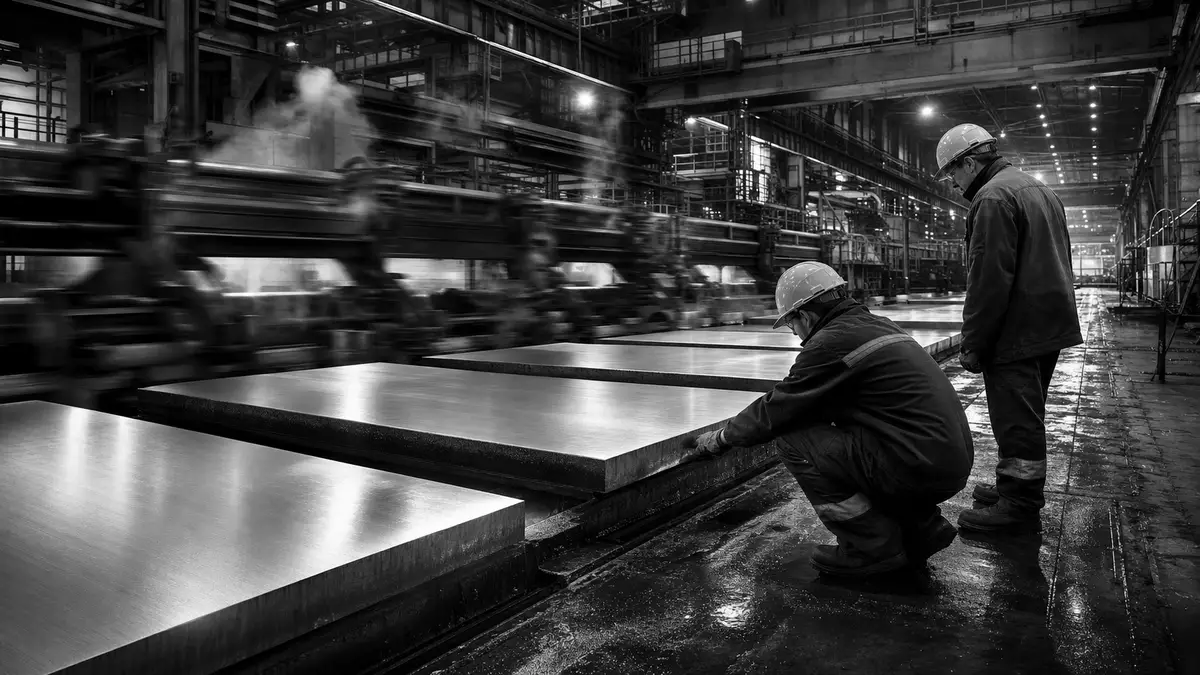
Acerinox's representative product range includes stainless steel sheet, coil and plate used in household appliances, kitchen equipment, industrial machinery and architectural applications. These products must combine corrosion resistance, mechanical strength and aesthetic qualities, and Acerinox offers multiple grades and finishes to meet differing customer requirements. High performance alloys complement this core range by providing enhanced properties for demanding environments, such as chemical processing, energy generation and aerospace applications.
The company's ability to tailor stainless steel and high performance alloys to specific customer needs is a key competitive advantage. Customers often require precise specifications in terms of thickness, surface finish, corrosion resistance and mechanical performance. Acerinox's technical expertise and production capabilities allow it to deliver products that meet these requirements while maintaining efficiency in manufacturing. This adds value beyond commodity stainless, supporting margins and customer loyalty.
Acerinox stock and market value
Acerinox stock is listed in euros on the Spanish market, and the share price reflects both company specific fundamentals and broader sentiment towards cyclical industrials and materials. As of a recent trading date in 2026, Acerinox shares have traded in a range between roughly EUR 8 and EUR 12 over the prior twelve months, illustrating moderate volatility linked to stainless price cycles and macroeconomic news. At a mid range share price around EUR 10, the company's market capitalization would stand at approximately EUR 2.5 billion to EUR 3 billion, depending on the exact number of shares in issue. This market value levels Acerinox as a mid cap industrial and materials company with a meaningful presence in European equity indices.
For investors, Acerinox stock represents a way to gain exposure to stainless steel demand, margins and cash flow dynamics. The share's performance over time has mirrored major cycles in industrial activity and commodity prices, with periods of strong returns followed by phases of consolidation or weakness. The current valuation reflects expectations about future earnings, dividend sustainability and the ability of management to navigate cyclical markets. While the stock can be volatile, its combination of cash dividends and potential capital appreciation continues to attract investors who are comfortable with cyclical exposure.
Acerinox key data
- Company: Acerinox S.A.
- ISIN: ES0132105018
- Ticker: BME: ACX
- Trading venue: Bolsa de Madrid
- Sector / Industry: Materials / Stainless steel and alloys
- Index membership: IBEX 35
Disclaimer regarding our articles: No investment advice, no buy or sell recommendation. Information on prices, companies, and markets is provided without guarantee; changes are possible at any time. Stock market transactions can lead to substantial losses. Our articles are created and reviewed in whole or in part automatically with the support of AI.