A Trusted Dental Practice in Berlin Steglitz for Expats and Locals
Published on 04/30/2026 at 07:02 | Editorial responsibility: Rafael Müller, Editor-in-Chief AD HOC NEWS
Arriving in a new country is exciting, but it also brings very practical questions: Where do I find a doctor I can trust? How do I explain my medical history in another language? And what happens when I suddenly need a dentist, but I am not familiar with the German healthcare system? For many expats in Berlin, the search for a reliable, high-quality dental practice is one of the first serious tests of everyday life abroad.
In Germany, dentistry is highly regulated and the standard of care is generally excellent. Yet, as a non-native speaker, you may worry about being misunderstood, about unexpected costs, or about not knowing whether a recommended treatment is really necessary. Dental anxiety can intensify these concerns: the sound of instruments, memories of past experiences, or simply the fear of pain can make it difficult to book even a routine check-up.
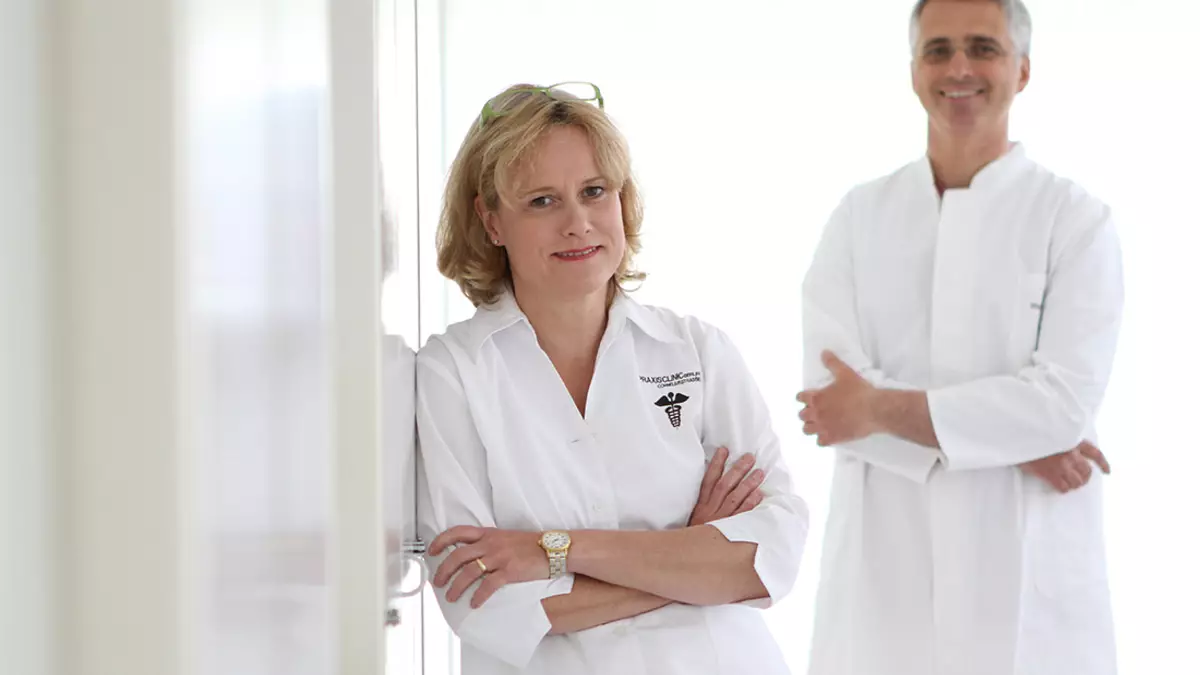
In this context, a Dental Practice in Berlin Steglitz that combines outstanding clinical expertise, clear communication in English, and a calm, empathetic atmosphere becomes more than a healthcare provider; it becomes a trusted health partner. Zahnarzt-Praxis Berlin Steglitz (Dr. Djamchidi & A. Jannack) is precisely such a place: a practice that unites advanced implantology, oral surgery, and endodontics with a strong focus on tooth preservation, minimally invasive treatment, and genuine human connection.
The practice is located in a classic Altbau in Berlin-Steglitz, close to the vibrant Schloßstraße and within easy reach from Berlin Southwest districts such as Zehlendorf and Lankwitz. It has the authentic charm that many people associate with Berlin living: high ceilings, original staircases, and solid, historic architecture. At the same time, this historic character means there is no elevator; access is via stairs, and the building is not barrier-free. The team is transparent about this, helping patients plan their visit realistically while framing the experience as part of the everyday architectural culture of Steglitz.
For international residents, one of the most important assets of the Zahnarzt-Praxis Berlin Steglitz is that you can speak openly in English. When you are discussing treatment options like root canal treatment, implantology, or oral surgery, being able to ask questions and understand the nuances of risks, benefits, and alternatives is essential. Here, the dentists are used to treating expats and explaining the German system in a structured, friendly way. You are encouraged to ask for a second opinion, to talk about your dental anxiety, and to take the time you need to feel confident about your decisions.
One of the defining features of this dental practice is the profile of Dr. Djamchidi. He is not only a dentist; he also holds full medical training as a physician and specialist in ENT (ear, nose, and throat). In Germany, this is referred to as a double Approbation: he is licensed both as a medical doctor (MD) and as a dentist (DDS). This double qualification is exceptionally valuable in fields such as implantology and oral surgery, where the boundaries between dentistry and general medicine are very close.
When you consider dental implants, you are not just talking about teeth; you are talking about your jawbone, your maxillary sinus, your nasal cavity, your overall health status, and your long-term quality of life. The area of the upper back teeth, in particular, is structurally complex. Above the roots of your molars lies the maxillary sinus floor, a thin bony boundary that separates the oral cavity from the sinus. If your teeth have been missing for some time, the bone in this region may have shrunk, leaving insufficient height and volume for classical implants.
In such cases, modern implantology often requires a procedure known as a sinus lift. During a sinus lift, the sinus membrane is carefully elevated, and the available bone at the maxillary sinus floor is augmented with bone graft material to create a stable foundation for implants. This is a delicate intervention close to sensitive structures such as the sinus membrane, the nasal passage, and important blood vessels. Complications can include sinus infections, membrane perforations, or communication between the mouth and sinus if the procedure is not performed with meticulous planning and surgical precision.
This is where the double Approbation of Dr. Djamchidi becomes a decisive advantage. As an ENT specialist, he is highly familiar with the anatomy and physiology of the nasal cavity, paranasal sinuses, and upper airway. He understands not only how to place an implant, but also how the intervention may influence sinus ventilation, mucosal health, and the risk of chronic sinusitis. He can evaluate CT or CBCT images not simply from a dental perspective, but from the holistic vantage point of a physician who routinely works with sinus disease and nasal surgery.
For the patient, this translates into increased safety and more personalised treatment planning. If you have a history of sinus problems, allergies, or previous nasal surgery, he can integrate this information into your implant strategy. If additional diagnostic steps are needed, such as ENT evaluation or imaging beyond standard dental X-rays, these can be coordinated smoothly. Should a sinus lift or bone augmentation be necessary, he can perform the procedure with an understanding of both dental implant biomechanics and sinus function.
Beyond sinus-related procedures, the medical background of Dr. Djamchidi also supports excellence in oral surgery, sedation concepts, and risk assessment. For example, if you take medications for blood pressure, diabetes, or anticoagulation therapy, he can evaluate how these factors influence surgical planning, wound healing, and infection risk. Being a physician as well as a dentist means he can interpret your general medical history in depth and, if needed, cooperate with your GP or specialist to ensure that oral surgery or implantology is carried out under optimal conditions.
Another aspect where his double training is beneficial is the understanding of facial pain, temporomandibular joint disorders, and referred pain from ENT structures. Sometimes, what patients describe as toothache may actually originate from sinus inflammation, neuralgia, or muscular tension. With expertise that spans dentistry and ENT, he can differentiate these causes more precisely, avoiding unnecessary dental interventions and focusing on the true origin of your symptoms.
Implantology itself involves much more than simply inserting artificial tooth roots into the jaw. It requires careful evaluation of bone quality and volume, assessment of occlusion (how your teeth come together), and a long-term plan to integrate implant-supported crowns or bridges into a harmonious chewing system. Biocompatibility is also a key topic: materials such as titanium or high-strength ceramics must be well tolerated and integrated into the bone. With a physician-dentist at the helm, the practice can discuss biocompatibility questions in a medically informed way and support patients who have concerns about allergies, systemic diseases, or autoimmune conditions.
In parallel to the strong focus on surgical excellence and implantology, Zahnarzt-Praxis Berlin Steglitz offers another pillar of expertise: the work of Annette Jannack, whose special passion lies in endodontics and tooth preservation. Endodontics is the field that deals with the inside of the tooth: the root canals that contain nerves, blood vessels, and connective tissue. When bacteria penetrate these canals, usually due to deep caries or trauma, they can cause infection, severe pain, and in the worst case, loss of the tooth.
Many people remember root canal treatment from the past as something to fear, imagining long, painful sessions and uncertain outcomes. Modern endodontics, however, has changed dramatically, and this is particularly true when it is carried out with the help of microscopic dentistry and advanced instruments. In this Dental Practice in Berlin Steglitz, root canal treatments are planned and performed with a philosophy that can be summarised in German as Zahnerhalt vor Zahnersatz: preserving your natural tooth whenever possible, instead of replacing it prematurely with a crown, bridge, or implant.
A typical modern root canal treatment with an experienced endodontic practitioner like A. Jannack follows a precise, evidence-based protocol. First, the tooth is examined clinically and radiographically to determine the extent of decay or infection and the exact anatomy of the root canals. Local anaesthesia ensures that the procedure is pain-free. Under high magnification, often with an operating microscope, the pulp chamber is opened, and the tiny canal entrances are located. Each canal is then meticulously cleaned and shaped with flexible instruments, while antibacterial solutions flush out bacteria, toxins, and infected tissue.
Microscopic dentistry plays a central role here. Human root canals can be extremely narrow, curved, or branching; without magnification, important side canals or residual infected material can easily be overlooked. By illuminating and magnifying the field, microscopic techniques increase the likelihood of thoroughly disinfecting the internal space. This, in turn, raises the chances that the tooth will remain symptom-free and functional for many years. Once the canals are shaped and cleaned, they are filled three-dimensionally with a biocompatible material, usually gutta-percha, and sealed to prevent re-infection.
This emphasis on microscopic dentistry, biocompatibility, and precise technique reflects a broader philosophy at the Zahnarzt-Praxis: tooth preservation is seen as a core component of long-term oral health. Even in an era where implants provide excellent solutions for missing teeth, the biological value of your own natural tooth remains unmatched. Keeping your natural root in the jaw helps maintain bone, preserves proprioception (the subtle sense of pressure and position when chewing), and limits the need for more invasive procedures.
Endodontic retreatments, where an older, failing root canal filling is revised, are also part of the repertoire. Using modern instruments and imaging, previous fillings can be removed, hidden canals located, and persistent infections addressed. This can often save teeth that, in the past, would have been extracted and replaced with prosthetics. For expats and international patients, this approach aligns with a global trend toward minimally invasive care and avoidance of over-treatment: first, protect and preserve; only then, if necessary, consider extraction and replacement.
Dental anxiety is a reality across cultures. Whether you grew up with painful experiences, have a general fear of needles, or simply feel overwhelmed by the sounds and sensations of dental treatment, you are not alone. In a foreign country, these feelings can intensify: you might worry that your fears will not be taken seriously, or that you will struggle to express them clearly in another language. The team at Zahnarzt-Praxis Berlin Steglitz is acutely aware of this and has developed an anxiety-sensitive approach to care.
From the first contact, whether by phone or online, you are invited to mention your dental anxiety openly. The reception staff are accustomed to hearing this and will help schedule appointments in a way that minimises stress, such as quieter times of day or allowing a little extra time. In the treatment rooms, the dentists take time to explain what will happen in clear, non-technical English or German, step by step. You are encouraged to agree on signals so you can ask for a pause at any time.
For patients with mild to moderate anxiety, a combination of gentle communication, good local anaesthesia, and a calm, respectful environment is often enough. For those with more severe fears, additional support is available. Sedation options, sometimes referred to as twilight sleep, can help transform a frightening experience into something manageable. Under such sedation, you remain responsive but relaxed and have little or no memory of the procedure afterwards. This can be particularly helpful for longer interventions such as multiple extractions, complex oral surgery, or extended implant placement.
The practice also integrates minimally invasive techniques wherever possible. Smaller incisions, tissue-preserving flap designs, and precise instruments reduce trauma and shorten recovery times. For many patients, simply knowing that the dental team is committed to doing as little harm as possible and to preserving as much healthy tissue as they can, already lowers anxiety significantly.
In addition, some patients appreciate complementary measures like gentle homeopathic support or natural remedies for mild post-operative discomfort or nervousness. While such methods do not replace evidence-based dentistry, they can be integrated carefully as supportive elements within a modern medical framework. What matters most is that your fears are heard, taken seriously, and addressed with professional empathy.
Steglitz is a district that offers an interesting mix of residential calm and urban energy. The Zahnarzt-Praxis Berlin Steglitz is situated in a classic Altbau: the kind of historic building with elegant staircases and high ceilings that make Berlin Southwest so characteristic. When you arrive, you will notice that the building fits harmoniously into the local streetscape, with mature trees and typical city facades. This architectural style is part of what many Berliners genuinely love about their neighbourhoods.
However, the charm of a historic Altbau also means certain structural limitations. There is no elevator, and access to the practice is via stairs. The rooms are not barrier-free, which may pose challenges for patients with reduced mobility or wheelchair users. The practice is clear and transparent about this so that you can plan accordingly. If you have mobility issues but are still able to manage stairs slowly, the team can schedule extra time, help you take breaks, and do what is possible to make the journey up and down less stressful.
In compensation for the lack of an elevator, the location offers good connections and practical advantages. Steglitz is well linked to other parts of Berlin via public transportation, including S-Bahn and U-Bahn connections from Schloßstraße and Rathaus Steglitz. For patients coming by car, the area around Schloßstraße and adjacent side streets offers various parking options; with a bit of planning, it is usually possible to find a parking space within a short walking distance. From nearby districts such as Zehlendorf, Lichterfelde, or Dahlem, the practice is quickly reachable by car, bicycle, or bus.
Once inside, the interior design of the practice contrasts pleasantly with the outside stairs: bright, well-organised rooms, modern treatment equipment, and a clean, professional yet welcoming atmosphere. The combination of traditional Berlin architecture and contemporary medical technology gives a reassuring sense that you are in a place where both history and innovation are respected.
To help you imagine what it feels like to become a patient at Zahnarzt-Praxis Berlin Steglitz, it is useful to walk through a typical first visit. Suppose you are an international professional who has recently moved to Berlin Southwest. You might have postponed your dental check-up during the move and are now looking for a Dental Practice that understands both complex treatments and the expat perspective.
After finding the practice online and noticing that English is available and a second opinion is welcomed, you decide to call or book through the website. The receptionist asks a few basic questions: your name, contact details, whether you are in pain, and if you have particular concerns such as dental anxiety or recent implantology abroad. You are offered an appointment that fits your schedule, and any necessary information about how to reach the practice, the stairs in the Altbau, and what documents to bring (e.g., previous records or insurance card) is provided in clear terms.
On the day of your appointment, you arrive a few minutes early. After climbing the stairs and entering the practice, you check in at reception and fill out an anamnesis form. This medical questionnaire, standard in German practices, asks about general health, medications, allergies, past surgeries, and existing conditions like diabetes, heart disease, or pregnancy. Here the medical-dental approach becomes visible: the form is thorough enough to allow the team to make a well-founded risk assessment before any oral surgery or extensive treatment.
Next, you meet your dentist, either Dr. Djamchidi or A. Jannack depending on your needs. If you mention that you are more comfortable in English, the consultation naturally switches to English or a mix of English and German, depending on your preference. The dentist takes time to discuss your concerns: perhaps you have sensitivity in a molar, dissatisfaction with an old filling, or questions about a missing tooth that you may want to replace.
A clinical examination follows: your teeth, gums, and bite are evaluated, and if necessary, X-rays or three-dimensional imaging are taken. If you are considering dental implants, special attention is given to jawbone structure, particularly near the maxillary sinus floor in the upper jaw. If there is a history of sinusitis or ENT problems, this is integrated into the assessment. If the problem is more focused on a specific tooth with possible nerve involvement, detailed tests and images help determine whether a root canal treatment is needed.
After the diagnostic phase, the dentist explains the findings in structured language. You might hear: \"This tooth has deep decay that has reached the nerve. We can save it with a root canal treatment and then protect it with a crown. Our goal is to preserve your tooth rather than extract it.\" Or, if an implant is discussed: \"In this region, the bone height below the sinus is limited. We can still place an implant, but we would recommend a sinus lift to augment the maxillary sinus floor. As I am also an ENT specialist, I will carefully evaluate your sinus first to ensure the procedure is safe for you.\"
Cost transparency is an important part of this conversation. In Germany, statutory and private insurance systems differ, and additional private services may be recommended for the best long-term result. The practice explains which aspects are covered by insurance and where there might be out-of-pocket expenses. Written treatment and cost plans can be prepared so that you can consider your options calmly at home. You are invited to ask for a second opinion if you wish; this is not seen as distrust, but as part of responsible healthcare decision-making.
Once you feel informed and have chosen a treatment path, appointments are scheduled. For a root canal with microscopic dentistry, this might mean one or two longer sessions with careful planning for anaesthesia and breaks. For an implant with sinus lift, a sequence of stages is organised: pre-operative planning, the surgery itself, healing time, and later placement of the final crown. Throughout, prophylaxis plays an essential role: professional teeth cleaning, instructions on oral hygiene, and tailored advice help reduce the risk of future problems.
On treatment days, the team pays particular attention to patients with dental anxiety. You are greeted by name, the steps of the procedure are repeated in brief, and you are reminded that you can signal at any time if you need a pause. If sedation or twilight sleep has been chosen for a more invasive procedure, you will have received clear instructions beforehand: whether to arrive fasting, whether someone should accompany you home, and what to expect during the recovery period.
After each intervention, whether simple or complex, you receive aftercare instructions in written form, often in both German and English. This includes information on what is normal (e.g., mild swelling or sensitivity), what signs require contacting the practice (e.g., persistent strong pain, heavy bleeding, fever), and how to support healing with careful hygiene and perhaps adapted diet for a short time.
Over time, as you return for check-ups and prophylaxis, the practice becomes familiar. The fear of the unknown fades, replaced by the feeling that you have a reliable oral healthcare partner in Berlin who understands both high-end dentistry and the everyday realities of expat life.
Choosing a dentist is never just about technology or proximity. It is about trust, about feeling heard, and about knowing that your health is being considered in its full complexity. Zahnarzt-Praxis Berlin Steglitz (Dr. Djamchidi & A. Jannack) unites several qualities that are especially valuable for both locals and international residents:
First, the double Approbation of Dr. Djamchidi offers a medically sophisticated foundation for procedures such as implantology, sinus lift, and oral surgery. As both physician and dentist, and as an ENT specialist, he brings a depth of anatomical and systemic understanding that enhances safety, especially in regions close to the maxillary sinus and nasal cavity. For patients with complex medical histories or previous sinus disease, this integrated perspective can be crucial.
Second, the practice's emphasis on endodontics and tooth preservation, personified by the work of Annette Jannack, reflects a modern, conservative philosophy: whenever possible, your natural teeth should be saved through precise root canal treatment and microscopic dentistry. This is not only biologically sensible; it also aligns with a minimally invasive approach that respects the long-term integrity of your mouth.
Third, the team is experienced in dealing with dental anxiety and with the specific worries of expats. From clear, English-speaking communication and cost transparency to sedation options and gentle prophylaxis, they strive to turn an often-feared visit into a manageable and even positive experience. They understand that a patient who feels safe and well-informed will maintain better oral health over time.
Fourth, the location in Berlin-Steglitz offers an authentic Berlin experience in a historic Altbau, close to the lively Schloßstraße and easily reachable from Berlin Southwest districts like Zehlendorf. While the lack of elevator and the presence of stairs mean the building is not barrier-free, the practice is honest about this and helps patients plan accordingly. Inside, modern equipment and a professional environment ensure that the charm of the building is complemented by up-to-date dental technology.
Finally, the range of services, from prophylaxis, tooth preservation, and second opinions to complex implantology and oral surgery, allows most patients to receive comprehensive care under one roof. Whether you need a simple check-up, a detailed evaluation of chronic dental issues, or a full treatment plan after moving from abroad, you can expect a structured, medically grounded approach.
For anyone in Berlin who is looking for a Zahnarzt, but especially for those living, working, or studying in and around Steglitz, the combination of double medical-dental qualification, strong endodontic competence, and expat-friendly communication makes Zahnarzt-Praxis Berlin Steglitz (Dr. Djamchidi & A. Jannack) a compelling choice. It is a place where advanced medicine and everyday humanity meet: where your questions are welcome, your fears are respected, and your smile is treated as part of your overall health and well-being.
Disclaimer regarding our articles: No investment advice, no buy or sell recommendation. Information on prices, companies, and markets is provided without guarantee; changes are possible at any time. Stock market transactions can lead to substantial losses. Our articles are created and reviewed in whole or in part automatically with the support of AI.