A Trusted Dental Practice in Berlin Steglitz for Expats and Locals
20.03.2026 - 07:01:03 | ad-hoc-news.de
Arriving in a new country is exciting, but it can also be unsettling when it comes to your health. Many international residents in Berlin share the same story: they postpone going to the dentist because they are unsure where to find a trustworthy dental practice that speaks their language, understands their expectations, and provides modern, gentle treatment. As the months pass, a small sensitivity or broken filling turns into real pain. At that point, navigating unfamiliar systems, German terminology such as Zahnarzt or Krankenkasse, and the fear of misunderstandings can make the idea of seeking care feel overwhelming.
In a city as large and diverse as Berlin, there are countless clinics and practices, but not all are equally equipped to communicate clearly with expats or to offer the combination of medical expertise and human warmth that many patients are used to from their home countries. Especially when it comes to oral surgery, implantology, or complex root canal treatment, patients often look for a level of medical depth that goes beyond a standard check-up. They want to know that their dentist can see the bigger picture of their health, that the materials used are safe and biocompatible, and that every intervention is truly necessary.
For many people, there is also the element of dental anxiety. This is not just a little nervousness; it can be a deep-seated fear based on previous negative experiences. The sound of the drill, the feeling of losing control, or worrying about pain can be enough to keep someone away from the dentist for years. For expats, that fear is often intensified by the thought of not understanding what is being said during treatment, or of having to sign consent forms in a language they do not fully master.
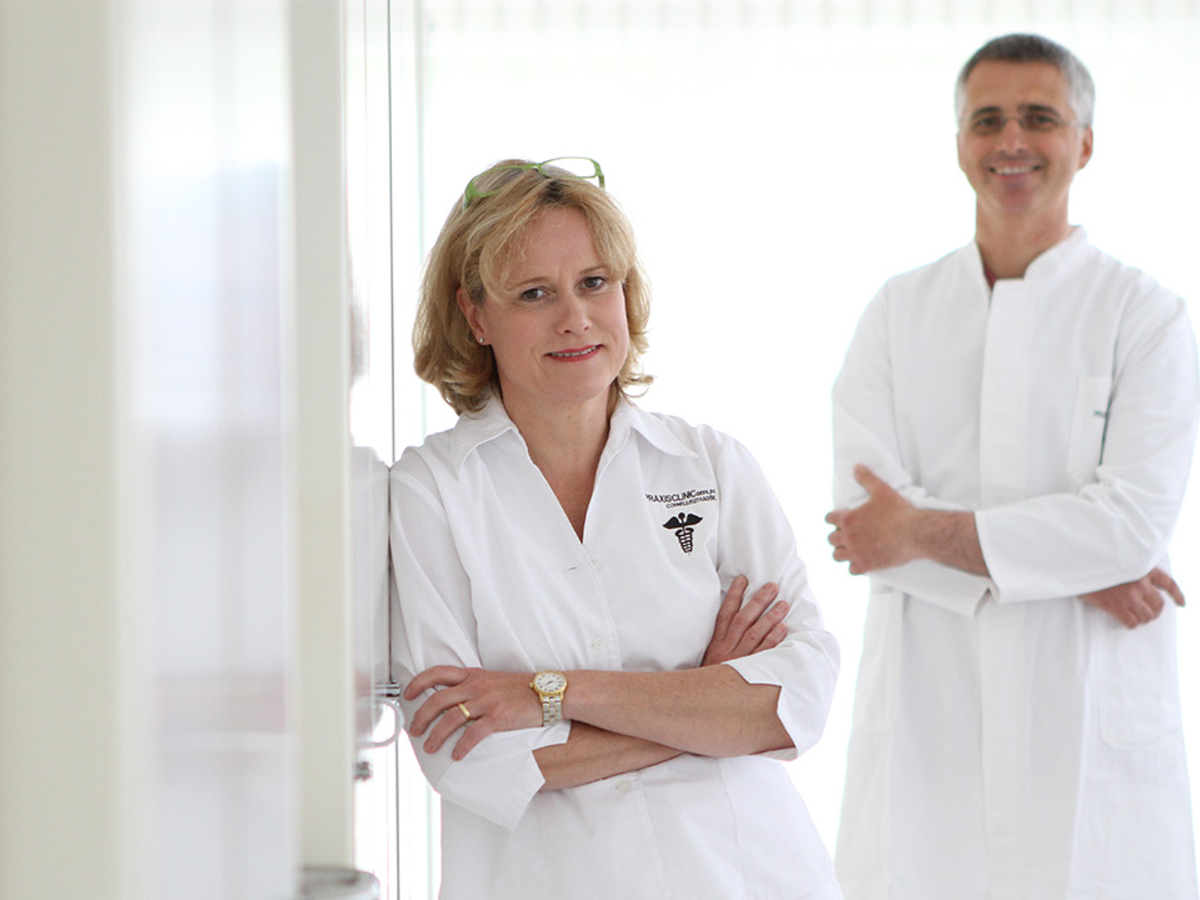
This is where the Dental Practice in Berlin Steglitz run by Dr. Djamchidi and dentist Annette Jannack offers something genuinely different. Located in a classic Altbau building in Berlin-Steglitz, close to the vibrant Schloßstraße and the residential neighborhoods stretching toward Zehlendorf and the wider Berlin Southwest, their practice brings together two powerful strengths: a rare double approbation and a strong focus on tooth preservation. Combined with clear English communication and a warm, personal approach, this creates an environment where expats and locals alike can feel genuinely safe and cared for.
At the heart of this Zahnarzt-Praxis is an unusual qualification that immediately stands out: the double approbation of Dr. Djamchidi. He is both a fully qualified physician with specialization in ENT (ear, nose, and throat) and a licensed dentist. In practical terms, this means that he holds both medical degrees: the MD side, with its deep understanding of the entire body and especially the head and neck region, and the DDS-equivalent dental qualification, focused on teeth, gums, jawbones, and oral function.
This double degree is particularly valuable in the field of implantology and oral surgery. When placing dental implants in the upper jaw, the surgeon works close to the maxillary sinus floor, a delicate anatomical region that separates the oral cavity from the sinus system. Misjudging the available bone, misplacing an implant, or misunderstanding a patient's sinus health can lead to complications such as sinus infections, chronic discomfort, or implant failure.
As an ENT specialist and dentist, Dr. Djamchidi approaches every implant case with a holistic medical mindset. He is trained not only to evaluate the condition of the jawbone and gums, but also to interpret the sinus anatomy, nasal passages, and surrounding structures that influence breathing, pressure equalization, and long-term comfort. When a sinus lift is required to create sufficient bone height for stable implants, his ENT background provides an extra layer of safety. He understands the physiology of the sinuses, the delicate mucous membrane lining, and the potential impact on ventilation, drainage, and infection risk.
For the patient, this means that implantology in this Dental Practice in Berlin Steglitz is not just about placing a screw in the bone. It is a carefully planned medical procedure in which the entire head and neck region is considered. Advanced imaging, such as 3D scans, allows precise mapping of the maxillary sinus floor, nerve canals, and bone structures. The medical perspective helps to differentiate between normal anatomical variation and true pathology that may need further evaluation before surgery.
Another advantage of a double approbation is the ability to recognize systemic conditions that could influence oral surgery. For example, certain medications for osteoporosis, blood thinners, or autoimmune conditions can increase the risk of complications after implant placement or tooth extraction. A practitioner with full physician training is well positioned to interpret blood tests, medical histories, and complex medication lists, and to coordinate with other specialists if necessary. This results in safer, more predictable outcomes and a more personalized risk assessment for each individual patient.
This medically comprehensive approach extends into decisions about biocompatibility of implant materials, bone grafting substances, and sutures. While titanium implants are widely used and well researched, some patients have concerns about metal sensitivity or prefer ceramic options for aesthetic or biological reasons. In such situations, the practice can discuss the evidence, the pros and cons, and the individual medical context, helping patients to make informed choices rather than relying on trends or marketing slogans.
In addition to his surgical skills, the ENT and dental combination allows Dr. Djamchidi to consider functional aspects such as nasal breathing, snoring, and temporomandibular joint balance when planning restorative care. For instance, how the bite is rebuilt after implantology can influence jaw tension, headaches, and even posture. Viewing the mouth as an integrated part of the entire body, he can align oral surgery with long-term health rather than short-term repair.
While implantology and oral surgery are essential when teeth are lost or must be removed, the philosophy of the practice is not to jump straight to replacement. This is where the expertise of dentist Annette Jannack comes in. She is particularly focused on endodontics and aesthetics, and her guiding principle can be summarized in one phrase: saving the tooth before replacing it, or in German, Zahnerhalt vor Zahnersatz.
Endodontics is the specialist field that deals with the inside of the tooth: the root canals that contain nerves, blood vessels, and connective tissue. When deep decay, trauma, or repeated treatments lead to infection or inflammation of the pulp, a root canal treatment is often the only way to save the natural tooth. Many patients still imagine root canal treatment as a painful, old-fashioned procedure, but modern endodontics can be remarkably comfortable and minimally invasive when performed with the right tools and expertise.
In this Berlin Steglitz dental practice, root canal treatment is approached with precision and patience. The process typically begins with a thorough diagnosis using digital X-rays and, where appropriate, additional imaging to assess root length, curvature, and any existing inflammation around the root tips. Careful testing determines which tooth is actually causing symptoms, which is essential in complex cases where pain radiates or multiple teeth are previously restored.
Once the tooth is isolated and numbed, microscopic dentistry comes into play. Using high magnification and strong illumination, very fine instruments can access even narrow or curved root canals that would be difficult or impossible to treat under normal vision. This is not merely a technical detail; it significantly increases the chances of cleaning out bacteria, infected tissue, and biofilm from the entire canal system. Overlooked side canals or uncleaned areas are a common reason for failure in conventional root canal treatments.
Irrigation with specially formulated solutions, activated by gentle sonic or ultrasonic tools, helps to dissolve organic debris and disinfect the canal walls. Modern endodontic methods also emphasize minimally invasive preparation, which means preserving as much healthy tooth structure as possible rather than aggressively widening the canals. This makes the tooth stronger in the long term, reducing the risk of fracture under chewing forces.
After the canals are thoroughly cleaned and shaped, they are filled three-dimensionally with biocompatible materials that aim to seal off remaining micro-spaces where bacteria could multiply. The top of the tooth is then rebuilt, often with a high-quality filling or a crown designed for long-term durability and aesthetics. The result is a tooth that feels and functions naturally again, allowing the patient to bite and smile without discomfort or worry.
For many patients, the idea of investing in a tooth that has already caused trouble might seem counterintuitive. Why not simply extract it and replace it with an implant? Here the experience of both practitioners informs the treatment philosophy. A natural tooth has a complex ligament system that transmits subtle feedback to the brain, supporting fine control of chewing and bite forces. Whenever possible, preserving this natural organ is more gentle for the surrounding tissue and often more cost-effective in the long run.
Furthermore, saving teeth through endodontics helps to maintain the continuity of the dental arch and the volume of the jawbone. After extraction, the bone begins to resorb, sometimes rapidly, leading to changes in facial contours and complicating later implant placement. By choosing tooth preservation when medically reasonable, patients buy time and keep their options open, rather than being pushed prematurely into prosthetic solutions.
Alongside her technical focus on endodontics, Annette Jannack also pays close attention to aesthetics. Whether a tooth is being restored after root canal treatment, rebuilt after fracture, or improved for cosmetic reasons, form and color are carefully matched to the individual smile. For many expats who are used to highly aesthetic dentistry in their home countries, this attention to detail is reassuring. It means that functional dentistry and cosmetic dentistry are not seen as separate worlds but as different aspects of the same comprehensive care.
All the medical and technical expertise in the world is of limited value if a patient is too anxious to make an appointment. The practitioners in this Steglitz clinic understand that dental anxiety is real and deserves respect. They approach anxious patients without judgment, recognizing that each person's background and previous experiences shape how safe they feel in the dental chair.
The first step in the anxiety-free concept is time. Instead of rushing directly into treatment, the team allows space for conversation. Patients can explain their fears, ask detailed questions, and discuss any specific triggers, such as injections, drilling sounds, or loss of control. Clear communication in English is a key element here, allowing international patients to articulate nuances that might be difficult to express in German.
Pain control is another important pillar. Local anesthesia is administered gently and only once the patient is ready, with careful testing to ensure that treatment begins only when the area is fully numb. For those with stronger anxiety or a history of traumatic dental experiences, additional options such as sedation or so-called twilight sleep can be discussed. These methods allow patients to remain relaxed and often to remember little of the procedure itself, while vital signs are monitored and safety remains the top priority.
Some patients also appreciate complementary measures, such as a calm environment, soft communication, and, where desired, supportive homeopathic remedies. While homeopathy is not a replacement for evidence-based dentistry, its careful integration can be part of a broader strategy to make the entire experience feel more personalized and less clinical. The overarching goal is that each visit should leave the patient more confident than the last, gradually reducing fear rather than reinforcing it.
The architecture and location of a medical practice shape the entire visit. Zahnarzt-Praxis Berlin Steglitz is housed in a historic Altbau building, typical for this part of the city. The creak of old wooden steps, high ceilings, and classic facades are part of what many people love about Berlin, particularly in the Steglitz and Zehlendorf areas. At the same time, this authentic Berlin flair comes with a practical consideration: the building is not barrier-free. There is no elevator, and access to the practice involves climbing stairs.
The team is transparent about this from the outset. Patients with limited mobility, wheelchair users, or those who struggle with steep stairs should be aware that the practice may not be suitable for them logistically. However, for mobile patients who appreciate the charm of traditional Berlin architecture, the setting adds to the sense of place. It feels less like a sterile hospital and more like a personal, neighborhood clinic, rooted in the community of Berlin Southwest near Schloßstraße, one of the city's main shopping streets.
Despite the historic building, the practice itself is modern and well equipped inside. For those arriving by car, the Steglitz location offers better parking opportunities than many inner-city districts. Public transport connections are also convenient, with nearby bus and U-Bahn links making it easy to reach from central Berlin or from residential areas stretching down toward Zehlendorf and beyond. This combination of accessibility, local charm, and modern interior facilities contributes to a patient experience that feels both grounded and contemporary.
For a new patient, especially someone recently arrived in Berlin, knowing what to expect from the first visit can greatly reduce anxiety. The typical journey in this dental practice follows a clearly structured yet flexible path, designed to respect both medical priorities and the patient's comfort.
The process usually begins with making contact, often via phone or online. English-speaking staff help with appointment scheduling and can explain which documents to bring, such as insurance cards, previous X-rays, or letters from other doctors. The aim is to remove bureaucratic fear as far as possible by explaining how the German system works, whether the patient is covered by statutory insurance, private insurance, or is self-paying.
On arrival, the first step is anamnesis: a detailed medical history. Here, the double approbation of Dr. Djamchidi is particularly valuable. He looks not only at dental records but also at general health: cardiovascular conditions, respiratory issues, medications, allergies, and previous surgeries. Since he thinks as both physician and dentist, subtle connections can be recognized. For example, certain cardiac medications may influence bleeding, and nasal or sinus problems might have implications for planned oral surgery.
The clinical examination follows, with a careful assessment of teeth, gums, bite, and, when relevant, the temporomandibular joints. If there are acute problems, such as pain or swelling, these are addressed first. Digital X-rays are taken when medically indicated, and in complex cases, three-dimensional imaging may be recommended to visualize the jawbone and maxillary sinus floor in detail. Throughout this phase, the practitioners explain each step, using clear language and, when helpful, visual aids so that patients can see what is happening inside their mouths.
Next comes the consultation phase. Instead of simply dictating a treatment plan, the team presents options, often including both tooth preservation strategies and, if necessary, implantology or other prosthetic solutions. For example, a severely decayed molar might be a candidate for root canal treatment and a crown, or, if the prognosis is poor, for extraction and later implant placement. Risks, benefits, and cost implications are discussed transparently. This is also the ideal moment for patients to request a second opinion, either within the practice or by bringing in previous findings from another Zahnarzt, to compare approaches and feel secure in their decision.
When treatment is agreed upon, scheduling is arranged with the patient's comfort in mind. Anxious individuals might prefer shorter, more frequent sessions, while others prefer to have more extensive work completed in fewer appointments, possibly with sedation. For prophylaxis and routine tooth preservation, appointments can be planned at regular intervals, forming the backbone of a long-term oral health strategy.
During treatment sessions, the focus remains on gentle, minimally invasive methods whenever clinically appropriate. In endodontics, microscopic dentistry is used to maximize precision. In implantology and oral surgery, careful incision planning and atraumatic techniques help reduce swelling and support faster healing. Post-operative instructions are provided in understandable language, including tips on pain control, diet, and hygiene. Patients are encouraged to return for follow-up, not only to check healing but to ask questions that may arise later, once they have had time to reflect.
The journey does not end when a single tooth is repaired or an implant is placed. Ongoing prophylaxis plays a central role in the philosophy of this dental practice. Professional tooth cleaning, regular check-ups, and early detection of small problems can prevent major interventions later. This is particularly important for implants, which require meticulous oral hygiene and periodic monitoring to ensure the surrounding bone and gums remain healthy.
For expats who may move frequently or split their time between countries, the practice can provide detailed documentation of treatments performed, materials used, and long-term plans. This makes it easier to continue care elsewhere if life circumstances change. At the same time, many international residents find that once they discover a clinic that feels both medically competent and personally warm, they prefer to stay, building a long-term relationship with their dentists just as they would in their home country.
Finding a dentist who truly understands both the medical intricacies of oral surgery and the emotional needs of anxious or internationally mobile patients is not always easy. In Berlin Steglitz, the Zahnarzt-Praxis of Dr. Djamchidi and Annette Jannack stands out precisely because it brings together several rare strengths under one roof.
The double approbation of Dr. Djamchidi, uniting ENT medicine and dentistry, offers a level of safety and holistic perspective that is particularly valuable in implantology and oral surgery around the maxillary sinus floor and complex jaw anatomy. His ability to evaluate systemic health, sinus conditions, and biocompatibility issues enhances the security of every intervention, from sinus lift procedures to implant placement and surgical tooth removal.
Complementing this, the deep focus of dentist Annette Jannack on endodontics and aesthetics embodies the principle of Zahnerhalt vor Zahnersatz. Through modern microscopic dentistry, minimally invasive root canal treatment, and careful aesthetic restoration, she gives compromised teeth a second chance, helping patients retain their natural dentition and avoid unnecessary extractions.
Both practitioners share a strong commitment to humane, anxiety-aware care. Options such as sedation or twilight sleep, sensitive communication, and a calm environment make it easier for fearful patients to take the first step. For expats and international residents, the fact that this is an English-speaking dentist team who can explain diagnoses and treatment plans clearly is often the deciding factor in overcoming years of hesitation.
The location in a classic Altbau in Berlin-Steglitz, within reach of Schloßstraße and the friendly neighborhoods of Berlin Southwest and Zehlendorf, adds a sense of local authenticity. Although the lack of elevator and the presence of stairs mean the building is not barrier-free, many patients appreciate the characteristic Berlin architecture combined with a modern, well-equipped interior. Good access by car and public transport, along with honest information about accessibility constraints, rounds out the practical advantages.
Ultimately, what makes this Dental Practice in Berlin Steglitz a strong candidate for both locals and the international community is the combination of medical depth, technical excellence in areas like implantology, oral surgery, tooth preservation, and prophylaxis, and a genuinely patient-centered ethos. Here, a second opinion is welcomed, questions are encouraged, and decisions are made together rather than imposed.
For anyone in Berlin who has delayed dental care because of anxiety, language barriers, or uncertainty about the quality of treatment, this practice offers a realistic path forward: a place where you are seen not just as a set of teeth, but as a whole person with a unique medical history and emotional background. In a city full of options, that rare combination of clinical competence and human understanding is what turns a simple visit to the Zahnarzt into a long-term partnership for oral health.
So schätzen die Börsenprofis Aktien ein!

Für. Immer. Kostenlos.