A Dental Practice in Berlin Steglitz Where Medicine and Dentistry Meet
Published on 04/08/2026 at 07:01 | Editorial responsibility: Rafael Müller, Editor-in-Chief AD HOC NEWS
Relocating to a new country often means starting from scratch with every part of everyday life: learning where to shop, how public transport works, and how the healthcare system is organized. For many expats in Berlin, one of the most stressful parts of this transition is finding a dental practice that feels safe, understandable, and medically trustworthy. Especially when you already struggle with dental anxiety, the idea of navigating German forms, new treatment philosophies, and technical explanations in a foreign language can feel overwhelming.
In Berlin, you will see the German word "Zahnarzt" on many doors, but not every office is equally prepared for international patients. Questions arise: Will the dentist really listen? Will they explain things in English in a way you can follow? Will treatment be modern and minimally invasive, or will you feel rushed into decisions you do not fully understand? These worries are intensified when the treatment is more complex, for example implantology, oral surgery, or root canal treatment.
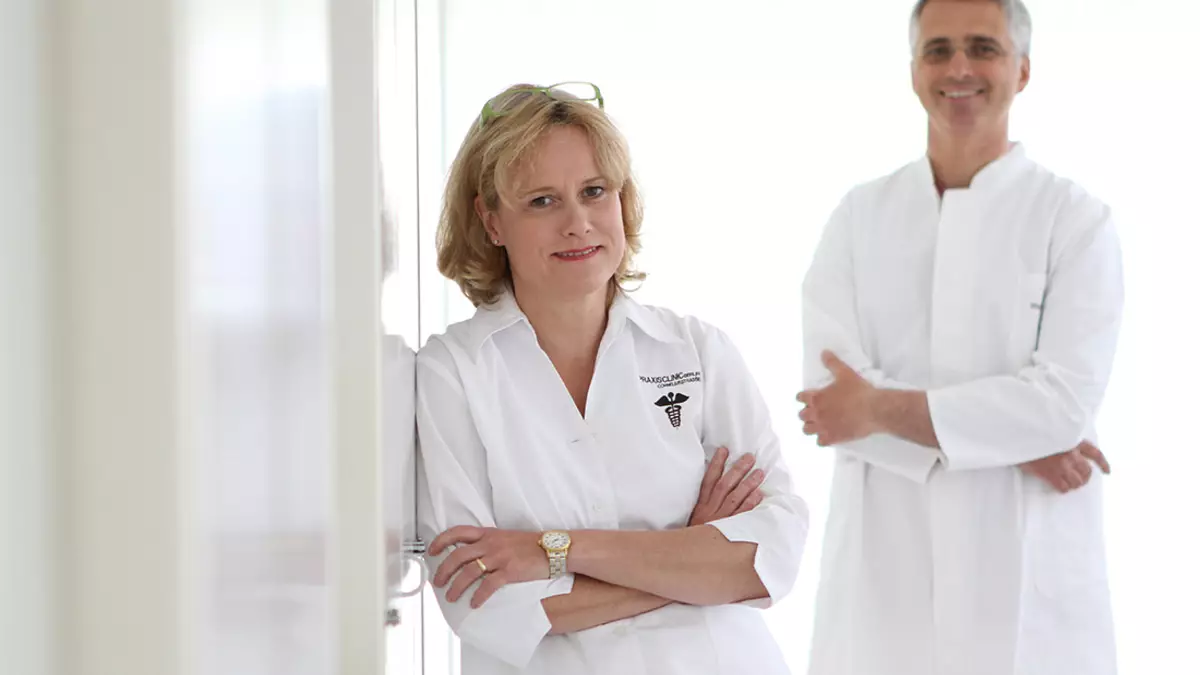
In the southwest of the city, close to the vibrant Schloßstraße shopping area in Steglitz and near the leafy districts of Zehlendorf and Berlin Southwest, the Dental Practice in Berlin Steglitz of Dr. Djamchidi & Annette Jannack offers a very particular answer to these concerns. Here, detailed medical knowledge, advanced dentistry, and a warm, personal atmosphere meet in a way that is rare even in a major city.
What makes this dental practice especially unique is the combination of a double medical license on the one hand and a strong focus on endodontics and aesthetics on the other. One of the practice owners, Dr. Djamchidi, is not only a dentist but also a fully trained physician and ENT specialist (Ear, Nose, Throat). This so-called "double approbation" means he holds both medical and dental qualifications, a powerful advantage when planning safe and predictable implants or oral surgery procedures in complex anatomical regions like the maxillary sinus floor.
His colleague and co-owner, Annette Jannack, brings deep expertise in endodontics and tooth preservation, including microscopic root canal treatment and minimally invasive restorations. Together, they embody an ethical philosophy that is increasingly important for discerning patients: save the tooth whenever realistically possible before replacing it. In German, this principle is often expressed as "Zahnerhalt vor Zahnersatz".
This article explores why this particular dental practice in Berlin Steglitz has become a trusted address for both locals and expats, what the double medical qualification of an MD and dentist means in everyday treatment, and how the practice addresses anxiety, communication, and comfort for international patients.
For many people, dental appointments are postponed again and again—not because they do not care, but because anxiety and uncertainty build a wall. If you grew up with a different medical system, the German approach may feel unfamiliar: detailed forms, health insurance specifics, or new technical terms like prophylaxis, biocompatibility, or sinus lift. Add to this the fear of pain or of losing control in the dental chair, and it is easy to understand why small problems can grow into larger ones.
Expats in Berlin often describe four core challenges when seeking a dentist:
First, the language barrier. Even if you speak some German, explaining exactly how you feel or asking detailed follow-up questions can be intimidating. You want an English-speaking dentist who can talk you through the options in clear, non-technical language, so you can make informed choices rather than just nodding politely.
Second, trust. You need to know that your dentist is not only competent but also honest. When you hear that a crown, implant, or root canal is needed, it is natural to wonder whether this is truly necessary or if a more conservative option would be possible. A practice that openly supports second opinions and clearly explains the pros and cons of each treatment builds the kind of trust that is especially important when you are far from home.
Third, the fear of pain and unpleasant experiences. Many adults have a history of stressful dental visits. Sounds, smells, or memories from childhood can trigger strong reactions. An empathetic team that recognizes dental anxiety, offers sedation or twilight sleep where appropriate, and takes enough time to proceed gently can change a patient’s relationship to dentistry entirely.
Fourth, the complexity of modern treatments. When you hear terms like implantology, oral surgery, sinus lift, or microscopic dentistry, they can sound intimidating. In reality, these are simply tools and methods to make treatments more precise, predictable, and comfortable. However, this reassuring perspective only emerges when the dentist takes the time to explain what will happen in your mouth using understandable examples and, ideally, visual aids.
Against this background, the dental practice of Dr. Djamchidi & A. Jannack in Berlin-Steglitz has positioned itself as a place where expats and locals alike can feel medically safe and personally understood. The combination of an ENT physician-dentist with a preservation-focused endodontic specialist makes it possible to offer both high-end implantology and advanced tooth preservation under one roof.
To understand why this combination is so powerful, it helps to look a bit closer at the anatomical and medical context—especially when it comes to implantology in the upper jaw near the sinus region.
When dentists talk about implantology, they refer to the replacement of a missing tooth root with a small, screw-shaped titanium or ceramic post inserted into the jawbone. Over time, the bone heals around this implant in a process called osseointegration, creating a stable base for a crown, bridge, or prosthesis. In the lower jaw, bone conditions are often favorable. In the upper jaw, however, especially near the back teeth, things can become more complex because of the maxillary sinus.
The maxillary sinus is a hollow, air-filled space in the upper jawbone located just above the roots of the upper molars and premolars. Its floor—the maxillary sinus floor—can be very close to the tooth roots. When teeth are lost and bone gradually resorbs, there may not be enough bone height left between the oral cavity and the sinus to place an implant safely.
This is where procedures like the sinus lift come in. In such a procedure, the dentist or surgeon carefully elevates the membrane that lines the sinus and fills the space below with bone graft material, effectively thickening the bone in this area. After healing, implants can be placed in this newly created bone. The benefits for function and aesthetics are clear, but the procedure demands a precise understanding of sinus anatomy, individual variations, and potential risks like sinus infections or perforations.
This is exactly where the "double approbation" of Dr. Djamchidi becomes especially valuable. As both a physician and an ENT specialist in addition to being a dentist, he brings a three-dimensional understanding of the complex area where dentistry and ENT meet: the nasal cavity, sinuses, jawbone, and oral cavity.
In practical terms, this means that when he plans implantology or oral surgery, he does not consider only the teeth and bones. He also takes into account the ventilation of the sinuses, the condition of the nasal passages, possible pre-existing ENT conditions (such as chronic sinusitis, polyps, or past surgeries), and the overall medical status of the patient. This broader medical perspective can improve safety significantly, especially in patients with complex histories or systemic diseases.
For laypeople, one way to imagine this benefit is to think of building a house. A regular builder may know how to construct excellent walls and roofs. But if the house is located above a hidden tunnel or a fragile underground structure, you would feel more comfortable if an engineer specializing in subsurface conditions was also involved. In the human head, the sinuses are a bit like these hidden spaces. An ENT physician is trained precisely to understand and treat these areas.
In addition, as a medically trained physician, Dr. Djamchidi is accustomed to considering the entire body when suggesting dental treatment: cardiovascular health, blood-thinning medications, allergies, and the biocompatibility of materials. This holistic view is particularly important when choosing implant materials, planning sedation strategies, or coordinating with other medical specialists.
When it comes to implantology, many patients are also concerned about the question of when an implant is truly necessary and when a natural tooth can still be saved. This is precisely where his colleague, Annette Jannack, complements the practice profile with her focus on endodontics and tooth preservation.
Endodontics is a field of dentistry that deals with the inside of the tooth—especially the dental pulp (nerve and blood vessels) and the root canals. When deep decay, trauma, or repeated dental work damage the pulp, a tooth can become painfully inflamed or die. In the past, such teeth were often removed. Today, with modern endodontic techniques, they can frequently be preserved for many years or even decades.
The most well-known endodontic procedure is the root canal treatment. In this procedure, the inflamed or infected tissue within the tooth is carefully removed, the inside of the root canal system is cleaned and disinfected, and then the canals are filled with a special biocompatible material to seal them. Finally, the tooth is rebuilt—often with a crown—to restore strength and function.
What makes endodontics a highly demanding specialty is the extreme fineness and variability of the root canal system. Canals can be extremely narrow, curved, or branching. Small extra canals may hide off the main path. If infected tissue remains in such hidden spaces, inflammation may persist. That is why modern endodontics often uses microscopic dentistry: high-magnification microscopes and special lighting to visualize structures that are invisible to the naked eye.
Annette Jannack focuses particularly on this type of detailed, preservation-oriented work. For patients, this philosophy translates into a clear message: if there is a realistic chance to save a tooth with advanced root canal treatment or minimally invasive measures, this option will be considered seriously before an extraction or implant is proposed. In German, this approach is captured in the phrase "Zahnerhalt vor Zahnersatz"—tooth preservation before tooth replacement.
For example, imagine an upper molar with deep decay reaching the nerve. One option might be to remove the tooth and replace it with an implant, which in the upper jaw could involve sinus considerations. Another option, if the remaining root structure is solid, is to perform a precision root canal treatment, possibly under magnification, and then reconstruct the tooth. In the dental practice of Djamchidi & Jannack, this decision is not taken lightly. Both the endodontic possibilities and the implantological options are evaluated carefully, so that the chosen route matches your medical situation, your long-term health, and your preferences.
For patients who want to maintain as much of their natural dentition as possible, this combination of expertise is crucial. It means this is a place where both advanced implantology and sophisticated tooth preservation exist side by side rather than in competition.
Beyond the medical facts, many expats and locals alike choose a dental practice based on something less measurable: the feeling they get when they walk in and sit in the chair. Dental anxiety is extremely common and should never be dismissed as weakness. It often stems from previous traumatic experiences, fear of pain, or a feeling of helplessness in the face of unfamiliar instruments and sounds.
At the dental practice in Berlin Steglitz of Dr. Djamchidi & A. Jannack, the team places great emphasis on creating an environment where such fears are acknowledged and addressed. This starts with a gentle first conversation where you are invited to explain your fears openly—without judgment. Instead of being rushed, you are encouraged to articulate what exactly worries you: Is it injections? Drilling sounds? Loss of control? The unknown?
Depending on the level of anxiety and the complexity of the planned treatment, different strategies can be used:
For mild to moderate anxiety, careful explanations and a step-by-step approach already make a major difference. The dentist may show you the instruments, describe what you will feel (pressure, vibration, but not pain), and agree on a "stop signal" so you can pause the treatment at any time. Knowing you have this control can be extremely calming.
For patients with more severe fear or with a strong gag reflex, options like gentle sedation or twilight sleep can be considered. Twilight sleep refers to a state where you remain technically conscious but deeply relaxed and less aware of what is happening, often with limited memory of the procedure. Because Dr. Djamchidi also has a medical background, the practice is particularly well-positioned to evaluate which form of sedation is safe and appropriate for you, taking into account your overall health, medications, and individual risk factors.
Some patients also appreciate supportive methods such as homeopathy or other gentle, complementary approaches as part of their anxiety management. While these methods do not replace the scientific foundation of modern dentistry, they can help some individuals feel more cared for and balanced. The practice’s attitude is to take patient preferences seriously as long as safety and evidence-based treatment remain central.
Another key component of an anxiety-reducing environment is prevention and prophylaxis. When you attend regular professional cleanings and check-ups, small issues are detected early, meaning that invasive treatments become rarer and lighter. Over time, this builds a virtuous circle: fewer emergencies, less pain, and a steadily growing trust in the dental team.
When you picture a "modern" dental practice, you might imagine a glass-and-steel building with an elevator and automatic doors. In Berlin-Steglitz, however, many high-quality medical practices are located in charming Altbau buildings—historic structures with high ceilings, wooden staircases, and architectural details that give the southwest of Berlin its distinctive character.
The dental practice of Djamchidi & Jannack is located in exactly such an Altbau near the heart of Steglitz, not far from Schloßstraße with its mix of shops, cafés, and classic Berlin city life. This location gives the practice a certain warmth and personality that many patients appreciate: you are not entering a sterile, anonymous space, but rather a piece of authentic Berlin history.
However, this traditional architecture also means there is a practical limitation: the building is not barrier-free. There is no elevator, and access requires using stairs. For patients who are severely mobility-impaired or dependent on a wheelchair, this can present a challenge. The team is transparent about this fact and encourages prospective patients to discuss their mobility needs in advance, so that realistic solutions can be explored. In some cases, referrals or cooperation with barrier-free facilities may be appropriate.
For many others, the historic staircase is simply part of the classic Berlin experience. Once you arrive, you find yourself in a quiet, bright environment that feels both professional and personal. The practice’s location in Berlin Southwest also has logistical advantages: it is well connected by public transport, and there are parking opportunities in the surrounding streets, making it accessible for patients coming from Steglitz, Zehlendorf, and neighboring districts.
To make the feeling of visiting this dental practice in Berlin Steglitz more tangible, imagine a typical first visit as a new patient who has recently moved to Berlin and is looking for an English-speaking dentist.
You have perhaps postponed booking an appointment for months, but a sensitive tooth or the desire to finally arrange a thorough check-up pushes you to act. You contact the practice—by phone or online—and immediately notice that the staff can communicate in English. An appointment is arranged, and you receive clear instructions on what to bring and how to find the practice near Schloßstraße.
On the day of your appointment, you arrive at the Altbau building. You climb the staircase, noticing the characteristic high windows and banisters typical of Berlin’s older architecture. At the practice door, you are greeted by a receptionist who checks your details and health insurance information. If German forms feel intimidating, the staff help you understand what you are signing, explaining in English as needed.
Before you even sit in the dental chair, a detailed anamnesis (medical history) is taken. Here, the fact that one of the practice owners is also a physician is especially helpful. You are asked not only about your teeth, but also about medications, allergies, past surgeries, cardiovascular or respiratory conditions, and any ENT issues such as sinus problems or chronic nasal congestion. If you mention that you have had recurrent sinusitis, for example, this information will play an important role in planning any potential implantology or oral surgery.
Next comes the clinical and radiographic examination. The dentist inspects your teeth, gums, and bite, and may take digital x-rays or 3D imaging if a more detailed view of the jawbone and maxillary sinus floor is needed. If you are anxious, every step is explained to you before it happens: what you will feel, how long it will take, and why it is necessary. You can ask questions at any time.
After the examination, you sit down for a consultation. Here, the dentist outlines the current situation in your mouth, ideally using images or diagrams so you can literally see what is being discussed. If there are teeth that can be saved with root canal treatment or minimally invasive restorations, this is explained in the context of the practice’s preservation philosophy. If some areas would benefit from implantology or other forms of oral surgery, these options are equally presented, including potential ENT implications when the sinus region is involved.
Because the practice is committed to transparency, you are invited to ask for a second opinion if you wish. Rather than perceiving this as mistrust, the team views it as a sign that you are taking responsibility for your health, which they support.
Together, you and the dentist then design a treatment plan that fits your medical status, your timeline, and your budget. This plan may include steps such as professional prophylaxis sessions, periodontal care if your gums need attention, endodontic treatment on particular teeth, and, in some cases, implant placement or other surgical steps. The sequence is structured to minimize discomfort and maximize long-term stability.
If you have high dental anxiety, special attention is given to how each appointment will be managed: shorter sessions if needed, sedation or twilight sleep for longer procedures, or simply extra time for explanations and breaks. The idea is to transform your experience from one of dread to one of gradually building trust.
Over the following visits, you notice that each treatment is carried out according to the plan and explanation you received earlier. If a root canal is performed by Annette Jannack, for example, she may use microscopic dentistry techniques to ensure that even tiny side canals are cleaned and sealed. You experience this not as a mysterious, frightening process, but as a careful, methodical procedure aimed at saving your tooth.
If implants are indicated and planned by Dr. Djamchidi, his dual background as physician and ENT specialist comes into play. Before any sinus-related procedure, your individual sinus anatomy is evaluated, potential risks are explained, and steps are taken to avoid complications. You sense that your entire head and neck region, not just your teeth, are being considered.
Throughout the journey, the practice’s focus on biocompatibility is evident. When materials are chosen—whether for fillings, crowns, or implants—factors such as allergy risk, tissue reactions, and long-term tolerance are discussed with you. For many patients, knowing that their body’s systemic health is being taken into account is deeply reassuring.
As you complete your active treatment sequence, the emphasis gradually shifts toward maintenance: regular prophylaxis appointments, check-ups, and adjustments as needed. Over time, your relationship with the practice becomes less about emergencies and more about continuity and prevention.
For expats in particular, an additional layer of comfort arises from the fact that you now have a stable, English-speaking dental point of contact in Berlin Southwest—someone who understands both German medical structures and international expectations of communication and care.
In a city as large and diverse as Berlin, there are many dental offices, but not all are alike. The practice of Dr. Djamchidi & A. Jannack in Berlin-Steglitz stands out through a combination of features that are particularly relevant for discerning local and international patients:
First, the rare double approbation of Dr. Djamchidi as both physician/ENT specialist and dentist creates a unique bridge between medical and dental worlds. This is especially valuable in implantology and oral surgery involving the maxillary sinus floor, as it allows for medically informed, anatomically precise planning and a heightened focus on patient safety.
Second, the practice’s strong emphasis on endodontics and tooth preservation through Annette Jannack reflects an ethical and modern approach: save what the body has given you whenever it is realistically possible. Using microscopic dentistry and advanced root canal techniques, the practice gives compromised teeth a serious chance before recommending extraction or replacement.
Third, the team’s explicit awareness of dental anxiety and its impact on patients’ lives shapes every aspect of the patient experience. From gentle communication and English explanations to options like sedation and twilight sleep, the practice actively supports individuals who have long avoided dental care out of fear.
Fourth, the practice’s location in a classic Berlin Altbau in Steglitz near Schloßstraße offers both charm and convenience. While the historic building means there is no elevator and access requires stairs, it also provides a characteristic Berlin atmosphere and good connectivity to surrounding areas such as Zehlendorf and the wider Berlin Southwest region. The team is honest about the lack of barrier-free access and invites open discussion for patients with mobility needs.
Finally, the practice’s prophylaxis and prevention focus, attention to biocompatibility, and openness to second opinions position it as a trustworthy long-term partner in oral health. English-speaking patients especially will appreciate the clear, patient-centered explanations, the respect for individual preferences, and the sense that their entire medical situation—not just isolated teeth—is being considered.
Whether you are an expat newly arrived in Berlin or a long-term resident of Steglitz or Zehlendorf searching for a high-standard dental practice with an integrated medical view, the combination of medical and dental expertise at this practice offers a rare opportunity. Here, complex treatments like implantology and root canal treatment are not isolated services but parts of a coherent philosophy: evidence-based, safety-oriented, and deeply respectful of the person behind the teeth.
Choosing a dentist is ultimately a matter of trust. When you step into this Berlin dental practice in Steglitz, you are not only choosing technical skill; you are choosing a team that understands fear, respects international backgrounds, and is committed to preserving and restoring your oral health in the most thoughtful way possible.
Disclaimer regarding our articles: No investment advice, no buy or sell recommendation. Information on prices, companies, and markets is provided without guarantee; changes are possible at any time. Stock market transactions can lead to substantial losses. Our articles are created and reviewed in whole or in part automatically with the support of AI.