
50 Cent live plans spark new era focus
Published on 05/17/2026 at 01:22 | Editorial responsibility: Rafael Müller, Editor-in-Chief AD HOC NEWS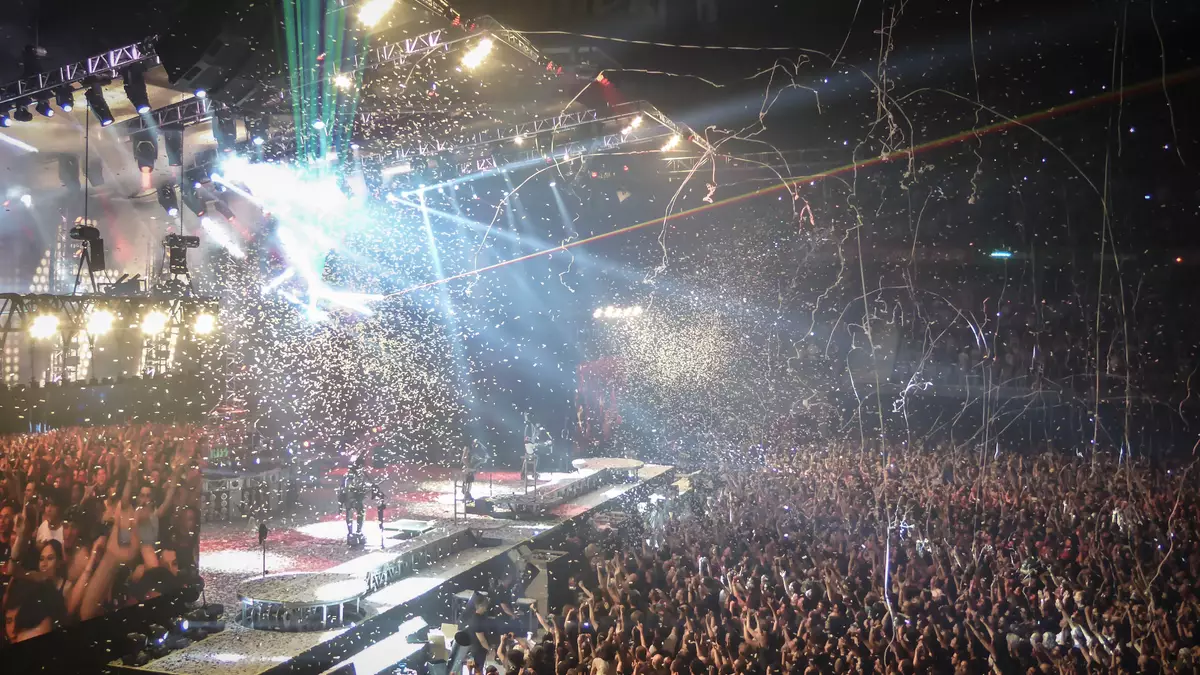
On a humid New York night in 2023, 50 Cent walked onto a Madison Square Garden stage and turned a greatest-hits set into a career victory lap. In the months since, the rapper and mogul has kept his name in the touring mix, hinting at more live dates while his classic records surge in streams. For US fans, every new move from 50 Cent raises the same question: how did a Queens street storyteller become a fixture of both rap radio and prime-time television?
50 Cent keeps tour spotlight warm after 2023 arena run
As of May 17, 2026, there has not been a brand-new album or fully announced US tour from 50 Cent within the last 72 hours. Instead, the strongest current storyline around the rapper centers on his continued live presence after 2023's global arena trek, framed as The Final Lap Tour. That run celebrated the twentieth anniversary of his blockbuster debut Get Rich or Die Tryin' and featured multiple sold-out US arena dates.
Billboard reported in 2023 that 50 Cent's tour included stops at major venues such as New York's Madison Square Garden and Los Angeles's Crypto.com Arena, reflecting sustained demand for his catalog more than two decades after he first topped the charts. Pollstar data around the same period underscored how strong the box office was for the run, with robust ticket sales across US and European markets. While the artist has suggested in interviews that the tour was framed as a kind of farewell to large-scale global treks, he has also signaled openness to future shows and special events.
In the absence of a freshly announced tour leg this week, US fans are watching his official channels and ticket platforms closely. His official site continues to spotlight touring content and previous dates at arenas such as Chicago's United Center and Atlanta's State Farm Arena, even as future schedules are kept flexible. That keeps 50 Cent in the Discover sweet spot: a legacy act with an active audience, a deep catalog, and a sense that the next big announcement could arrive at any time.
At the same time, his influence is being reframed by a new generation of listeners encountering his music through streaming playlists. With hip-hop's anniversary cycles spotlighting early-2000s milestones, tracks like In da Club and 21 Questions are being contextualized alongside newer artists he helped inspire. For US readers, this combination of touring afterglow and catalog rediscovery is why 50 Cent remains central to the conversation in 2026.
- Touring legacy: A 2023 arena run celebrating Get Rich or Die Tryin' kept his live profile strong.
- Catalog power: Early hits continue to rack up streams and radio spins in the US.
- Media footprint: His television and film work keeps his brand visible beyond music.
- Business moves: Headline-making deals, from beverages to production companies, reinforce his mogul image.
Who 50 Cent is and why he matters to US pop and rap
50 Cent, born Curtis Jackson in Queens, New York, is a rapper, songwriter, actor, producer, and entrepreneur who became one of the defining voices of early-2000s hip-hop. His breakthrough fused street-level storytelling with polished, radio-ready hooks at a time when gangsta rap and pop sensibilities were colliding on mainstream US radio. For many American listeners, he was the bridge between the gritty realism of the late-1990s New York scene and the maximalist pop-rap crossover era.
According to Rolling Stone, the success of his debut album reshaped the sound of commercial rap, proving that aggressive narratives could coexist with massive club anthems. Billboard has consistently ranked his singles among the most influential hits of the 2000s, highlighting his knack for hooks that cut across genre lines. Long after his initial chart run cooled, his songs are staples on classic hip-hop playlists, workout soundtracks, and DJ sets from Las Vegas clubs to college-town bars.
In addition to his role as an artist, 50 Cent has become a power player behind the camera. As the executive producer and creative force behind the crime drama franchise Power and its spin-offs on Starz, he helped define a new lane for rapper-turned-TV producer. This dual identity as both hitmaker and television impresario is central to why he remains relevant, even in years when he releases little new music.
For US fans scrolling through the Discover feed, 50 Cent is not just a nostalgic figure. He is a case study in how a hip-hop artist can evolve into a cross-media brand, using early chart success to build a long-term empire. Whether audiences are rewatching his Super Bowl Halftime Show cameo or rediscovering old videos on YouTube, his presence continues to hover at the intersection of music, television, and business.
From South Jamaica, Queens to global rap stardom
50 Cent's story begins in South Jamaica, Queens, a neighborhood whose struggles and resilience shaped his worldview. In interviews over the years, he has described growing up in a tough environment and channeling those experiences into his music. By the late 1990s, he was recording with local producers and building a reputation in New York's underground mixtape circuit, long before the streaming revolution made digital platforms the default route for discovery.
His breakthrough came after a series of independent recordings caught the ear of major-label scouts. Early tracks circulated heavily on mixtapes, where his direct, conversational delivery and knack for memorable hooks stood out. Those recordings eventually sparked the interest of Eminem and Dr. Dre, two of the most powerful figures in early-2000s hip-hop. According to coverage in The New York Times, their co-sign and production support turned 50 Cent from a local name into a national priority for Interscope Records.
When Get Rich or Die Tryin' arrived in February 2003, it landed like a meteor. The album debuted at number one on the Billboard 200, moving hundreds of thousands of units in its first week and instantly cementing 50 Cent as a top-tier rap star in the United States. Lead single In da Club also reached number one on the Billboard Hot 100, dominating radio and MTV rotation with its rubbery Dre beat and simple, chantable hook.
RIAA data confirms that Get Rich or Die Tryin' went on to become one of the bestselling rap albums of the decade, achieving multi-Platinum status in the United States. The project spun off several hits, including 21 Questions and P.I.M.P., each showcasing a different facet of his persona. Where some rappers struggled to maintain momentum after a blockbuster debut, he quickly followed up with The Massacre in 2005, another chart-topping album that extended his dominance.
Throughout this period, 50 Cent built a larger creative ecosystem around him. His G-Unit crew, featuring artists like Lloyd Banks and Tony Yayo, became a brand of its own, with the group releasing albums and touring heavily across the US. He also diversified into film, starring in the semi-autobiographical movie Get Rich or Die Tryin' and later appearing in various action and crime projects. These moves helped position him as more than just a rapper; he became a recognizable face in broader entertainment.
By the late 2000s and early 2010s, shifts in hip-hop trends, the rise of southern trap, and the changing economics of the music industry altered the landscape. While newer albums like Curtis and Before I Self Destruct delivered hits and notable tracks, they could not fully replicate the seismic impact of his early work. Still, even as the charts evolved, his presence remained visible through guest verses, mixtapes, and a growing portfolio of business ventures.
Signature sound, style, and essential 50 Cent works
The core of 50 Cent's sound combines hard-nosed street narratives with melodic hooks that invite mass singalong. Working with producers like Dr. Dre, Mike Elizondo, and Sha Money XL on Get Rich or Die Tryin', he developed a sonic palette built around rubbery bass lines, sparse piano stabs, and tightly programmed drums. Songs like Many Men (Wish Death) showcased his storytelling instincts, while In da Club distilled his charisma into a simple, explosive party record.
On his follow-up The Massacre, he refined that formula with tracks such as Candy Shop and Disco Inferno. According to Billboard, both songs climbed high on the Hot 100, reinforcing his knack for radio smashes that blurred the line between rap and pop. The album itself debuted at number one on the Billboard 200, selling over a million copies in its first four days in the US, a feat that underscored his commercial dominance at the time.
Lyrically, 50 Cent often toggles between brash bravado, survival narratives, and flashes of vulnerability. His verses lean on conversational phrasing and memorable one-liners rather than dense internal rhyme schemes. That approach has sometimes divided critics, but it helped make his music widely accessible. In live performance, it translates into crowds shouting along to every line, especially on choruses that are built for call and response.
Beyond his first two albums, projects like Curtis, Before I Self Destruct, and later independent releases such as Animal Ambition show an artist wrestling with an evolving musical landscape. Collaborations with artists including Eminem, Olivia, Nate Dogg, and The Game added layers to his catalog, bringing in R&B hooks and West Coast textures. In recent years, he has leaned more on sporadic singles and features instead of full-length major-label albums, reflecting a broader industry shift toward playlist-driven listening.
Key songs in his discography include:
In da Club: A Dr. Dre and Mike Elizondo production that became one of the defining party songs of the 2000s, with its staccato strings and thudding kick drum. The track dominated urban and pop radio, helping to solidify 50 Cent's status as a cross-format star.
21 Questions (featuring Nate Dogg): A slower, more tender song that showed his ability to balance toughness with romantic themes. Its success on the Hot 100 demonstrated that he could connect with audiences beyond the hardcore rap base.
Candy Shop: Powered by an infectious, slightly eerie synth loop, this single became a staple of mid-2000s clubs and radio playlists. It cemented his reputation as an artist capable of generating provocative, hook-heavy hits.
Many Men (Wish Death): A darker track that fans and critics often cite as one of his most emotionally resonant songs. Here he reflects on mortality and betrayal over a somber, almost cinematic beat.
Hate It or Love It (with The Game): While technically credited to The Game, this collaboration featuring 50 Cent became a signature record for both artists. Its soulful, nostalgic feel and autobiographical lyrics connected deeply with listeners, further broadening his reach.
On stage, 50 Cent combines these tracks into crowd-pleasing sets designed for maximum energy. His 2023 tour dates leaned heavily on early-2000s material while weaving in later singles and guest appearances. Backed by a live band or DJ, he tends to deliver muscular, straightforward performances that emphasize connection with the crowd over elaborate choreography or staging.
Cultural impact, business moves, and evolving legacy
50 Cent's cultural impact extends far beyond his initial chart statistics. In the early 2000s, he became a symbol of hip-hop's ability to dominate mainstream US culture, appearing on magazine covers, television shows, and movie screens. His image — bulletproof vest, fitted cap, diamond-encrusted cross — helped define the look of the era. According to Vibe and Complex, his sense of branding influenced how later rappers approached merchandise, endorsements, and visual identity.
One of the most discussed aspects of his career is his business savvy. His stake in Vitaminwater, widely reported after the brand's acquisition by Coca-Cola, turned him into a case study in artist entrepreneurship. While estimates of the exact payout vary, outlets like Forbes and The Wall Street Journal have framed the deal as a transformative moment that underscored the financial potential of equity-based endorsement deals for musicians.
He has since launched and overseen multiple ventures, including G-Unit Records, G-Unit Clothing, and various headphone and beverage partnerships. But perhaps his most important business move has been his pivot into television and film production. As executive producer of the Starz series Power, as well as spin-offs like Power Book II: Ghost and Power Book III: Raising Kanan, he helped build a sprawling crime-drama universe that drew significant US viewership.
NPR noted that Power and its related series marked a turning point for cable storytelling centered on Black characters and urban environments, with 50 Cent playing a key role both on screen and behind the scenes. This expansion into television mirrored similar moves by figures like Ice Cube and Queen Latifah, but with a distinctly gritty, serialized tone that resonated with viewers and critics alike.
In terms of accolades, 50 Cent has earned Grammy recognition, winning Best Rap Performance by a Duo or Group for his role on the Eminem-led track Crack a Bottle. He has also received American Music Awards, Billboard Music Awards, and BET Awards, reflecting broad recognition from both industry peers and mainstream audiences. The RIAA lists numerous Gold and Platinum certifications for his singles and albums, confirming the lasting commercial footprint of his work.
His influence on younger rappers is particularly visible in the melodic, hook-driven approach of many contemporary artists. The integration of sing-song choruses with street narratives that he helped pioneer can be heard in acts across regions, from New York drill to Atlanta trap. At the same time, his public feuds and blunt social-media presence have made him a template, for better or worse, for how hip-hop stars wield online platforms.
Despite occasional controversies, 50 Cent's legacy is increasingly framed in terms of longevity and reinvention. As hip-hop continues to evolve and generations cycle through the spotlight, his early-2000s run is being reevaluated as a foundational chapter in the genre's mainstream takeover. For US audiences encountering his work today, he stands as both a time capsule of a specific era and a living example of how a rapper can extend influence into television, business, and beyond.
Frequently asked questions about 50 Cent
What are 50 Cent's most important albums?
Many fans and critics point to Get Rich or Die Tryin' and The Massacre as 50 Cent's most essential albums. The first introduced his blend of street narratives and pop-savvy hooks, while the second confirmed his staying power with additional hits and a broadened sonic palette. Later projects such as Curtis and Before I Self Destruct round out his major-label catalog and show how he adapted to shifting trends.
How did 50 Cent first achieve mainstream success?
50 Cent broke through to mainstream success in 2003 with the release of Get Rich or Die Tryin' on Shady/Aftermath and Interscope Records. Supported by Eminem and Dr. Dre, the album debuted at number one on the Billboard 200 and produced the Hot 100 chart-topper In da Club. The combination of huge first-week sales, heavy radio play, and MTV rotation quickly made him one of the most visible rappers in the US.
What is 50 Cent doing now beyond music?
In recent years, 50 Cent has focused heavily on television and film production, most notably as executive producer of the Starz drama franchise Power and its spin-offs. He also continues to develop new scripted and unscripted projects, alongside ongoing business ventures in areas like spirits, merchandising, and branded entertainment. Music remains part of his portfolio through occasional singles, collaborations, and touring.
Has 50 Cent announced a new album or tour for 2026?
As of May 17, 2026, there has been no widely reported announcement of a new 50 Cent studio album or a fully detailed US tour for this year from major outlets such as Billboard or Variety. However, his previous arena tour and steady media visibility keep speculation alive among fans. It is common for legacy artists to mix festival appearances, one-off shows, and select city runs instead of lengthy, back-to-back tours.
Why is 50 Cent still important to younger hip-hop fans?
50 Cent remains important to younger hip-hop fans because his music continues to circulate heavily on streaming platforms and social media. Iconic tracks like In da Club are often used in memes, workout clips, and DJ sets, exposing new listeners to his catalog. Many contemporary rappers also cite him as an influence, particularly in the way he blends melodic hooks with street narratives and builds a multimedia brand that extends beyond the recording studio.
50 Cent on social media and streaming
For US listeners, some of the most immediate ways to engage with 50 Cent's evolving story are through social platforms and streaming services. His classic albums and hit singles are widely available, and his active online presence offers a running commentary on music, television, and business.
50 Cent – moods, reactions, and trends across social media:
More coverage from AD HOC NEWS
More coverage of 50 Cent at AD HOC NEWS:
Read more on 50 Cent at AD HOC NEWS ->Browse all 50 Cent coverage at AD HOC NEWS ->


