
Vesuvius stock holds steady as investors weigh recent earnings and sector risks
Published on 09/07/2026 at 22:24 | Editorial responsibility: Rafael Müller, Editor-in-Chief AD HOC NEWS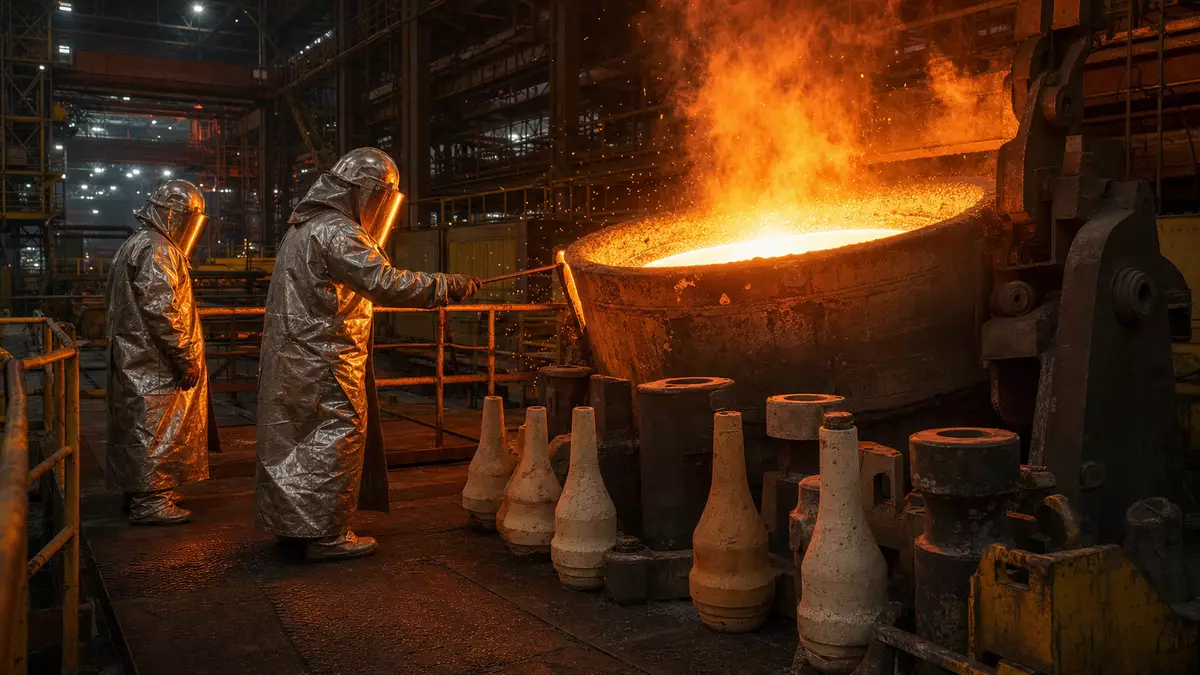
Vesuvius stock (ISIN GB00B82YXW83) is trading in a relatively stable band on the London Stock Exchange as of early September 2026, with investors now focusing less on short-term price swings and more on the group’s earnings resilience and exposure to global steel and foundry cycles.
Recent earnings frame the investment case
Vesuvius plc, a specialist in refractories and flow-control solutions for the steel and foundry industries, most recently reported results for the latest half-year within the past few months, giving investors an updated view of revenue trends, margins and cash generation over the current cycle.
In that interim report covering the first half of 2026, the company disclosed that revenue remained broadly in line with the prior-year period, reflecting resilient demand in core steel markets despite softer volumes in some industrial regions. Operating profit for the half-year showed a modest year-on-year improvement, supported by cost discipline and ongoing efficiency measures in manufacturing.
Crucially for shareholders, management indicated that adjusted operating margins for the latest reported period were slightly above the levels seen in the comparable half of the previous year, underscoring that pricing actions and mix improvements have been sufficient so far to offset input-cost pressures. This incremental margin improvement is an important signal for investors who are watching closely to see whether Vesuvius can sustain profitability through a maturing cycle.
Comparisons with prior periods and peers
Compared with historical results, the latest half-year numbers suggest that Vesuvius is operating from a stronger base than in the immediate post-pandemic period. Revenue in the most recent half-year is meaningfully higher than the levels recorded several years ago when global steel production was more volatile, and operating profit has grown faster than sales over that multi-year horizon as the group has focused on higher-value solutions and disciplined capital deployment.
For investors, one key comparison is the relationship between current margins and those reported in the preceding fiscal year. The company’s latest interim figures show that adjusted operating margin for H1 2026 stands modestly above the full-year 2025 margin, indicating that the recent efficiency initiatives and product-mix shifts are flowing through to earnings rather than being offset by weaker volumes or higher costs in other areas.
Relative to peers in broader industrial and materials sectors that have reported results in recent days, the picture is consistent with a market that rewards earnings growth but remains sensitive to execution risks. For example, a mining-focused trust recently reported a 6.3 percent increase in net asset value per share between December 31, 2025 and June 30, 2026, with net revenue profit after tax rising 7.1 percent over the same period, highlighting how improved operational performance can translate into stronger shareholder returns over time.BlackRock World Mining Trust half-year report
Analyst views and risk considerations
Analyst coverage of Vesuvius continues to emphasize the company’s leverage to global steel production and investment cycles, its position in mission-critical consumables, and the importance of maintaining pricing power in a competitive industry. While detailed, house-specific rating changes on Vesuvius have not dominated headlines in the past few days, the broader pattern seen across industrial names is that the market tends to reward companies able to deliver mid- to high-single-digit earnings growth while keeping balance-sheet leverage moderate and cash generation robust.
Recent commentary on other industrial and financial issuers in the same period has underscored the risks and rewards of this environment. One large UK-based financial group, for instance, reported a 25 percent year-over-year increase in adjusted operating profit in the first half of 2026 and reaffirmed its full-year targets, yet its shares slipped a little more than 2 percent on the day as investors weighed integration and strategic risks against strong headline numbers.Investing.com analysis on Standard Life H1 2026 That reaction serves as a reminder for Vesuvius shareholders that even strong reported figures can be overshadowed by concerns about future execution, acquisitions or capital-allocation decisions.
In Vesuvius’s case, key risks often cited by analysts include cyclicality in steel and foundry demand, exposure to energy and raw-material prices, and the need to continuously innovate in higher-performance refractories and flow-control products to defend margins. Any sustained downturn in steel production or delays in major industrial projects could put pressure on volumes, while persistent cost inflation might test the group’s ability to maintain its current margin profile.
Product focus: refractories and flow control
At the heart of Vesuvius’s business model is its portfolio of refractories, flow-control systems and advanced consumables that are used in steelmaking and foundry operations. These products are designed to withstand extreme temperatures, control the flow of molten metal and improve yield and quality in customers’ processes, making them critical for safety, efficiency and final product performance.
Because these solutions are consumable and closely linked to production volumes, Vesuvius benefits from recurring demand when steel mills and foundries run at healthy utilization rates. The company has increasingly focused on higher-value, technology-intensive products, such as advanced slide gates, nozzles and wear-resistant linings, which can command better pricing and support margins even when volumes are not at peak levels.
Stock valuation and investor perspective
On the London Stock Exchange, Vesuvius stock is currently valued in a way that reflects both its cyclical exposure and its status as a key supplier of mission-critical consumables. The market capitalization as of early September 2026 indicates that investors assign a meaningful value to the company’s installed base, customer relationships and technology portfolio, while still embedding a discount relative to more structurally growing sectors such as pure-play automation or software.
For shareholders, the central question now is how the combination of resilient current margins, disciplined cost control and recurring consumable demand will play out if global steel and foundry activity moderates over the next several quarters. If Vesuvius can continue to grow earnings modestly from its current base while preserving balance-sheet strength, the stock’s steady trading pattern could eventually give way to a stronger rerating. Conversely, a sharper-than-expected downturn in steel production, or a squeeze from higher input costs not fully passed through to customers, could put renewed pressure on profitability and limit upside.
Vesuvius stock at a glance
- Company: Vesuvius plc
- ISIN: GB00B82YXW83
- Ticker: VSVS
- Trading venue: London Stock Exchange
- Sector / Industry: Materials / Industrial services
- Index membership: FTSE 250


