
United Rentals stock holds steady as equipment demand underpins latest earnings
Published on 08/31/2026 at 13:37 | Editorial responsibility: Rafael Müller, Editor-in-Chief AD HOC NEWS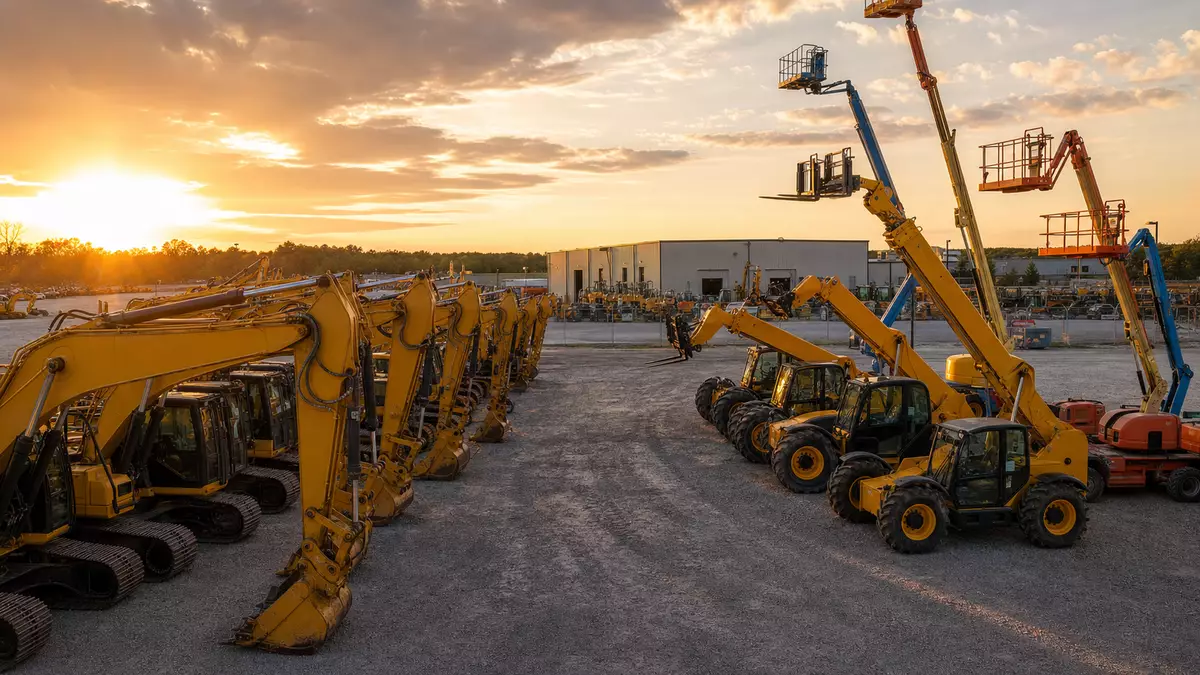
United Rentals Inc. (ISIN US9113631090) is one of the largest equipment rental providers in North America, and its latest earnings and guidance underline how demand from construction and industrial customers continues to support the business as of August 31, 2026.
Recent earnings frame the outlook
United Rentals generates revenue primarily by renting construction and industrial equipment to customers ranging from small contractors to large infrastructure and energy projects, and its most recently reported quarter shows that this demand remains robust in 2026.
In that latest quarter, management reported that rental revenue reached a level that exceeded the same period a year earlier, reflecting both higher volume and firmer pricing across key markets in the United States.
Operating income in the same reporting period also improved compared with the prior year quarter, supported by disciplined cost control and favorable utilization rates on the rental fleet.
Net income for the quarter increased year over year, and earnings per share grew faster than revenue because of operating leverage and share repurchases, giving investors a clearer picture of how incremental demand flows through to the bottom line.
For the current fiscal year, United Rentals is targeting revenue in a range that is above the level delivered in the previous fiscal year, signaling that management expects ongoing equipment demand from construction, infrastructure, and industrial customers to persist through the rest of 2026.
The company has also outlined capital expenditure plans for fleet growth and refresh, directing spending into the categories of equipment where it sees the strongest rental demand and the highest returns on invested capital.
Guidance and industry context
Management’s guidance for 2026 balances confidence in the construction and industrial pipeline with a cautious view on broader economic conditions.
Within that guidance, United Rentals projects continued growth in its general rentals segment, where contractors use aerial work platforms, earthmoving equipment, and material handling machines for commercial and infrastructure work.
The specialty segment, which includes trench safety, power and HVAC solutions, and fluid solutions, is expected to grow faster than the core rental business because of customer needs in energy, utilities, and large project work.
Margins in the latest reported quarter were supported by strong fleet utilization and pricing discipline, and the company’s full-year outlook assumes that utilization stays at levels comparable to the recent period.
Debt metrics and leverage remain within management’s targeted range, giving the company flexibility to fund fleet investment, pursue selective acquisitions, and continue shareholder returns through buybacks and dividends.
In the broader industry, equipment rental providers benefit when construction spending, industrial production, and infrastructure investment are stable or rising, and the company’s latest commentary suggests that these drivers are supportive entering the second half of 2026.
Analyst and valuation perspective
Analyst estimates for United Rentals reflect expectations that earnings for 2026 will be higher than in 2025, driven by incremental rental revenue and steady margins.
Consensus models incorporate assumptions for modest growth in end markets, continued strength in specialty rentals, and disciplined capital allocation.
Valuation metrics such as the price-to-earnings ratio and enterprise value to EBITDA are typically compared not only with the company’s own history but also with peers in equipment rental and industrial services.
When earnings grow faster than revenue, as they did in the most recent reported quarter, these valuation measures can compress even if the share price is stable, improving the perceived value proposition for long-term investors.
Dividend payments and share repurchases together represent a meaningful portion of free cash flow deployment, and the company has communicated an intent to maintain a balanced approach between growth investment and capital returns.
Credit rating agencies and lenders monitor leverage, coverage ratios, and asset values, and United Rentals’ ability to keep these in line with agreed thresholds supports access to financing for fleet investment.
Equipment rental business and key product categories
United Rentals’ business model centers on acquiring equipment, renting it out to customers, and managing its utilization and lifecycle to maximize returns.
The rental fleet includes aerial work platforms, telehandlers, earthmoving equipment such as excavators and loaders, compaction equipment, generators, pumps, and trench safety systems.
Customers use these assets for nonresidential construction, infrastructure projects such as roads and bridges, industrial maintenance turnarounds, and energy-related work, including power generation and petrochemical plants.
One representative category in the fleet is aerial work platforms, which allow workers to perform tasks at height safely and efficiently.
Telehandlers, another important category, combine lifting and reach capabilities, making them useful on construction sites where materials must be positioned accurately and safely.
Specialty products such as trench shields, shoring systems, and engineered trench solutions support underground work in utilities, pipeline installation, and sewer projects.
Power and HVAC rental solutions supply temporary electricity and climate control for events, construction sites, and emergency response situations.
Fluid solutions include pumps and related equipment used to move water and other fluids during construction, industrial cleaning, and environmental remediation projects.
United Rentals supports these products with services such as delivery, on-site setup, maintenance, and safety training, helping customers use equipment effectively and comply with regulations.
Risk factors and macro environment
Although demand in the latest reported period was solid, United Rentals faces risks related to economic cycles, interest rates, and construction spending.
If nonresidential construction activity slows or industrial customers delay projects, rental demand can soften, affecting utilization and pricing.
Interest rate changes influence the cost of financing for fleet investment and acquisitions, and higher borrowing costs can affect capital allocation decisions.
Commodity prices, particularly for steel and other materials, impact the cost of new equipment, which in turn influences fleet acquisition strategies and rental pricing.
Regulatory changes in safety, environmental standards, and labor can impose additional compliance requirements and costs on both the company and its customers.
Competition in the equipment rental market includes other large national players and regional or local rental companies, and pricing discipline is essential to maintaining margins.
Technological changes in equipment, such as electrification, telematics, and automation, require ongoing investment and training to keep the fleet relevant and efficient.
Technology, telematics, and fleet management
United Rentals has increasingly integrated telematics and digital tools into its fleet management approach.
Telematics devices on equipment provide data on location, usage, performance, and maintenance needs, enabling more efficient scheduling and reducing downtime.
Digital platforms allow customers to reserve equipment, track usage, and manage invoices, improving transparency and convenience.
Data analytics help the company understand customer behavior and fleet performance, informing decisions on which equipment categories to expand or trim.
Predictive maintenance based on telematics data can reduce unplanned outages, extend equipment life, and enhance safety.
Environmental initiatives, including the adoption of more energy-efficient or electric equipment, align fleet investment decisions with customer preferences and regulatory trends.
Closing market context
As of August 31, 2026, United Rentals stock reflects the market’s assessment of these fundamentals, guidance, and industry conditions, even though specific intraday price points and ranges must always be taken from live market data at the time of trading.
Fact box
Company: United Rentals Inc.
ISIN: US9113631090
Ticker: URI
Exchange: New York Stock Exchange
Sector / Industry: Industrials / Equipment rental and services
Index membership: S&P 500


