
United Rentals stock benefits from strong Q2 2026 demand and higher 2026 guidance
Published on 08/27/2026 at 11:57 | Editorial responsibility: Rafael Müller, Editor-in-Chief AD HOC NEWS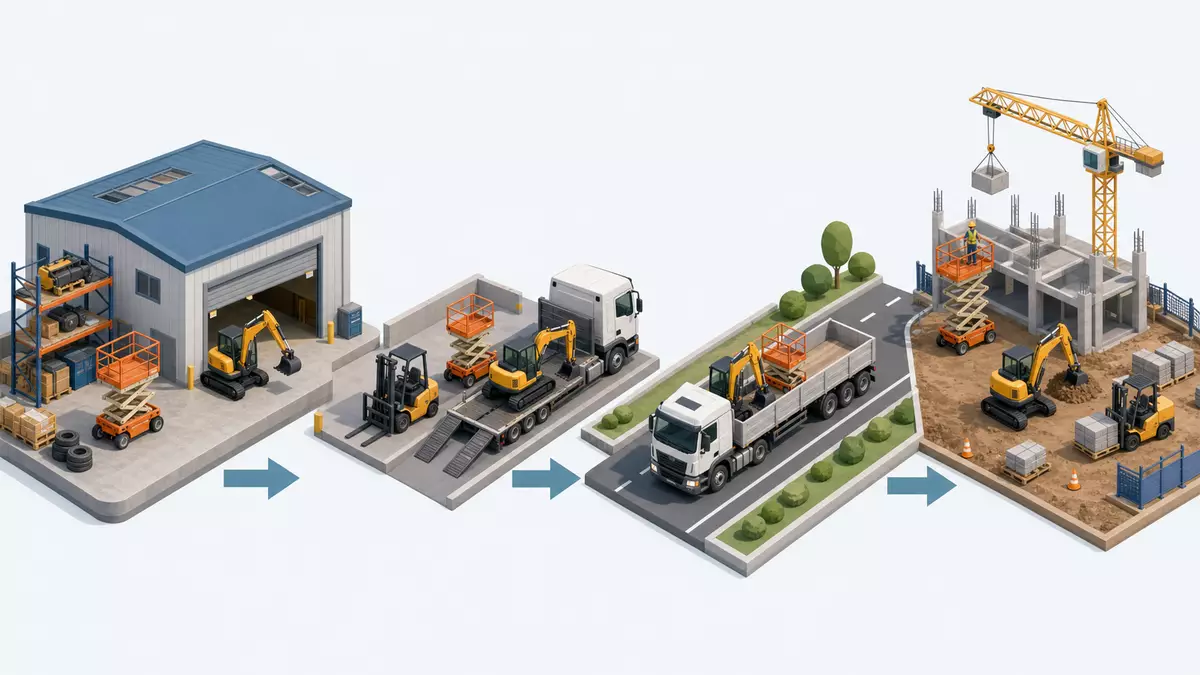
United Rentals, Inc. (ISIN US9113631090) stock is holding above the $1,050 level in late August 2026 as investors digest stronger second quarter 2026 results and a raised full-year revenue outlook alongside continued dividend payments.
Per a recent market overview dated August 26, 2026, United Rentals opened the latest New York Stock Exchange session at $1,052.07 and was quoted intraday at $1,057.63, underscoring how the shares remain in a high four-digit trading range after a strong run through 2026. The same overview highlighted that the stock move came against a backdrop of record quarterly earnings and an updated guidance range that points to continued growth momentum for the year.
For investors, the key driver today is not a single headline but the interaction of solid operational performance in Q2 2026, increased spending on fleet growth to capture infrastructure demand, and a capital return framework that now includes a steadily rising quarterly dividend.
Q2 2026 earnings beat and guidance raised
United Rentals reported its Q2 2026 earnings earlier in the season, giving markets a concrete look at how rising construction and infrastructure activity is feeding into the rental business. In that quarter, the company generated earnings per share (EPS) of $12.76, which exceeded a widely cited consensus estimate of $11.67 and was up from $10.47 in Q2 2025, marking EPS growth of more than $2.00 year over year and a double-digit percentage increase. This beat on EPS signaled that pricing, utilization and scale effects are combining to support profitability beyond what analysts had penciled in for mid-2026.
Revenue performance followed a similar pattern. For Q2 2026, total revenue reached $4.41 billion, a figure described as beating consensus expectations by 4.1 percent and rising 11.8 percent compared with the Q2 2025 level. The combination of an 11.8 percent year-over-year revenue increase and EPS expansion from $10.47 to $12.76 illustrates that United Rentals is not only growing the top line but also protecting margins and per-share earnings as the cycle matures.
Management commentary around these results emphasized that 2026 is tracking as a very strong year across EPS, adjusted EBITDA and revenue, with the second quarter delivering record values on several of these metrics. This backdrop allowed United Rentals to lift its full-year 2026 revenue guidance. The company now expects revenue for fiscal 2026 to fall in a range between $17.5 billion and $17.8 billion, compared with a prior guidance corridor of $16.9 billion to $17.4 billion. The midpoint of the new guidance range is $17.65 billion, which stands $0.55 billion above the previous midpoint, highlighting incremental confidence in demand as the year progresses.
The guidance revision matters because it quantifies how management is translating positive Q2 dynamics into expectations for the remainder of 2026. A move from a $16.9–$17.4 billion corridor to $17.5–$17.8 billion implies an upward adjustment of several percentage points and suggests that the company now sees more resilient or stronger project activity in its core markets than initially anticipated at the start of the year.
Infrastructure demand, fleet investment and utilization metrics
Beyond headline earnings, investors are focused on operational metrics that capture how United Rentals is positioning its fleet to serve a rich pipeline of construction and infrastructure projects. Commentary on the second quarter of 2026 described demand as exceeding earlier expectations, with the project pipeline emerging as the main growth driver for the rental business. In response, United Rentals increased its 2026 gross rental capital expenditure (CapEx) outlook by $450 million to a new range of $4.85 billion to $5.25 billion, up from a previously indicated level.
Year-to-date gross rental CapEx stood at $2.9 billion by mid-2026, more than $650 million above the prior-year period. That delta points to a deliberate strategy of front-loading fleet investments to ensure that equipment is available where and when projects require it. The higher CapEx plan also reflects management confidence that elevated demand can support the incremental asset base without eroding returns.
Operational metrics from Q2 2026 complement this investment story. Fleet productivity improved 3.4 percent in the quarter, indicating that United Rentals is generating more revenue per unit of fleet, while rental revenues grew nearly 13 percent year over year to $3.8 billion. That rental revenue figure, paired with overall revenue of $4.41 billion, underscores that the core rental segment remains the primary engine of growth. Time utilization was described as reaching historically high levels in the second quarter, reinforcing the narrative that equipment is being deployed efficiently across job sites rather than sitting idle.
From an investor perspective, rising fleet productivity and high time utilization function as leading indicators for earnings durability. If an equipment rental company can grow rental revenue by nearly 13 percent while lifting fleet productivity by more than 3 percent and keeping utilization historically high, it suggests that the business is not simply benefiting from price increases but also from strong underlying demand and disciplined asset deployment.
Dividend stream and capital return profile
United Rentals is complementing its growth investments with ongoing returns of capital to shareholders. The company pays a quarterly dividend that, according to recent data for 2026, stands at $1.97 per share per quarter, translating into an annual dividend of $7.88 per share. Based on current share prices, this payout corresponds to a dividend yield of 0.72 percent, modest in absolute terms but underpinned by strong earnings and a relatively low payout ratio.
Investors who held the stock before the ex-dividend date of August 12, 2026 are in line to receive the latest quarterly dividend payment of $1.97 per share, scheduled for August 26, 2026. This calendar pairing of an August ex-dividend date with a late-August payment offers investors a clear timeline for income, and the fact that the dividend has been increased in recent years points to a policy of gradually returning more cash as profitability grows.
A payout ratio below 20 percent on current earnings levels suggests that United Rentals retains the majority of its profits to reinvest in fleet expansion, technology and operations, while still providing a tangible cash return. For yield-focused investors, the 0.72 percent dividend yield might appear modest compared with some utilities or mature industrial names, but within the rental and leasing services segment it compares favorably to industry averages and signals confidence in the sustainability of cash flows.
Analyst estimates, valuation and recent share performance
Analyst earnings estimates for United Rentals have been moving upward over the past month, reinforcing the positive tone set by Q2 2026 results and guidance. Current projections for 2026 EPS stand at $48.55 per share, while 2027 EPS estimates are at $55.71 per share. These figures imply year-over-year EPS growth of 15.4 percent for 2026 and 14.7 percent for 2027, respectively, suggesting that analysts expect double-digit earnings expansion to continue beyond the current year.
These revised earnings trajectories help frame valuation. United Rentals shares are currently described as trading at a forward 12-month price-to-earnings ratio of 19.79, placing the stock at a premium relative to certain industry peers but arguably justified by its growth profile and strong operating metrics. A forward P/E near 20 times against a backdrop of mid-teens EPS growth indicates that the market is willing to pay for the company’s ability to convert infrastructure and construction demand into sustained profit increases.
Price performance also reflects this confidence. Commentary from late August 2026 notes that United Rentals shares have climbed 25.4 percent over the past six months, outpacing indices tied to construction and building products as well as the broader equity market. This six-month gain provides context for why the stock is trading comfortably above the $1,050 mark and why pullbacks, such as the 2.9 percent decline cited for one recent session, are being interpreted as short-term volatility within a broader uptrend rather than a fundamental reversal.
For investors analyzing the stock today, the combination of a 25.4 percent six-month advance, double-digit projected EPS growth for 2026 and 2027, and a forward P/E near 19.79 frames United Rentals as a growth-oriented industrial name whose valuation rests on continued execution in fleet management, pricing and capital allocation.
Equipment rental solutions for large projects
United Rentals, Inc. operates one of the largest equipment rental networks in North America, serving construction firms, industrial customers and municipalities with a broad portfolio of machinery and tools. A representative product area for the company is its range of aerial work platforms and boom lifts, which are critical for tasks such as installation, maintenance and construction on elevated structures.
These platforms are designed to support projects where safety, reach and flexibility are essential, including commercial building construction, bridge work, energy infrastructure and facility maintenance. Customers can rent different configurations with varying reach heights, load capacities and mobility options, enabling them to match equipment precisely to job requirements without committing to long-term ownership.
United Rentals embeds these products within a service offering that includes delivery, on-site support and digital fleet management tools. By combining physical equipment with data-driven utilization tracking, the company helps customers optimize rental periods, minimize downtime and coordinate multiple assets across complex job sites. This integration of robust equipment such as boom lifts with software and logistics capabilities underpins United Rentals’ competitive position in the rental market.
United Rentals stock and current market context
United Rentals stock is listed on the New York Stock Exchange under the ticker URI, trading in U.S. dollars. As of the most recent detailed market overview dated August 26, 2026, the shares were quoted intraday at $1,057.63 after opening at $1,052.07, reflecting a high-four-digit price range that has persisted through much of mid-2026. Market commentary around that quote emphasized that even with session-to-session swings, the stock remains elevated compared with levels seen at the start of the year, consistent with a 25.4 percent gain over the preceding six months.
For US retail investors, the current picture is that United Rentals combines strong reported fundamentals for Q2 2026, an expanded 2026 revenue guidance band between $17.5 billion and $17.8 billion, an ongoing quarterly dividend of $1.97 per share, and a forward EPS trajectory pointing to $48.55 for 2026 and $55.71 for 2027. The share price behavior in late August 2026, with quotes such as $1,057.63 on August 26, 2026, reflects how the market is pricing these fundamentals and expectations into United Rentals stock.
Read more
More details on recent earnings, guidance and fleet investment plans can be found in a late-August 2026 overview of United Rentals’ stock performance and fundamental drivers, which summarizes the Q2 2026 metrics, the updated revenue range and the latest dividend schedule in one place.
Fact box
Company: United Rentals, Inc.
ISIN: US9113631090
Ticker: URI
Exchange: New York Stock Exchange
Price (as of August 26, 2026, 11:16 a.m. ET): $1,057.63 USD
Sector / Industry: Industrials / Rental and leasing services
Index membership: S&P 500


