

Tesla stock dips as robotaxi push reshapes strategy and solar roof production ends
Published on 08/21/2026 at 08:10 | Editorial responsibility: Rafael Müller, Editor-in-Chief AD HOC NEWS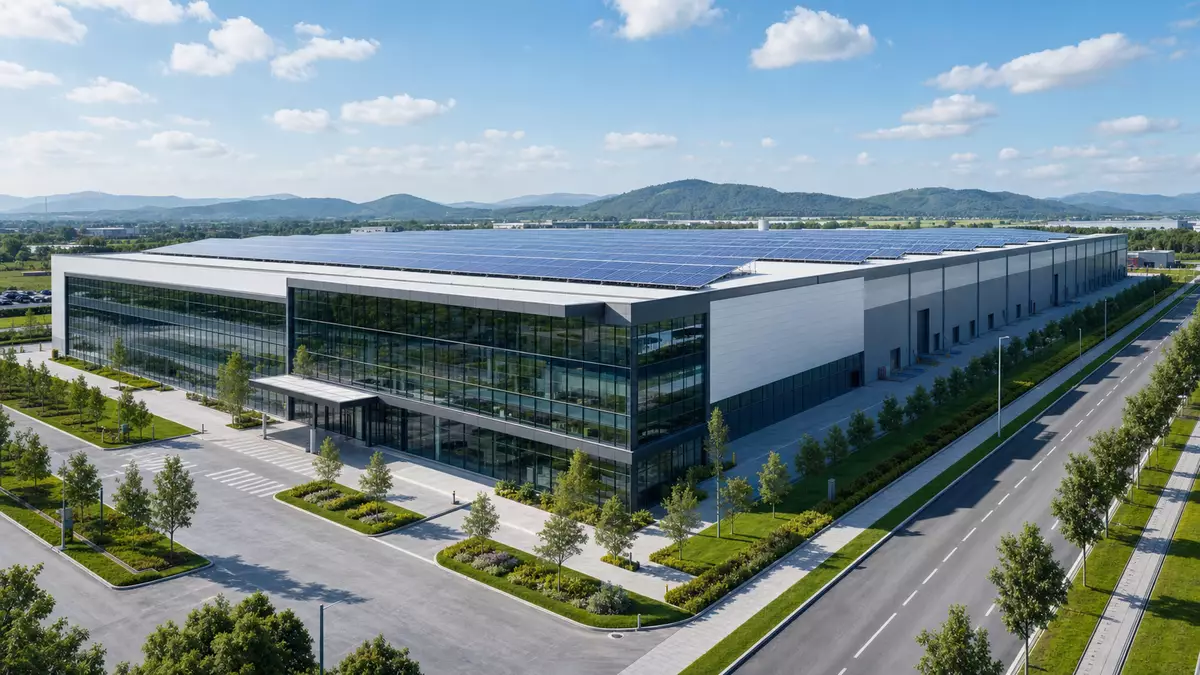
Tesla, Inc. (US88160R1014) stock is trading modestly below recent highs as of August 20, 2026, with shares changing hands around $345 after a multi-day rally that had taken them above $350 earlier in the week.
Recent reporting on August 21, 2026 highlights that Tesla shares declined about 1.7% in the latest session, reflecting broader pressure on large technology stocks amid rising bond yields and higher oil prices.
For investors, the mix of regulatory progress on autonomous vehicles, shifts in the company’s energy strategy, and ongoing valuation debates now frame the near-term narrative for Tesla stock.
Regulators clear Tesla robotaxis in Nevada
One key catalyst for Tesla stock this week has been fresh momentum for its robotaxi ambitions, with transport regulators in Nevada granting permits that allow Tesla and other operators to run commercial autonomous ride services in Las Vegas.
According to an August 21, 2026 report on the Nevada Transportation Authority’s latest decisions, three separate permits were unanimously approved that cover commercial robotaxi operations for Tesla alongside other mobility providers in Clark County.
Sector coverage indicates that this approval supports plans for up to several thousand autonomous vehicles in the state over time, reinforcing management’s earlier commentary that robotaxi fleets and the planned Cybercab platform could drive meaningful growth beyond the existing Model Y lineup.
Additional regional reports from the same date point out that in Austin, Texas, Tesla-operated robotaxis have been completing rides without a company representative inside the vehicle, with one crowd-sourced tracker citing 170 such trips over the prior two weeks.
The expansion of driverless services in both Nevada and Texas gives Tesla more real-world data for its Full Self-Driving software and deepens the company’s exposure to regulatory and public-safety scrutiny as it scales autonomous offerings.
Stock pulls back from recent highs but remains elevated
While the robotaxi news signals operational progress, Tesla stock has eased from recent peaks amid a broader sell-off in mega-cap technology names, with one August 21, 2026 market summary noting a decline of roughly 1.71% for Tesla in the latest trading session.
Separate trading data on August 20, 2026 shows Tesla closing at $344.54 after reaching an intraday high of $347.41 and a low of $342.30 on volume of 5.90 million shares, representing a one-day drop of 1.87% from the prior session.
An equities-focused alert the same day documented Tesla last trading at $345.13, with the stock having dipped as low as $338.96 intraday; that close positions the shares still well above a GF Value-based intrinsic estimate cited at $333.17, implying Tesla trades 3.6% above that valuation framework.
A separate valuation overview published on August 20, 2026 referenced another GF Value calculation at $333.17 and a market price of $351.12 earlier in the week, concluding that Tesla was 5.4% overvalued by that measure when it traded at that higher level.
Taken together, these snapshots show Tesla stock oscillating in a broad mid-$340s to low-$350s range over recent sessions, with the shares currently priced a few percent above some intrinsic-value estimates but below their latest short-term high.
Tesla remains dominant in U.S. EV market
Beyond day-to-day trading, Tesla’s underlying position in the U.S. electric-vehicle market remains strong, even as competitive pressure intensifies and delivery growth moderates compared with earlier years.
An EV market brief released on August 20, 2026, summarizing Cox Automotive’s latest quarterly EV Sales Report, estimates that 247,226 battery-electric vehicles were sold in the United States during the second quarter of 2026.
Within that total, Tesla is estimated to have delivered 124,800 vehicles in the quarter, giving the company a 50.5% share of all U.S. EV sales and maintaining its role as the single largest player in the segment.
The same data set indicates that Tesla’s year-to-date share of the U.S. EV market stands at 52.3%, underscoring that, despite new entrants and aggressive pricing from rivals, Tesla still accounts for roughly half of battery-electric vehicle sales in its core geography.
However, the Cox Automotive figures point to a year-over-year decline in Tesla deliveries during the quarter, suggesting that while the company retains market leadership, growth in unit volumes is more measured than in earlier expansion phases.
Strategic shift in energy business as Solar Roof production stops
In parallel with its vehicle and software initiatives, Tesla is reshaping its energy segment, including a notable product decision that may affect perceptions of the company’s long-term diversification beyond cars.
An August 21, 2026 analysis recounts how Tesla announced on August 20, 2026 that it has halted production of its Solar Roof product and is instead focusing on more conventional solar panels within its energy portfolio.
The report explains that this shift reflects both operational considerations and customer demand patterns, with Tesla concentrating resources on solar products that can scale more effectively and integrate with its Powerwall storage offerings.
That same valuation-focused article notes that, at the time of writing, Tesla’s stock price of $345.13 was assessed as being 3.6% above a GF Value estimate of $333.17, characterizing the shares as modestly overvalued while acknowledging continued investor interest following the Solar Roof decision.
For investors weighing Tesla’s energy ambitions, the move away from Solar Roof manufacturing may signal that management is prioritizing higher-volume, more standardized solar solutions rather than architectural solar products that had proven challenging to scale.
Analyst commentary on Cybercab and future models
Recent analyst commentary on Tesla’s product roadmap has emphasized the strategic importance of the Cybercab platform and its relationship to the company’s wider robotaxi strategy.
One August 20, 2026 note states that Tesla appears increasingly focused on scaling Cybercab operations rather than further expanding its Model Y robotaxi fleet, highlighting the potential for future vehicle models built on the Cybercab architecture.
The same commentary describes Full Self-Driving version 15 as a step-change from earlier iterations of the software, reinforcing Tesla’s belief that its latest FSD release materially improves performance and safety in autonomous driving scenarios.
In that context, the regulatory progress in Nevada and operational milestones in Austin add practical support to the narrative that Cybercab and FSD advancements could underpin new revenue streams beyond traditional retail vehicle sales.
For investors, the key question is how quickly such robotaxi platforms can scale within the guardrails of safety regulation and public acceptance, and whether they can eventually command valuation multiples that justify Tesla’s current premium against some intrinsic-value models.
Representative product - Cybercab and robotaxi services
One representative product in Tesla’s evolving lineup is the planned Cybercab vehicle and associated robotaxi services, which integrate the company’s latest hardware design with its Full Self-Driving software to offer autonomous ride-hailing without a human driver.
Cybercab is envisioned as a purpose-built vehicle platform designed for shared mobility, with a focus on durability, easy cleaning, and high utilization rates in urban environments such as Las Vegas and Austin where regulators have begun approving commercial robotaxi operations.
The platform is expected to leverage Tesla’s in-house battery technology, electric drive units, and software stack, making Cybercab a showcase for the company’s integration of hardware and AI-driven autonomy in a single product offering.
As regulatory approvals expand and software capabilities advance, Cybercab could become a cornerstone product for Tesla’s transportation-as-a-service ambitions, complementing its existing Model 3 and Model Y fleets while offering a distinct vehicle tailored to autonomous operation.
Tesla stock and recent trading context
Looking specifically at Tesla stock, the latest available historical price data show that Tesla opened at $345.96 on August 20, 2026 and closed at $344.54 after an intraday range between $342.30 and $347.41 on volume of 5.90 million shares.
Earlier trading during July 2026 captured a session on July 21, 2026 when Tesla closed at $378.93 after reaching an intraday high of $384.07 and a low of $369.98 on significantly higher volume of 32.74 million shares, illustrating that the current mid-$340s level sits below that prior peak but still reflects a robust valuation compared with earlier years.
From a derivatives perspective, an options quote for the TSLA August 21, 2026 405.000 put contract shows that this put last traded at $62.05, down 10.53% during the session as of 2:47 p.m. ET, with an ask of $62.10 against the 405 strike; such pricing indicates that traders are demanding meaningful premium to insure against larger downside moves below the mid-$300s area.
At the same time, macro-driven selling pressure on large-cap technology stocks, including a reported 1.71% decline for Tesla in the latest trading day, underscores that broader market conditions and interest-rate expectations remain important drivers of short-term performance alongside company-specific news.
For now, Tesla stock is trading several percent below its recent intraday high in the upper $370s but still a few percent above certain intrinsic-value benchmarks, leaving investors to decide whether robotaxi progress and EV-market dominance justify paying a premium versus those models.
Read more
Further details on Tesla’s recent valuation assessments, product decisions, and market positioning can be explored in current equity research and EV-market reports that track both the company’s share price and its operational milestones in autonomous driving and energy products.
Fact box
Company: Tesla, Inc.
ISIN: US88160R1014
Ticker: TSLA
Exchange: Nasdaq
Market cap: Tesla’s market capitalization currently reflects its position as the largest pure-play EV maker, with valuation fluctuating in line with a share price in the mid-$340s range as of August 20, 2026.
Sector / Industry: Consumer Discretionary / Automobiles
Index membership: S&P 500


