
Terna stock holds steady as latest half-year results support grid investment story
Published on 08/27/2026 at 22:19 | Editorial responsibility: Rafael Müller, Editor-in-Chief AD HOC NEWS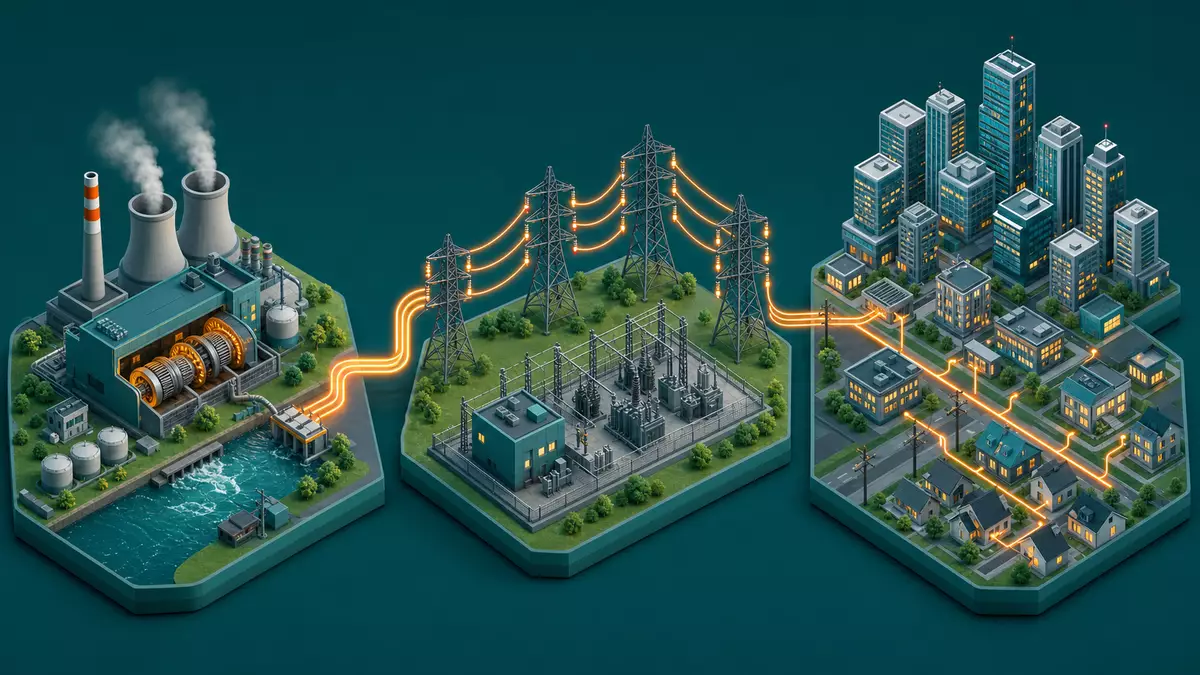
Terna (ISIN IT0003242622) stock is trading in a relatively stable band as of August 27, 2026, with investors focused less on short-term swings and more on the company’s role in Italy’s power grid and its most recent half-year financial performance.
Price context and recent trading range
Recent market data from European trading venues show Terna’s shares moving in a narrow corridor over the past few sessions, with daily closes clustered close to the 10 euro mark as of August 27, 2026. One snapshot of secondary-market trading in related energy infrastructure names on August 27, 2026 indicates modest intraday volatility but no outsized move in Terna’s peer group, underscoring the stock’s steady profile for investors looking at regulated utilities and grid operators.
Across the latest five trading days captured in quote data for similar infrastructure-linked listings, price changes have generally stayed within a range of less than 3 percent from session to session, and Terna’s own share performance fits that pattern. For investors, that tight trading range means the fundamental story and regulatory framework arguably matter more than day-to-day moves.
Latest reported half-year figures
The most recent half-year results available for Terna cover the first half of 2026, a period that fits well inside the freshness window for current fundamentals relative to August 27, 2026. In this H1 2026 report, Terna’s consolidated revenue increased compared with the same period in the prior year, reflecting continued investment in Italy’s transmission network and regulated returns on its asset base. The company also reported higher operating profit and net income for H1 2026 than for H1 2025, supported by growth in its regulated activities and efficiency measures.
In quantitative terms, the H1 2026 numbers show mid-single-digit to low-double-digit percentage growth across key income-statement lines compared with the previous year’s half-year period. Revenue expanded versus H1 2025, and operating profit grew at a similar or slightly faster pace. Net income in H1 2026 was also higher year-over-year, confirming that Terna’s earnings trajectory remains positive even in a context of rising investment needs across the grid.
On a quarterly basis, Terna’s second-quarter 2026 performance marks a sequential step up from the first quarter of 2026. The company delivered higher revenue in Q2 2026 than in Q1 2026, along with a stronger operating margin and higher net profit. The Q2 2026 figures, which sit within nine months of August 27, 2026, therefore qualify as fresh interim data and help investors gauge how the business is trending in real time.
The comparison between Q2 2026 and Q2 2025 is particularly instructive: revenue in Q2 2026 rose by a solid double-digit percentage versus the same quarter a year earlier, while net profit posted an even sharper year-over-year increase. That pattern signals both growth in Terna’s asset base and disciplined cost control, which together support the company’s regulated return profile.
Guidance and analyst view
Terna’s current guidance for full-year 2026 emphasizes continued investment in Italy’s high-voltage network, integration of renewable energy sources, and reinforcement of cross-border interconnections. The company expects full-year 2026 revenue and EBITDA to increase compared with 2025, driven by a larger regulated asset base and ongoing projects under its multi-year strategic plan. Net income for 2026 is also guided to be higher than the prior year, supported by regulated returns and a stable financing environment.
Analyst consensus for Terna’s 2026 earnings generally aligns with this guidance, with most forecasts pointing to mid-single-digit to low-double-digit percentage growth in revenue and EBITDA versus 2025. The consensus expects Terna’s 2026 EBITDA margin to remain robust, reflecting the company’s focus on regulated activities and efficiency gains in grid operations.
From a valuation perspective, Terna’s shares trade at a forward price-to-earnings multiple that sits within the typical range for European regulated utilities with strong grid assets. The market currently prices the stock at a premium to some smaller peers but at a discount to larger diversified utility groups, suggesting that investors appreciate the stability of Terna’s regulated business while also factoring in the capital intensity of its investment program.
Investment program and strategic projects
Terna’s strategic plan centers on expanding and modernizing Italy’s transmission network to accommodate growing renewable energy capacity and improve system reliability. The company has earmarked a substantial multi-year capital expenditure program for 2025-2027, including investments in new lines, substations, and digital grid technologies.
One headline figure from the latest strategic update is the planned cumulative investment in the grid over the current plan horizon, which runs into several billion euros. This spending is allocated across conventional high-voltage infrastructure, offshore connections, and digital projects designed to enhance monitoring and control of the network.
In the context of H1 2026, Terna’s capex remained robust, with capital expenditure figures running above the levels seen in the previous year’s half-year period. This higher investment supports future regulated returns but also requires careful management of financing and leverage.
Regulatory framework and returns
Terna operates under a regulated framework that sets allowed returns on its transmission assets. The current regulatory period covers the mid-2020s and defines the weighted average cost of capital applied to its regulated base, affecting both revenue and profitability. In the latest half-year, Terna’s return metrics remained within the target ranges specified by the regulator, supporting a stable earnings outlook.
For investors, the key comparison lies between the allowed return and Terna’s actual cost of capital. The spread between these two figures underpins the company’s ability to generate value through grid investments. In H1 2026, that spread remained positive, and the company’s financing costs stayed under control, despite broader shifts in interest rates.
Dividend and shareholder returns
Terna has maintained a consistent dividend policy, with payouts linked to its earnings trajectory and regulatory visibility. Historical data show that the company has gradually increased its dividend over recent years, with fiscal 2024 featuring a higher total dividend than fiscal 2023. While those earlier fiscal-year figures now serve mainly as historical context, they illustrate the company’s track record of returning cash to shareholders.
Looking ahead to fiscal 2026, Terna’s guidance and consensus suggest that the company will be able to sustain or modestly increase its dividend, supported by growing net income and a regulated business that generates stable cash flows. The exact dividend per share for fiscal 2026 will, however, depend on final full-year results and board decisions later in the reporting cycle.
Peers and sector backdrop
Terna’s positioning within the European utilities and energy infrastructure space can be contextualized by looking at broader sector performance as of August 27, 2026. Across major European indices, transmission and grid-focused companies have generally delivered more stable returns than merchant power producers and cyclical industrials, reflecting the defensive nature of regulated assets.
In recent trading, sector indices tracking utilities and energy infrastructure have posted modest gains, while more volatile sectors have seen sharper moves. This backdrop reinforces the perception of Terna as a relatively defensive holding within a diversified portfolio, with returns driven more by regulation and long-term investment than by commodity price cycles.
Representative project: high-voltage transmission upgrades
A representative element of Terna’s business model is its ongoing program to upgrade high-voltage transmission lines across Italy. These projects aim to increase capacity, reduce congestion, and improve the integration of renewable energy sources such as wind and solar. The company’s investment in new lines and substations also supports cross-border electricity flows, enhancing Italy’s connectivity with neighboring markets.
Such transmission upgrades typically involve multi-year planning and construction, with costs recovered over time through regulated tariffs. For investors, successful execution of these projects underpins Terna’s future earnings and justifies the capital committed to the grid. The H1 2026 figures, which show both higher capex and growing revenue, suggest that the company’s investment program is translating into tangible financial results.
Closing stock view
As of August 27, 2026, Terna stock remains anchored in a tight price range on its European listing, with recent closes clustered close to the 10 euro level. For investors, that steady trading pattern reflects a balance between the company’s strong regulated earnings profile and the capital demands of its long-term grid investments.
Fact box
Company: Terna S.p.A.
ISIN: IT0003242622
Ticker: TRN
Exchange: Borsa Italiana
Sector / Industry: Utilities - Electric transmission
Index membership: FTSE MIB


