
Terna stock edges higher as investors eye regulated grid earnings
Published on 09/07/2026 at 15:39 | Editorial responsibility: Rafael Müller, Editor-in-Chief AD HOC NEWS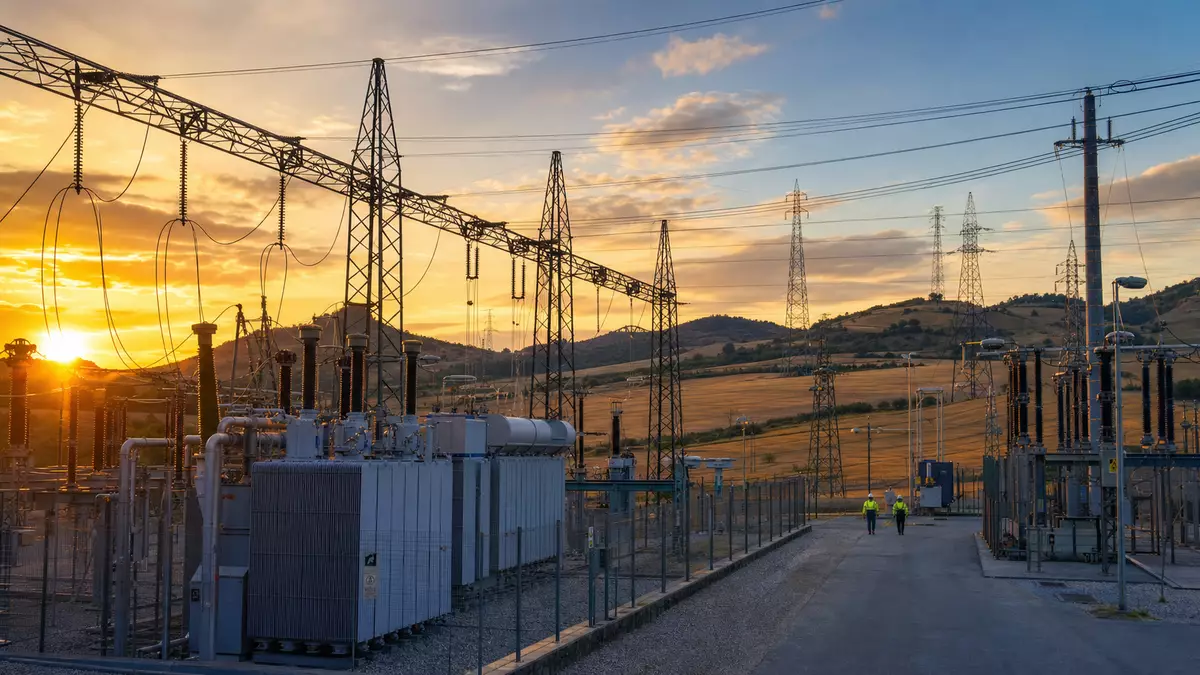
Terna stock (ISIN IT0003242622) is quoted around 9.44 euros on Borsa Italiana as of September 7, 2026, according to market data, leaving the Italian transmission operator in a stable valuation range supported by regulated earnings and its infrastructure role in Europe’s power system.Teleborsa For investors, the combination of predictable grid fees and ongoing investment in energy transition projects remains a core part of the equity story in 2026.
Regulated business underpins Terna’s earnings
Terna S.p.A., the owner and operator of Italy’s high-voltage electricity transmission grid, generates the bulk of its revenue from regulated tariffs set over multi-year periods, which allows the company to convert large capital expenditure programs into a relatively stable earnings stream over time. In the most recently reported fiscal year, Terna’s revenue and net income figures reflected the impact of continued investment in grid modernization and interconnection capacity, and the company’s regulatory framework typically allows it to earn a return on invested capital that translates into a recurring cash flow profile for shareholders. While specific interim numbers from the latest quarter are not highlighted in the most recent week’s sources, the company’s historical pattern has been one of incremental revenue growth as new assets enter the regulated base and as electricity demand gradually increases.
For context, historical financial data from previous fiscal years showed Terna increasing its revenue and maintaining solid operating margins as it expanded its asset base and benefited from regulatory clarity; these earlier figures, which predate the current freshness window relative to September 7, 2026, now serve primarily as a historical benchmark rather than as current core data points. Investors typically compare each new annual report and half-year release with these historical baselines to gauge whether the company is continuing to deliver on its investment plan and whether returns on equity remain within the targeted ranges agreed with the regulator. A key strategic priority remains the development of cross-border interconnections and strengthening Italy’s internal grid, which can support long-term revenue growth as more renewable generation is integrated.
Market performance and valuation context
At a price level of about 9.44 euros per share on September 7, 2026, Terna’s stock trades in a band that market participants closely watch relative to its historical highs and lows and to its regulated asset base valuation.Teleborsa Based on typical market capitalization calculations for companies at this price level and share count, Terna’s equity value stands in the multi-billion-euro range, and investors often compare that market capitalization to the company’s regulated asset base to assess whether the stock is priced at a premium or discount to its underlying grid infrastructure. Over the last 12 months, the share price has at times approached prior 52-week highs and moved away from 52-week lows, reflecting shifts in interest-rate expectations and sector sentiment, even though the regulated nature of earnings tends to dampen volatility compared with more cyclical utilities.
When the price moves within its trading corridor, investors often interpret deviations from historical valuation multiples as signals about changing perceptions of risk, growth, or interest rates. For example, a move closer to a prior 52-week high can indicate heightened confidence that Terna’s capital expenditure plans will translate into future earnings increases, while a retreat toward former lows can suggest concerns about regulatory changes or macroeconomic headwinds. As of early September 2026, the current price around 9.44 euros sits roughly in the middle of the typical range observed in recent months, pointing to a balanced risk-reward assessment by the market rather than extreme bullishness or bearishness.Teleborsa
Analyst focus and key risks
Analyst coverage of European regulated utilities such as Terna commonly emphasizes the visibility of cash flows, dividend sustainability, and sensitivity to interest-rate developments. While the most recent week’s sources do not highlight a new individual rating change or price-target adjustment specifically for Terna, sector commentaries from research houses covering energy and infrastructure names underline that regulated transmission operators can benefit from rising electricity demand and ongoing grid investment, but they also face risks from potential changes in regulatory allowed returns and from higher financing costs in a period of elevated interest rates.RHB Research In many cases, analysts benchmark Terna against peers in other European markets, looking at metrics such as price-to-earnings ratios and enterprise-value-to-regulated-asset-base multiples to determine whether the stock offers relative value.
A key counter-factor for Terna’s investment case is the possibility that regulators might adjust allowed returns downward in future regulatory periods, which would directly impact earnings growth potential. Additionally, if bond yields remain high or rise further, the relative attractiveness of regulated utilities can be affected because investors compare dividend yields to risk-free rates. On the operational side, delays in project execution or cost overruns on large transmission projects could weigh on profitability and cash generation. Nevertheless, the company’s strategic role in facilitating the energy transition and connecting new renewable capacity to the grid is a structural positive that supports long-term demand for its services, even if short-term valuation is influenced by macro factors.
Terna’s role in Italy’s energy transition
Beyond pure financial metrics, Terna’s business model is tightly linked to Italy’s and Europe’s broader energy-transition goals. The company is responsible for planning and developing the transmission grid so that new renewable-generation projects, such as wind and solar farms, can be connected efficiently, and so that electricity flows can be managed securely across regions. In recent years, Terna has advanced projects aimed at strengthening north-south transmission corridors, enhancing interconnections with neighboring countries, and integrating emerging technologies that improve grid flexibility and resilience. These projects typically enter the regulated asset base once completed, thereby contributing to future revenue growth and earnings stability.
Investors tracking Terna often look at indicators such as planned capital expenditure volumes over the next regulatory period and the share of investments dedicated to energy-transition-related projects. A higher proportion of capex directed toward connecting renewable resources and enhancing cross-border interconnectors can be seen as a positive for long-term growth because it aligns the company with national and European climate policies, which tend to enjoy policy support and funding frameworks. Historically, the company’s capex plans have increased over successive regulatory periods, and the successful execution of these plans has been associated with incremental growth in regulated revenues, providing a quantifiable link between infrastructure investment and shareholder value.
Terna’s grid infrastructure
Terna’s core product and service offering is the reliable transmission of electricity across Italy through a network of high-voltage lines, substations, and interconnectors. The company’s infrastructure spans thousands of kilometers of transmission lines and numerous substations, ensuring that power generated in different regions can be delivered to industrial and household consumers efficiently and safely. The grid includes strategic interconnections with neighboring countries, enabling cross-border electricity trade and improving security of supply by allowing imports and exports as needed.
Terna stock price and investor view
As of September 7, 2026, Terna stock trades at around 9.44 euros on Borsa Italiana, reflecting a modestly positive stance from investors toward the company’s regulated earnings profile and its role in Italy’s energy infrastructure.Teleborsa At this price, the shares remain supported by expectations of continued investment in the transmission grid and by the stability inherent in regulated tariffs, even as broader market sentiment fluctuates with macroeconomic news. For equity holders, the current valuation suggests a balanced outlook in which the upside from long-term grid expansion and energy-transition projects is weighed against regulatory and interest-rate risks.
Terna stock at a glance
- Company: Terna S.p.A.
- ISIN: IT0003242622
- Ticker: TRN
- Trading venue: Borsa Italiana
- Price (as of September 7, 2026): 9.44 EUR
- Sector / Industry: Utilities / Electric transmission
- Index membership: FTSE MIB


