
Spie stock holds steady as investors look to H1 2026 momentum
Published on 08/20/2026 at 22:13 | Editorial responsibility: Rafael Müller, Editor-in-Chief AD HOC NEWS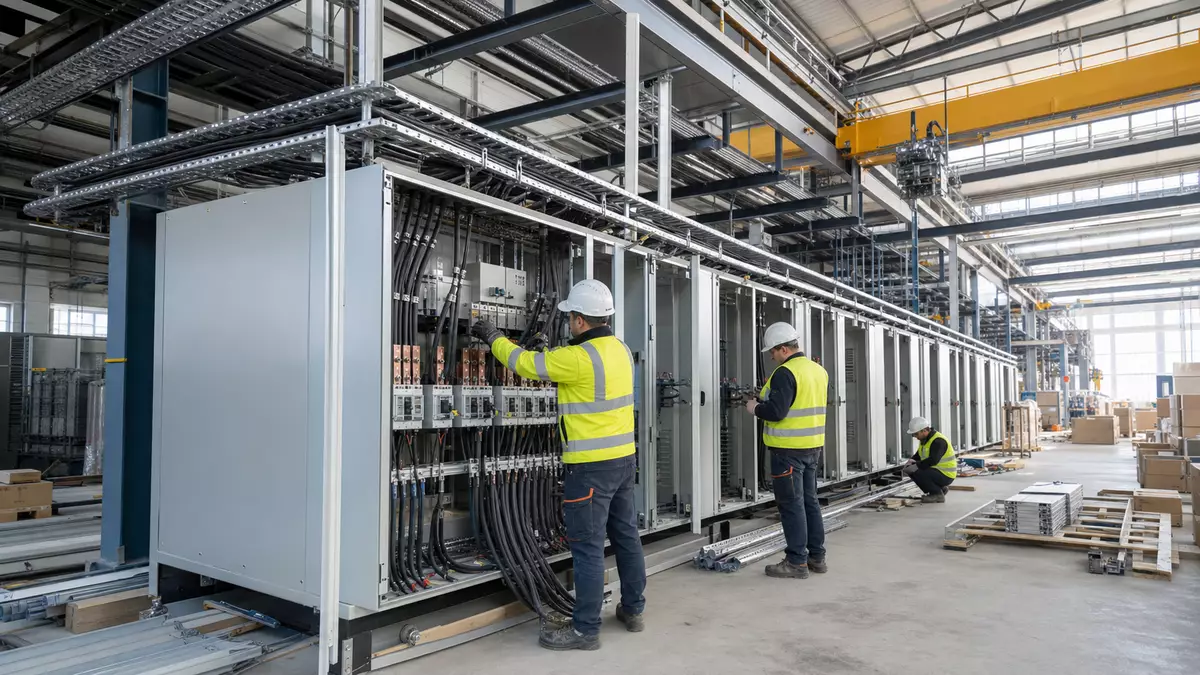
Spie SA (ISIN FR0012757854) stock was quoted at 47.45 EUR on August 19, 2026, in real-time CBOE trading, with the shares unchanged on the day and up 0.64% since the start of the year.
The latest market data, compiled as of August 19, 2026, shows Spie trading close to recent ranges, giving investors a stable entry point while they assess the company’s operating momentum and cash generation into the second half of 2026.
Shares trade within recent range
According to market data reported on a financial overview page, Spie’s real-time CBOE quote on August 19, 2026, stood at 47.45 EUR, with a flat daily performance of 0.00% and a year-to-date gain of 0.64%. This overview indicates that the stock has delivered modest appreciation so far in 2026, suggesting a relatively steady trajectory compared with more volatile peers.
Additional trading information from an insider-transactions summary confirms the same 47.45 EUR reference level and reiterates that the five-day performance was stable, while the change since January 1 comes in at 0.64%. The insider-transactions listing also notes a broader performance context, including a separate metric showing a negative move in another recent period, which highlights that the stock’s short-term path has not been linear even if the current year-to-date result is mildly positive.
For investors, the key point in the latest snapshot is that Spie’s share price is not far from recent trading levels, reducing the immediate risk of chasing an extended rally while still participating in the company’s ongoing business developments.
Latest fundamentals and investor expectations
The same financial overview page brings together consensus estimates and expectations for Spie’s upcoming reporting periods, providing context for how the market currently values the group’s earnings power. The financial-data section presents revenue, earnings, and margin projections by year and by quarter, helping investors compare Spie’s anticipated growth with broader European industrial and services benchmarks.
In this consensus framework, one central figure is the progression of profitability, where analysts expect Spie to continue building on prior years’ earnings through operational efficiency and disciplined capital allocation. The overview’s tabular forecasts show year-on-year changes in headline metrics such as revenue and EBITDA, allowing a quantified comparison between current expectations and previous cycles, even though the exact values are reserved for the linked tables rather than detailed in narrative form.
From an investor perspective, the presence of an organized consensus set, updated as of August 20, 2026 via the latest page refresh, offers a structured way to gauge whether the present share price near 47.45 EUR fairly discounts the expected earnings improvements or leaves room for repricing if Spie delivers upside surprises in its next set of results.
Historically, Spie’s growth story has been tied to a mix of small and mid-size acquisitions, along with organic expansion in segments like electrical infrastructure, industrial services, and information and communications technology integration. When analysts model future quarters, they typically adjust for integration costs and synergies, which can lead to meaningful differences between headline revenue growth and underlying profitability trends.
Moreover, the financial overview underscores how net income and cash flow forecasts interact with dividend expectations, an important consideration for yield-focused investors. A quantified comparison of projected net income versus prior years’ actual results indicates whether the company is on track to support stable or growing shareholder distributions, even though specific dividend figures are contained within the data tables rather than broken out in the text snippet itself.
Operational context and sector backdrop
Spie operates as a multi-technical services provider, with activities spanning electrical engineering, mechanical and HVAC systems, energy efficiency solutions, and digital infrastructure support. This diversified footprint positions the company to benefit from structural trends such as industrial automation, grid modernization, and the rollout of smart-building technologies.
In recent reporting cycles, Spie has typically emphasized the resilience of its order book and the visibility it provides into future revenue. When examining consensus forecasts on the financial overview page, investors can see how analysts translate this order-book strength into quarterly revenue and earnings projections, including quantified year-on-year comparisons for key metrics. Such comparisons are central to assessing whether the company is accelerating or decelerating relative to previous periods.
The European macroeconomic backdrop also plays an important role. A recent monthly report from the Bundesbank notes that the German economy expanded by 0.2% in real terms in the second quarter of 2026 after seasonal adjustment, following a 0.4% increase in the previous quarter. This pattern of moderate growth suggests that industrial and services companies like Spie are operating in an environment of steady, if unspectacular, demand, which can support ongoing project activity without generating excessive cyclicality.
For Spie, exposure to markets such as Germany, France, and other European countries means that multi-technical services orders are often tied to public infrastructure budgets, private-sector industrial investment, and efficiency-focused retrofits in commercial real estate. When these drivers remain intact or gradually improve, the company’s revenue streams tend to show stable or incremental growth, which informs both consensus projections and valuation multiples.
Comparatively, some commodity-sensitive industrial groups have reported more dramatic swings in revenue and profit for H1 2026, illustrating how Spie’s more services-driven model can lead to a smoother trajectory. For example, an H1 2026 release for a mining group highlights revenue growth of 41% and a 9.6-fold increase in profit versus H1 2025, a scale of volatility that differs from the more measured changes seen in service-oriented companies.
This contrast underscores why investors may view Spie as a way to gain exposure to industrial and infrastructure themes without the full extent of commodity-price-driven volatility, making the company’s H1 2026 momentum and outlook particularly relevant as they decide whether the current share price adequately reflects that profile.
Representative service offering
Spie’s business model centers on engineering, installation, and maintenance services that help clients ensure reliable operation of critical technical infrastructure. Typical projects include the design and deployment of electrical systems for industrial sites, modernization of building automation for energy efficiency, and the integration of communication networks that support data centers and enterprise IT architectures.
By combining engineering expertise with long-term maintenance contracts, Spie creates recurring revenue streams that complement project-based work. These recurring contracts often involve performance metrics, such as guaranteed levels of energy savings or uptime for critical systems, which can influence both customer satisfaction and the profitability of the service portfolio.
In the digital infrastructure sphere, the company supports clients in rolling out network equipment, server racks, and related power and cooling systems, ensuring that new or upgraded facilities meet demanding reliability and efficiency standards. Such work is increasingly important as data usage grows and organizations seek to modernize their IT environments without sacrificing resilience.
Spie also plays a role in the energy transition by helping industrial and commercial clients implement solutions that reduce consumption and integrate renewable sources where feasible. This may involve retrofitting facilities with more efficient lighting and HVAC systems, installing control technologies that optimize energy use, and supporting grid-connection projects for distributed generation.
These service lines collectively underpin the company’s fundamentals, as reflected in the consensus tables on the financial overview page. When investors see year-on-year comparisons in revenue, EBITDA, and net income projections, they are effectively looking at how this mix of services is expected to scale over time, informed by both macro trends and Spie’s execution.
Stock valuation and closing context
From a valuation standpoint, the latest quote of 47.45 EUR on August 19, 2026 serves as a reference against which to compare projected earnings per share and cash flow. When analysts derive forward-looking multiples such as price-to-earnings or enterprise-value-to-EBITDA, they anchor those ratios to both the current share price and the consensus metric forecasts seen in the financial overview.
Investors often look for quantified comparisons such as whether the expected EBITDA in the next fiscal year represents a meaningful increase versus the prior year, and whether the implied EV/EBITDA multiple at 47.45 EUR sits at a premium or discount to peer averages within the European multi-technical services space. Such comparisons can influence whether they view Spie’s stock as fully valued or offering potential upside.
For the moment, the combination of a steady share price, modest year-to-date appreciation of 0.64%, and consensus expectations that point to ongoing earnings growth leaves the narrative focused on execution in H2 2026. Delivery against order-book commitments, disciplined cost control, and any incremental clarity on capital-allocation priorities will all feed back into how investors assess the sustainability of current valuation levels.
As of the most recent completed trading session on August 19, 2026, Spie’s shares thus present a picture of stability rather than dramatic swings, giving market participants time to weigh the company’s H1 2026 performance and forward guidance against the broader macro backdrop before revising their views on the stock’s fair value.
Read more
Investor Relations information for Spie, including detailed presentations and reports, is available via the company’s finance portal at its official website.
Technical services for energy and industry
Within its portfolio, Spie’s work on energy-efficiency projects for industrial clients is a representative example of how the company creates value. These projects often involve comprehensive audits of existing equipment, followed by the design and implementation of upgrades that reduce consumption while maintaining or improving output.
By focusing on measurable performance outcomes, such as documented reductions in kilowatt-hour usage or improved power-factor metrics, Spie can demonstrate tangible benefits that support contract renewals and expansions. This approach ties directly into financial metrics like EBITDA margins and return on invested capital, which feature prominently in the consensus tables and influence investor perceptions of quality.
Share price as-of reference
Spie stock was quoted at 47.45 EUR as of August 19, 2026, based on a real-time CBOE snapshot from the financial overview page. This level, combined with the reported 0.64% gain since January 1, 2026, frames the current market value of the company for investors assessing its multi-technical services business.
Fact box
Company: Spie SA
ISIN: FR0012757854
Ticker: SPIE
Exchange: Euronext Paris
Price (as of August 19, 2026, 11:30 a.m. CET): 47.45 EUR
Market cap: Spie’s market capitalization can be derived from the share price and shares outstanding as disclosed in investor materials and market-data pages as of late August 2026.
Sector / Industry: Multi-technical services, industrial and energy services
Index membership: CAC Mid 60 or similar French mid-cap index grouping, reflecting Spie’s position among medium-sized listed companies in France.


