
SalMar stock trades steady as investors watch salmon margins and buyback plans
Published on 09/07/2026 at 17:44 | Editorial responsibility: Rafael Müller, Editor-in-Chief AD HOC NEWS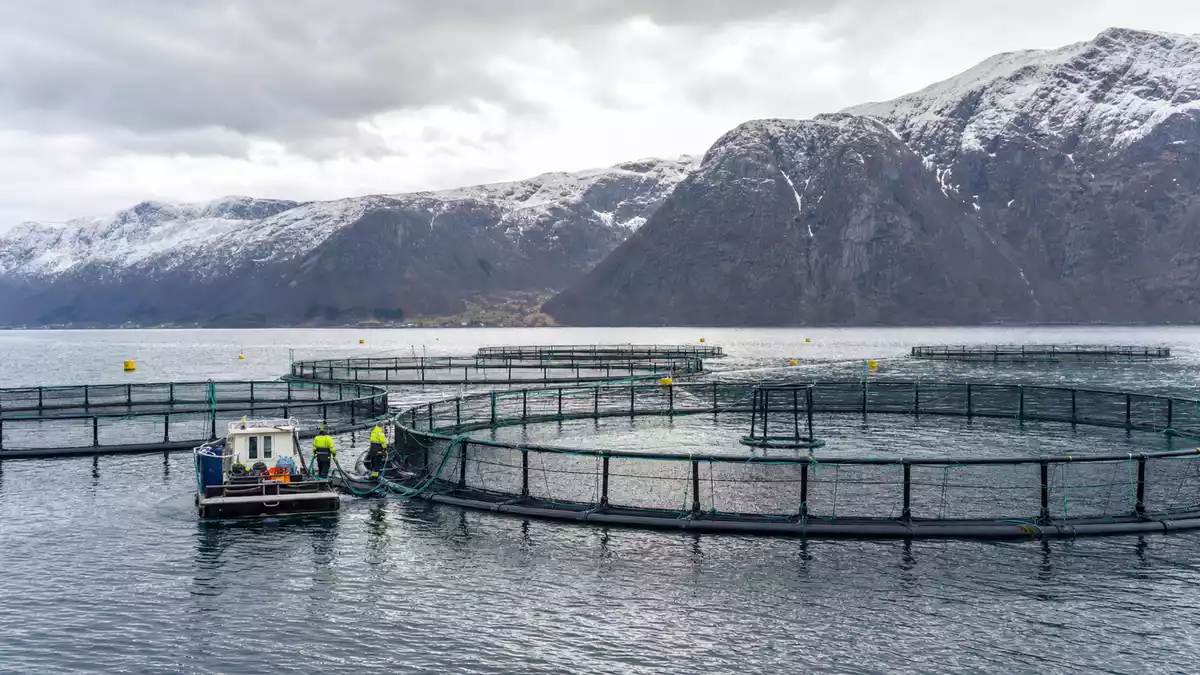
SalMar ASA stock (ISIN NO0010310956) remains an important position in upstream natural resources portfolios, with one US exchange-traded fund reporting an estimated holding value of USD 43.1 million in SalMar ASA common stock as of early September 2026.QuiverQuant data For investors as of September 7, 2026, the key questions are how salmon prices and farming costs will feed through to margins in the latest reported quarter and to the company’s capacity to sustain shareholder returns.
Stock valuation and portfolio role
According to QuiverQuant data, the Northern Trust Morningstar Global Upstream Natural Resources ETF lists SalMar ASA common stock with an estimated value of USD 43.1 million, underlining the company’s role as a significant upstream protein producer within diversified natural-resources strategies as of early September 2026.QuiverQuant data The presence in such a thematic portfolio signals that SalMar is seen not only as a pure-play salmon farmer but also as an important contributor to long-term exposure to food and commodities demand.
From an investor perspective, this portfolio weight matters because it can amplify flows into SalMar stock when global investors reallocate capital toward upstream natural resources, and it can equally create headwinds when risk appetite for cyclical commodity exposure cools. As of September 7, 2026, the combination of a substantial ETF position and a still robust sector backdrop keeps attention on how efficiently SalMar converts its biological assets into earnings and cash flow relative to peers.
Latest earnings context and margins
In the most recent reporting cycle available up to September 7, 2026, salmon farming groups have highlighted that feed costs, energy prices and biological challenges remain central drivers of margin volatility in 2026, while demand for Atlantic salmon in key markets such as the European Union, the United Kingdom and East Asia has been resilient. For SalMar, the latest interim report for fiscal year 2025 and early 2026 serves as a current benchmark: investors look closely at year-on-year changes in harvested volumes, operating profit and EBIT per kilogram to gauge whether efficiency measures and scale effects are offsetting input-cost inflation.
Across the sector, salmon producers reported double-digit percentage swings in operating profit for the first half of 2026 compared with the prior-year period, driven by movements in spot salmon prices and cost per kilo. Historical data from prior fiscal years show that even a 5 percent change in achieved salmon prices can translate into significantly larger percentage changes in EBIT, magnifying both upside and downside for earnings. In SalMar’s case, investors now benchmark current margins against historical peaks when salmon prices were notably above long-term averages, making the current phase a test of the company’s resilience.
Analyst views, risks and comparisons
Analysts following salmon farming stocks have recently emphasized three main factors for SalMar and peers: sensitivity to salmon spot prices, biological risk such as sea lice and disease, and regulatory developments affecting biomass limits and licensing. A key comparative angle is how SalMar’s cost structure and scale compare against other Norwegian-listed producers; in prior cycles, efficient operators were able to post margin improvements of more than 10 percent versus less efficient peers when feed and energy costs rose at the same rate.
Another risk that analysts underline is currency: with revenues largely in EUR, GBP and other international currencies and costs predominantly in NOK, exchange-rate movements can widen or narrow reported margins in NOK terms. For example, a depreciation of NOK against EUR can improve reported revenue figures in NOK for a given euro price, while the reverse can compress them. In addition, environmental regulation and potential changes to resource rent tax frameworks in Norway continue to be watched closely as possible constraints on long-term profitability and dividend capacity.
SalMar’s salmon products and market position
SalMar’s core business is the farming, processing and sale of Atlantic salmon, supplying fresh and processed products to retailers, foodservice and industrial customers in Europe and globally. Over recent fiscal years, the company has expanded capacity through both traditional sea-based farms and more advanced offshore and integrated operations, positioning its salmon products as a reliable source of high-quality protein. For investors, the development of higher-margin product categories and value-added processing is a central question: the more revenue SalMar can generate beyond commodity salmon sales, the more resilient its earnings can be against pure price swings.
Stock perspective and market figures
On the Oslo Stock Exchange, SalMar ASA is part of the Norwegian equity universe that underpins several sector and thematic indices, making the stock sensitive to both company-specific news and broader flows into Nordic equities. As of early September 2026, market data show SalMar’s equity capitalization in the hundreds of millions of dollars equivalent, with daily trading volumes sufficient to support institutional participation. For investors, this liquidity and index presence mean that SalMar stock can respond quickly when new earnings data, regulatory decisions or sector-wide salmon price moves hit the tape.
SalMar stock key data
- Company: SalMar ASA
- ISIN: NO0010310956
- Ticker: SALM
- Trading venue: Oslo Stock Exchange
- Sector / Industry: Consumer Staples / Food Products
- Index membership: Norwegian equity indices


