
Resilient Teradyne stock pulls back after a 306% one-year surge
Published on 08/19/2026 at 11:05 | Editorial responsibility: Rafael Müller, Editor-in-Chief AD HOC NEWS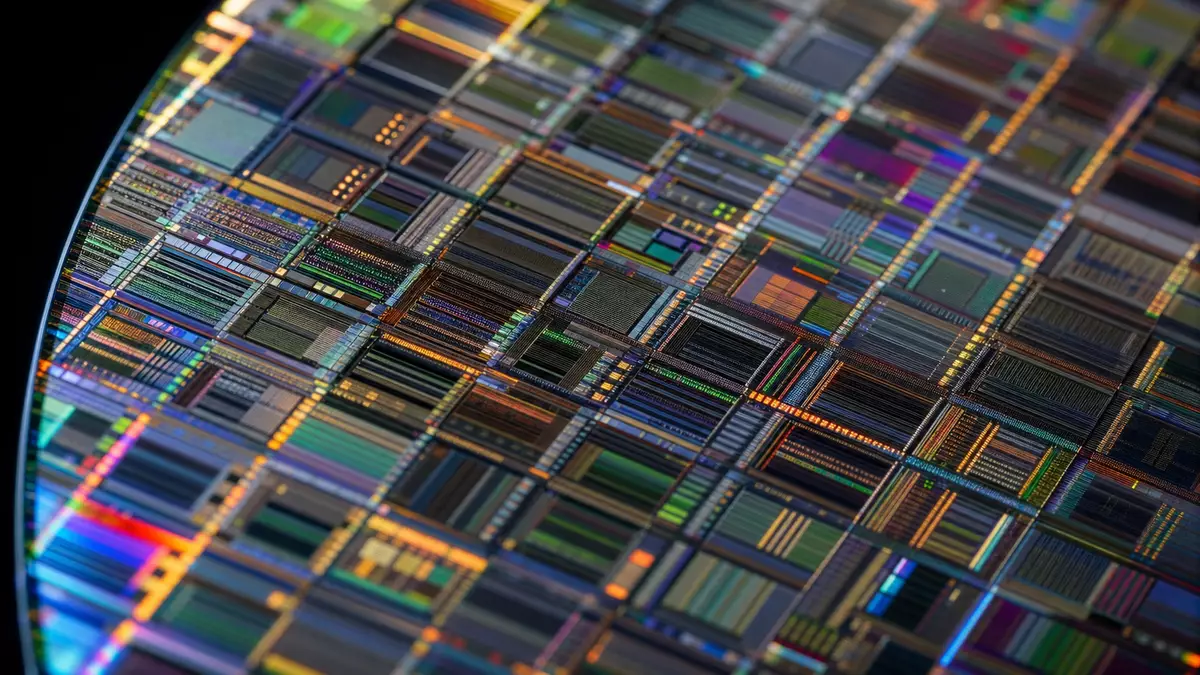
Teradyne Inc. (US8807701029) has seen its stock retreat in the latest trading session, closing at $404.29 on August 18, 2026, after an extended one-year run of 306% that has pushed valuation metrics to elevated levels for the AI hardware space. As of August 18, 2026, Teradyne shares also finished down 8.77% on the Nasdaq, reflecting investor rotation out of high-multiple semiconductor names.
Stock pulls back from recent highs
According to a market-data overview, Teradyne stock closed at $404.29 on the Nasdaq at 4:00 p.m. ET on August 18, 2026, down $38.85 or 8.77% from the prior close of $443.14, putting the shares below recent resistance around the mid-$440s. A separate quote snapshot shows that after-hours trading on August 18, 2026, saw the stock at $399.89, a further 1.09% decline from the official close, underscoring continued profit-taking after a strong multi-month rally.
Technical data compiled on August 18, 2026, indicate that Teradyne is still in a powerful uptrend: the shares are up 21.26% since the start of 2026 and 128.93% over the past year, even after the latest pullback. A technical analysis overview lists a Nasdaq close at $404.29 with an 8.77% daily decline and highlights volumes in the billions of dollars, reflecting heavy trading interest as investors reassess valuations.
AI hardware rally meets valuation concerns
Recent commentary on the broader semiconductor and AI hardware sector points out that Teradyne’s decline of approximately 10% on August 18, 2026, came alongside double-digit percentage drops in other chip-related names, as investors recalibrated positions in stocks that had rallied several hundred percent over the past year. One sector-focused analysis notes that Teradyne’s move follows an extraordinary run: the shares were up 21% in the prior week, 37% in the past month, 129% year to date, and 306% over one year through August 18, 2026, making it one of the strongest performers in the S&P 500 before the pullback.
The same analysis highlights that valuation now plays a central role in the stock’s narrative. It cites a trailing price-to-earnings ratio of 57 and a forward P/E of 45 for Teradyne as of mid-August 2026, levels that are high relative to many broader-market benchmarks even if they are not unusual among fast-growing AI-exposed semiconductor names. With consensus expectations for continued AI-related demand in test equipment, investors are weighing the trade-off between growth and the risk of multiple compression if sentiment shifts further.
Q2 2026 earnings deliver triple-digit growth
Fundamentally, Teradyne’s most recent quarterly report continues to underpin the investment case. An earnings database shows that on July 28, 2026, Teradyne reported results for the quarter ended June 30, 2026, delivering earnings per share of $2.39 compared with a consensus forecast of $2.09, an EPS beat of 14.52%. The same earnings summary reports Q2 2026 revenue at $1.33 billion versus expectations of $1.22 billion, an 8.62% positive surprise against the forecast.
Further performance context from a broader market commentary indicates that Q2 fiscal 2026 revenue of $1.33 billion represented year-over-year growth of 103.9%, underscoring how sharply demand for Teradyne’s semiconductor test systems has increased in the last twelve months. That same discussion notes that roughly 70% of Teradyne’s revenue is tied to AI-related applications, which helps explain both the exceptional growth rate and the sensitivity of the stock to shifts in sentiment around AI hardware and capital spending.
Profitability metrics also reflect the impact of higher volumes and operating leverage. With trailing and forward P/E ratios in the mid-50s and mid-40s respectively as of August 18, 2026, Teradyne’s valuation embeds expectations for continued robust earnings expansion. However, the one-day decline of around 8.8% and the larger 10% intraday drop highlighted in sector commentary show how quickly the market can react when investors decide that growth has already been priced into the shares.
Institutional flows and insider activity
Institutional investors have been active in Teradyne stock during 2026, adding to the liquidity backdrop around the recent moves. One regulatory filing summary dated August 19, 2026, reports that Deutsche Bank AG accumulated 427,648 shares of Teradyne in the second quarter of 2026, a stake valued at $206,913,000 and representing 0.27% of the company’s outstanding shares at the end of that period. The same report indicates that the company’s market capitalization stood at $63.21 billion, with a price-to-earnings ratio of 55.46 and a beta of 1.78, illustrating both its size and sensitivity to market swings.
Another institutional activity overview dated August 19, 2026, states that Diversify Advisory Services LLC purchased 10,498 shares of Teradyne during the second quarter, with the position valued at $3,515,000. That filing reinforces the picture of continued institutional interest in the stock, even at elevated price levels, as asset managers seek exposure to companies benefiting from AI-related capital expenditure and semiconductor test demand.
Insider transactions have also been noteworthy. A transaction report dated August 18, 2026, outlines that Gregory Stephen Smith, Teradyne’s president and chief executive officer, sold 4,000 shares of common stock on August 17, 2026. The filing summary states that the shares were sold at $425.00 each, for total proceeds of $1,700,000, and that following the sale Mr. Smith directly holds 112,495.4075 shares. The transaction occurred against a backdrop of a 302% one-year return and a then-current price of $399.61, suggesting that management took the opportunity to realize gains after a substantial rally.
Analyst and consensus view
Consensus data compiled in mid-August 2026 portray a generally constructive but valuation-conscious view of Teradyne. An aggregation of analyst recommendations shows that one research analyst has assigned a Strong Buy rating, twelve have issued Buy ratings, and three have rated the shares Hold, leading to an overall consensus rating of Moderate Buy. The same consensus snapshot cites a price target of $396.80, which is modestly below the August 18, 2026, closing price of $404.29 and indicates that, on average, analysts see limited upside from current levels after the strong run.
A broader valuation commentary dated August 18, 2026, observes that Teradyne trades on a price-to-earnings multiple of 60.2x, compared with a semiconductor industry average P/E of 53.6x and a peer group average of 77.8x. This valuation analysis concludes that Teradyne looks fully priced on market multiples, given the gap between its current P/E and an estimated fair-value ratio framework, even though it still trades below some higher-multiple peers. For investors, the key question is whether the company’s triple-digit revenue growth and AI exposure can sustain these valuation levels without further volatility.
Short-term performance metrics reinforce that the recent pullback is happening from a position of strength. A performance table for S&P 500 constituents as of August 19, 2026, lists Teradyne with a one-month return of 37.5% and highlights its 129.1% year-to-date gain. That overview describes Teradyne’s returns as persistent and notable among index constituents, while the latest price action shows how momentum names can experience sharp, sudden corrections.
Teradyne’s test systems in the AI cycle
Teradyne’s core business is the development and sale of automatic test systems used in semiconductor manufacturing and increasingly in AI-related computing infrastructure. A company profile describes operations across the Semiconductor Test, Robotics, and All Other segments, with the Semiconductor Test segment designing, manufacturing, and marketing test products for logic, memory, and mixed-signal devices. With roughly 70% of revenue tied to AI usage according to recent sector commentary, Teradyne’s equipment is central to validating chips destined for data centers, cloud AI workloads, and edge devices.
The revenue acceleration reported for Q2 2026 reflects rising orders from chipmakers investing in additional capacity for AI accelerators and high-performance processors. As these customers expand production volumes, high-throughput, high-precision test systems become critical to maintaining yields and reliability, reinforcing demand for Teradyne’s solutions. Investors therefore tend to view Teradyne as a leveraged play on the AI spending cycle, where capital expenditure by leading chip designers and manufacturers directly influences test equipment orders.
Beyond semiconductor test, Teradyne has been expanding its presence in industrial automation and robotics. While robotics and other segments currently represent a smaller share of revenue than semiconductor test, they provide diversification and exposure to trends in factory automation and collaborative robots. This multi-segment structure offers potential resiliency if one end market slows, although the current growth story remains heavily concentrated in AI-related chip testing.
Representative product: semiconductor test platforms
Among Teradyne’s representative offerings are its advanced semiconductor test platforms, which are designed to handle complex, high-speed integrated circuits used in AI accelerators, processors, and memory. These systems combine hardware capable of generating and measuring precise electrical signals with software that configures test patterns and analyzes results, enabling chipmakers to screen large volumes of devices efficiently before they are shipped to customers.
In practice, a modern semiconductor test platform from Teradyne allows manufacturers to validate performance characteristics such as timing, power consumption, and error rates under various operating conditions. As AI workloads demand higher data throughput and more parallel processing, the underlying chips often incorporate larger numbers of transistors and more complex architectures, increasing the difficulty of comprehensive testing. Teradyne’s equipment is built to address these challenges, helping customers maintain quality while managing production costs and cycle times.
Shares adjust after a strong rally
Teradyne stock, listed on the Nasdaq under the ticker TER, closed at $404.29 on August 18, 2026, at 4:00 p.m. ET, down 8.77% for the day but still up sharply year to date and over the past twelve months. The company’s market capitalization stood at $63.21 billion as of that same date, and the shares have traded between a one-year low of $106.30 and a one-year high of $487.91, illustrating the scale of the recent rally and correction.
Fact box
Company: Teradyne Inc.
ISIN: US8807701029
Ticker: TER
Exchange: Nasdaq
Price (as of August 18, 2026, 4:00 p.m. ET): $404.29 USD
Market cap: $63.21 billion (as of August 18, 2026)
Sector / Industry: Information Technology / Semiconductor equipment and test systems
Index membership: S&P 500


