
Resilient Orsted stock holds steady as Korean offshore wind bid is suspended
Published on 08/28/2026 at 11:39 | Editorial responsibility: Rafael Müller, Editor-in-Chief AD HOC NEWS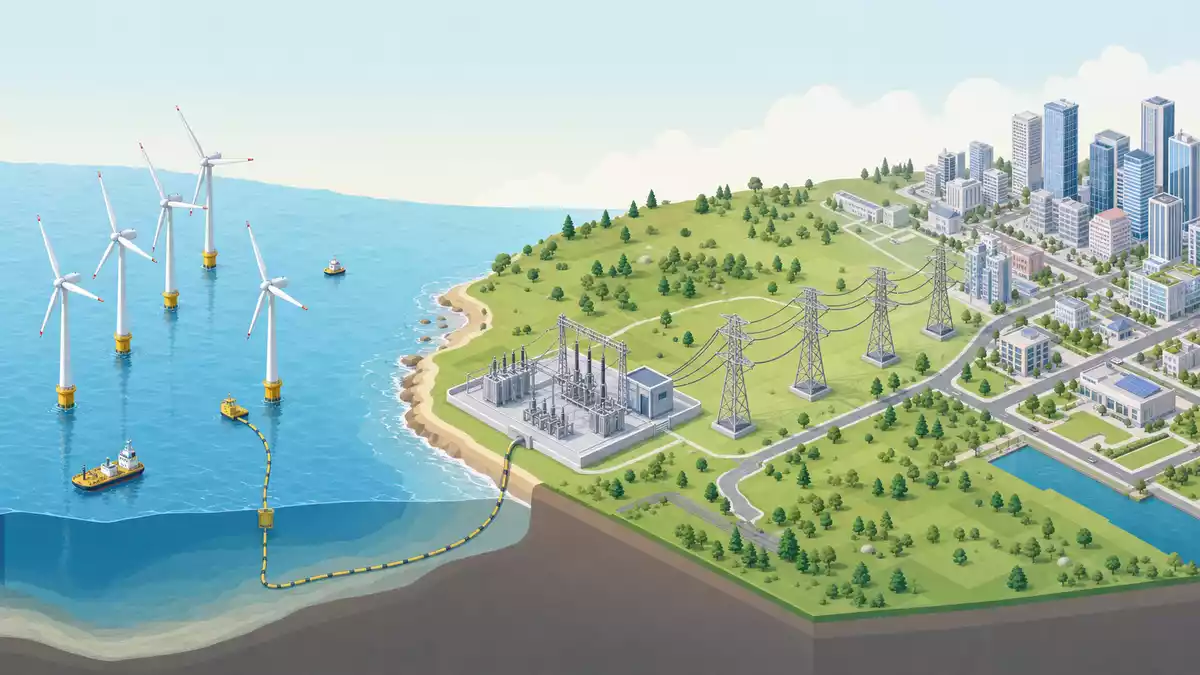
Orsted A/S (ISIN DK0060094928) stock is trading in a resilient manner as of August 28, 2026, after the Danish renewable energy group moved to suspend bidding for a major offshore wind project in South Korea and began restructuring its operations in the country. Per an August 28, 2026 sector report on offshore wind, Orsted has halted participation in the 1.4GW Incheon offshore wind project, highlighting a more selective approach to growth in Asia.
Orsted pauses 1.4GW Incheon offshore wind bid
According to an August 28, 2026 article on the Incheon project, Orsted has suspended its bid for a planned 1.4GW offshore wind farm off the coast of Incheon in South Korea, while simultaneously starting a restructuring of its South Korean business. The offshore energy report notes that the project size of 1.4GW would have represented a sizable addition to Orsted's Asian development pipeline, underscoring the strategic significance of the decision.
The suspension of the 1.4GW bid in Incheon indicates that Orsted is reassessing the risk-return profile of specific Asian markets, including regulatory frameworks and long-term power price visibility. A 1.4GW project translates into 1,400MW of planned installed capacity, and halting such a development means that the company is prioritizing capital allocation towards regions where it sees clearer policy support and more predictable cash flows.
Strategic implications for growth and guidance
Per the same August 28, 2026 commentary on the Incheon restructuring, Orsted's decision to suspend the South Korean project and reshape its local operations comes against the backdrop of a broader portfolio review, where management has been focusing on balancing growth ambitions with capital discipline. With 1.4GW of potential capacity taken out of the near-to-medium term project pipeline in South Korea, investors are likely to compare the change to the company's current guidance and its mix of committed and potential projects in other regions.
Historically, Orsted has highlighted large-scale offshore wind projects as a core driver of revenue and EBITDA growth, and a single 1.4GW development can involve multi-billion-dollar investment commitments over several years. The reassessment of a 1.4GW project therefore matters not only for future revenue potential but also for capex planning and leverage, particularly at a time when the cost of capital and supply-chain dynamics in renewables require careful project selection.
For investors, the 1.4GW Incheon decision offers a clear numeric yardstick: any future Asian project announcements will now be measured against the scale and risk profile of the suspended 1.4GW development. If Orsted channels capital into alternative projects of similar or larger capacity in markets with stronger policy frameworks, the redeployment could support long-term earnings targets even as the South Korean pipeline is reduced.
Representative offshore wind project: Hornsea portfolio
A representative example of Orsted's global offshore wind capabilities is its Hornsea portfolio in the United Kingdom, which showcases multi-gigawatt scale and complex project execution. In this portfolio, individual projects have capacities running into several hundred megawatts each, and combined they reach multiple gigawatts of installed offshore wind power feeding into the UK grid. The Hornsea developments illustrate how Orsted structures large offshore wind projects, from securing long-term offtake contracts to managing construction risk in deep-water environments.
In practice, a project of 1.4GW, such as the planned Incheon development before suspension, would sit alongside other large-scale assets in Orsted's global portfolio. Investors can use the capacity figure as a reference point to understand how decisions in one region compare with growth commitments elsewhere, including markets like the UK, continental Europe, and North America where policy frameworks and auction designs have matured over time.
Orsted stock and market context
As of August 28, 2026, market commentary describes Orsted A/S as part of the listed renewable utilities universe, with its stock reflecting sentiment around long-term offshore wind economics, policy support, and project-level decisions like the suspension of the 1.4GW Incheon bid. The decision to pause such a sizeable project can influence perceptions of Orsted's medium-term growth trajectory, particularly in Asia, but the group's diversified portfolio across Europe and other regions helps to balance regional project risk.
In comparative terms, investors may look at Orsted's market capitalization and sector peers to gauge whether the suspension of a 1.4GW project in South Korea significantly alters valuation metrics such as enterprise value to EBITDA multiples or price-to-earnings ratios. The impact will depend on how quickly management can redeploy capital into alternative projects and whether guidance still calls for similar levels of installed capacity growth over the coming years despite the Incheon change.
Go deeper
Read more on Orsted stock and the company’s investor communication via the official investor relations site.
Offshore wind as Orsted’s flagship business
Offshore wind remains Orsted's flagship business, with large-scale projects like the Hornsea portfolio and the planned, now-suspended 1.4GW Incheon development demonstrating the scale at which the company operates. These projects typically involve hundreds of turbines, sophisticated grid connection infrastructure, and long-term power purchase agreements, which together drive recurring revenue once the assets are operational.
For Orsted, each multi-gigawatt cluster or individual project of 1.4GW or more embeds a complex set of financial and operational commitments. The company must manage construction risk, negotiate competitive offtake terms, and ensure supply-chain reliability for key components such as foundations, cables, and turbines. The suspension of the 1.4GW Incheon bid reflects that such commitments are only taken on when the regulatory and commercial environment aligns with Orsted's risk appetite.
Orsted stock outlook and investor perspective
From an investor perspective, Orsted stock on August 28, 2026 embodies both the opportunities and challenges of global offshore wind expansion. The capacity figure of 1.4GW attached to the Incheon project provides a concrete sense of scale for what is being reconsidered, and the restructuring of South Korean operations signals a disciplined approach to capital allocation. If Orsted replaces the suspended 1.4GW with projects in markets where policy support is stronger or returns are clearer, the long-term earnings profile could remain intact even as the geographic mix of growth shifts.
Orsted shares trade on their home exchange with pricing influenced by sector-wide themes such as interest rates, commodity prices relevant to construction, and evolving auction designs for offshore wind capacity. As of August 28, 2026, the strategic choice to pause a 1.4GW investment decision in South Korea is a tangible example of management using project-level data to fine-tune its global growth trajectory, and investors will monitor subsequent announcements to see how that 1.4GW of potential capacity is ultimately reallocated.
Fact box
Company: Orsted A/S
ISIN: DK0060094928
Ticker: ORSTED
Exchange: Nasdaq Copenhagen
Sector / Industry: Utilities / Renewable energy
Index membership: OMX Copenhagen 25


