
Resilient Hexpol stock holds steady as Vipa Group acquisition boosts thermoplastic growth
Published on 08/18/2026 at 18:55 | Editorial responsibility: Rafael Müller, Editor-in-Chief AD HOC NEWS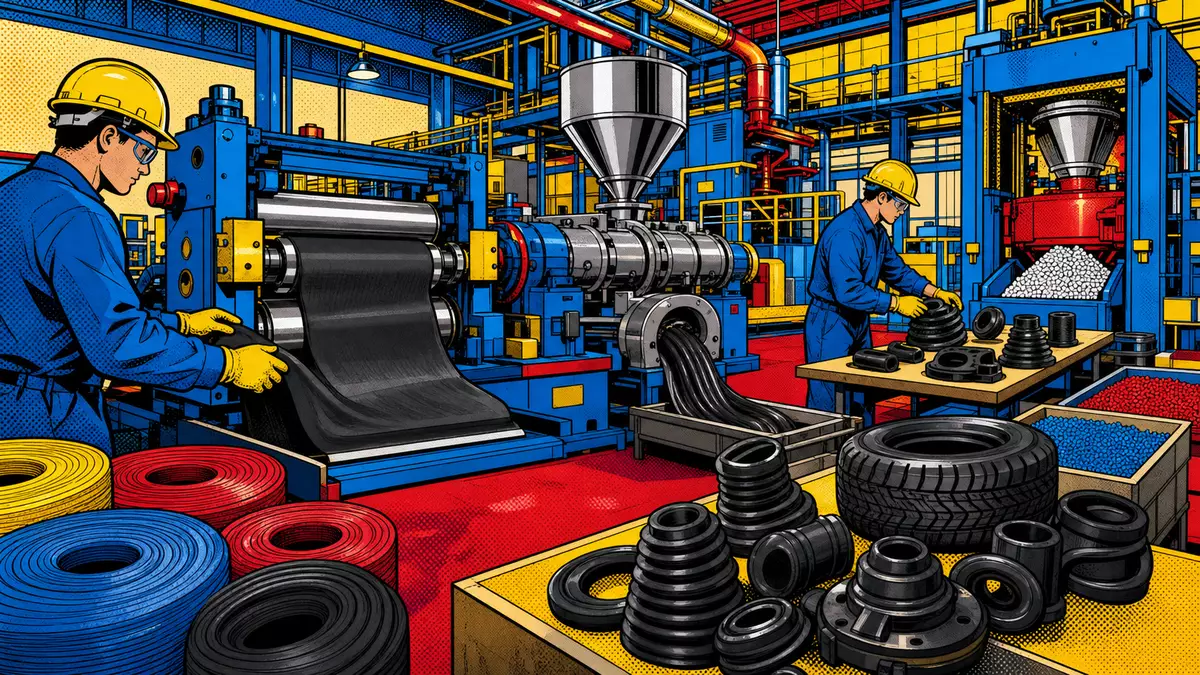
Hexpol AB (ISIN SE0011624077) stock is trading steadily at SEK89.70 as of August 17, 2026 on the CBOE venue, with the shares showing a year-to-date gain of 3.43 percent supported by a clear strategic shift toward thermoplastic compounding and wire and cable applications.
The stability in the share price comes as Hexpol moves to acquire Italy-based Vipa Group for an agreed purchase price of €143.5 million on a cash and debt-free basis, a deal that is expected to close during the third quarter of 2026 and expand the company’s presence in high-growth electrification and data infrastructure markets. Recent reporting on the transaction highlights that Vipa generated €76.4 million in revenue in 2025, underlining the scale of the acquired business relative to Hexpol’s existing thermoplastic operations.
For investors, the combination of a stable share price, incremental earnings capacity from Vipa Group, and the reorganization of selected subsidiaries into the Thermoplastic Compounding business area points to a focused effort to build recurring cash flow in segments tied to long-term trends such as electrification, data centers, and smart buildings.
Share price context and ownership moves
Per recent market data from CBOE, Hexpol stock closed at SEK89.70 on August 17, 2026, unchanged over the preceding five trading days but still up 1.96 percent over that interval and 3.43 percent since the start of 2026, signaling modest but positive performance in the current year. The same market overview shows that the stock’s short-term performance has been supported by steady demand despite a reduction in holdings by one major institutional investor.
That investor reduction is reflected in a notice dated August 17, 2026 indicating that Alecta has trimmed its stake in Hexpol, a move that can shift the free float and potentially alter the shareholder structure without necessarily changing the fundamental outlook. While the absolute impact on daily trading volumes is not detailed in the available data, the fact that the share price was flat at SEK89.70 on the same date suggests that other market participants absorbed the selling without pronounced price pressure.
The year-to-date gain of 3.43 percent at the SEK89.70 level implies that Hexpol’s shares have added just over SEK2.97 in value versus a notional starting level of SEK86.73 at the beginning of 2026, a relatively moderate advance that nevertheless outperforms some industrial peers whose returns are closer to flat over the same period. This incremental appreciation, combined with a stable short-term price trend, points to a share that is neither under severe pressure nor reflecting euphoric expectations, which often aligns with measured confidence among longer-term holders.
Strategic acquisition of Vipa Group
The headline corporate development for Hexpol in August 2026 is its agreement to acquire 100 percent of the Italian company Vipa Group, a specialty thermoplastic compounder headquartered in Ancarano on Italy’s east coast, for a purchase price of €143.5 million on a cash and debt-free basis. Reporting on the deal emphasizes that the acquisition will be funded through a mix of bank facilities and existing cash, underlining Hexpol’s capacity to deploy capital while maintaining balance-sheet flexibility.
According to the same report, Vipa Group generated €76.4 million in turnover in 2025 with around 80 employees, meaning the agreed enterprise value represents a revenue multiple of just under 1.88 times 2025 sales. That ratio is indicative of a valuation that recognizes Vipa’s “above market profitability,” as described in the coverage, yet remains within a disciplined range for a specialty manufacturing asset with capacity for organic growth within its current production footprint.
The operations to be acquired include two well-invested production sites in Italy and a state-of-the-art research and development center, giving Hexpol immediate access to established manufacturing infrastructure and technical capabilities in thermoplastic compounding. By adding Vipa’s wire and cable-focused product portfolio to its own offerings, Hexpol strengthens its exposure to long-term structural growth drivers such as electrification, data centers, telecom networks, and smart-building technologies.
Management commentary in the acquisition coverage explains that the Vipa transaction is a key step in executing Hexpol’s growth strategy for its Thermoplastic Compounding business area, which was introduced at a Capital Markets Day in November 2025. The combination of organic growth initiatives and targeted acquisitions is intended to build a leading thermoplastics platform, and the Vipa deal serves as an early proof point for that strategy. In addition, Vipa’s current chief executive is expected to continue running the business as a subsidiary within Hexpol’s structure, supporting continuity in customer relationships and operational expertise.
The integration plan also includes shifting existing Hexpol subsidiaries Hexpol Izmir and Hexpol Vilafranca into the Thermoplastic Compounding business area as of July 1, 2026, moving them from their prior classification under Rubber Compounding. This reallocation of assets enlarges the thermoplastic segment’s scale and gives Hexpol greater critical mass in serving wire and cable industry customers, which could enhance its bargaining power with both suppliers and end clients over time.
Latest reporting schedule and segment context
Beyond the immediate acquisition news, investors tracking Hexpol’s fundamental performance have a concrete timeline for upcoming disclosures. The company’s event calendar lists October 23, 2026 as the date for releasing its third-quarter 2026 results, which will provide the next official snapshot of revenue, margins, and cash flow after the integration steps for Vipa Group and the internal segment reassignments. The referenced calendar positions this Q3 release as a key milestone for evaluating the early financial impact of Hexpol’s thermoplastic growth focus.
Hexpol’s activities span two primary business areas, with Hexpol Compounding developing advanced polymer compounds for demanding applications and Hexpol Engineered Products offering specialized components such as rubber seals for plate heat exchangers and wheels for forklifts. The compounding business covers 25 production units across NAFTA, Europe, and Asia, including its Thermoplastic Elastomer compounding segment, while the engineered products arm concentrates on custom solutions for original equipment manufacturers in sectors where reliability and performance are critical.
Within this structure, the newly sharpened Thermoplastic Compounding business area is designed to capture opportunities in emerging applications where thermoplastics deliver weight, durability, and processability advantages over traditional materials. By reclassifying facilities like Hexpol Izmir and Hexpol Vilafranca into this segment, Hexpol is effectively rebalancing its portfolio toward areas with higher expected growth tied to modernization of energy grids and communication networks.
While detailed quarterly figures for 2026 are not provided in the available sources, the emphasis on “above market profitability” for Vipa Group and the continued focus on specialty polymer solutions suggest that Hexpol is prioritizing margin resilience alongside growth. Historically, acquisitions such as Kardoes Rubber in 2014 have served to expand Hexpol’s reach and capabilities in compounding, and the Vipa deal appears to follow a similar pattern, but with a more pronounced tilt toward thermoplastics and electrification-driven demand.
The upcoming Q3 2026 result date thus carries additional weight, as it will allow investors to gauge whether the company’s capital deployment and segment reorganization are translating into improved earnings metrics, such as operating margin and return on invested capital, compared with prior periods. Given that Vipa’s 2025 revenue of €76.4 million represents a meaningful addition to Hexpol’s thermoplastic base, incremental contributions to consolidated sales and profit levels may begin to show in late 2026 once the acquisition closes and integration proceeds.
Hexpol TPE and thermoplastic elastomer solutions
A representative product and business line within Hexpol’s portfolio is Hexpol TPE, which focuses on thermoplastic elastomer compounds used in automotive, industrial, consumer, and specialty applications where flexibility, durability, and recyclability are important. Through Hexpol TPE, the group offers a wide range of TPE materials tailored to specific performance requirements, such as low-volatility formulations for interior automotive parts or compounds designed to meet stringent regulatory standards for consumer products.
Industry coverage has highlighted recent initiatives from Hexpol TPE, including the introduction of low-VOC recycled TPEs targeted at automotive applications, underscoring the company’s emphasis on circular materials and reduced emissions. By leveraging both virgin and recycled content in its TPE compounds, Hexpol aims to support customers seeking to reduce their environmental footprint while maintaining robust mechanical properties and processability.
Hexpol TPE’s product development efforts are closely tied to broader shifts in regulation and consumer expectations. For instance, automotive manufacturers face tightening thresholds for volatile organic compounds and are increasingly specifying materials that meet both performance and sustainability criteria. Hexpol’s ability to deliver tailored TPE solutions that satisfy these requirements can create stickier customer relationships and potentially higher margins compared with commodity materials.
The thermoplastic elastomer line also benefits from overlaps with the Vipa Group acquisition, as both businesses operate in segments where polymer innovation and reliability are central to customer decisions. In wire and cable applications, for example, the insulation and jacketing materials must withstand mechanical stress, thermal cycling, and environmental exposure while preserving signal integrity or power-delivery reliability. Hexpol’s expanded portfolio following the Vipa acquisition may allow it to cross-pollinate material expertise between TPE-based products and other thermoplastic compounds within the broader group.
For end users, such as automotive suppliers, building contractors, or data-center operators, the combination of Hexpol TPE’s specialized elastomer offerings and Vipa’s wire and cable-focused thermoplastic compounds could mean access to integrated solutions that span different components and systems. Over time, this integrated approach may support higher wallet share per customer and create opportunities for Hexpol to design systems-level material packages rather than stand-alone products, reinforcing its position as a partner in innovation rather than a simple supplier.
Stock outlook tied to price and corporate events
Hexpol stock, trading around SEK89.70 as of August 17, 2026, reflects a modest gain for the year and a flat short-term trend, a combination that suggests investors are awaiting concrete financial evidence of the thermoplastic growth strategy before repricing the shares more aggressively. With the acquisition of Vipa Group expected to close during the third quarter of 2026 and the next result date scheduled for October 23, 2026, the remainder of the year provides a clear window for catalysts related to integration progress, margin development, and updated guidance.
From a valuation perspective, the revenue multiple of roughly 1.88 times 2025 turnover implied by the Vipa purchase price indicates that Hexpol is willing to pay for strategic positioning and profitability but is not overextending itself compared with typical ranges for specialty chemicals and advanced materials transactions. If Vipa’s above-market margins are sustained under Hexpol’s ownership and if synergies with existing thermoplastic operations materialize, the effective multiple on contribution to earnings could be lower over time, which may support a favorable narrative among equity analysts.
In parallel, the adjustment of internal assets such as Hexpol Izmir and Hexpol Vilafranca into the Thermoplastic Compounding business area adds granularity to the company’s reporting structure. Once these changes are reflected in segment-level disclosures, investors should gain greater visibility into the performance of the thermoplastic platform, allowing comparisons between compounding, engineered products, and the newly sharpened business area.
Given that the share price has not reacted dramatically to either the Vipa acquisition announcement or the institutional stake reduction by Alecta, the current market stance appears to be one of cautious patience. For long-term holders, the key questions likely center on whether Hexpol can deliver sustained growth in thermoplastic revenues, maintain attractive margins in specialty compounds, and continue to allocate capital in a way that balances acquisitions with organic investments in research and development.
As of mid-August 2026, Hexpol’s combination of a stable SEK89.70 share price, a year-to-date gain of 3.43 percent, and a pipeline of corporate events including the third-quarter 2026 results and the closing of the Vipa deal creates a backdrop where incremental news on integration, customer wins, or margin trends could have a clearer impact on the stock trajectory.
Read more
Further background on Hexpol’s share performance, corporate network, and upcoming events is available in the market overview referenced above. This material provides a useful companion to the acquisition coverage, allowing investors to frame the Vipa transaction within the broader context of Hexpol’s listed peers, connected companies, and geographic footprint.
Hexpol TPE compounds for mobility and industry
Beyond the wire and cable focus, Hexpol TPE compounds play a significant role in mobility and industrial segments ranging from vehicle interior components to tool grips and consumer electronics. These applications often demand a combination of soft-touch feel, durability, and regulatory compliance, which Hexpol addresses through tailored formulations and dedicated technical support.
In automotive interiors, for instance, thermoplastic elastomers from Hexpol can be used in instrument-panel overlays, HVAC controls, and seating elements where tactile comfort and long-term color stability are important. By optimizing factors such as shore hardness, tensile strength, and resistance to UV exposure, Hexpol TPE is able to meet specifications from original equipment manufacturers while supporting efficient processing on customer lines.
Industrial tools and equipment, such as power-tool housings or safety grips, also benefit from TPE compounds that balance flexibility and firmness, ensuring that the user maintains a secure hold even in demanding conditions. Hexpol’s experience in compounding for such applications allows it to tailor materials for different ergonomics and environmental environments, from cold-weather construction sites to hot industrial facilities.
Consumer electronics represent another area where Hexpol TPE can add value. Protective cases, wearables, and accessory components often utilize TPE materials for shock absorption, grip, and aesthetic differentiation. Here, the ability to deliver consistent color palettes and tactile effects at volume is essential, and Hexpol’s global footprint in compounding helps support multinational brands seeking standardized material performance across regions.
As sustainability considerations become more central in all of these segments, Hexpol’s work on recycled-content TPEs and lower-emission compounds aligns with customer needs and regulatory pressures. The company’s capacity to supply such materials while maintaining functional performance can strengthen its role in development programs for next-generation products, positioning Hexpol as a collaborative partner in innovation.
Shares anchored by SEK89.70 level
Hexpol stock currently anchors around the SEK89.70 level as of August 17, 2026, a price point that has held over recent sessions even as institutional shareholdings adjust and major strategic decisions unfold. This anchoring suggests that the market has identified a near-term equilibrium between perceived risk and opportunity, with the Vipa transaction and thermoplastic segment expansion representing potential upside drivers once translated into earnings data.
For market participants, this means that upcoming events, particularly the closing of the Vipa acquisition and the third-quarter 2026 result release on October 23, 2026, could serve as inflection points where new information prompts reassessment of Hexpol’s valuation. Until then, the steady share price and modest year-to-date gains provide a reference frame for tracking how news flow interacts with investor expectations.


