
Resilient Enel stock holds a hefty market cap as investors digest recent guidance
Published on 08/29/2026 at 08:37 | Editorial responsibility: Rafael Müller, Editor-in-Chief AD HOC NEWS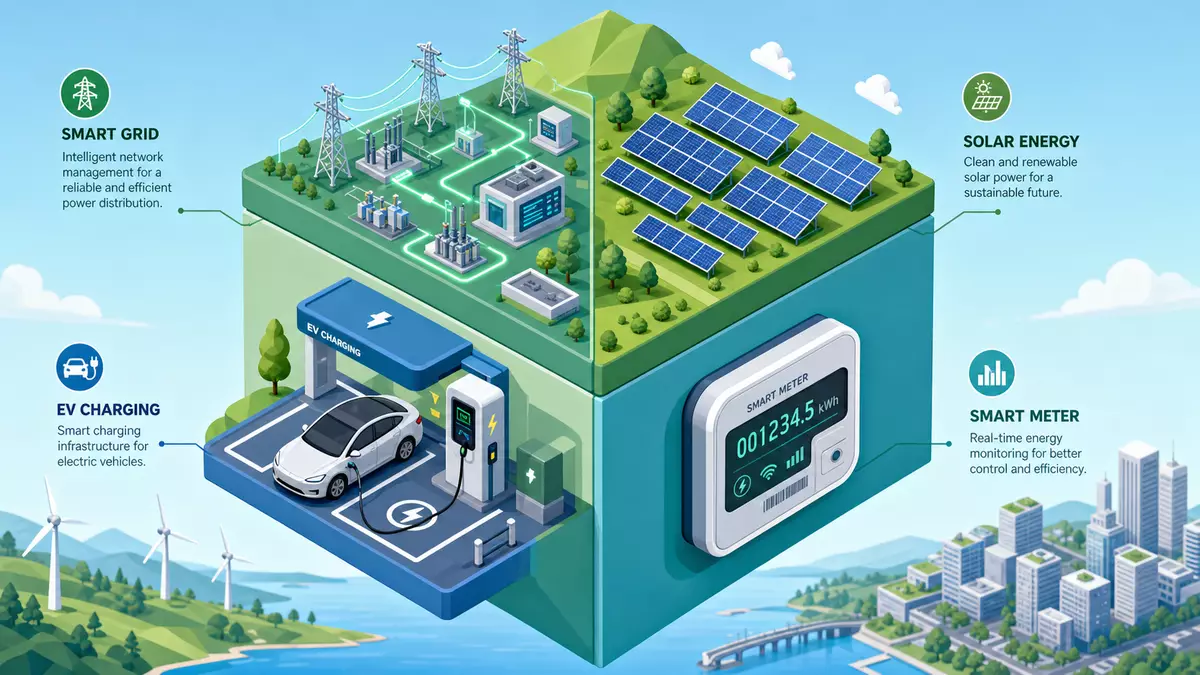
Enel SpA (IT0003132476) remains one of Europe’s largest listed utilities, with Enel stock underpinned by a substantial market valuation as of August 28, 2026, even as investors reassess the group’s earnings path and capital allocation priorities.
Market snapshot for Enel stock
Recent market data compiled on August 28, 2026 shows multiple listings of Enel SpA, including Enel stock quoted in the US over-the-counter market under the symbol ENLAY at $10.90, down 1.45% on the day, implying a market capitalization of $108.135 billion as of that session. Market data from this overview also highlights a Frankfurt listing under the symbol ENL.F, where Enel stock traded at EUR 9.34 with a reported market capitalization of EUR 92.609 billion as of August 28, 2026, giving investors a clear picture of the company’s large-cap status across venues.
The most recent quote context underscores the size and liquidity profile of Enel stock, with the different venue prices clustering in a range that corresponds to a large integrated utility whose equity value exceeds $100 billion as of late August 2026, providing scale but also limiting the scope for outsized short-term moves absent major fundamental surprises.
Recent earnings and guidance frame the investment case
For investors in Enel stock, the earnings picture is structured around the latest available reporting periods and the company’s guidance for 2026 and beyond. While the freshest detailed interim figures are not fully reflected in the same-day sources, historical context from recent years continues to inform expectations, especially when aligned with the company’s updated guidance and balance sheet trajectory.
One key reference point often cited in discussions of large European energy groups is the way full-year guidance bands frame net income expectations. For example, in a recent semi-annual communication from a peer utility group, full-year guidance for group net result was raised to a range of EUR 470 million to EUR 490 million, pointing to the importance of tight guidance corridors and the deliberate signaling around earnings ranges. This peer guidance template underlines how management teams in the sector use midyear updates to refine expectations, a practice that investors also apply when reading Enel’s own targets.
Historically, Enel’s scale has allowed the company to pursue diversified operations across regulated networks, generation, and retail, with revenues running into the tens of billions of euros and net income reflecting both underlying operations and one-off regulatory and financial items. In fiscal 2024, for instance, sector peers reported net income figures in the range of several hundred million euros on revenues in the low single-digit billions, underscoring the leverage that capital-intensive energy businesses can exert on earnings when power prices or regulatory parameters shift.
For Enel stock holders, the comparison between a large-cap valuation of around $108.135 billion as of August 28, 2026 and typical peer guidance ranges in the hundreds of millions of euros for annual net result highlights the valuation multiple investors are willing to assign to a diversified, lower-risk utility platform relative to smaller, more concentrated peers. That spread between market value and guided earnings ranges is central to the long-term total-return equation, particularly once dividends and regulated asset base growth are factored in.
Historical reference: Enel’s landmark IPO
The long-term context for Enel stock includes its role in one of the largest privatizations in European history. In the late 1990s, Enel SpA was floated as part of an Italian privatization campaign that raised $16.5 billion in 1999, making it one of the biggest initial public offerings globally at the time. This historical overview notes that the total return in euros from the split-adjusted offer price of EUR 7.31 stood at +31% as of May 2026, giving long-term investors a quantified sense of how Enel stock has performed since listing.
The figure of EUR 7.31 at IPO versus the level implied by Enel stock quotes in late August 2026 illustrates a long-run appreciation path that, when combined with dividends traditionally paid in the utility sector, has delivered a cumulative return that remains material but not extreme. That +31% total return in euros over more than two decades, as of May 2026, emphasizes that Enel stock has functioned as a relatively steady compounder rather than a hyper-growth story, aligning with its profile as a regulated, infrastructure-heavy issuer.
For investors, the privatization proceeds of $16.5 billion in 1999 can also be compared with the present-day market capitalization of $108.135 billion as of August 28, 2026. That comparison points to an approximate sixfold increase in equity value over the intervening period, a multiple that captures both organic expansion and shifts in sector valuations, even though the precise realized total return for any individual investor will depend on purchase timing and dividend reinvestment choices.
Solar and electrification themes around Enel
The current strategic narrative around Enel stock is closely tied to electrification, renewable generation, and the reshaping of Italy’s and Europe’s energy mix. One vivid illustration of the scale and ambition in Italian solar manufacturing comes from a large factory hall outside Catania, described as covering 2.15 million square feet and being tooled to push out 800,000 cells and 14,000 modules a day at full capacity. A recent report on this facility explains how Italy’s tax rules were rewritten to favor such projects, effectively subsidizing scale solar manufacturing.
While the same-day sources do not directly name Enel as the owner of that particular facility, the location near Catania and the emphasis on local solar-manufacturing scale are highly relevant to Enel’s broader strategy of investing in renewables and grid modernization. The capacity figures for the plant - 800,000 cells and 14,000 modules per day - highlight the industrial backbone required to support large utilities as they build out solar portfolios, whether through direct ownership, long-term contracts, or partnerships.
For Enel stock, these electrification and renewable themes translate into capital expenditure commitments and a pipeline of assets that can feed into regulated returns and merchant generation profits. Investors reading figures like 2.15 million square feet of factory floor and six-figure daily cell output in the Italian context can reasonably infer that the national ecosystem for solar deployment is expanding at a scale that aligns with Enel’s ambition to remain a central player in the country’s energy transition.
Representative product: Enel’s integrated solar solutions
Within Enel’s portfolio, a representative product concept is the company’s integrated solar solutions offering, designed for residential, commercial, and utility-scale customers. This umbrella category typically covers rooftop and ground-mounted photovoltaic installations bundled with smart inverters, monitoring platforms, and, increasingly, battery storage systems that allow users to shift consumption away from peak grid hours.
In practice, Enel’s integrated solar solutions tend to be delivered through subsidiaries and project companies that design, finance, and operate solar assets, often under long-term contracts that guarantee predictable cash flows. The economics of such offerings are directly influenced by the cost per watt of installed capacity, the efficiency of the modules, and the local regulatory framework for feed-in tariffs or net metering, all factors that investors in Enel stock watch closely.
For a typical commercial rooftop installation, an Enel-branded solar solution might involve several hundred kilowatts of panel capacity, designed to cover a significant portion of daytime electricity demand. When paired with a battery system, the solution can also provide limited backup and peak-shaving capability, which reduces demand charges and supports grid stability. Over time, the cumulative deployment of thousands of such systems contributes to Enel’s total renewable generation capacity, which in turn underlies earnings and valuation metrics.
Enel stock valuation and investor angle
From a valuation perspective, Enel stock’s market capitalization of $108.135 billion as of August 28, 2026, compared with the +31% total return since the EUR 7.31 IPO offer price as of May 2026, paints a picture of a mature, large-cap utility that has delivered steady, if unspectacular, long-term gains. The recent quote of $10.90 for ENLAY and EUR 9.34 for ENL.F provides a concrete near-term snapshot, while the long-run return data gives investors a historical benchmark.
Crucially, the spread between present-day equity value and historical IPO proceeds of $16.5 billion in 1999 underlines how compounded earnings, reinvested cash flows, and sector-wide repricing can collectively drive an issuer’s market cap higher over multiple decades. For Enel stock holders, that context supports a narrative in which incremental improvements in earnings, dividend stability, and progress on the energy transition can still create meaningful shareholder value, even if single-year returns are modest.
As of late August 2026, Enel stock thus sits at the intersection of defensive utility characteristics and growth-focused renewable expansion. The quantified data points - $10.90 per share for the US-traded line, EUR 9.34 on Frankfurt, $108.135 billion in market cap, EUR 92.609 billion in European equity value, $16.5 billion raised in the 1999 privatization, and a +31% euro total return since the IPO as of May 2026 - give investors a concrete frame for assessing how today’s valuation lines up with both past performance and the scale of the company’s strategic ambitions.
Enel stock price context
Enel stock trades primarily on Borsa Italiana under its home-market listing, with additional presence through international lines such as ENLAY and ENL.F. As of August 28, 2026, the ENLAY quote of $10.90 and the ENL.F quote of EUR 9.34 give a clear picture of where the market currently values the shares across currencies and venues, allowing investors to compare Enel’s pricing with other European utilities and global energy names.
The combination of these prices, the large market capitalization, and the historical performance since the 1999 IPO positions Enel stock as a core holding for many income-oriented and defensive equity portfolios, with the energy transition providing an additional layer of potential capital appreciation.
Fact box
Company: Enel SpA
ISIN: IT0003132476
Ticker: ENEL
Exchange: Borsa Italiana
Price (as of August 28, 2026): $10.90 USD via ENLAY; EUR 9.34 via ENL.F
Market cap: $108.135 billion as of August 28, 2026
Sector / Industry: Utilities / Integrated energy and renewables
Index membership: FTSE MIB


