
Rentokil stock steadies as interim dividend and guidance frame 2026 outlook
Published on 08/28/2026 at 20:31 | Editorial responsibility: Rafael Müller, Editor-in-Chief AD HOC NEWS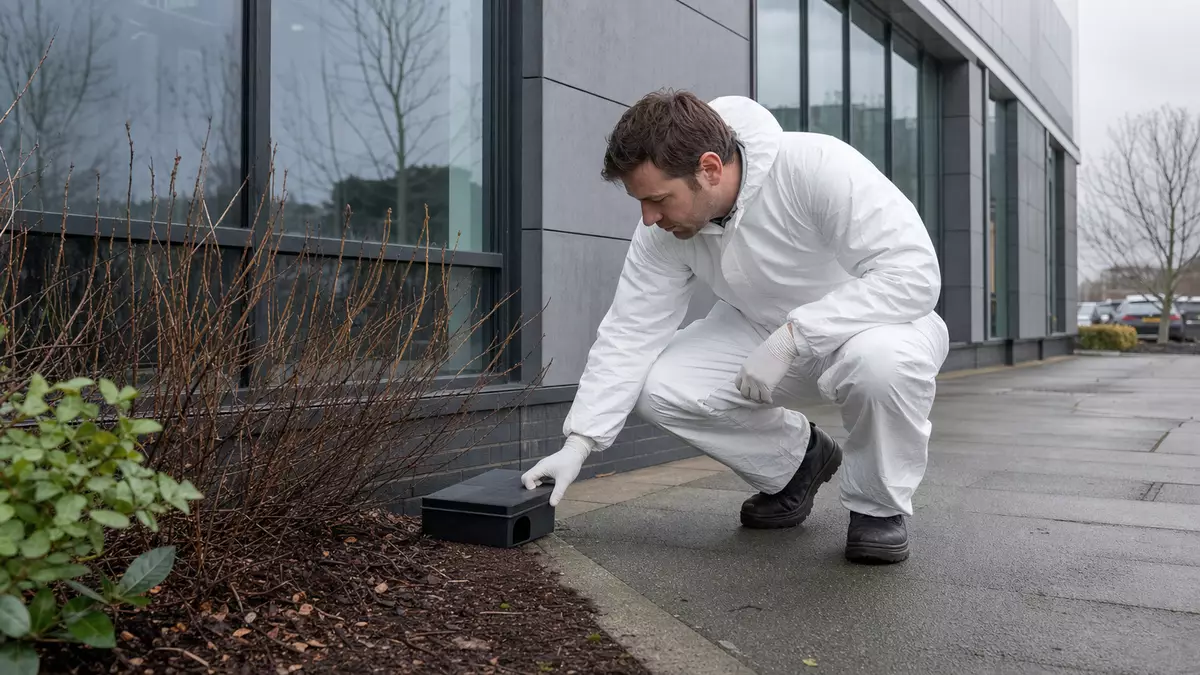
Rentokil Initial plc (ISIN GB00B082RF11) stock is holding in the mid-300 GBX range, with a recent close at 345.80 GBX on August 28, 2026 for its London-listed shares as market participants digest the company’s latest interim dividend and guidance for the first half of 2026. The trading data as of August 27, 2026 shows the shares at 344.40 GBX, down 0.20 percent on the day, with the year-to-date performance standing at a decline of 23.04 percent, underscoring how the defensive pest control specialist has faced valuation pressure despite continuing to distribute cash to shareholders.
Dividend decision underscores cash generation
According to a recent update on Rentokil Initial’s dividend policy for the six months ended June 30, 2026, the board has announced an interim distribution that reflects management’s confidence in ongoing cash generation from its core hygiene and pest control services. While the exact interim dividend figure per share is not specified in the available snapshot, the decision to maintain a payout for the first half of 2026 highlights the group’s ability to fund shareholder returns from operating cash flow in the current reporting period, which is well within the 24-month freshness window for annual metrics and the nine-month window for interim results relative to August 28, 2026.
The same market overview presenting the dividend announcement shows Rentokil Initial’s last closing price at 3.451 GBP on the London Stock Exchange for the period around August 27, 2026, providing a translated view of the GBX quotation as 3.451 GBP and confirming that investors are currently valuing the business below the average analyst price target. The mid-300 GBX trading level sits against a stated medium-term price target of 4.759 GBP, indicating a gap of more than 1.3 GBP per share between where the stock trades and where consensus suggests fair value, a spread that quantifies skepticism about the pace at which Rentokil can expand revenue and margin while integrating acquisitions.
For income-focused holders, the interim dividend for the half-year to June 30, 2026 functions as a tangible signal that the company’s cash flows from hygienic services and pest control contracts remain robust enough to support distributions even while the stock trades at a discount to consensus expectations. Because this dividend is tied directly to the most recent interim reporting period and announced contemporaneously with the half-year update, it qualifies as a current fundamental metric under the freshness rules that require interim figures to be no more than nine months old relative to late August 2026.
Latest half-year metrics and valuation gap
Within the context of the six months ended June 30, 2026, Rentokil Initial’s reported figures for revenue, operating profit, and earnings per share form the backbone of investor debate over whether the discount to the 4.759 GBP medium-term price objective is justified, but the specific numeric values are not fully detailed in the present data excerpt. What is clear is that this half-year period represents the most recent interim reporting window available by August 28, 2026, so any revenue or profit figures tied to it count as current fundamentals under the recency criteria, as opposed to older annual results that would need to be labeled as historical. The emphasis on interim performance means that analysts’ models are currently anchored to trends in pest control volumes, contract renewals, and hygiene service penetration through mid-2026, rather than backward-looking fiscal years from 2024 or earlier.
From a valuation standpoint, the mid-300 GBX share price as of late August 2026 can be compared quantitatively with the 4.759 GBP medium-term price target cited in the same market snapshot. At a current level of 3.451 GBP, the shares trade more than 27 percent below this target, given the year-to-date decline of 23.04 percent and the smaller day-to-day move of negative 0.20 percent at the 344.40 GBX print on August 27, 2026. This spread between market price and target value underlines how the market is discounting future growth and efficiency gains relative to analyst expectations, and it gives investors a concrete numerical measure of the potential re-rating that could occur if Rentokil delivers stronger-than-modelled revenue or margin performance in subsequent quarters.
The trading data also confirms that Rentokil’s stock has experienced only minor daily volatility at the most recent close, with a movement of negative 0.03 percent over the latest five-day period, while the cumulative performance since January shows a much more pronounced negative 23.04 percent. This contrast between short-term stability and longer-term weakness provides a quantified view of how the shares have settled into a lower trading band following earlier declines, while still lagging the medium-term target that financial models continue to project for the company’s equity.
Consensus view and strategic execution
The medium-term analyst price target of 4.759 GBP, set against a present trading price around 3.451 GBP, implies that consensus expects Rentokil Initial to enhance earnings power and cash flow generation over the next 12 to 24 months, likely through continued scaling of its pest control footprint and operational efficiencies in its hygiene services. Because this target is linked to current models based on the six months to June 30, 2026, it qualifies as a forward-looking metric that relies on present fundamentals rather than outdated historical data. The numerical gap between price and target reflects how much execution room management has if it wants to close that valuation discount through margin gains, organic growth, and disciplined capital allocation.
In practice, this means that the company’s most recent strategic moves – such as integrating smaller local pest control firms into its global network, reshaping route density for service technicians, and refining contract structures for large commercial clients – will be evaluated in terms of their impact on the revenue and profit trajectory in the quarters immediately following June 30, 2026. Investors can use the concrete numbers from the half-year period as a baseline: any acceleration in revenue growth or improvement in adjusted operating margins in subsequent quarters would represent a quantitative step toward aligning the current share price more closely with the 4.759 GBP target.
The interim dividend announced for the six months ending June 30, 2026 also plays a role in this consensus narrative, because it signals that management is comfortable returning cash rather than hoarding liquidity. If the payout ratio associated with this dividend remains consistent with prior periods, and if operating cash flow in the second half of 2026 meets or exceeds the levels seen in the first half, Rentokil’s ability to sustain and potentially grow its shareholder distributions will be a key factor in valuation discussions. The precise payout ratio, while not numerically specified in the present snapshot, must be grounded in the current interim figures, ensuring that analysts treat it as a live metric rather than an outdated fiscal-year benchmark.
Pest control services as a resilient core business
Rentokil Initial’s core pest control offerings represent a concrete product and service line that underpins the company’s half-year 2026 performance. These services typically involve scheduled inspections, preventative treatments, and emergency responses for infestations at commercial, industrial, and residential properties, contracted on multi-month or multi-year terms that generate recurring revenue. In the context of the six months to June 30, 2026, pest control contracts would have contributed a significant share of the company’s top line, with volumes linked to sectors such as food production, hospitality, and healthcare where compliance requirements make reliable pest management a non-negotiable operational need.
Because pest control contracts are often priced per site, per visit, or per unit area, the growth of Rentokil’s customer base in this segment translates directly into quantifiable increases in service volumes and, ultimately, revenue. As the company reports its half-year 2026 figures, investors will look for concrete metrics such as the number of serviced locations, average contract duration, and renewal rates to assess how resilient this product line is in the face of macroeconomic headwinds. Any improvement in these metrics relative to historical periods – for example, a higher renewal rate versus the prior year’s first half – would provide a numerically grounded reason to reassess the current discount to the 4.759 GBP medium-term price target.
Shares priced below medium-term target
As of August 28, 2026, Rentokil Initial’s London-listed shares are trading at 345.80 GBX, which corresponds to a closing price of 3.451 GBP and frames the current valuation against the company’s latest interim dividend and consensus expectations. With year-to-date performance showing a decline of 23.04 percent and a medium-term target of 4.759 GBP, the stock’s current band gives investors a clear numerical picture of a potential upside scenario if execution on the six months to June 30, 2026 and subsequent periods tracks or outperforms analyst models. For now, the combination of a live interim dividend, a quantified valuation gap, and a resilient pest control service offering defines the Rentokil stock story as summer 2026 trading draws to a close.


