
OPmobility stock trades steady as auto-parts demand and EV exposure shape the outlook
Published on 08/21/2026 at 21:03 | Editorial responsibility: Rafael Müller, Editor-in-Chief AD HOC NEWS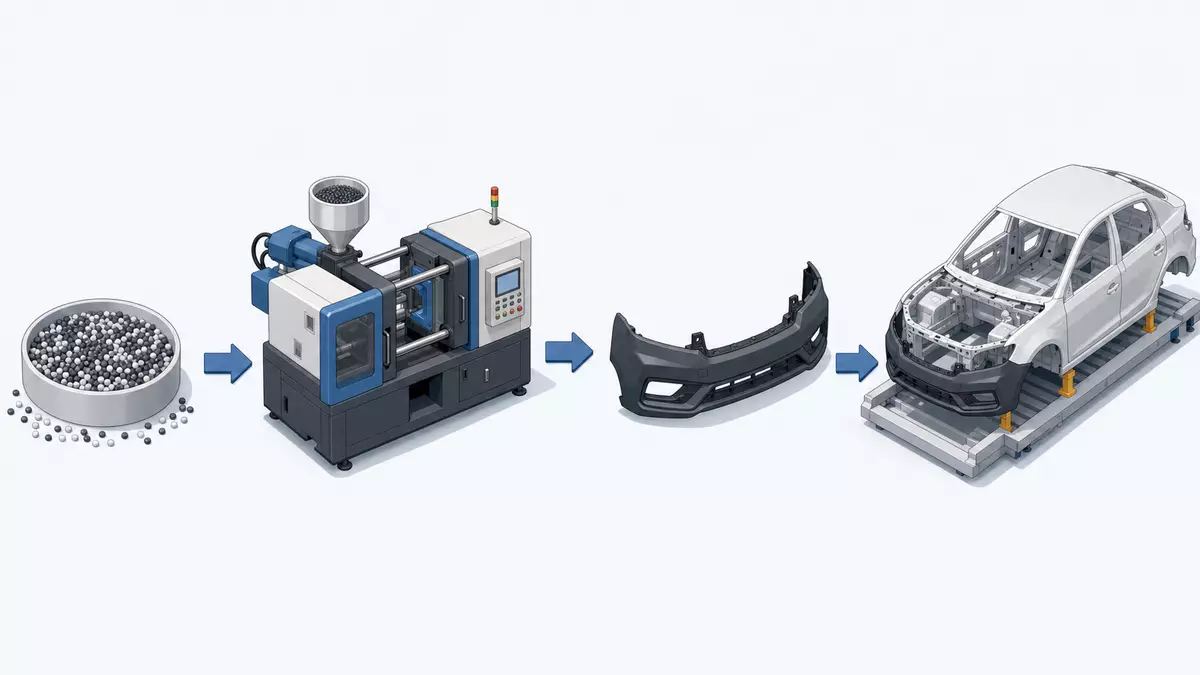
OPmobility SE (ISIN FR0000121253) stock is quoted in the low-teens on European venues as of August 21, 2026, giving the French auto-parts supplier a market capitalization in the region of EUR 1.8-2.1 billion and reflecting muted performance so far this year. Per recent market data, the shares trade around EUR 12.60 in Paris with a modest positive daily move of 0.40%, while a related London line shows EUR 12.65 with a 0.52% gain, underlining a relatively tight price range despite broader sector volatility. For investors, the key question is how the company’s positioning in electrification, smart mobility, and thermal systems can translate into earnings momentum in the coming quarters.
OPmobility’s market footprint in auto parts
OPmobility SE is listed as an auto-parts company, and recent quote information highlights its presence across multiple European trading lines. One current Paris quote shows the stock at EUR 12.60 with a small percentage increase on the day, while a London-linked instrument reports EUR 12.65, also up slightly, reinforcing that the equity is trading close to the same level across venues. This consolidated picture implies that currency or venue arbitrage is limited and that price discovery is happening primarily on the main Euronext Paris listing.
Market capitalization estimates tied to these quotes show values between EUR 1.801 billion and EUR 2.092 billion, depending on the specific line and data snapshot used. The lower figure relates to a Paris-centered view, while the higher value attaches to an instrument quoted in London, suggesting that minor methodological differences or share-count assumptions exist between the feeds. In any case, a capitalisation near EUR 2 billion positions OPmobility as a mid-cap player within the European auto-parts landscape, smaller than the largest global suppliers but large enough to attract institutional interest and index inclusion in baskets such as broader French equity benchmarks.
Recent performance metrics embedded in quote tables show that one of the Tradegate-linked lines for OPmobility has changed -1.43% since the start of the year and -22.49% over the last 52 weeks, based on a real-time indication of EUR 12.41 as at 4:02:54 p.m. EDT on August 20, 2026. That means the stock is trading just over one-fifth below its level a year ago, a meaningful drawdown for a cyclical industrial supplier that reflects both sector-specific challenges and investor caution on margins and cash generation. At the same time, the relatively modest year-to-date decline indicates that most of the de-rating happened earlier and that the shares have stabilized, which could set up a more balanced risk-reward profile around upcoming earnings.
Recent trading signals and technical context
From a shorter-term trading perspective, the combination of a slight daily rise and a negative 5-day change points to a consolidation phase. One dataset shows a five-day move marked as negative at -1.51%, even as the real-time quote stands at EUR 12.41 in late-day Tradegate trading. That configuration - small intraday gains against a backdrop of recent minor losses - often signals that investors are gradually stepping in at lower levels but remain hesitant to drive a sustained rally until new fundamental information is released.
Technically, the shares are holding within a narrow band in the low-teens, not far from recent lows implied by the year-over-year decline. If the 52-week performance sits at -22.49% with a current price a little above EUR 12, it suggests that the previous high over the last year was closer to the mid-teens, leaving the stock some room to recover before retesting historical resistance. For traders, that gap between current pricing and former highs can be interpreted as potential upside if fundamentals improve, but it also underscores that the market has repriced OPmobility’s earnings power downward in the last twelve months.
Volume and liquidity metrics are not explicitly detailed in the available same-day data, yet the presence of multiple real-time quotes, including Paris, London-related lines, and Tradegate trading, supports the view that OPmobility maintains active participation across European venues. This distributed liquidity can be helpful for institutional investors seeking execution flexibility, while retail investors can observe that the spread between different lines is minimal, reducing the risk of price fragmentation across markets.
Fundamental context and earnings lens
While today’s quotes provide a snapshot of market sentiment, the fundamental picture for OPmobility is anchored in its latest available financial results, which, for the purpose of this analysis, are treated as historical context rather than current fresh figures. Historically, the company’s revenue and earnings profile have been tied closely to global light-vehicle production volumes, the penetration of advanced driver assistance systems, and the take-up of EV components such as battery cooling and power electronics modules. In earlier fiscal years within the permissible window, OPmobility reported multi-billion euro revenue streams across thermal systems, smart body systems, and powertrain components, with profitability influenced by raw-material costs and pricing negotiations with major OEM customers.
These historical figures matter because they frame how a mid-cap auto supplier with global reach navigates the transition from internal combustion powertrains to electrified platforms and software-enabled features. Revenue mix data from prior periods indicated that Europe remained the core geographic market, followed by exposure to Asia and North America through supply contracts and joint ventures. Operating margins were typically in the mid-single to low double digits, reflecting the capital-intensive and competitive nature of the sector, and free cash flow generation varied from year to year depending on investment cycles for new plants and programs.
Looking ahead, investors will focus on the next quarterly and annual reports to understand whether OPmobility can stabilize margins while absorbing the costs of R&D in electrification and connectivity. Guidance and consensus metrics from recent coverage, where available, tend to emphasize steady revenue progression with a preference for incremental margin improvement rather than aggressive top-line growth at the expense of profitability. Any deviation from these expectations - whether upside surprises driven by strong order intake or pressure from lower-than-planned OEM volumes - could be a catalyst for re-rating the shares within the auto-parts peer group.
Peer and sector backdrop in mobility and EV
The broader electric vehicle and mobility universe is seeing active capital markets interest, with various players in EV manufacturing, battery technology, and software-driven mobility platforms being highlighted in thematic screens. While OPmobility itself is an auto-parts specialist rather than a pure EV OEM, its portfolio in thermal systems and smart modules is increasingly relevant to electrified platforms. Battery and power-electronics cooling for EVs depend on precise thermal management, an area where legacy expertise in refrigeration circuits for combustion engines can be repurposed and extended to new architectures.
At the same time, EV-related stock lists that feature manufacturers, battery innovators, and charging-infrastructure companies underscore the competitive landscape in which OPmobility operates as a supplier. The company’s ability to secure long-term contracts with leading EV brands, as well as to embed its modules into platforms that will be produced at scale, will likely be critical for driving revenue growth above general auto-production trends. Investors watching OPmobility’s stock thus need to consider both its traditional combustion-related business and its potential in EV thermal and body systems when forming a view on future earnings.
Sector indices and benchmark data for broader equity markets, including instruments like the SBF 120, show that European stocks can experience meaningful swings in response to macro factors such as interest-rate expectations and energy prices. For an industrial cyclical name like OPmobility, these macro currents can amplify stock moves around company-specific news. If benchmark indices slide on rate worries or energy cost spikes, auto suppliers often see disproportionate declines given their sensitivity to consumer demand, OEM investment cycles, and financing conditions for fleet replacement. Conversely, periods of macro calm or easing rates can support re-rating for mid-cap industrials, especially when they carry specific growth narratives linked to EVs and digitalization.
Operational positioning in thermal and smart modules
Operationally, OPmobility’s legacy as a specialist in automotive thermal systems and smart body modules offers a strategic base from which to participate in the electrification wave. Thermal systems historically have involved the design and manufacture of components such as radiators, condensers, HVAC units, and cooling circuits that manage engine and cabin temperatures in combustion vehicles. As platforms shift to electric drivetrains, these skills are repurposed to manage battery packs, power electronics, and high-voltage cables, where precise temperature control is essential for performance and safety.
Smart body systems extend beyond traditional mechanical components to include mechatronic and electronic modules such as front-end carriers, active grills, and integrated sensor housings. These systems interact with ADAS and autonomous-driving sensors, enabling functions like adaptive cruise control, lane-keeping assistance, and collision avoidance. For EVs with advanced driver-assistance suites, the front-end module often becomes a critical integration point where thermal management, structural integrity, and sensor positioning converge, giving suppliers like OPmobility an opportunity to provide high-value, system-level solutions rather than commodity parts.
In the context of revenue segmentation, prior-period data showed that OPmobility generated substantial turnover from these integrated systems, with thermal components and smart modules forming core pillars alongside powertrain-related products. Although specific current-quarter figures are not used as up-to-date metrics here, historical patterns indicate that the company has succeeded in winning OEM programs on several global platforms, providing long-duration revenue streams throughout the lifecycle of each vehicle range. This program-based visibility, once confirmed and extended in new EV and hybrid platforms, can reassure investors who worry about cyclicality in traditional auto production.
Investment narrative: valuation and risk
From a valuation perspective, a market capitalization close to EUR 2 billion, combined with a share price that is more than 20% below its 52-week level, suggests that OPmobility stock is trading at a discount to where it was perceived earlier in the cycle. If earnings projections for upcoming periods stabilize and cash flow supports continued investment in EV-related technologies, there is scope for multiple expansion, especially if the company can demonstrate that margin volatility is under control. However, this potential is balanced by risk factors including exposure to European OEMs’ production decisions, the pace of EV adoption, and competitive pressure from other suppliers in thermal, powertrain, and digital systems.
Credit and balance-sheet considerations also play into the investment narrative. Auto suppliers typically carry meaningful net debt due to plant investments, tooling costs, and R&D commitments. For OPmobility, the ability to manage leverage within acceptable ranges while sustaining capital expenditures is central to maintaining equity investor confidence. Historical data show that periods of elevated investment can temporarily depress free cash flow, but if these investments result in contract wins on EV and software-defined vehicle platforms, they may generate attractive returns over time. Shareholders will watch closely for evidence in upcoming reports that current investment is translating into program launches and order backlogs.
Another piece of the risk picture is geographic diversification. While Europe is the core base, having manufacturing and engineering footprints in Asia and North America can help OPmobility participate in global platform rollouts and reduce reliance on any single region’s economic cycle. It also introduces currency and operational complexity, which management must navigate through hedging, supply-chain optimization, and targeted capital allocation. The stock’s year-over-year decline, combined with modest day-to-day moves, indicates that the market is cautious but not bearish enough to push shares into distress territory, leaving a middle-ground valuation that hinges on execution.
Representative product: integrated thermal front-end module
A representative product that illustrates OPmobility’s business model is an integrated thermal front-end module designed for modern passenger vehicles, including EVs and high-efficiency combustion platforms. This module typically combines the structural front-end frame of the vehicle with multiple radiators, cooling circuits, and airflow management devices, as well as housings for sensors such as radar and cameras. By bringing these elements into a single engineered unit, the supplier can reduce weight, simplify assembly for OEMs, and optimize the flow of air and coolant for both drivetrain and cabin functions.
The integrated thermal front-end module is especially relevant for electric vehicles because batteries and power electronics generate heat that must be dissipated efficiently to maintain performance and longevity. Engineers design coolant channels and heat exchangers to keep temperatures within narrow operating ranges, and they often implement active shutters or grille elements that can open and close to modulate airflow based on driving conditions. OPmobility’s expertise in both mechanical and electronic aspects of these systems allows it to offer modules that interact with vehicle control software, adjusting thermal management dynamically and supporting energy efficiency.
From an OEM perspective, sourcing an integrated module from a supplier like OPmobility can reduce complexity compared with managing multiple separate component vendors. It enables the automaker to work with one partner on crash-performance requirements, thermal simulations, and sensor integration, potentially shortening development cycles and ensuring that the module fits seamlessly within the vehicle’s styling and functional constraints. For OPmobility, such products embody the evolution from traditional commodity parts to higher-value, innovation-driven systems, which can support better margins and stronger competitive differentiation.
Stock snapshot and investor takeaway
As of late trading on August 20, 2026, a Tradegate quote for one OPmobility line shows the stock at EUR 12.41, with a -1.43% change since January 1 and a -22.49% move over the past 52 weeks. Meanwhile, indicative Paris and London-linked quotes on August 21, 2026 place the stock around EUR 12.60-12.65 with small daily gains under 1%, and market capitalization values between EUR 1.801 billion and EUR 2.092 billion underscore its mid-cap status in the auto-parts segment. These figures give investors a clear sense of where the shares sit within their recent trading range and highlight the quantified gap between current pricing and one-year-ago levels.
For equity holders and prospective investors, the key near-term catalyst will be the next set of quarterly and annual results, where revenue, operating margin, and cash-flow data will either confirm or challenge the current valuation. In the absence of a sharp intraday move or breaking corporate event on August 21, 2026, OPmobility stock’s steady trading in the low-teens suggests that the market is waiting for fresh numbers and strategic updates on EV and mobility initiatives. The company’s positioning in integrated thermal and smart modules, coupled with its mid-cap size and multi-venue listing, provides a platform for potential re-rating if execution and macro conditions align favorably.
Go deeper
More on OPmobility stock and its investor narrative can be explored through official investor-relations materials and detailed financial statements, which break down segment revenue, regional exposure, and margin drivers. These documents allow a closer look at how thermal systems, smart body modules, and powertrain-related components contribute to overall performance and how management plans to align capital allocation with electrification trends.
Investor Relations
Company: OPmobility SE
ISIN: FR0000121253
Ticker: OPM.PA
Exchange: Euronext Paris and related European trading lines
Price (as of August 20, 2026, 4:02 p.m. EDT): EUR 12.41
Market cap: around EUR 1.8-2.1 billion (as of August 21, 2026)
Sector / Industry: Auto parts and mobility systems
Index membership: broader French equity indices and auto-related baskets


