
Ørsted stock holds steady as investors eye offshore wind profitability
Published on 09/07/2026 at 12:55 | Editorial responsibility: Rafael Müller, Editor-in-Chief AD HOC NEWS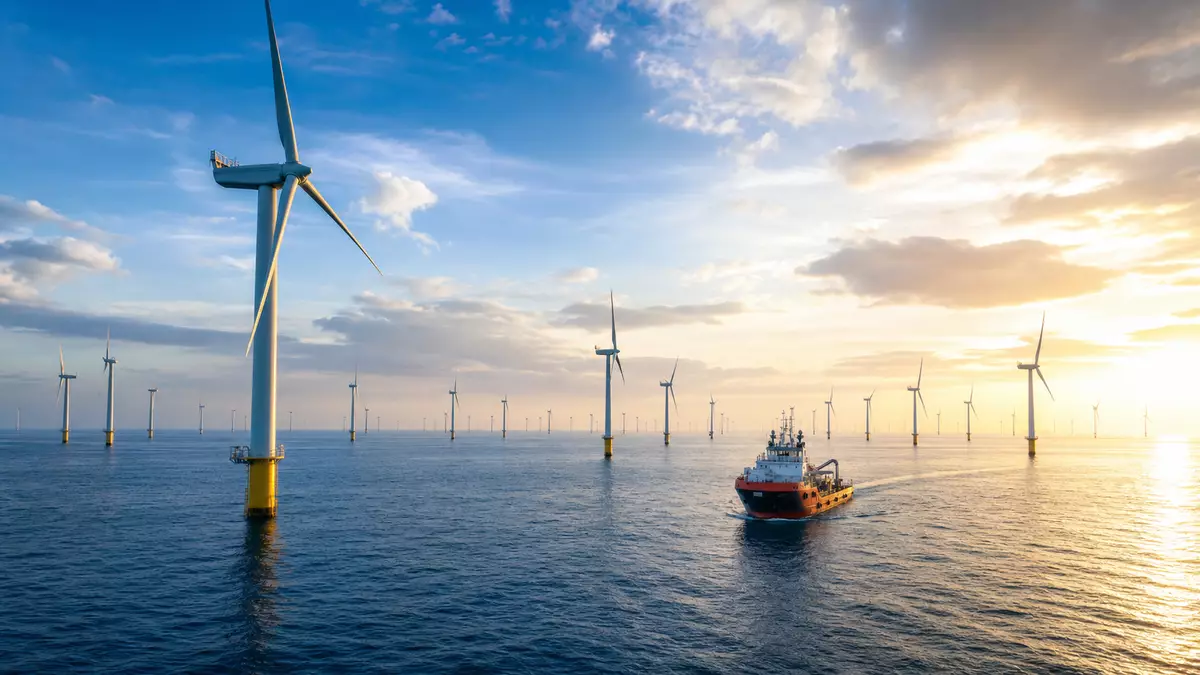
Ørsted stock (ISIN DK0060094928) remains in a consolidating phase as investors weigh the Danish renewable energy group’s latest offshore wind profitability trends and past project impairments as of September 7, 2026. Recent quarterly figures and guidance play a key role in how the market prices the company’s growth and risk profile.
Profit under pressure, revenue still growing
According to a recent summary of Ørsted’s quarterly performance, the company reported net profit of 848 million Danish kroner in the second quarter, down sharply from 3,350 million kroner a year earlier, as offshore wind project write-downs weighed on earnings in the United States in the period from April to June.Gulf Times Revenue in that same quarter rose by 21 percent to 20.6 billion kroner, underlining that the core offshore wind operations continue to expand even as profitability comes under pressure from cost revisions and policy uncertainty.Gulf Times
Those write-downs, which totaled roughly 1.2 billion kroner for key U.S. projects in that quarter, highlight the financial risk of large-scale offshore wind development when regulatory support and long-term contract economics become less favorable.Gulf Times For investors, the quantified contrast between a 21 percent revenue increase and a steep drop in net profit underscores that topline growth alone is not sufficient; margin quality and project discipline are now central to the Ørsted equity story.
Dividend perspective and capital discipline
The same overview of Ørsted’s strategy indicates that the group plans to resume dividend payments for the 2026 financial year, with a first payout expected in 2027, after having last paid a dividend in March 2023.Gulf Times This roadmap signals to shareholders that management aims to balance growth investments with returning cash, provided that profitability and balance sheet strength improve enough to support regular distributions.
For retail investors, the guidance on future dividends complements the recent profit figures: if the company can stabilize earnings after the 848 million kroner net profit in the latest reported quarter and avoid further large impairments, the planned resumption of dividends in the 2026 financial year could become a tangible support for Ørsted stock valuation. At the same time, the historical reference to the last dividend in March 2023 serves as a reminder that payout decisions depend heavily on sustained earnings rather than on single-period revenue growth.
Offshore wind portfolio and risk factors
The offshore wind business remains Ørsted’s key growth driver, with revenue in the most recent reported quarter up 21 percent to 20.6 billion kroner, driven by ongoing construction and operation of large-scale projects.Gulf Times However, opposition to certain U.S. offshore wind developments and associated policy shifts led to the 1.2 billion kroner impairments mentioned in the quarter, illustrating how political and regulatory risk can directly translate into profit volatility for highly capital-intensive renewable assets.Gulf Times
In this context, Ørsted’s continued progress on major European projects such as Hornsea 3 in the United Kingdom, where construction is reported to be on schedule after the sale of a 50 percent stake, suggests that the company is actively reshaping its risk profile by partnering and recycling capital on large projects.Gulf Times For investors comparing regional exposures, the difference between impaired U.S. projects and the ongoing build-out of Hornsea 3 offers a concrete backdrop for assessing whether Ørsted can sustain growth while tightening its hurdle rates and risk management on new offshore wind investments.
Hornsea 3 as flagship project
Hornsea 3 stands out as one of Ørsted’s flagship offshore wind developments and is central to the company’s long-term capacity and revenue ambitions. The project, located off the U.K. coast, is designed to add several gigawatts of renewable capacity once fully commissioned, supporting Ørsted’s strategy to remain a global leader in offshore wind generation. With construction reported to be on schedule in the recent quarterly summary and a 50 percent stake sold to a partner, Hornsea 3 exemplifies the company’s approach to sharing capital requirements while keeping operational leadership.Gulf Times
From an investor perspective, Hornsea 3 provides tangible context to the quarter’s 21 percent revenue growth to 20.6 billion kroner: as large projects like this move from construction toward operations, they can gradually convert heavy upfront investment into recurring cash flow. The key question for Ørsted stock holders is whether the mix of projects such as Hornsea 3 and impaired U.S. developments ultimately delivers a stable, growing earnings base that can underpin the planned dividend resumption in the 2026 financial year.
Stock trading and market view
Based on recent market data as of early September 2026, Ørsted shares trade on Nasdaq Copenhagen in Danish kroner, with the price reflecting both the latest quarterly results and expectations for future offshore wind profitability and dividend resumption. Trading volumes in this period indicate a steady interest from institutional and retail investors rather than an extreme reaction to the most recent profit figures.
For DACH-based investors who follow Ørsted alongside regional utilities and renewables peers, the stock’s behavior can be compared with major European energy names listed in indices such as the DAX and SMI, where companies with large wind and solar portfolios also face the challenge of balancing growth, project risk and shareholder returns. Ørsted’s combination of a 21 percent revenue increase to 20.6 billion kroner, a net profit drop to 848 million kroner in the latest quarter, and the medium-term plan to resume dividends for the 2026 financial year offers a compact numerical framework for assessing whether the current share price adequately discounts project risk while preserving upside from the company’s offshore wind pipeline.
Ørsted stock at a glance
- Company: Ørsted A/S
- ISIN: DK0060094928
- Ticker: ORSTED
- Trading venue: Nasdaq Copenhagen
- Sector / Industry: Utilities / Renewable energy
- Index membership: OMX Copenhagen 25


