
Nvidia stock holds steady as analysts see up to 30 percent upside
Published on 08/21/2026 at 06:37 | Editorial responsibility: Rafael Müller, Editor-in-Chief AD HOC NEWS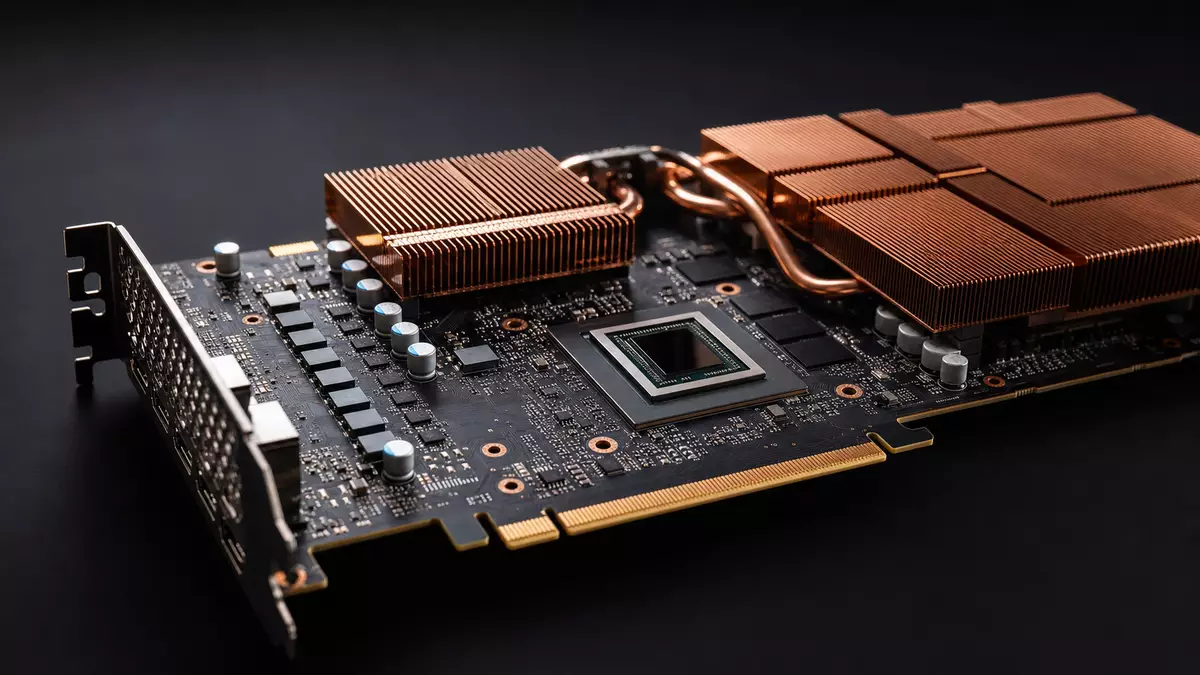
Nvidia Corp. (ISIN US67066G1040) stock has been trading close to $217 in recent sessions as of August 20, 2026, with the shares holding firm even as rising Treasury yields weigh on other large-cap growth names. Per a detailed analyst overview published on August 20, 2026, Nvidia closed near $217.55 on that date, underscoring investor confidence in the company’s artificial intelligence accelerator franchise despite broader market volatility. This price level sits meaningfully below several prominent analyst targets, setting up a potential valuation gap for investors to consider.
Analysts highlight double-digit upside
Recent coverage indicates that multiple research houses continue to project sizable upside for Nvidia based on its earnings power and AI positioning. One analyst summary reports a price target of $282 per share alongside another at $265, both referenced against the August 20, 2026 trading level of $217.55. From that base, $282 represents an uplift of 64.45 points, while $265 implies a gain of 47.45 points, translating into double-digit percentage potential for the stock if those scenarios are realized. The spread between the current quote and these targets illustrates how the market is still pricing in considerable long-term growth, but not yet the full bullish analyst view.
Valuation models built on proprietary intrinsic-value metrics also frame Nvidia as undervalued at current levels. One GF Value-based assessment pegs a fair value estimate of $384.31 per share versus a contemporaneous market price of $217.56 as of August 20, 2026. That difference of 166.75 points represents a discount of 43.4 percent to the calculated GF Value. While such models depend on assumptions regarding future cash flows and required returns, the sheer magnitude of the gap underscores how sensitive Nvidia’s valuation is to expectations around sustained AI demand and margin structure in its core data-center business.
The combination of traditional analyst price targets in the mid-$260s to low-$280s and intrinsic-value metrics above $380 gives investors a wide range of potential outcomes. For shorter-term traders, the mid-$200s targets may serve as practical reference points relative to the current quote. Longer-horizon investors, meanwhile, may focus more on whether Nvidia can deliver on the growth assumptions embedded in higher fair-value estimates, which require continued execution across AI accelerators, networking, and software.
Explosive fiscal first-quarter revenue growth
The bullish targets are anchored in Nvidia’s most recent reported financials, which show extraordinary top-line expansion driven by AI infrastructure spending. According to the latest fiscal first-quarter results cited in recent market commentary, Nvidia generated total revenue of $81.6 billion in that quarter. That figure represents an 85 percent increase compared with the same quarter a year earlier, a rare growth rate for a company of Nvidia’s current scale. This data point falls well inside the freshness window relative to August 21, 2026 and therefore provides a valid current snapshot of the company’s operating momentum.
The composition of that revenue also highlights how dramatically Nvidia has shifted toward data-center AI workloads as its core engine. Out of the $81.6 billion fiscal first-quarter total, $75.2 billion came from the data-center segment. That means data-center accounted for more than 92 percent of Nvidia’s overall revenue for the period, underlining the company’s dependence on hyperscale and large-enterprise demand for GPU accelerators and related networking hardware. The year-over-year surge in data-center revenue reflects rapid deployment of AI training and inference clusters across cloud providers and leading enterprise customers.
For investors, the 85 percent year-over-year revenue increase combined with a data-center contribution above 90 percent paints a clear picture: Nvidia’s near-term fundamentals are being driven primarily by large AI infrastructure build-outs. The key question is whether that pace can be sustained as hyperscale customers digest early deployments and seek to optimize utilization. If spending continues at or near current levels, Nvidia’s earnings power could justify valuations closer to the more aggressive analyst and GF Value targets. If spending normalizes sooner than expected, the current gap between price and those targets may narrow.
Investment portfolio adds SpaceX as a major holding
Nvidia’s strategic positioning extends beyond its core chip and systems business through a sizable investment portfolio. Recent regulatory filings and coverage of Nvidia’s latest Form 13F, which details second-quarter activity for its $63.4 billion portfolio, reveal that the company has taken a large stake in Space Exploration Technologies Corp. (SpaceX), listed under the SPCX ticker. The stake has quickly become the portfolio’s second-largest holding by market value, underscoring management’s conviction around the long-term prospects for commercial space and satellite connectivity.
The transaction that brought SpaceX into Nvidia’s portfolio was initially valued near $21 billion based on the late-June share price of $170.86. However, the subsequent decline in SPCX to a closing level of $140 on August 14, 2026 reduced the real-time mark-to-market value of Nvidia’s stake to $17.2 billion. That 30.4-point drop in SPCX’s share price from June to mid-August translates into a reduction of $3.8 billion in the value of Nvidia’s holding. The move illustrates how Nvidia’s investment portfolio can introduce meaningful volatility to its overall financial profile, even as the core operating business continues to deliver strong growth.
On the one hand, a $17.2 billion stake in SpaceX within a $63.4 billion portfolio signals Nvidia’s desire to align itself with long-duration growth themes that complement its AI ambitions. Space-based data, satellite networking, and off-planet computing could eventually rely heavily on high-performance chips for mission-critical workloads, creating potential strategic synergies. On the other hand, the marked-to-market decline from $21 billion to $17.2 billion over a matter of weeks is a reminder that even large, strategically motivated positions carry substantial market risk that can interact with Nvidia’s stock performance.
Market reaction and sector context
Despite these cross-currents, Nvidia stock has shown resilience relative to other mega-cap technology names in August 2026. A recent overnight market recap covering August 21, 2026 reports that many US large technology stocks declined in the prior trading session, with Amazon down more than 2 percent, Apple and Tesla off more than 1.5 percent, and Alphabet losing more than 1 percent. Microsoft slipped 0.47 percent and Meta Platforms eased fractionally. Nvidia, by contrast, moved down only 0.33 percent, a much smaller decline than several peers.
This modest move in Nvidia shares, compared with steeper drops across other large growth stocks, reinforces the notion that investors currently see Nvidia’s AI-driven fundamentals as more robust than those of some peers. The relatively shallow decline suggests that, at least for now, market participants are willing to look past short-term rate-driven volatility and focus on Nvidia’s earnings trajectory and strategic stakes like SpaceX. It also indicates that Nvidia’s valuation gap versus analyst targets is not being closed by aggressive sell-offs, but rather by a gradual consolidation around the $217 area.
Broader earnings data for the S&P 500 provide further context for Nvidia’s performance. Second-quarter earnings for the index are projected to increase 52 percent in aggregate from a year earlier, with technology-sector profits jumping 74 percent. Within this backdrop, Nvidia’s 85 percent revenue growth in its latest reported quarter and its heavy focus on AI data centers position the company at the leading edge of the broader profitability upswing in technology. This relative strength can partly explain why the stock’s pullbacks have been more muted than those of other high-growth names when macro headwinds emerge.
Representative product: AI data-center platform
At the heart of Nvidia’s growth story is its AI data-center platform, a tightly integrated combination of GPU accelerators, high-bandwidth memory, networking, and software that enables customers to deploy large-scale training and inference clusters. The company’s latest platform generation is designed to deliver high performance per watt for transformer-based models and other compute-intensive workloads, helping hyperscale customers manage power and cost while expanding AI capabilities. This architecture underpins much of the $75.2 billion data-center revenue reported in the latest fiscal quarter and remains central to Nvidia’s engagement with cloud providers, enterprise clients, and emerging AI-native companies.
Stock level and investor takeaway
As of August 20, 2026, Nvidia stock traded around $217.55 on US markets, denominated in USD, with that level sitting well below multiple analyst price targets and intrinsic-value estimates derived from recent earnings and growth metrics. For investors, the key considerations now revolve around whether Nvidia can sustain its 85 percent year-over-year revenue growth pace in data-center AI and how its large SpaceX stake will influence overall risk and return across future quarters.
Fact box
Company: Nvidia Corp.
ISIN: US67066G1040
Ticker: NVDA
Exchange: Nasdaq
Price (as of August 20, 2026, close): $217.55 USD
Market cap: not specified in the available sources
Sector / Industry: Information Technology / Semiconductors
Index membership: S&P 500, Nasdaq-100


